


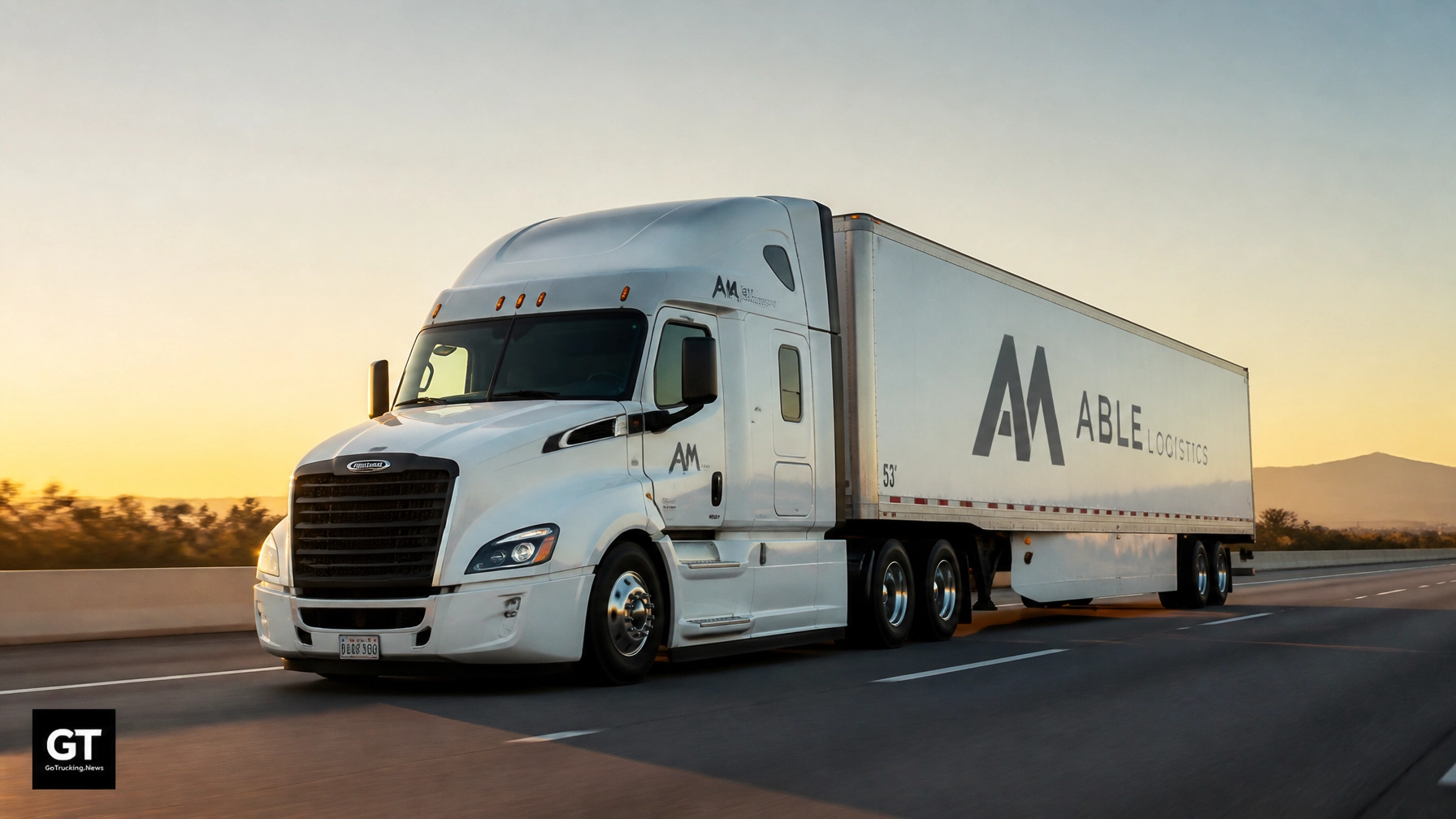
Most fleet owners think their trucks are rolling billboards that generate thousands of free impressions every day… until they realize that nobody on the road can actually read them.
In the trucking world, your fleet is your most visible asset. It’s a 53-foot canvas that travels thousands of miles, passing through the eyes of potential shippers, drivers, and partners. But if your branding identity is cluttered, confusing, or just plain ugly, you’re not building a brand: you’re creating visual noise that people subconsciously tune out.
At GoTrucking.News, we see thousands of trucks on the road every year, and the difference between a professional fleet and a "just-okay" fleet often comes down to a few critical design choices. Whether you’re a small owner-operator or managing a massive national fleet, these seven common mistakes could be costing you brand equity and business.
Here is how to spot them and, more importantly, how to fix them.
1. The "Kitchen Sink" Syndrome: Too Much Information
The biggest mistake in fleet branding is trying to say everything at once. We’ve all seen it: a trailer covered in a list of 15 different services, three phone numbers, two email addresses, a physical address, and a list of every state the company services.
The Problem: At 65 mph, a driver or pedestrian has about 2.5 seconds to process your truck. If you give them a paragraph, they read nothing. Clutter kills conversion.
The Fix: Stick to the "Rule of Three." Your truck should only communicate three things:
- Who you are (Your Logo/Name)
- What you do (A short tagline or service line)
- How to reach you (A clean website URL or QR code)
Keep the text large and the background clean. If you need to list more services, save that for your website.

2. Illegible Typography (Fonts That Don't Move)
You might love that elegant, cursive script or that rugged, distressed "Western" font, but if it isn’t legible from 100 feet away while vibrating on a highway, it’s useless.
The Problem: Many companies choose fonts based on how they look on a stationary business card rather than a moving vehicle. Small serifs, thin lines, and overly decorative letters disappear once the wheels start turning.
The Fix: Use bold, sans-serif fonts (like Helvetica, Montserrat, or Roboto) for your most critical information. Ensure there is a high contrast between the text color and the truck body. Dark blue on black? Bad. White on dark blue? Great. Always test your design at scale before printing the wrap.
3. Ignoring the Most Valuable Real Estate: The Rear
The sides of your trailer are great for brand awareness, but the rear of the truck is where the "buying" happens.
The Problem: In traffic, people spend minutes: not seconds: staring at the back of your trailer. Most fleets leave this space blank or put only a tiny "How's my driving?" sticker there.
The Fix: Treat the rear doors as your primary call-to-action. This is where you put your website and your "Now Hiring" message. Since the viewer is often stationary (or following at a safe distance), they have time to actually type in a URL or take a mental note of your brand.

4. Generic "Trucking" Imagery
If your logo is a silhouette of a truck and your tagline is "We Move Freight," you are invisible. In an industry as competitive as transportation, being generic is a death sentence for your branding strategy.
The Problem: Using stock imagery of generic trucks on your own trucks is redundant. It doesn't tell the customer why they should choose you over the 500 other white trailers they saw today.
The Fix: Focus on your unique value proposition. Are you the fastest? The safest? Do you specialize in refrigerated medical supplies? Use imagery or icons that represent your specific niche. Even a unique color palette (like the iconic UPS brown or FedEx purple/orange) can do more for your brand than a picture of a truck ever will.
5. The "Frankenstein" Fleet: Inconsistency
As fleets grow, they often acquire used equipment or work with different wrap shops over the years. Eventually, you end up with three different versions of your logo and four shades of blue across twenty trucks.
The Problem: Inconsistency screams "unprofessional." If your trucks don't look like they belong to the same family, shippers might worry that your service is just as fragmented. Consistent branding builds trust and makes a small fleet look much larger and more established.
The Fix: Create a simple Brand Style Guide. It doesn't need to be a 50-page document. Just a single sheet that lists your official hex colors, your fonts, and where the logo should be placed on every vehicle. Check out our recent coverage on logistics technology and AI vision tools to see how modern fleets are using tech to maintain better oversight of their physical assets.
6. Forgetting the Drivers (Your Internal Audience)
Branding isn't just for customers; it’s for your team. Drivers want to take pride in the equipment they operate.
The Problem: A beat-up, poorly branded truck makes it harder to recruit top-tier talent. In a market where driver retention is everything, your fleet’s appearance is a massive part of your culture.
The Fix: Involve your drivers in the branding process. A "Driver of the Year" decal or a clean, modern wrap can boost morale. When a driver is proud of their rig, they’re more likely to keep it clean and drive more safely, which further protects your brand's reputation.
7. Poor Maintenance: The "Zombie" Brand
Even the best design in the world won't save you if the wrap is peeling, faded, or covered in road grime.
The Problem: A dirty, damaged truck tells the world that you don't pay attention to detail. If you don't care about your own equipment, why would a shipper trust you with their multi-million dollar cargo?
The Fix: Build "Brand Maintenance" into your PM (Preventative Maintenance) schedule. Inspect wraps for UV damage every six months and ensure your washing schedule is frequent enough to keep the graphics popping. According to our October 2025 State of the Industry report, professionalism and reliability remain the top two factors shippers look for when awarding long-term contracts.
Conclusion: Your Fleet is Your Reputation
Fixing your branding identity isn't just about aesthetics; it's about business growth. A clean, professional, and readable fleet acts as a 24/7 sales force that never asks for a commission. By simplifying your message, choosing the right fonts, and maintaining consistency, you turn every mile driven into a building block for your company’s future.
Is your fleet sending the right message? Take a walk around your yard today and look at your trucks through the eyes of a stranger. If you can't tell who you are and what you do in three seconds, it’s time for a change.
🔥 HOOK: Most fleet owners think their trucks are rolling billboards… until they realize nobody can actually read them.
#trucking #brandingidentity #fleetmanagement #logistics #transportation #brandingstrategy #GoTruckingNews
Targeted Keywords: Branding Identity, Fleet Branding, Trucking Industry, Branding Strategy, Logistics Marketing, Truck Wraps.
START NOW! Want to stay ahead of the curve in the trucking world? Join our community of Truck enthusiasts and get the latest news delivered daily.
Contact Info:
GoTrucking.News
Email: info@gotrucking.news
Website: https://gotrucking.news
Follow Us:
LinkedIn | X (Twitter) | Instagram | Facebook