


By Mark Ricci
Published: July 20th, 2026
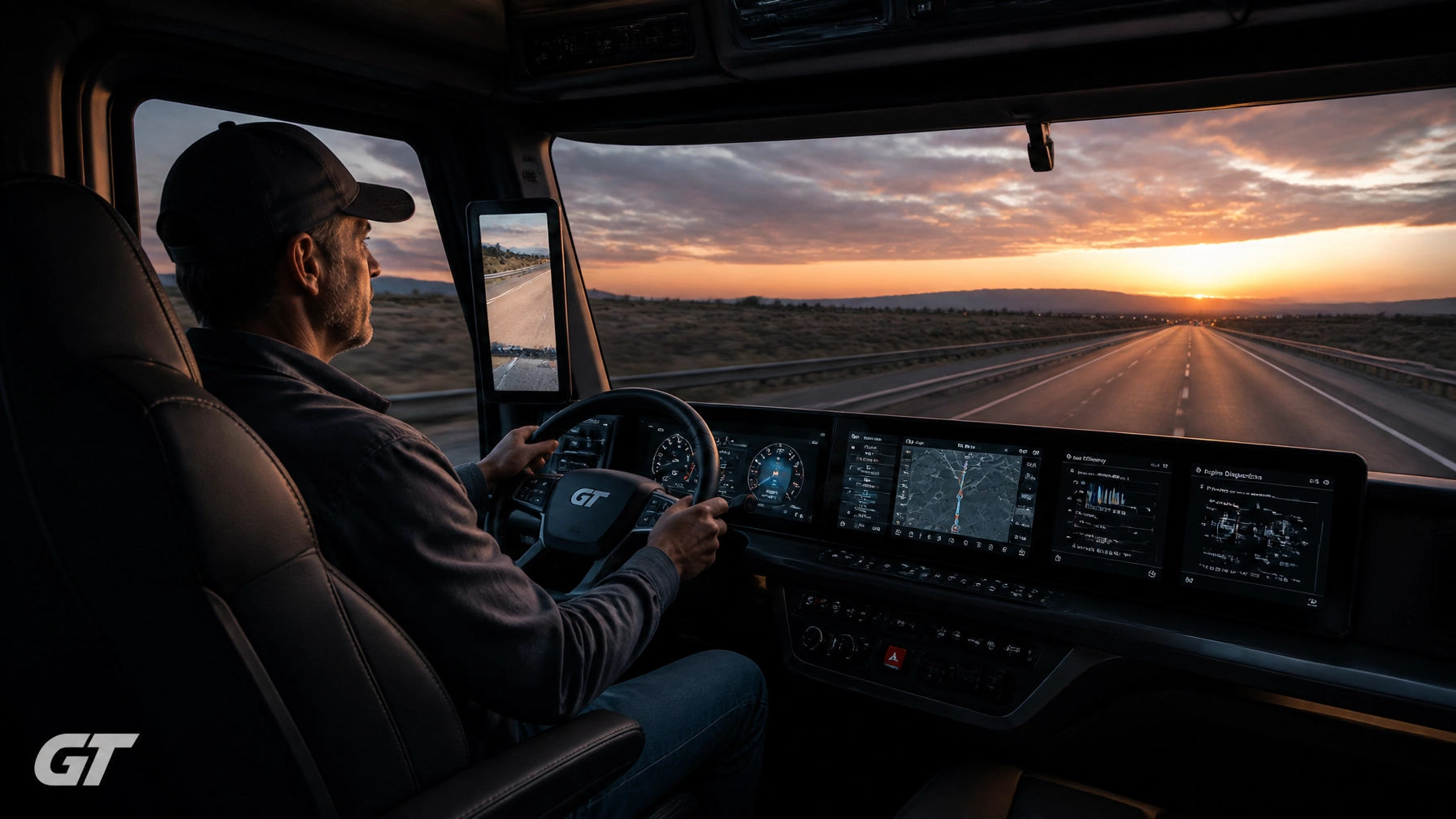
97% of the goods in your home arrived on the back of a truck, but the person behind the wheel is navigating a world that looks more like a Silicon Valley cockpit than a traditional diesel-breathing rig. Being a truck driver in 2026 means living at the intersection of tradition and rapid technological change. The core of the job- long hours, tight deadlines, and life lived mostly in a cab- remains, but the tools, rules, and expectations around it have evolved significantly.
As the industry faces a tightening labor market, the "game" of trucking has become a high-stakes balance of human endurance and algorithmic precision.
The Cab as a High‑Tech Office
Modern trucks in 2026 are far more connected than they were even half a decade ago. Dashboards increasingly feature multiple high-resolution screens showing real‑time data on fuel efficiency, route optimization, tire pressure, and engine diagnostics. This isn't just for show; it's the primary interface for a job that is now as much about data management as it is about steering.
Many drivers rely on advanced driver‑assistance systems (ADAS) that can automatically brake, stay in lane, and maintain safe following distances. Limited autonomous features are being tested and deployed on certain highway corridors and in controlled environments, but the driver remains in control, especially in cities, depots, and during loading and unloading.
For many drivers, the truck functions as a mobile office. Electronic logging devices (ELDs) are mandatory and integrated with fleet management software, automatically tracking hours of service, breaks, and duty status. Dispatch communication increasingly happens through tablets and apps rather than CB radios, though some drivers still monitor the radio for traffic updates and community information.

Schedules, Pay, and Pressure: The Economics of the Road
The basic rhythm of the job is familiar: early mornings, late nights, and long stretches away from home. Many drivers still do over‑the‑road (OTR) hauls, spending weeks at a time on the road, while others run regional or local routes that allow more frequent home time.
From a business perspective, the "salary cap" for drivers has shifted notably. Pay varies widely by segment, carrier, and experience level:
- Entry-level company drivers: Roughly $50,000–$65,000 per year.
- Experienced specialized drivers (reefer, flatbed, dedicated): $70,000–$90,000.
- Top-tier veterans: Pushing toward or past $100,000 depending on hours, equipment, and company.
Large carriers and private fleets frequently offer sign‑on bonuses, mileage incentives, and benefits to attract and retain drivers amid a tightening pool of qualified CDL holders. At the same time, the pressure to keep moving is intense. Customers expect faster deliveries, algorithms optimize every minute of a driver’s day, and any delay- weather, traffic, warehouse congestion- can ripple through a tightly scheduled network. Drivers in 2026 increasingly emphasize pay stability, flexible schedules, better equipment, and transparent communication as foundational to job satisfaction.
Regulation and Compliance: The "Motus" Era
Regulation remains a constant presence, acting as the league's "referee." Hours‑of‑service rules are strictly enforced through ELDs, with little room for the old “paper log” flexibility. Drug and alcohol testing is routine, and safety scores tied to a carrier’s DOT rating can affect a driver’s job security.
For owner‑operators, the administrative burden is heavier. They manage their own compliance, insurance, maintenance, and fuel purchasing, all while competing with large fleets that have dedicated back‑office support. The FMCSA’s ongoing registration modernization effort, known as “Motus,” is rolling out in phases. This introduces stronger identity, account, and business‑verification controls that affect how carriers and operators register and prove compliance. Navigating these innovation-driven regulatory shifts is now a core requirement for anyone wanting to stay in the game.

Technology and Automation: Help or Threat?
Automation is a major topic in 2026, but fully driverless long‑haul trucks are not yet mainstream. Pilot programs and limited autonomous operations exist on certain corridors and in controlled environments such as ports, distribution hubs, and dedicated freight lanes. Many drivers view these systems as tools that can reduce fatigue and improve safety, not as immediate replacements.
There is underlying anxiety about the future, especially among younger drivers who know their careers may span the transition to more automated freight. Training increasingly includes modules on interacting with automated systems, understanding sensor data, and knowing when to override or disengage technology. Industry analyses highlight AI and automation as key trends, with fleets that apply these tools carefully and practically better positioned to compete.
Lifestyle On the Road: Survival of the Fittest
Life in the cab is a mix of solitude and routine. Meals are often quick stops at truck stops or fast food, though healthier options and in‑cab cooking (supported by inverters and small appliances) are more common. Sleep happens in sleeper berths, sometimes in noisy lots near highways or distribution centers.
Fitness and health remain ongoing challenges. Long hours sitting, irregular sleep, and limited access to healthy food contribute to high rates of obesity, back problems, and other chronic conditions. Some carriers now offer wellness programs, gym discounts, and telehealth access, but staying healthy still requires real effort. Claims that truck drivers’ life expectancy is dramatically lower than the national average have been questioned for lacking solid statistical backing, though fatigue, schedule disruption, and chronic disease are still recognized concerns.

Community and Culture
Truck stop culture remains a core part of the identity. Drivers swap stories about routes, loaders, dispatchers, and weather. There’s still pride in the skill of backing into a tight dock, navigating a difficult city, or making a tough delivery in bad conditions. Online forums, social media groups, and trucking‑specific apps have expanded that community, allowing drivers to share tips, warn each other about problematic shippers, and organize around issues like pay, parking, and regulations.
Recent data revisions show that the industry has shed more drivers than previously reported, with roughly 122,000 fewer truck drivers since the 2022 peak. This underscores how tight the labor market has become and how much leverage some drivers now have in choosing carriers.
The Bottom Line
Being a trucker in 2026 is still hard work defined by long hours, responsibility, and a lot of time alone. But it’s also a job that’s more connected, more regulated, and more technologically sophisticated than ever before. Drivers today are part mechanic, part logistics coordinator, and part data manager, all while keeping a heavy vehicle moving safely across an impatient, always‑on supply chain.
For those who love the road, the independence, and the clear link between effort and result, it remains a compelling career: especially as capacity tightens and rate conditions improve modestly. For everyone else, it’s a reminder that the goods they order online, the fuel in their cars, and the food on store shelves still depend heavily on men and women spending days at a time behind the wheel, navigating an industry in the middle of a quiet but profound transformation.
About the Author
Mark Ricci is a veteran transportation journalist covering the intersection of logistics, technology, and the people who keep the supply chain moving. He has reported on the trucking industry for over a decade and writes regularly for GoTrucking.News.
#TruckingLife2026 #LogisticsInnovation #TruckDriverCommunity #SupplyChain #AutonomousTrucking #TransportationNews #DriverPay #TruckingIndustry