


What if everything you’ve been told about fleet maintenance is wrong?
Most fleet owners think that cutting downtime is strictly about hiring better mechanics or buying newer trucks. But here is the reality: you can have a brand-new fleet and the best wrench-turners in the business, and still lose thousands of dollars a month to "mystery downtime."
The secret isn’t just in the engine; it’s in the Project Management.
Managing a fleet isn't just about moving freight from point A to point B. It is a continuous, high-stakes project that requires planning, data, and clear communication. If you treat your fleet operations like a series of "fires to put out," you will always be behind. But if you apply formal project management principles, you can flip the script.
In this guide, we’re breaking down the 5 essential steps to master fleet project management and finally slash that downtime.
Step 1: Define Your "Downtime" Baseline and Goals
You can’t fix what you don’t measure. In project management, every successful initiative starts with a "Scope of Work" and a baseline.
For many fleet owners, "downtime" is a vague feeling of annoyance when a truck is in the shop. To fix it, you need to turn that feeling into a hard number.
Why a Baseline Matters
Without a baseline, you’re just guessing. Start by gathering your business requirements. What are your service level agreements (SLAs) with customers? What is the cost limit for repairs before an asset is no longer profitable?
Key Actions for Step 1:
- Build a Clean Asset Inventory: Every vehicle needs a digital birth certificate: VIN, make, model, service history, and assigned driver.
- Define Downtime: Is it any time the wheels aren't turning? Or only when it's in for unplanned repairs? (Pro tip: Focus on unplanned downtime first).
- Set Your KPIs: Track Mean Time Between Failures (MTBF) and Mean Time to Repair (MTTR).
By treating uptime as a formal project requirement, you shift your focus from "fixing trucks" to "managing assets." This is the foundation of modern Innovation in the trucking industry.
Step 2: Design Workflows for Prevention, Not Just Repair
If Step 1 was about the "What," Step 2 is about the "How." In project management, this is your workflow design.
Reactive maintenance is a project manager's nightmare. It’s unpredictable, expensive, and ruins your scheduling. To cut downtime, you must design workflows that prioritize prevention.

The Power of the Digital Checklist
Gone are the days of grease-stained clipboards. Modern fleet management relies on digital, mobile-friendly inspections. When a driver completes a pre-trip inspection on a tablet, that data should feed directly into your management system.
Key Actions for Step 2:
- Trigger-Based Maintenance: Don't wait for things to break. Use mileage, engine hours, or calendar dates to trigger service automatically.
- Standardize the Workflow: Define exactly what happens when a fault is found. Who approves the repair? Who schedules the shop time?
- Predictive Maintenance: Use historical data to spot trends. If a certain model of truck always has alternator issues at 200,000 miles, schedule those replacements at 190,000.
By moving from clipboards to control towers, you ensure that "Project Uptime" stays on track.
Step 3: Deploy Tools for Real-Time Visibility
A project manager is only as good as their visibility. If you don’t know where your assets are or what state they are in, you aren't managing: you're reacting.

Telematics and cloud-based software are the "Command Center" of your fleet. They allow you to see the health of your entire operation in real-time. This is where the "ProjectManagement" keyword really comes to life. You aren't just looking at GPS coordinates; you're looking at project milestones.
Key Actions for Step 3:
- Real-Time Fleet Tracking: Know where every truck is so you can re-route if a breakdown occurs, minimizing the impact on the customer.
- Integrated Systems: Your telematics should talk to your maintenance software. When an engine fault code pops up, it should automatically create a work order.
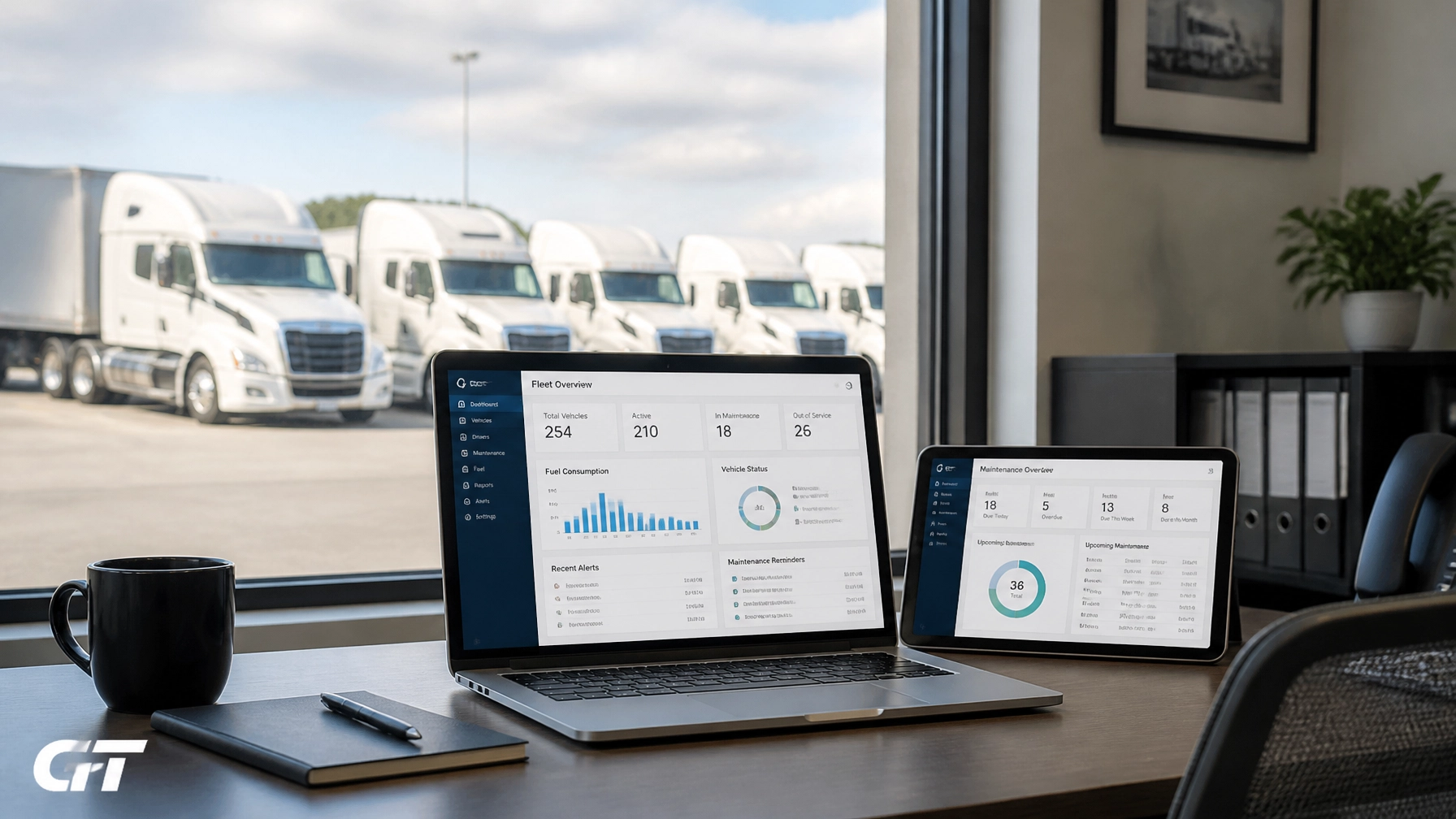
- Custom Dashboards: Build a view that shows you exactly what you need to see: upcoming inspections, high-cost assets, and current uptime percentages.
Step 4: Align Your People Through Communication
You can have the best software in the world, but if your drivers and mechanics aren't on the same page, your project will fail. Project management is, at its core, a people business.

Communication gaps are one of the biggest hidden causes of downtime. A driver hears a "weird noise" but doesn't report it because they don't want to be delayed. Three days later, the truck is on the side of the road with a blown turbo. That’s a communication failure.
Key Actions for Step 4:
- Establish Clear Channels: Use apps or integrated messaging so drivers can report issues instantly without playing phone tag.
- Driver Buy-In: Explain why these processes matter. When drivers see that better inspections lead to fewer breakdowns on the road (and more money in their pockets), they become your best project partners.
- Continuous Training: The industry changes fast. Regular training on new technology and safety protocols keeps your team sharp and your downtime low.
Remember, even external factors like a government shutdown can impact your operations; having a team that communicates well helps you pivot when these challenges arise.
Step 5: Review, Learn, and Iterate
The final step in any project is the "Post-Mortem." In fleet management, this is a continuous loop. You must constantly review your performance data to see where the project is succeeding and where it’s leaking cash.

Data-Driven Decision Making
Look at your monthly downtime reports. Are you seeing a downward trend? If not, why? Maybe a specific shop is taking too long for repairs (high MTTR). Maybe a certain brand of tires is failing prematurely.
Key Actions for Step 5:
- Monitor Total Cost of Ownership (TCO): Sometimes, the best project management move is to retire an asset that is costing more in downtime than it's making in revenue.
- Identify Root Causes: Don't just fix the leak; find out why the pipe burst.
- Refine Your Policies: If your data shows that monthly inspections are catching 90% of issues, but weekly inspections would catch 98%, it’s time to update your workflow.
Conclusion: Taking Control of Your Fleet’s Future
Mastering fleet project management isn't a one-time event. it’s a commitment to a structured, data-driven way of doing business. By defining your goals, designing smart workflows, leveraging technology, aligning your team, and constantly reviewing your progress, you can transform your fleet from a source of stress into a streamlined, high-uptime machine.
The road is tough, but with the right project management mindset, you'll always stay ahead of the curve.
🔥 STOP LOSING MONEY TO UNPLANNED DOWNTIME!
Ready to take your fleet to the next level? Join our community of trucking enthusiasts and professionals today! Get the latest industry insights and project management tips delivered straight to your inbox.
GET DAILY NEWSLETTER DELIVERED
#ProjectManagement #TruckingNews #FleetManagement #LogisticsInnovation #GoTrucking #MaintenanceMagic #UptimeOptimization
Keywords: Fleet Project Management, Cutting Downtime, Trucking Logistics, Preventive Maintenance, Fleet ROI, Telematics.
Contact GoTrucking.News:
Email: editor@gotrucking.news
Website: https://gotrucking.news
Follow Us:
LinkedIn | X (Twitter) | Instagram | Facebook