


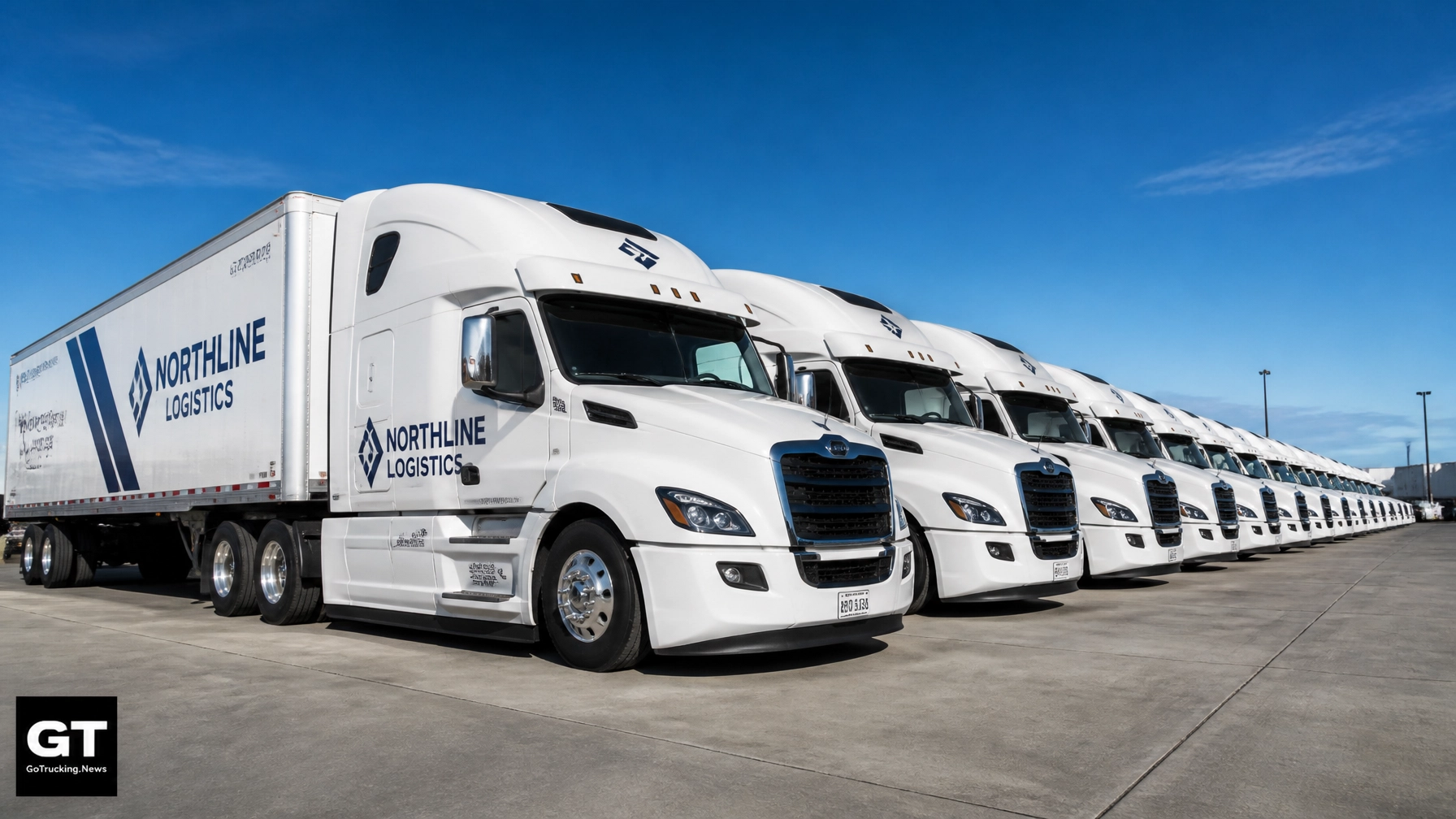
Most fleet owners think their trucks are just expensive tools for hauling freight… until they realize they are actually 70-foot rolling billboards that could be generating thousands in free leads every day.
Think about it. Your fleet is on the road 24/7, passing through major cities, idling in traffic next to decision-makers, and pulling into warehouses where potential clients are watching. If your brandingstrategy is "just stick the logo on the door and call it a day," you are leaving money on the table. Worse, if your branding is confusing or messy, you might be actively driving business away.
In the fast-paced world of trucking and logistics, your image is your handshake before you ever walk into an office. Here at GoTrucking.News, we see thousands of trucks every week. Some stop us in our tracks with their professionalism, while others make us squint in confusion.
Are you making these common fleet branding mistakes? Let's break them down and, more importantly, talk about how to fix them so your fleet starts working as hard for your sales team as it does for your operations team.
1. The "Everything but the Kitchen Sink" Design
One of the biggest mistakes we see in the trucking industry is clutter. You want to tell the world everything you do: refrigerated, dry van, LTL, hazmat, brokerage, and that you’ve been in business since 1974.
The problem? At 65 MPH, nobody can read all that. If you try to say everything, you end up saying nothing.
The Fix: The Three-Second Rule.
Your truck needs to communicate three things instantly:
- Who are you? (Your logo)
- What do you do? (One core service or tagline)
- How do I reach you? (Website or phone number)
Cut the list of services down to the essentials. If people want to know the nitty-gritty, they will visit your website. Keep it clean, keep it simple, and let your brand breathe.

2. Failing the "Squint Test" (Legibility Issues)
We’ve all seen it: a beautiful, artistic script font that is absolutely impossible to read from more than ten feet away. Or worse, a dark blue logo on a black truck.
If your drivers are on the highway, your audience is usually moving in the opposite direction or viewing you from a distance. High-resolution art doesn't matter if the contrast is low or the font is too "fancy."
The Fix: Prioritize Contrast and Scale.
Use bold, sans-serif fonts for your primary contact information. Stick to high-contrast color palettes: think white on dark blue, or black on yellow. Before you commit to a full wrap, print a mockup on a standard piece of paper, tape it to a wall, and walk 50 feet back. If you can’t read it at a glance, neither can your next big customer.
3. The Identity Crisis (Lack of Consistency)
As fleets grow, they often acquire different types of equipment: semi-tractors, straight trucks, and delivery vans. Too often, the branding is treated as a one-off project for each vehicle. One truck has the old logo, another has a slightly different shade of blue, and the vans don't have the website listed at all.
This inconsistency makes your company look disorganized. It signals to shippers that if you can't keep your own look consistent, you might not keep their shipments consistent either.
The Fix: Create a Brand Standards Guide.
You don't need a 100-page manual, but you do need a simple document that specifies your exact brand colors (CMYK/Pantone), your approved fonts, and where the logo should sit on every type of vehicle in your fleet. When you hire a wrap shop, give them this guide. Consistency builds trust, and trust builds business.

4. Ignoring the "Back Porch" (Rear-Door Real Estate)
The sides of your trailer are great for brand awareness, but the rear doors are where you have a "captive audience." Think about how many thousands of hours people spend staring at the back of a truck in traffic. If your rear doors are blank: or worse, just covered in rust and DOT tape: you are missing your most valuable advertising space.
The Fix: The High-Impact Rear Graphic.
Treat the back of your trailer like a landing page. This is the perfect spot for a bold call to action. "We're Hiring Drivers," "Need Freight Moved?", or a simple, large website URL works wonders here. Since the viewer is usually right behind you, they have more time to process the information than they do when you're passing them on the left.

5. Running with Stale Information
Nothing says "out of touch" like a truck rolling down I-80 with a phone number that's been disconnected for three years or a website URL that leads to a "404 Not Found" page. In the age of digital transformation, your physical assets must match your digital ones.
The Fix: Annual Branding Audits.
Once a year, during scheduled maintenance, perform a visual audit of every unit. Check that the phone numbers are correct, the website is current, and the social media icons (if you use them) match where you are actually active. If you’ve rebranded your website, make sure the trucks are updated to match.
6. The "Dirty Truck" Syndrome
You can spend $10,000 on a world-class wrap, but if the truck is covered in three weeks of road salt and grime, your brand looks cheap. Your fleet is the literal face of your company. A dirty truck sends a subconscious message that you cut corners on maintenance and care.
The Fix: A Culture of Cleanliness.
Make vehicle washing a non-negotiable part of your fleet management strategy. Whether you use an automated bay or a mobile pressure-washing service, keeping those graphics bright and visible is essential for protecting your investment in your brandingstrategy. A clean truck isn't just about pride; it's about professionalism.

7. The Missing Digital Bridge
In 2026, your truck shouldn't just be a static image; it should be a gateway to your digital presence. Many fleets fail to connect their physical presence on the road to their digital marketing funnel. If a logistics manager sees your truck and wants to learn more, are you making it easy for them?
The Fix: Smart QR Codes and Targeted URLs.
Consider adding a large, high-contrast QR code to the rear or side of the vehicle. But don't just link it to your homepage. Link it to a specific landing page designed for mobile users: perhaps a "Get a Quote" page or a "Drive for Us" application. Use a trackable URL so you can actually see how much traffic is coming from your fleet’s physical presence. This allows you to measure the ROI of your branding spend.
Conclusion: Turn Your Fleet Into a Growth Engine
Your fleet is more than just a collection of assets; it’s your most visible marketing channel. By avoiding these seven common mistakes, you can transition from "just another carrier" to a premium brand that shippers recognize and trust.
At GoTrucking.News, we believe that the future of the industry lies in the intersection of traditional logistics and modern branding. Don't let your trucks be invisible. Give them a voice, keep them clean, and make sure they are telling the right story about your business.
Ready to stay ahead of the curve in the trucking world?
Join our community of truck enthusiasts and professionals today!
Get the daily newsletter delivered to your inbox and never miss a beat in the world of logistics and transportation.
🚛 Stay Connected with GoTrucking.News
- LinkedIn: Follow us for industry insights
- X (Twitter): Real-time trucking updates
- Facebook: Join the GoTrucking community
- Instagram: The best of the road in photos
Contact Us:
For media inquiries or story tips, reach out at https://gotrucking.news/contact-us
Trending Hashtags:
#brandingstrategy #trucking #fleetmanagement #logistics #truckingnews #transportation #brandidentity #truckdrivers #fleetbranding
Keywords: brandingstrategy, trucking industry, fleet branding, logistics marketing, vehicle wraps, transportation news, professional trucking.