

[Press Release]
They don’t want you to know this, but the EPA just gave you the keys to your own engine.
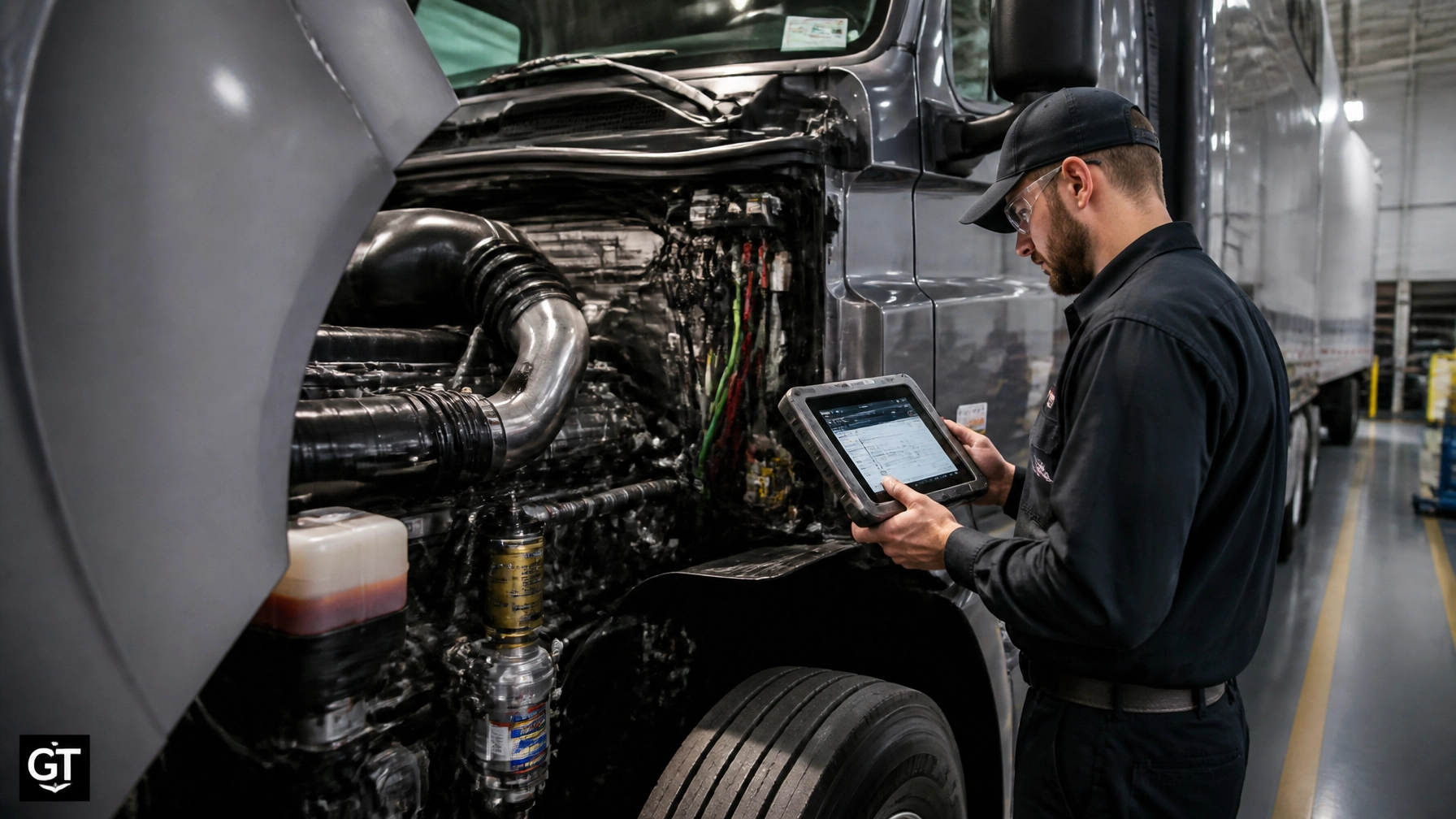
For years, if your truck threw a code for the Selective Catalytic Reduction (SCR) system or your Diesel Exhaust Fluid (DEF) tank started acting up, you had one choice: tow it to the dealer and wait. You’d sit in a hotel room for three days while your truck gathered dust in a bay, all because the manufacturer held the "secret sauce": the software and diagnostic tools: under lock and key.
Most owner-operators think the dealer is the only one who can legally touch their emissions system… until they see the EPA’s new "Freedom to Fix" guidance.
As of July 2026, the game has changed. The EPA has officially cracked the door open, giving independent shops and owner-operators the same rights as the big-name dealerships. Here is everything you need to know about the EPA Right to Repair in under three minutes of reading time (with a deep dive for those who want the full breakdown).
What is the EPA "Freedom to Fix" Guidance?
On July 1, 2026, the Environmental Protection Agency (EPA) issued a formal clarification of the Clean Air Act. This isn't just a suggestion; it’s a directive that changes how heavy-duty truck manufacturers handle repair data.
The guidance explicitly states that manufacturers must provide vehicle owners and independent mechanics with the exact same emissions-related service and repair information they give to their authorized dealers. This includes:
- Service Manuals: No more "dealer-only" PDFs.
- On-Board Diagnostic (OBD) Data: Complete access to the data streams coming off your sensors.
- Diagnostic Tools: Manufacturers must make their proprietary diagnostic software available for purchase by anyone on "reasonable terms."
- Pass-Through Programming: The ability to reprogram an Engine Control Unit (ECU) after a repair without needing a dealer tech to "initialize" it.
In short, the EPA has ruled that the Clean Air Act exists to keep the air clean, not to give manufacturers a monopoly on your maintenance budget.

Why This Matters for Your Bottom Line
If you’re running a business as an owner-operator, downtime is the enemy. Every hour your wheels aren't turning, you're losing money. The "Freedom to Fix" guidance hits three major pain points that have plagued the industry for a decade:
1. Ending the "Dealer Waitlist"
We’ve all been there. You have a simple NOx sensor issue, but the local dealer is backed up for two weeks. Because they were the only ones with the software to "reset" the system after the repair, you were stuck. Now, your local independent shop: the one that actually has an open bay: can buy the same tools and get you back on the road by sunset.
2. Reasonable Tool Pricing
Manufacturers used to charge astronomical fees for their software suites, or simply refuse to sell them to non-dealers. The EPA’s new stance requires these tools to be offered on "reasonable terms." While "reasonable" is always a bit of a legal gray area, it’s a massive step toward making high-end diagnostics accessible to small fleets and independent garages.
3. Part Flexibility
The EPA has made it clear: Manufacturers cannot force you to use OEM-branded parts for emissions repairs. As long as the part is an "equivalent" that meets emissions standards, you are free to use generic or aftermarket components. This injects much-needed competition into the parts market, which usually means lower prices for you.
The DEF Dilemma: Software Overrides are Now Legal (Sort Of)
One of the biggest frustrations for truckers has been the "derate" or "inducement" mode. Your DEF sensor fails, and suddenly your 500-horsepower rig is limited to 5 mph in the middle of a blizzard.
The 2025 and 2026 EPA updates have addressed this directly. The EPA now allows temporary overrides of emission control systems when they are performed specifically for the purpose of repair.
What does this mean for you?
- You can legally use a tool to bypass a derate long enough to get the truck into a shop.
- Manufacturers are being pushed to update their software so that minor DEF issues don't cause immediate, dangerous shutdowns.
- The goal is to give you time to fix the problem without leaving you stranded on the shoulder of I-80.

The Fine Line: Repair vs. Tampering
Before you go looking for a "delete kit," let’s be very clear: Repair is legal; tampering is not.
The EPA’s new guidance is a "Freedom to Fix," not a "Freedom to Delete." The rules are designed to help you restore your truck to its original, certified emissions configuration.
- Allowed: Accessing software to calibrate a new DPF filter.
- Allowed: Using an aftermarket NOx sensor.
- Allowed: Clearing a code after fixing a DEF pump.
- Illegal: Permanently disabling the EGR system.
- Illegal: Installing "cheat" software that bypasses emissions sensors entirely.
The EPA has stated that they will continue to aggressively pursue companies and individuals who sell or install defeat devices. Their policy is to empower the repair industry, not to let people roll coal.
Where Does the REPAIR Act Fit In?
You might have heard of the REPAIR Act (House Bill 906). While the EPA’s guidance is already in effect and focuses on emissions, the REPAIR Act is a broader piece of legislation currently moving through Congress.
If passed, the REPAIR Act would extend these "right to repair" principles to everything on your truck: from the telematics data and advanced driver assistance systems (ADAS) to your infotainment and seat sensors. While the EPA has solved the "emissions lockout," the REPAIR Act aims to solve the "data lockout" across the entire vehicle.

Practical Steps for Owner-Operators
Knowledge is power, but only if you use it. Here is how you can take advantage of these changes today:
- Ask Your Independent Shop: Does your favorite local mechanic have the latest diagnostic software? If they say "the dealer won't sell it to us," tell them to look up the EPA 2026 Freedom to Fix guidance. They have a right to that software now.
- Invest in Your Own Tools: If you’re tech-savvy, look into purchasing pass-through diagnostic tools. Being able to read your own deep-level codes can save you a $500 diagnostic fee at the dealer before you even pick up a wrench.
- Use Quality Equivalents: Don't be afraid of high-quality aftermarket emissions parts. They often come with better warranties than the OEM versions and are now explicitly protected by the EPA.
- Stay Informed: Keep an eye on GoTrucking.News for updates on the REPAIR Act and further EPA clarifications. The landscape is shifting fast.

Conclusion: A New Era of Independence
The days of being a "hostage" to the dealership are coming to an end. By clarifying that the Clean Air Act supports: rather than blocks: independent repair, the EPA has leveled the playing field for every owner-operator in America.
This isn't just about saving money on a sensor; it’s about the fundamental right to own and maintain the equipment that powers your livelihood. You bought the truck; you should be allowed to fix it.
🔥 JOIN THE MOVEMENT
Are you tired of dealer delays? Join our community of Truck enthusiasts and stay updated on the latest industry shifts. Get our daily newsletter delivered straight to your inbox and never miss a beat in the world of logistics and transportation.
START NOW!
#trucking #RightToRepair #EPAGuidance #OwnerOperator #DieselRepair #TruckingNews #Logistics #FreightIndustry #CleanAirAct #REPAIRAct
Keywords: EPA Right to Repair, Trucking Industry News, Owner-Operator Maintenance, DEF System Repair, Independent Truck Shops, REPAIR Act 2026, Diesel Diagnostics.
Contact Info:
GoTrucking.News
Email: info@gotrucking.news
Website: https://gotrucking.news
Follow Us: