


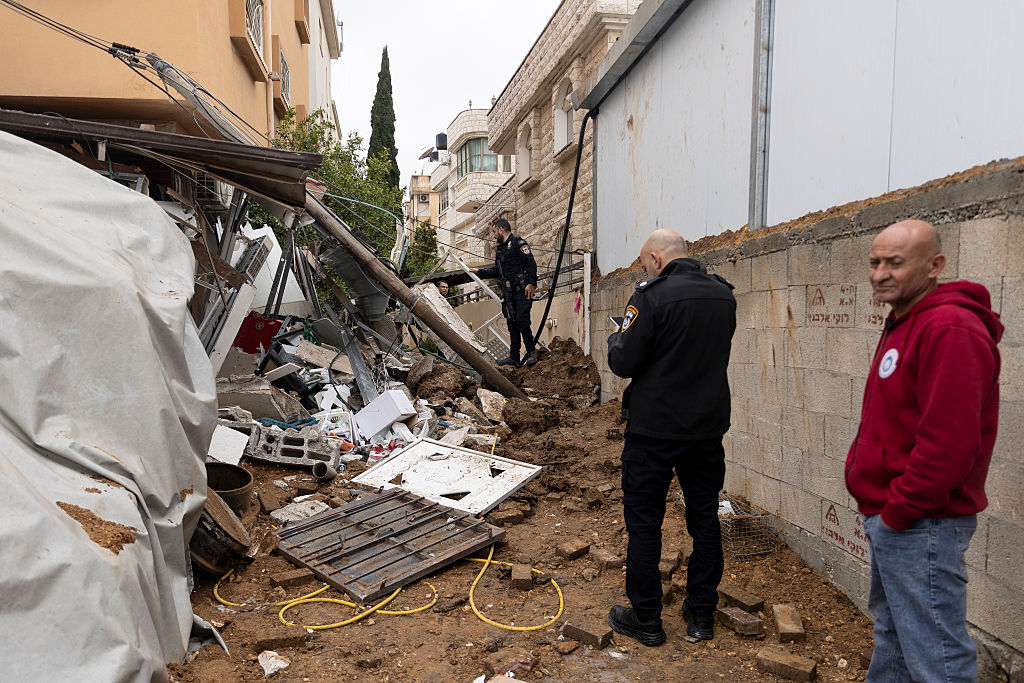
The Israeli military said search‑and‑rescue teams were deployed to an impact site in central Israel on Thursday, shortly after detecting missile launches from Iran. The strike triggered emergency responses across several communities as authorities assessed damage.
Israel’s national rescue service reported that paramedics were treating people suffering from blast injuries in Kafr Qassem, a city northeast of Tel Aviv. Officials did not immediately release details on the number or severity of casualties.
Only a handful of oil tankers are still navigating the Strait of Hormuz, and those that do are being pushed into a narrow passage controlled by Iran, where some vessels are reportedly being charged millions of dollars to transit the strategic chokepoint.
Maritime analyst Tomer Raanan of Lloyd’s List told NBC News that ships are now funneled into a single channel inside Iranian territorial waters, where the Islamic Revolutionary Guard Corps checks vessel information and effectively operates “a Tehran toll booth.”
Before the war, roughly 110 ships moved through the strait each day. Traffic has now collapsed to 10 or fewer, according to shipping data reviewed by the outlet.
Iranian state media has reported that lawmakers are drafting legislation to impose long‑term transit fees to fund war‑related reconstruction. Raanan said the implication is clear: vessels that refuse to pay could face future attacks, further heightening risks in one of the world’s most critical energy corridors.
The head of the World Trade Organization delivered a stark warning about the state of global governance, telling delegates at the WTO’s annual conference in Cameroon that the international system built after World War II is no longer functioning as it once did.
Director‑General Ngozi Okonjo‑Iweala said the world is entering a period defined by disruption, citing geopolitical rifts, climate pressures and rapid technological shifts. Speaking in Yaoundé, she said governments and institutions were already struggling to manage rising tensions before the conflict in the Gulf further destabilized trade in energy, fertilizer and food.
Oil prices climbed sharply on Thursday after fresh reports suggested that Washington and Tehran are engaged in quiet diplomatic contacts aimed at easing the conflict. Traders interpreted the possibility of behind‑the‑scenes negotiations as a sign that both sides may be testing pathways to de‑escalation, adding new volatility to energy markets.
Brent crude surged 5.2 percent to $107.54 a barrel, extending a week of heavy swings driven by the war’s impact on global supply routes. West Texas Intermediate, the main U.S. benchmark, rose 4.9 percent to $94.71.