

The one thing veteran fleet managers never tell you about scaling a trucking business is that it isn’t about who has the biggest trucks or the fastest drivers. It’s about who has the cleanest data.
Most people in the transportation industry think that ProjectManagement in a fleet context requires expensive, high-end software and a team of analysts to get right. They assume you need a massive budget and a dedicated IT department to streamline operations. But what if I told you that the secret to reclaiming your time and doubling your efficiency is much simpler than that?
If you’ve ever felt like you’re just "firefighting" from the moment you have your first cup of coffee: chasing down missing maintenance logs, wondering where Driver A is, or stressing over a late delivery: you aren’t alone. The chaos of fleet management is real, but it’s also avoidable.
The "simple trick" that the most successful companies use isn't a secret piece of hardware; it’s the implementation of a Single Source of Truth (SSOT).
The Chaos of "Memory-Based" Management
In the trucking world, we tend to be a "get it done" kind of crowd. We rely on our memories, scribbled notes on the back of receipts, and a series of frantic phone calls to keep the wheels turning. While this grit is what built the industry, it’s also what keeps many fleet operators stuck in a cycle of reactive management.
When your project management "system" exists in three different notebooks, four email threads, and the collective memory of your dispatch team, things fall through the cracks. You miss a preventive maintenance window, leading to a $5,000 repair that could have been a $200 oil change. You lose track of a driver's hours, leading to compliance issues. You over-promise a delivery time because you didn't have a clear view of your fleet's current capacity.
This is where true ProjectManagement comes in. It’s not just for software developers or construction crews; it’s the backbone of a profitable trucking operation.

The Simple Trick: Creating Your "Single Source of Truth"
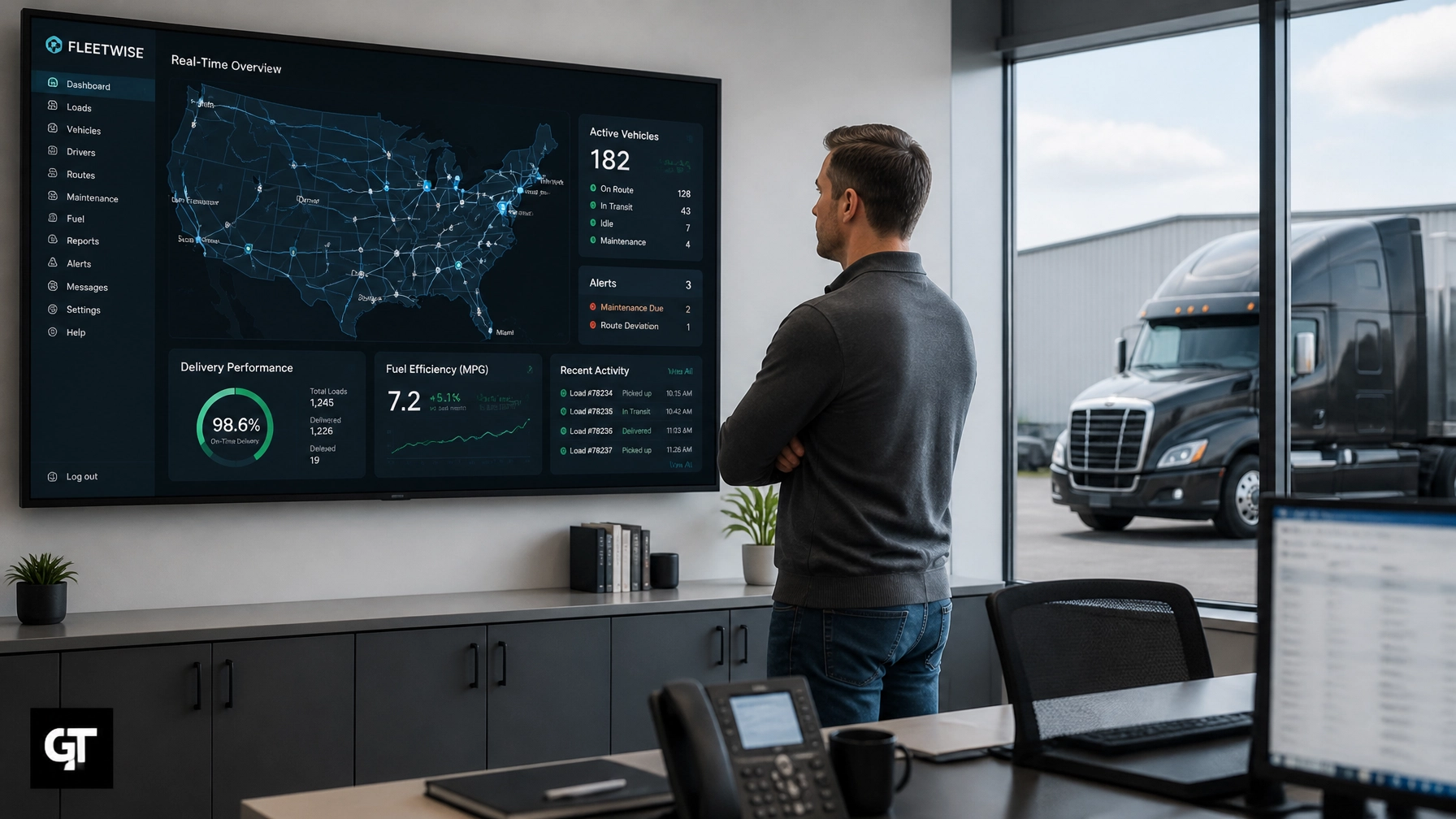
The most immediate way to improve your fleet’s performance is to centralize your data into one live dashboard. You don’t need to buy a $50,000 enterprise system today. You can start with a simple, shared spreadsheet or a basic project management tool.
The goal is to move from "I think" to "I know." Here is how you build your control center in under an hour:
1. Inventory Your Assets
Every truck, trailer, and driver needs a home on this dashboard. List your unit numbers, makes, models, and VINs. More importantly, list their status. Is the truck active, in the shop, or being held for inspection? Knowing exactly what tools you have available at any given second is the first step in effective resource allocation.
2. Track the "Deadlines" of Maintenance
Maintenance is the biggest "project" in fleet management. Instead of waiting for a breakdown, your dashboard should track the date of the last service and the projected date (or mileage) of the next. By visualizing this on a timeline, you can schedule maintenance before a truck is needed for a high-priority load, rather than finding out it’s out of commission at 4 AM on a Monday.
3. Monitor Key KPIs
You don’t need a hundred metrics. You need four or five that actually move the needle:
- Asset Downtime: How many days was each truck unavailable this month?
- On-Time Delivery Rate: Are we meeting our promises to clients?
- Fuel Efficiency: Which routes or drivers are costing us the most at the pump?
- Safety Compliance: Are all registrations, inspections, and insurance documents up to date?
By having these numbers in one place, you stop guessing and start managing. You can see patterns: like a specific truck that is constantly in the shop: and make data-driven decisions about when to retire an asset.
Why This is a "Project Management" Win
In professional project management, we talk about the "Triple Constraint": Time, Cost, and Scope. In trucking, your "Scope" is the load you’re carrying. Your "Time" is your delivery window. Your "Cost" is your fuel, labor, and maintenance.
When you use a centralized dashboard, you are effectively managing these constraints in real-time. You are no longer just a dispatcher; you are a Project Manager overseeing a complex web of logistics. This shift in mindset allows you to spot risks before they become disasters.
For example, if your dashboard shows that a specific driver consistently has high fuel burn on a particular route, you can investigate. Is it the traffic? Is it the truck? Or does the driver need a bit of coaching on idling? Without the dashboard, that money just bleeds out of your business every month, unnoticed.

Scaling Your Innovation: From Spreadsheets to Systems
While a spreadsheet is a great starting point, the ultimate goal is to integrate Innovation into your workflow. As your fleet grows, the "simple trick" evolves. This is where modern telematics and GPS tracking come into play.
Integrating real-time data into your ProjectManagement system is the gold standard. Imagine your dashboard updating itself automatically with the truck’s location, engine health, and driver hours. This level of automation reduces the human error inherent in manual entry and allows your team to focus on high-level strategy rather than data entry.
At GoTrucking.News, we’ve seen a massive trend toward digital transformation in small to mid-sized fleets. The companies that are winning aren't necessarily the ones with the newest trucks; they’re the ones using technology to squeeze every bit of efficiency out of their existing assets.
The Role of Technology and the Future of Trucking
We are currently in a pivot point for the industry. With the rise of electric vehicles (EVs) and autonomous technology, the way we manage fleet "projects" is changing. Managing an EV fleet requires a different kind of project management: one focused on charging cycles and range optimization rather than just fuel stops.
If you aren't building a "Single Source of Truth" now, you will struggle to adapt when these new technologies become the industry standard. Innovation isn't just about the hardware; it's about the systems you build to manage that hardware.

3 Steps to Take Before the End of the Day
If you want to see an immediate improvement in your fleet operations, do these three things right now:
- Pick Your Tool: Whether it’s Google Sheets, Excel, or a dedicated app, choose one place where all fleet data will live.
- Input Your "Problem" Assets: Don't worry about the whole fleet yet. Input the five trucks or drivers that cause you the most stress. Track their status and their next two "milestones" (maintenance, delivery, or inspection).
- Share the View: Give your lead driver or your dispatcher access. A "Single Source of Truth" only works if everyone is looking at the same truth.
Conclusion
Improving your fleet ProjectManagement doesn't require a miracle or a massive capital investment. It requires the discipline to stop managing from your head and start managing from a system. By centralizing your data, tracking your key metrics, and embracing the innovations that are reshaping our industry, you can turn a chaotic operation into a well-oiled machine.
The "simple trick" is visibility. When you can see the whole board, you can win the game.

🔥 CAN YOU SCALE WITHOUT THE CHAOS?
Bet you can’t double your fleet efficiency without adding a single new truck. The secret isn't more horsepower: it's better project management. Most managers are stuck in the "firefighting" loop, but the top 1% are using data to predict the future. Are you ready to join them?
Start your journey toward a more efficient fleet today. Check out our latest blog posts for more tips on trucking innovation and management.
#ProjectManagement #TruckingIndustry #FleetManagement #LogisticsInnovation #GoTruckingNews #FleetEfficiency #TruckingTech
Keywords: ProjectManagement, Fleet Operations, Trucking Innovation, Logistics Strategy, Fleet Maintenance, Transportation Media.
Contact Us:
GoTrucking.News
Website: https://gotrucking.news
Email: info@gotrucking.news
Follow Us: