

NEWYou can now listen to Fox News articles!
The Trump administration plans to withhold $40 million from California over its refusal to enforce English language requirements for truckers, Transportation Secretary Sean Duffy said Wednesday.
The move came weeks after an investigation found that an illegal immigrant truck driver, Harjinder Singh, killed three people after making an illegal U-turn on a Florida road in August. California had issued the driver a commercial license, but these English rules predate the crash.
Duffy cited failures by California to enforce English proficiency rules following one of President Donald Trump’s executive orders.
DUFFY RESPONDS WITH ‘CROCODILE TEARS’ COMMENT ON BANNED CALIFORNIA TRUCK DRIVER CASE
Trump withholds $40M from California over trucker English rules

PA CareerLink job fair draws crowd to Jaffa Shrine

Employers at the event represented many workforces including health care, education, manufacturing, transportation and public service.
There are currently 3,000 job openings in Blair County, according to career advisor Joe Razo.
“It’s a job seekers’ market,” he said. “It’s a matter of people coming out and finding those opportunities because they’re here.”
Exploring new opportunities
On Wednesday, job seekers were encouraged to bring resumes, wear professional clothes and be prepared for on-the-spot interviews.
Ben Asti, 33, said he was looking for a “better-suited job” at the job fair, stating that his current occupation is “tough on the back.”
Having multiple jobs beforehand, he said he is willing to move around for a new opportunity.
With her dog-sitting business on the side, Tipton resident Lynn D’Angelo, 54, said she would rather remain in the local area.
The number one quality D’Angelo was looking for in a job was flexibility, she said, so she was mainly interested in part-time work.
“I need a little bit of income to fill in the spots,” she said.
Curtis Brenneman, 25, said he was looking for a “stepstone” job since he is also looking to get his teaching certificate.
His mother, Robin Brenneman, 51, joined in on the job hunt Wednesday, while his niece, Ani Brenneman, 3, enjoyed the candy selection available at employers’ tables.
“It’s like trick-or-treating,” Ani said.
Robin Brenneman said she was interested in part-time office administration work.
“Recently, I feel like spending time is more important than anything, so it is affecting my job search in that I can’t work everyday,” she said, adding that she frequently watches her granddaughter.
Altoona resident Israa Ali, 42, was looking for a medical assistant position at various medical organizations at the job fair.
Ali has been on the job hunt for two weeks for positions in Altoona or Blair County.
As for Keith Diehl, 44, he said he wanted a “change” because he enjoys doing “different things.”
“I like to learn something new every day,” he said.
He said he has “hands-on” experience in running different types of equipment, including bulldozers and tractors.
He wanted to keep his options open when considering a job offer “because if you don’t, you might miss out on something.”
Help wanted
Not only were people looking for employers, but employers were also looking for people.
Lauren McCrum, human resources and youth development director for the Blair County YMCA, said her organization was looking for all types of candidates to fill childcare and wellness center positions.
McCrum said their childcare center employees require a state license, while giving scholarships to those who want to pursue early childhood degrees.
When approaching their table, McCrum said they are looking for candidates who are “willing to talk,” adding that personality is a huge deciding factor.
At the Leonard S. Fiore table, internal recruiter Jacob Adams said job seekers should present what they can contribute to the company as “opposed to what they can get.”
“It’s a better way to market themselves to the employers, and it’s a good way to start the conversation and shows that they take the initiative opposed to hoping to get something out of the employer,” he said.
The company was looking for skill, finish and trim carpenters Wednesday, Adams said. They prefer candidates with experience in the field, but they also offer an apprenticeship program to “teach them the ropes.”
Student Transportation of America recruitment manager Christine Griffin also said her company provides paid training to those who need driving requirements.
When looking for workers, Griffin said they want individuals who are open-minded and work well with others.
“Everybody has transferable skills that you might not think you’d be good at, but they might work for another position,” she said. “Somebody may have been a server in a restaurant, and they served others. Basically, our drivers are serving the students.”
Because STA is a big company, Griffin said there is “always an opportunity” for those wanting to move up in the company.
UPMC also gives employees a chance to move up in the company, recruiter Clayton Nelen said at the hospital group’s table.
Because the company is a union hospital, he said workers are eligible to transfer to a qualifying department after their first year of employment.
UPMC was looking for “strong, hard workers,” encouraging candidates to get their foot in the door and stay in the company, he said.
Having a resume on hand makes a job seeker stand out from the crowd, Nelen said.
Searching made easy
For attendees, a job fair provides people with face-to-face interactions, Diehl said.
“How do you really know someone over the internet?” he asked rhetorically.
PA CareerLink Blair and Bedford County site administrator Gwen Fisher said the group’s goal is to “make opportunity accessible.”
“These job fairs connect people with real employers, right here at home,” she said.
Everything is all in one place at a fair, Ali said, allowing easier outreach for job seekers.
D’Angelo also said job fairs show people what types of businesses are available in the area.
“It broadens (people’s) perspectives on what they can get,” she said.
For introverted job seekers, Asti said job fairs are “the perfect kind of thing.”
“There’s different personalities here,” he said. “And (employers) are trying to break the ice, make you more comfortable and explain to you what they do.
“Things like this open doors for people.”
Mirror Staff Writer Colette Costlow is at 814-946-7414.
Officials identify man killed in assault at San Jose light rail station

SAN JOSE – An unhoused man who died following a brutal assault late last month at a Valley Transportation Authority light rail station in North San Jose has been identified as Michael Patrick Howard, the Santa Clara County Medical-Examiner’s Office said.
The attack happened Sept. 29 at the Gish station, located at East Gish Road and North First Street, according to the Santa Clara County Sheriff’s Office. Deputies found Howard, 42, suffering from serious head injuries.
An investigation determined Howard had been severely beaten. He was taken to an area hospital, where he died Oct. 8.
Brandon Fryshaw, 23, was arrested in connection with the assault and booked into county jail.
He is still being held without bail at the Main Jail in San Jose, jail records showed.
Detectives are investigating Fryshaw’s connection to a separate assault, also in late September, of another unhoused person at the St. James light rail station, according to the sheriff’s office.
Finalized Business Loop 70 safety audit expected by Spring 2026

COLUMBIA, Mo. (KMIZ)
A full report outlining recommended safety improvements for Business Loop 70 in Columbia is expected to be completed by next Spring.
The Bicycle and Pedestrian Commission met Wednesday night at City Hall, where leaders provided an update on the audit. The City of Columbia and CBB Transportation Solutions conducted walk-throughs along the loop on Tuesday and Wednesday to identify safety improvements needed in the area.
Mckenzie Ortiz, an advocacy coordinator at Local Motion, took part in the walk-through on Tuesday night and Wednesday morning. Ortiz said Tuesday night’s walk took place from the Aldi and Interstate 70 interchange roundabout to Providence Road. Wednesday morning’s walk took place from Hickman High School to Paris Road.
Ortiz said the walk gave her a unique experience of what activity along Business Loop 70 is at night.
Faulty engineering led to implosion of Titan submersible headed to Titanic wreckage, NTSB finds

PORTLAND, Maine (AP) — Faulty engineering led to the implosion of an experimental submersible that killed five people on the way to the wreck of the Titanic, the National Transportation Safety Board concluded in a report Wednesday.
The NTSB made the statement in its final report on the hull failure and implosion of the Titan submersible in June 2023. Everyone on board the submersible died instantly in the North Atlantic when Titan suffered a catastrophic implosion as it descended to the wreck.
The NTSB report states that the faulty engineering of the Titan “resulted in the construction of a carbon fiber composite pressure vessel that contained multiple anomalies and failed to meet necessary strength and durability requirements.” It also stated that OceanGate, the owner of the Titan, failed to adequately test the Titan and was unaware of its true durability.
The report also said the wreckage of the Titan likely would have been found sooner had OceanGate followed standard guidance for emergency response, and that would have saved “time and resources even though a rescue was not possible in this case.”
The NTSB report dovetails with a Coast Guard report released in August that described the Titan implosion as preventable. The Coast Guard determined that safety procedures at OceanGate, a private company based in Washington state, were “critically flawed” and found “glaring disparities” between safety protocols and actual practices.
OceanGate suspended operations in July 2023 and wound down. A spokesperson for the company declined to comment on Wednesday.
In August, after the Coast Guard report was released, a company spokesperson offered condolences to the families of those who died.
The Titan’s implosion killed OceanGate CEO Stockton Rush and led to lawsuits and calls for tighter regulation of private deep sea expeditions. The implosion also killed French underwater explorer Paul-Henri Nargeolet, known as “Mr. Titanic”; British adventurer Hamish Harding; and two members of a prominent Pakistani family, Shahzada Dawood and his son Suleman Dawood.
The NTSB report recommends the Coast Guard commission a panel of experts to study submersibles and other pressure vehicles for human occupancy. It also recommends that the Coast Guard implement regulations for the vehicles that are informed by that study. The report states that current regulations for small passenger vessels “enabled OceanGate’s operation of the Titan in an unsafe manner.”
The report also called on the Coast Guard to “disseminate findings of the study to the industry,” which has grown in recent years as privately financed exploration has grown.
The company was aware of the possibility of Coast Guard regulations prior to the implosion. In describing OceanGate’s corporate culture, the report quotes an operations technician who quit the company after expressing concern about calling paying passengers “mission specialists.” The company’s CEO responded that “if the Coast Guard became a problem … he would buy himself a congressman and make it go away,” the technician said, according to the report.
The vessel had been making voyages to the Titanic site since 2021. Its final dive came on the morning of June 18, 2023. The submersible lost contact with its support vessel about two hours later and was reported overdue that afternoon. Ships, planes and equipment were rushed to the scene about 435 miles (700 kilometers) south of St. John’s, Newfoundland.
A multiday search for survivors off Canada made international headlines. It soon became clear there would be no survivors, and the Coast Guard and other authorities began lengthy investigations into what had happened.
___
Ramer reported from Concord, New Hampshire.
Bridge connecting Saugus and Lynn closes indefinitely for repairs

A bridge connecting the eastern Massachusetts communities of Saugus and Lynn will be closed until further notice.
The Massachusetts Department of Transportation announced the closure of the Route 107 bridge for repair work on Wednesday. Pedestrians and cyclists can continue to use the sidewalks of the bridge.
Saugus police said the closure was required due to
Taking Action to Defend America from the UN’s First Global Carbon Tax – the International Maritime Organization’s (IMO) “Net-Zero Framework” (NZF)

From the US Department of State
Media Note
Office of the Spokesperson
October 10, 2025
Joint Statement by Secretary of State Rubio, Secretary of Energy Wright, and Secretary of Transportation Duffy
President Trump has made it clear that the United States will not accept any international environmental agreement that unduly or unfairly burdens the United States or harms the interests of the American people. Next week, members of the IMO will vote on the adoption of a so-called NZF aimed at reducing global carbon dioxide gas emissions from the international shipping sector. This will be the first time that a UN organization levies a global carbon tax on the world.
The Administration unequivocally rejects this proposal before the IMO and will not tolerate any action that increases costs for our citizens, energy providers, shipping companies and their customers, or tourists. The economic impacts from this measure could be disastrous, with some estimates forecasting global shipping costs increasing as much as 10% or more. We ask you to join us in rejecting adoption of the NZF at the October meeting and to work together on our collective economic and energy security.
The NZF proposal poses significant risks to the global economy and subjects not just Americans, but all IMO member states to an unsanctioned global tax regime that levies punitive and regressive financial penalties, which could be avoided. The United States is considering the following actions against nations that support this global carbon tax on American consumers:
Pursuing investigations and considering potential regulations to combat anti-competitive practices from certain flagged countries and potential blocking vessels registered in those countries from U.S. ports;
Imposing visa restrictions including an increase in fees and processing, mandatory re-interview requirements and/or revisions of quotas for C-1/D maritime crew member visas;
Imposing commercial penalties stemming from U.S. government contracts including new commercial ships, liquified natural gas terminals and infrastructure, and/or other financial penalties on ships flagged under nations in favor of the NZF;
Imposing additional port fees on ships owned, operated, or flagged by countries supporting the framework; and
Evaluating sanctions on officials sponsoring activist-driven climate policies that would burden American consumers, among other measures under consideration.
The United States will be moving to levy these remedies against nations that sponsor this European-led neocolonial export of global climate regulations. We will fight hard to protect our economic interests by imposing costs on countries if they support the NZF. Our fellow IMO members should be on notice.
H/T CFACT
5 1 vote
Article Rating
Like this:
Like Loading…
Related
Discover more from Watts Up With That?
Subscribe to get the latest posts sent to your email.
Welcome to Watts Up With That, one of the most well-known climate blogs! We gather the latest scientific research, news, and expert opinion to help you understand how our planet is changing and what implications it may have for humanity. Our approach is based on facts, objective analysis, and open discussions about one of the most critical issues of our time. Watts up with that climate and what changes await us – let’s figure it out together!
Watts Up With That covers a wide range of topics related to climate change and its impact on the world. Here’s what’s important to us:
Global warming – its causes, consequences, and future forecasts.
Analysis of current climate research and its findings.
Climate change news.
Extreme weather events – hurricanes, droughts, floods, and their connection to climate change.
The impact of different energy sources on the environment and the development of sustainable technologies.
Political and economic aspects and how states and international organizations respond to climate change.
Fleetworks’ $17 million funding fuels AI dispatcher innovation

FleetWorks which officially launched its always-on AI dispatcher for carriers alongside $17 million in new funding. The always-on dispatcher is taking a dual-sided approach to freight automation. One AI agent works for carriers, learning their preferences, equipment, and availability to find ideal freight. The other serves brokers, identifying the best available truck for every shipment. When the two meet, Singer said, “it allows for stronger match facilitation — something that reduces the mountain of calls to a single, seamless interaction.”
With $17 million in new funding led by First Round Capital and participation from Y Combinator, Saga Ventures, and LFX Venture Partners, FleetWorks plans to scale its teams in San Francisco and Chicago, focusing on engineering and go-to-market growth. “We’re looking for the top 1% of talent,” Singer said. “The priority is continuing to build awareness, especially on the carrier side.”
But AI isn’t here to replace people in freight, it’s here to make them smarter and faster. “It’s a lot less about order-taking now and more about problem-solving,” Singer said. “We’ve seen reps making 50% more outbound calls instead of waiting for inbound calls. You have to change the work you’re doing. It has to be smarter and data-driven.” One FleetWorks customer saw a single rep book 50 to 60 loads a day using the platform, a productivity level previously out of reach.
That performance boost comes with measurable returns. “We’re seeing about a 30% lift in loads per day per person,” Singer noted. “And we see anywhere from a 1–4% gross margin expansion on those loads. That’s where our customers get a huge amount of ROI — they’re actually making more money per shipment.”
FleetWorks also addresses one of the industry’s most persistent pain points: trust. Every broker within FleetWorks is pre-verified with a track record of reliability, while carrier vetting happens through partnerships like Highway, which verifies key details such as insurance coverage.
“We take the things that diligent brokers are already doing and incorporate them into the process,” Singer said. A carrier management team reviews the AI’s actions and audits outcomes, maintaining a full trail of accountability. “The AI takes autonomous actions, but they’re all reviewable,” he emphasized.
Integration has been another key differentiator. “On the broker side, average onboarding time is a week, sometimes as quick as four hours,” Singer said. “It fits right into existing systems. You don’t have to adopt a new interface.” Carriers, meanwhile, can be onboarded in minutes. “A carrier comes on, one AI agent qualifies them, another calls their insurance provider to verify coverage, and another checks if they’re already in the network. It’s dozens of agents working together to make things happen.”
FleetWorks’ AI has even cracked one of logistics’ most frustrating technical hurdles, navigating automated phone trees. “We have a 96% success rate on AI navigating phone trees,” Singer said.
“What we’re doing with FleetWorks is in some ways new, but in many ways it’s embracing the way carriers and brokers already want to work. The carrier wants to text, call, WhatsApp; we can do that. We meet them where they are.”
Charleston revisits transportation sales tax after voter rejection

CHARLESTON, S.C. (WCSC) – The City of Charleston is revisiting a transportation sales tax referendum that voters rejected last year, with officials planning public meetings to detail potential funding allocation.
The proposed 25-year transportation sales tax would fund improvements and projects throughout Charleston County. City officials said the state lacks sufficient funding to initiate transportation projects for South Carolina’s various counties.
Mayor William Cogswell said the city has data to identify problem areas but also recognizes residents’ firsthand knowledge of traffic issues.
“We have traffic counts. We know where a lot of the congestion is. And so some of it’s pretty obvious. I mean, you don’t need you ask any resident and they’ll tell you where the traffic problems are,” Cogswell said. “But we also have to look at things like green belt funds, things like public transportation, things like zonings. It’s incumbent on the city.”
Leaders have planned a total of four meetings to discuss transportation priorities and funding allocation before any referendum appears on a future ballot. The first of those meetings took place on Tuesday afternoon and focused on streets on James and Johns Island, including Maybank Highway.
Last year, voters rejected a similar proposal that included a detailed list of planned projects funded by the tax revenue.
Utah in a good spot for energy efficiency, a new report concludes

A new analysis puts Utah seventh in the nation overall for its energy efficiency, coming in at fifth place in the country for home energy efficiency and ninth for vehicle fuel efficiency.
High-efficiency air conditioning and heating are key.
“In other words, get a high-efficiency HVAC system for the home if you currently have a system that is old or inefficient (ideally one that needs to be replaced soon anyway). Make sure to get a programmable thermostat. This will reduce wasted heating/cooling when you are not at home. Simpler items: install more insulation and seal leaks. This will reduce heating and cooling costs and can cut energy loss by 25-40%,” noted Betty Simkins, a professor at Oklahoma State University and Russell Simkins, a retired energy consultant.
“This can have a return on investment of up to 100%, depending how under-insulated the home is. Install energy-efficient windows and exterior doors, especially if the current ones are old. This option can be expensive. Buy Energy-Star certified appliances.”
The findings by WalletHub also note the importance of having efficient transportation systems.
“While there are some steps you can take to become more energy efficient on your own, living in the right area can give you a big boost. For example, certain states have much better public transportation systems that minimize your need to drive, at least in big cities. Some places also have better constructed buildings that retain heat better during the winter or stay cooler during the summer,” said Chip Lupo, WalletHub analyst.
Utah Transit Authority and efficiency
For multiple years, Utah Transit Authority has been named one of the best public transportation systems in North America. The analysis puts Utah in the No. 23 spot for transportation efficiency.
The American Public Transportation Association noted at one time UTA experienced record high use.
The association described its awards as “given to those individuals and organizations that have made outstanding contributions to the public transportation industry in North America. Winning an APTA Award means that you are ‘the best of the best’ and a distinguished leader.”
In April this year, U.S. Secretary of Transportation Sean Duffy took a ride on FrontRunner, accepting an invitation by Sen. John Curtis, R-Utah. He was also accompanied by Rep. Celeste Maloy, R-Utah.
Duffy noted the efficiency of FrontRunner, saying it is a model for other states to follow that want to improve transit systems.
Curtis emphasized he plans to expand the FrontRunner because of population growth in the state as well as Utah’s upcoming Olympics in 2034.
There are also plans to build a rapid bus transit system that links Murray, Taylorsville and West Valley City. The planning for that system goes back nearly 20 years.
Sen. Mike Lee, R-Utah, joined by Rep. Burgess Owens, R-Utah, introduced the Safe Transit Accountability Act in September.
It would ensure public transit agencies can implement safety plans without delay caused by internal disagreements. It proposes to clarify the chain of command within local transit agencies to resolve disputes as quickly as possible to ensure riders and transit employees are safe.
The new report by WalletHub emphasizes the importance of energy efficiency, given the amount of money spent by households on energy costs.
Energy is one of the biggest household expenses for American consumers. The average U.S. family spends at least $2,000 per year on utilities, according to the U.S. Department of Energy, with heating and cooling of spaces alone accounting for about half the bill.
It noted that the Department of Energy estimates that adopting energy efficient measures in the home could reduce a family’s utility costs by as much as 25%.
Secretary Duffy visits BWI, slams Wes Moore amid tensions over federal government shutdown

U.S. Transportation Secretary Sean Duffy on Tuesday made an unannounced visit to Baltimore/Washington International Thurgood Marshall Airport (BWI), where he met privately with air traffic controllers — just hours after many began missing parts of their paychecks.
His visit came as the federal government shutdown stretched more than 14 days with no clear resolution in sight and frustration mounted among hundreds of thousands of federal workers.
Spotlight on Maryland was granted an exclusive interview with Duffy during the visit. He addressed growing safety concerns, the political stalemate in Washington and the federal workers on the front lines of America’s aviation system.
Asked whether air travel remains safe amid the shutdown and threats from some air traffic controllers to abandon their posts in violation of federal law, Duffy offered reassurance but warned of ripple effects.
Yes, it is safe,” Duffy said. “But you are seeing a few more cancellations and delays in the system, and that’s because of the shutdown.”
“The number one priority for us at DOT and FAA is to make sure people are safe – not necessarily to make sure you get there on time, or to make sure you’re flight isn’t cancelled, but that you get from Point A to Point B safely,” Duffy added.
Air traffic controllers feel the strain
Duffy’s visit came on the first day that many air traffic controllers will began to see partial pay or no pay at all. The transportation secretary acknowledged that unless the shutdown ends soon, thousands of FAA personnel will miss future paychecks entirely, including critical air traffic controllers.
“These are often times heads of households financially,” Duffy said. “They’re responsible for mortgages, car payments, putting food on the table, so there’s an extra layer of stress.
Despite the uncertainty, the control tower at BWI remains fully staffed — one of the few towers in the country still operating at full strength. According to Duffy, morale at BWI remains relatively high, but that doesn’t mean emotions aren’t bubbling over.
“There is a frustration that they have,” Duffy said. “They do their job. They make sure planes stay in the air and are safe, they’re like, ‘Hey Congress, do your job. Why don’t you fight for me in air traffic control, a government employee? Why are you fighting for someone else who may have come across the border unlawfully? Why are you fighting for their health insurance – or why are you fighting for foreign aid?’”
Here at BWI, they show up for work, which is great, but we see other facilities in the airspace where they’re not coming into work because of that frustration,” Duffy added.
Eric Smith, a traveler from Phoenix waiting at BWI on Tuesday afternoon, sided with the federal workers keeping planes in the air. “Government shutdown? I don’t think we need as much government. But air traffic controllers? They absolutely need to get paid. Our safety depends on it.”
Political divide at BWI
Just a week earlier, Maryland Gov. Wes Moore and the state’s federal delegation held a high-profile press conference — also at BWI — demanding an end to the shutdown. Surrounded by cameras and microphones, Moore called on federal lawmakers to reopen the government and prioritize the well-being of federal workers.
“This assault on our federal workers is ongoing from the president of the United States, so I’m thankful that we have a federal delegation that is standing firm in saying a prerequisite for keeping the federal government should not be raising premiums by 70%,” Moore said last Wednesday.
Secretary Duffy, in contrast, opted for a different approach — no public remarks, no press conference and only a single interview.
Asked why he avoided the public spectacle, Duffy said he would much rather have had a one-on-one conversation because he thought it was “a better forum.” The transportation secretary then immediately slammed Moore.
“The problem though, is, Wes Moore comes here and says two things: one, I support air traffic controllers, I’m a supporter of government employees and in the next breath, he supports the government shutdown,” Duffy said. “You can’t have it both ways, governor.”
“You either got to support the employees, which means you got to open up the government. Tell your Democratic colleagues in Washington open it up and negotiate, have the conversation. Tell your Democrat colleagues to stop fighting for illegals and their health care, or giving foreign aid to countries for transgender this and all the crazy stuff that they funded,” Duffy added.
I think he is being disingenuous, the governor is,” Duffy said. “It’s slick, it’s impressive, trying to have it both ways – but in the end, the shutdown hurts the government employees, many of which live in his state.”
Spotlight on Maryland reached out to Moore’s office, as well as several members of Maryland’s congressional delegation, for interviews. They did not immediately respond.
What’s next?
Duffy did not offer a timeline for when the shutdown might end, but emphasized that DOT and FAA leadership were doing “everything possible” to mitigate disruptions.
As part of our ongoing coverage, Spotlight on Maryland will release more of our exclusive interview with Duffy later this week, including his take on long-term aviation staffing challenges, the future of rebuilding the Francis Scott Key Bridge, and his concerns about the current political atmosphere.
Follow Gary Collins with Spotlight on Maryland on and . Do you have news tips on this story or others? Send news tips to .
What happens when airports refuse to play video of Kristi Noem blaming the shutdown on Democrats

Travelers going through the Transportation Security Administration checkpoint at Detroit Metro Airport will come face-to-face with a video of Homeland Security Secretary Kristi Noem blaming Democrats for the shutdown of the federal government.
The remarkable video that injects divisive politics into the mundane process of airport security has sparked controversy as many airports refuse to show it.
The video raises questions about whether it can be legally played, if the Department of Homeland Security can require airports to show it, and what happens if airports refuse.
Checkpoints often include videos featuring government officials welcoming travelers and explanations of procedures, but they usually do not contain political messages.
CNN reached out to over 50 airports across the country varying in size; many refused to display the video on airport-owned monitors or noted they didn’t have the capabilities to show it to passengers.
Some monitors at checkpoints are owned and controlled by the airports, while others belong to the TSA.
As of Tuesday afternoon, Detroit Metro Airport and Bismarck Airport in North Dakota confirmed to CNN the video was playing on monitors in space controlled by the TSA.
At Albany International Airport in New York, the footage was displayed on TSA-owned monitors without prior notice to the airport authority, a spokesperson said. It was taken down “in keeping with longstanding policies of not displaying political messaging or content of any kind.”
The federal government shutdown, going on for two weeks, has been filled with finger-pointing on each side. Republicans insist Democrats need to simply agree to extend current funding for another seven weeks, Democrats demanded that any funding bill contain an extension of enhanced Affordable Care Act premium subsidies. Some federal websites contain messaging calling the shutdown “Democrat-led” and blaming “The Radical Left.”
Is Noem’s video legal?
Federal employees tend to distance themselves from politically charged messaging like what is seen in Noem’s video, said Keith Jeffries, vice president of K2 Security Screening Group and a former TSA federal security director at Los Angeles International Airport.
In the video, which was released last week and first obtained by Fox News, Noem starts by discussing travel, but the message quickly becomes political.
“It is TSA’s top priority to make sure that you have the most pleasant and efficient airport experience as possible while we keep you safe,” the video begins. “However, Democrats in Congress refuse to fund the federal government, and because of this, many of our operations are impacted, and most of our TSA employees are working without pay.”
Jeffries said it’s just not something these screeners are used to seeing at work.
“You don’t talk negatively about any elected official, and of course, with the federal government, you’re not even allowed to mention what political affiliation you are,” he said.
The partisan video may open the door for other federal workers to chime in, said John Berry, a lawyer who represents government employees.
“TSA employees that aren’t working (directly) for DHS may be like, ‘Well, I can say this, my boss said it,’” he told CNN. Others who don’t agree may feel discouraged in the workplace over the messaging, especially considering they are not currently being paid.
The video also “completely runs afoul of the Hatch Act,” Berry said, noting the 1939 law which prohibits government employees from taking part in certain political activates to ensure programs are administered in a non-partisan fashion.
Barry has spent 26 years handling Hatch Act cases, defending both Republicans and Democrats.
“The Hatch Act applies to the secretary of DHS,” he said. “She filmed it, most likely, using government resources. Even though it’s being played at the airport, which is like a separate entity, it’s definitely a political activity.”
Typically, a Hatch Act violation would be brought to the Office of Special Counsel, according to Berry, which would conduct an investigation. That investigation would then be forwarded to the president for a decision on what happens next.
Berry said it is unlikely a violation would result in any consequences, given President Donald Trump would be the one to decide.
In the first Trump administration, Peter Navarro, former assistant to the president and director of the Office for Trade and Manufacturing Policy, was reported to Trump for violating the Hatch Act. Kellyanne Conway was also found to have violated the Hatch Act and was reported to the president. Nothing came out of the two cases.
Airports pick a side
TSA owns and operates some of the video monitors at airports which have been added to try to expedite the screening process by displaying reminders and sometimes include DHS messages.
Not all monitors are owned by TSA, however; some belong to the airport.
“Airports have the right to determine what side of the legal line they want to be on,” said Juliette Kayyem, national security analyst for CNN and former assistant secretary for intergovernmental affairs at DHS under the Obama administration. “There is nothing in federal law that compels them to run these videos.”
A passenger or an airline worker could file a complaint with an airport authority about the video, and some states have laws which might prohibit the videos from being shown on airport authority monitors.
“Basically, the airports are saying this is a line we don’t want to cross: ‘We have a responsibility to the American flying public to do so safely and secure, securely and what she’s doing is not that,” Kayyem said.
It’s unclear at this point whether airports will be disciplined by the federal government, including losing any federal funding, if they do not play the message.
The Department of Transportation has threatened states in the past to comply with new requirements or risk being stripped of federal funding, but threatening air travel could cause airlines to balk and risk passengers being left stranded, Kayyem said.
“The question is, what will (Noem) do in response, or will she just ignore it? Will she just move on?” Kayyem said.
Legal questions arise as many airports refuse to play Kristi Noem’s shutdown message blaming Democrats

By Alexandra Skores, CNN
Washington (CNN) — Travelers going through the Transportation Security Administration checkpoint at Detroit Metro Airport will come face-to-face with a video of Homeland Security Secretary Kristi Noem blaming Democrats for the shutdown of the federal government.
The remarkable video that injects divisive politics into the mundane process of airport security has sparked controversy as many airports refuse to show it.
The video raises questions about whether it can be legally played, if the Department of Homeland Security can require airports to show it, and what happens if airports refuse.
Checkpoints often include videos featuring government officials welcoming travelers and explanations of procedures, but they usually do not contain political messages.
CNN reached out to over 50 airports across the country varying in size; many refused to display the video on airport-owned monitors or noted they didn’t have the capabilities to show it to passengers.
Some monitors at checkpoints are owned and controlled by the airports, while others belong to the TSA.
As of Tuesday afternoon, Detroit Metro Airport and Bismarck Airport in North Dakota confirmed to CNN the video was playing on monitors in space controlled by the TSA.
At Albany International Airport in New York, the footage was displayed on TSA-owned monitors without prior notice to the airport authority, a spokesperson said. It was taken down “in keeping with longstanding policies of not displaying political messaging or content of any kind.”
The federal government shutdown, going on for two weeks, has been filled with finger-pointing on each side. Republicans insist Democrats need to simply agree to extend current funding for another seven weeks, Democrats demanded that any funding bill contain an extension of enhanced Affordable Care Act premium subsidies. Some federal websites contain messaging calling the shutdown “Democrat-led” and blaming “The Radical Left.”
Is Noem’s video legal?
Federal employees tend to distance themselves from politically charged messaging like what is seen in Noem’s video, said Keith Jeffries, vice president of K2 Security Screening Group and a former TSA federal security director at Los Angeles International Airport.
In the video, which was released last week and first obtained by Fox News, Noem starts by discussing travel, but the message quickly becomes political.
“It is TSA’s top priority to make sure that you have the most pleasant and efficient airport experience as possible while we keep you safe,” the video begins. “However, Democrats in Congress refuse to fund the federal government, and because of this, many of our operations are impacted, and most of our TSA employees are working without pay.”
Jeffries said it’s just not something these screeners are used to seeing at work.
“You don’t talk negatively about any elected official, and of course, with the federal government, you’re not even allowed to mention what political affiliation you are,” he said.
The partisan video may open the door for other federal workers to chime in, said John Berry, a lawyer who represents government employees.
“TSA employees that aren’t working (directly) for DHS may be like, ‘Well, I can say this, my boss said it,’” he told CNN. Others who don’t agree may feel discouraged in the workplace over the messaging, especially considering they are not currently being paid.
The video also “completely runs afoul of the Hatch Act,” Berry said, noting the 1939 law which prohibits government employees from taking part in certain political activates to ensure programs are administered in a non-partisan fashion.
Barry has spent 26 years handling Hatch Act cases, defending both Republicans and Democrats.
“The Hatch Act applies to the secretary of DHS,” he said. “She filmed it, most likely, using government resources. Even though it’s being played at the airport, which is like a separate entity, it’s definitely a political activity.”
Typically, a Hatch Act violation would be brought to the Office of Special Counsel, according to Berry, which would conduct an investigation. That investigation would then be forwarded to the president for a decision on what happens next.
Berry said it is unlikely a violation would result in any consequences, given President Donald Trump would be the one to decide.
In the first Trump administration, Peter Navarro, former assistant to the president and director of the Office for Trade and Manufacturing Policy, was reported to Trump for violating the Hatch Act. Kellyanne Conway was also found to have violated the Hatch Act and was reported to the president. Nothing came out of the two cases.
Airports pick a side
TSA owns and operates some of the video monitors at airports which have been added to try to expedite the screening process by displaying reminders and sometimes include DHS messages.
Not all monitors are owned by TSA, however; some belong to the airport.
“Airports have the right to determine what side of the legal line they want to be on,” said Juliette Kayyem, national security analyst for CNN and former assistant secretary for intergovernmental affairs at DHS under the Obama administration. “There is nothing in federal law that compels them to run these videos.”
A passenger or an airline worker could file a complaint with an airport authority about the video, and some states have laws which might prohibit the videos from being shown on airport authority monitors.
“Basically, the airports are saying this is a line we don’t want to cross: ‘We have a responsibility to the American flying public to do so safely and secure, securely and what she’s doing is not that,” Kayyem said.
It’s unclear at this point whether airports will be disciplined by the federal government, including losing any federal funding, if they do not play the message.
The Department of Transportation has threatened states in the past to comply with new requirements or risk being stripped of federal funding, but threatening air travel could cause airlines to balk and risk passengers being left stranded, Kayyem said.
“The question is, what will (Noem) do in response, or will she just ignore it? Will she just move on?” Kayyem said.
Duffy cracks down on English standards for truck drivers

NEWYou can now listen to Fox News articles!
Transportation Secretary Sean Duffy on Tuesday doubled down on the Trump administration’s order to crack down on English proficiency standards for commercial truck drivers.
Duffy was responding to a local news report in California about an Indian citizen who drove a truck for a living but has since been banned because of new rules that restrict who is eligible for non-domiciled commercial learner’s permits (CLPs) and commercial driver’s licenses (CDLs).
The Department of Transportation (DOT) singled out California for what it called
TSA workers are going without pay as shutdown drags on

All Transportation Safety Agency workers are working without pay as the government shutdown nears the two-week mark.
Some large airports across the country have reported delays and flight disruptions due to staffing delays, but it’s unclear if this has begun to impact travel at Norfolk International Airport. About 61,000 of TSA’s 64,000 employees across the country are being required to work during this period, according to a TSA spokesperson.
“So long as TSA workers continue to report for work, airports shouldn’t experience checkpoint delays,” Norfolk airport spokesperson Chris Jones said in an email. “I won’t speculate on what could happen if that were to change, nor am I going to compare this situation versus (the 2018 government shutdown).”
Meanwhile, the airport has joined some others that have opted not to play a Department of Homeland Security video that blames Democrats for the shutdown.
“The Norfolk Airport Authority’s longstanding practice is to decline political messaging within its facilities,” Jones said. “We are hopeful those in Washington, D.C. will soon resolve this dispute for the benefit of all who are affected by it.”
The TSA spokesperson said the agency “has not experienced any delay in operations due to callouts,” adding that TSA “remains fully capable of facilitating safe and secure travel for passengers.”
“While TSA is prepared to continue screening about 2.5 million passengers a day, an extended shutdown could mean longer wait times at airports,” the spokesperson said. “We kindly ask for our passengers’ patience during this time. Despite this challenge, we will remain vigilant and focused on performing our vital security mission on behalf of the American people.”
The last paycheck TSA employees received since the shutdown was about 60-80% of their normal pay, depending on their days off, according to Mac Johnson, president of AFGE Local 449 — representing Virginia, North Carolina, West Virginia and Maryland — and vice president of TSA Council 100 Region 2.
Johnson, a 16-year U.S. Army veteran who retired from TSA in 2020, said some TSA workers resorted to donating blood plasma to pay bills during the 35-day shutdown in 2018.
“TSA employees will continue to come to work to perform the job for which they were hired, that is to protect the flying public … until they have no more money for gas,” Johnson said.
Johnson said the union is encouraging their members to reach out to their respective members of Congress to ask them to pass a budget, but added that if it goes on for three weeks, “I do anticipate we’ll be organizing some rallies at these airports.”
The union is also working to connect workers in need to sources of food, diapers, hygiene items and housing support, according to Johnson.
“Be kind to those (TSA workers), they’re gonna have a smile on their face when they go to work but inside they’re torn up over the shutdown so I just ask the passengers to be kind to them and tell them ‘thank you for what you do,’” he said.
Gavin Stone, 757-712-4806, gavin.stone@virginiamedia.com
Audit reveals need for safety improvements on Business Loop 70 in Columbia

COLUMBIA, Mo. (KMIZ)
The City of Columbia and CBB Transportation Solutions conducted a walk-through safety audit on Tuesday afternoon to survey the Business Loop 70 corridor between the roundabout near Creasy Springs Road and Stadium Boulevard.
The audit focused on identifying safety improvements aimed at eliminating traffic-related deaths and serious injuries. The project prioritizes safer conditions for pedestrians, cyclists, seniors, motorcyclists and school-aged children.
From 2019-25, CBB Engineering Project Lead Shawn Leight says, there were four deadly crashes all involving motorcyclists, making safety improvements a significant need. One occurred on May 16.
The findings from the audit highlighted specific areas along the corridor where targeted safety improvements are needed, including adjusting the signal timing at Business Loop 70 and Stadium Boulevard on Saturdays during sporting events at Cosmo Park.
The audit also found adding crosswalks to parts of the corridor for pedestrians but also students who attend Hickman High School.
America’s Trucking Industry is in Deep Trouble

Hauling an estimated 11 billion tons annually and handling nearly three quarters of the nation’s freight by weight, there can be few doubts about the importance of the nation’s truckers to the economy.
Duffy Says Antifa Behind ‘No Kings Day’ Protests
Transportation Secretary Sean Duffy said Monday that the anti-fascist movement antifa is organizing the
Boulder council moves forward a fee to fund transportation management projects
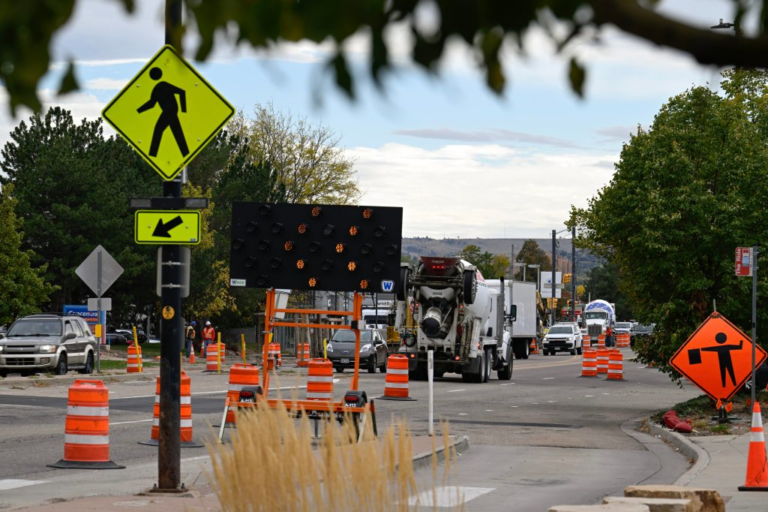
Is the third time a charm for a transportation management fee in Boulder?
The Boulder City Council is considering the fee to keep up with maintenance of roads, bridges and other infrastructure needs. The first reading was approved by the city council in its Thursday meeting on a 6-1 vote. Mark Wallach voted against is while Taishya Adams and Tara Winer absent. This is the third time the fee has been considered by the city council since a 2008 report concluded the city needed to raise revenue and diversify its revenue sources.
A study presented to the city council on Thursday estimates the fee could raise about $6.2 million in the first full year of collection for unfunded or underfunded transportation capital maintenance projects, and $6.4 million total. In 10 years, the city estimates the fee could generate more than $6.8 million. The fees apply to various private property ownership types to account for the number of trips to the property. The city has about $6.4 million in underfunded or unfunded transportation-related maintenance, the study says. That includes about $4.2 million in pavement and street safety asset management. City staffers say kicking the can down the road will only lead to higher costs.
As presented, single-family detached residents — think of a standard house — would pay around $54 per year. Multi-family attached residences, such as an apartment, would pay $42 per year. Mobile homes would be exempted from the fee.
For non-residential property owners, the fee ranges from $11 (owner of a warehouse facility) to $160 (owner of a retail property) annually per 1,000 square feet. A non-public university is subject to $7 per student. For non-public primary schools, an elementary school would be subject to $10 per student, a middle school would be subject to $9 per student and a high school would be subject to $8 per student.
The Boulder Valley School District and the University of Colorado – Boulder are not subject to this fee, but it’s possible for the city and those institutions to sign an agreement to contribute to the fund. Chris Hagelin, the principal planner at the city who presented the fee to the council, said Thursday that those conversations have not begun.
The fee would apply to people living in affordable housing, which sparked Wallach’s “no” vote and hesitation from councilmember Matt Benjamin. The memo says rebates are possible for low-income households.
In a Sunday message to the council’s email hotline, Wallach estimated that exempting residents of the approximately 2,000 units operated by Boulder Housing Partners would take out about $84,000 from the fee’s projected revenue.
“If the total deduction is more than we would care to bear, perhaps we can consider a reduced payment/unit, rather than a full deduction, as we do for several other categories against which we assess the TMF,” Wallach wrote.
Benjamin also had concerns about snow and ice response not being included in the study. City staffers said the purpose of the fee is to address capital maintenance, not operations.
There are lingering concerns from the business community, as well.
In 2008, a commission recommended a similar fee for the city, but that was never adopted. A transportation management fee was again recommended in 2019, but the COVID-19 pandemic ultimately threw it off. Much has changed since then for the business community, Boulder Chamber of Commerce CEO John Tayer said, and a fee may be too burdensome. This fee also comes at a time when the city is seeing a slowing growth in sales and use tax revenue.
Tayer acknowledged the need for transportation maintenance that the city has a need for maintenance projects, but hopes it finds a way to allocate other money in the budget to the projects.
Report says pilot error caused Centralia plane crash in July

COLUMBIA, Mo. (KMIZ)
A report from the National Transportation Safety Board indicates pilot error was the likely reason for a July 22 plane crash in a cornfield near Centralia.
The report says the pilot failed “to maintain clearance from power lines during low-level maneuvering.
Lawyer writes laws should be strengthened in trucking industry

Sarah Susman was killed in 2021 when an overloaded logging truck overturned and crushed her car.
The practice of double brokering allows trucking companies to pass shipments to other carriers, often eroding safety oversight and accountability.
The author argues that deregulation, low insurance minimums, and caps on damages contribute to preventable trucking-related tragedies.
Proposed solutions include raising minimum insurance requirements, eliminating damage caps, and holding all parties in the shipping chain accountable.
On Sept. 3, 2021, Sarah Susman left home for what seemed like an ordinary workday. A 25-year-old part-time medic and volunteer firefighter, Sarah understood the risks of her profession. However, she could never have prepared for the tragedy that unfolded on Oregon’s Highway 126. While driving along the highway, an overloaded logging truck, carelessly operated, overturned and spilled its cargo into oncoming traffic, crushing Sarah’s Toyota Prius and ending her life.
As someone who fights for justice on behalf of victims like Sarah and their families, I see these preventable tragedies all too often. In 2022 alone, 5,936 people were killed and over 160,608 injured in trucking-related crashes, according to the National Highway Traffic Safety Administration (NHTSA). These numbers don’t begin to capture the emotional and financial toll on families left behind. Trucking wrecks also take a toll on the at-fault driver and their families.
Sarah’s case is just one tragic example of systemic failures that continue to put lives at risk on our roads. Much of the danger can be traced back to the Motor Carrier Act of 1980, which deregulated the industry and paved the way for profit to take precedence over safety. Trucking companies, and shippers and companies that hire trucking companies, began cutting corners — lowering hiring standards, skimping on vehicle maintenance, failing to train drivers, and engaging in practices like double brokering.
The truck driver who killed Sarah had multiple violations, including a DUI and suspended license, yet Wolf Creek Timber continued to employ him. The company itself racked up nearly 200 safety violations before the crash and failed to implement even the most basic safety protocols. It has since ceased operations — but only after claiming Sarah’s life.
Oregon’s laws only make matters worse. The maximum award for non-economic damages, such as pain, suffering, and emotional distress, is $500,000. While no amount of money can replace a life, this figure falls far short of providing fair compensation for a family’s grief and the long-term impact of such a loss. This is a system that only deepens the wounds for families like Sarah’s, who must reconcile with the fact that those who caused the tragedy are not held fully accountable.
But it’s not just the damage caps that need changing; it’s also the practice of double brokering that continues to put our safety at risk. Double brokering occurs when a trucking company passes a shipment to another carrier without telling the original shipper or the business that hired them to transport the goods. This breakdown in the chain of custody erodes accountability, makes safety oversight nearly impossible, and allows companies with questionable safety records to operate under the radar.
Double brokering often pushes the most dangerous carriers to the front of the line, not because they’re the safest, but because they’re the cheapest. Each broker and carrier in the chain takes a portion of the fee from the shipper, leaving the company that actually hauls the load with little money to operate. In the end, the job often goes to whoever will do it for the lowest cost, and too often, those carriers cut corners and put everyone at risk.
Shipping companies and their independent contractors often hire the cheapest and most dangerous truckers and trucking companies. In Sarah’s case, R&T Logging, the broker contracted by the shipper Starker Forests, passed the job off to Wolf Creek Timber without conducting even a cursory review of its safety record. Wolf Creek had a lengthy rap sheet of significant safety violations, including employing a driver with a once suspended license and prior DUI, who ultimately killed Sarah. Had R&T initiated even a basic internet search, they would have seen these red flags. But because the freight was double brokered, that vetting never happened, and Sarah paid the price.
The legal complexity of double brokering helped R&T Logging avoid accountability for Sarah’s death. Despite testimony from R&T leadership admitting they did nothing to investigate Wolf Creek before handing its load of logs, the jury let them off the hook. That’s partly because shady brokering creates plausible deniability: companies can claim they weren’t the ones behind the wheel, even if they enabled the risk. Without greater awareness, clear enforcement, or meaningful penalties, brokers and carriers can pass the buck — literally and legally.
In Oregon, where logging trucks navigate some of the most challenging roads in the country, double brokering exacerbates the risks. When drivers and operators cut corners to save time or money, more accidents occur.
To address these issues, we need urgent changes in both local and national trucking laws. First and foremost, we must raise the minimum insurance requirements for trucking companies. The current $750,000 threshold, set over 40 years ago, is woefully inadequate given the catastrophic injuries and deaths that semi-trucks weighing in excess of 80,000 lbs. cause every day. The Truck Safety Coalition has calculated that in today’s dollars, this number should be closer to $2.6 million. Without an increase in minimum insurance, trucking companies have little incentive to invest in safety or responsible practices.
Additionally, Oregon must reconsider its damage caps. It is fundamentally unfair to place a dollar limit on a life lost or forever altered by catastrophic injury. The Susman family, and many others, deserve better. The legal system should ensure that victims receive full and fair compensation, reflective of the true cost of their losses.
Finally, it’s time to take a stand against double brokering. Lawmakers should propose reforms that allow injured parties to explicitly hold every broker or carrier in the chain financially accountable. One way to accomplish this would be amending state insurance law or the Federal Motor Carrier Safety Regulations to require that any motor carrier or broker taking part of the fee for a load (or any company that is part of the chain) be formally designated as a “motor carrier” for that load and carry the federal minimum liability coverage. This would close the loophole that allows unsafe companies to escape accountability while profiting from unsafe practices.
Until we impose stricter enforcement and raise awareness of how double brokering endangers lives, tragedies like Sarah’s will keep happening, and too often, no one will be held accountable.
Tom D’Amore, founder of D’Amore Law Group, is a personal injury attorney with over 30 years of experience in catastrophic injury, wrongful death, and complex civil litigation claims.
Trucking Industry Advised To Audit All Drivers To Limit CDL Liability

By John Gallagher of FreightWaves,
Trucking and logistics companies should be taking immediate steps to mitigate increased exposure to drivers with non-domiciled commercial driver’s licenses – including an audit of all existing employee or contract drivers, a regulations expert advises.
That advice, included in a legal alert by Greg Reed, a partner at Hanson Bridgett LLP, comes in the wake of an emergency rule issued in September by the Federal Motor Carrier Safety Administration overhauling who is eligible for a non-domiciled CDL.
“Both the regulatory language in FMCSA’s interim final rule, as well as Secretary Duffy’s remarks at the press conference announcing it, cast doubt on the legitimacy of all non-domiciled CDLs,” Reed told FreightWaves in an interview.
“If that holds true, the liability and risk has already increased dramatically for any carrier using these drivers or a brokerage that works with those carriers.”
In the alert, Reed points out that if an accident were to occur, plaintiffs’ attorneys would likely argue that logistics and trucking companies are on notice that non-domiciled CDLs may be operating unlawfully and are insufficiently qualified.
“And non-domiciled CDL holders may find their licenses revoked in real time as the DOT and SDLAs conduct audits of current non-domiciled CDLs, which could result in a driver behind the wheel who lacks a commercial license.”
Steps that both trucking and logistics companies should be taking now, according to Reed, include:
Audit all existing employee or contract drivers to determine whether any are holding non-domiciled CDLs. Logistics and brokerage companies should engage with frequently used carriers to determine the scope of their exposure to non-domiciled CDLs.
Work with legal counsel to determine how to assess whether identified employee or contract drivers have the sufficient records to demonstrate that their CDLs will not be revoked based on ongoing and forthcoming audits.
Begin a process to limit utilization of these drivers until they have their non-domiciled CDLs confirmed or renewed.
Incorporate new or reinforce existing contractual language making clear that drivers must be properly licensed, have a lawful employment status, and qualified to operate a commercial motor vehicle.
Looming capacity shakeout
The heightened restrictions now governing eligibility for a non-domiciled CDL prompted FMCSA to estimate that 194,000 of approximately 200,000 drivers holding those licenses will exit the market over two years as their CDLs become ineligible, representing roughly 5% of 3.9 million commercial drivers.
“Even though the regulatory language suggests that there will be a 5% reduction in capacity over two years, which it asserts will allow markets and fleets time to adjust, I potentially foresee capacity tightening to a greater degree over a shorter amount of time,” Reed told FreightWaves.
“While carriers are not necessarily going to let their non-domiciled CDL drivers go today, there will be pressure to immediately start phasing them out of the workforce. A carrier or broker is not going to want to expose themselves to the increased liability that comes with not knowing if these non-domiciled CDLs were validly issued in the first place.”
Some on Wall Street see the capacity attrition – and subsequent effect on rates – resulting from the CDL rule as “likely far more impactful” than the agency’s recent crackdown on English language proficiency violations.
“Capacity action, while meaningful, is mainly a late ‘26/early ‘27 tailwind for the trucking group in our view,” wrote TD Cowen transportation analyst Jason Seidl in a research note following the emergency rule announcement.
“Enforcement is unlikely to be a material help for ‘26 bid season (upcoming imminently in late ‘25/early ‘26) but could begin to firm up spot rates in time for the following ‘27 bid cycle barring a deep economic slowdown. That said, upcoming capacity attrition should be on shippers’ minds this bid season, which could lead to attempts to pull forward some bids.”
WATCH: Kristi Noem Savagely Blasts Democrats for Shutting Down the Government in Airport Public Service Announcement – Portland International Airport Refuses to Play Video

Homeland Security Secretary Kristi Noem aired a video slamming Democrats in Congress for shutting down the government at airports across America for travelers to watch while awaiting Transportation Security Administration (TSA) screening.
TSA employees are expected to miss a paycheck if the shutdown continues into next week. “As of Thursday, operations at airports have not been significantly impacted, but as the shutdown continues, sources at TSA say an increase in employees calling off work could increase and create longer wait times at airports across the U.S.,” Fox reports.
As The Gateway Pundit reported, one Senior Democrat aide even admitted that the Democrats will not reopen the government without their demands until we reach the point of “planes falling out of the sky.” This is arguably a terroristic threat in pursuit of their radical political agenda.
Democrats in the Senate, for nearly two weeks, have torpedoed seven different votes to fund the government as they demand taxpayer-funded healthcare for illegals, continued funding for leftwing PBS propaganda, and $1.5 trillion in additional spending.
Noem’s video, which played for passengers at every airport in America on Thursday, credited the Democrats for potential delays and impacts to airport security operations.
However, Portland International Airport (PDX) is reportedly refusing to show the video, amid the city’s ongoing war with the Trump Administration’s immigration crackdown and attempts to send the National Guard to Portland. A spokesperson for the Port of Portland claimed that the video violates the Hatch Act, which limits the political activities of federal employees and bars the federal government from engaging in partisan advocacy to influence an election.
It is unclear how this law applies to Noem’s accurate claim that the Democrats have repeatedly voted to shut the government down.
“Democrats in Congress refuse to fund the federal government, and because of this, many of our operations are impacted, and most of our TSA employees are working without pay,” Noem, who oversees TSA as DHS Secretary, states to her audience of passengers and TSA employees.
“We will continue to do all that we can to avoid delays that will impact your travel, and our hope is that Democrats will soon recognize the importance of opening the government.”
WATCH:
Noem: I’m Kristi Noem, the United States Secretary of Homeland Security. It is TSA top priority to make sure that you have the most pleasant and efficient airport experience as possible, while we keep you safe. However, Democrats in Congress refuse to fund the federal government, and because of this, many of our operations are impacted, and most of our TSA employees are working without pay.
We will continue to do all that we can to avoid delays that will impact your travel, and our hope is that Democrats will soon recognize the importance of opening the government.
As The Gateway Pundit reported, House Speaker Mike Johnson predicted that the Democrats will likely continue voting against reopening the government for more than another week until after a scheduled “No Kings” protest against the Trump Administration on October 18.
Congressional Democrats are catering to the radical left groups organizing the October 18 protest after they “spent weeks pressuring Democrats to shut the government down,” Johnson said in a press release.
Column: Hampton Roads Transit working to ensure future reliability
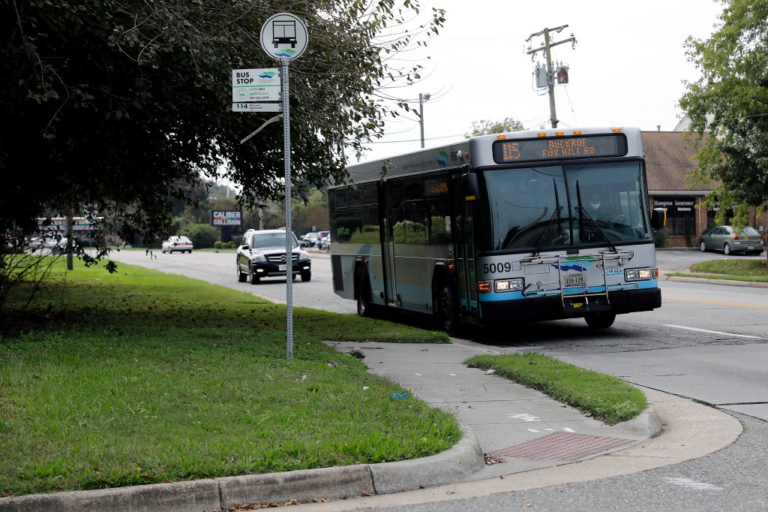
Just as roads, bridges and tunnels require attention, the region’s public transportation system needs steadfast support to keep the Hampton Roads economy moving forward.
As a partner in the success of the region and a responsible steward of public funds, Hampton Roads Transit (HRT) — created 25 years ago in the nation’s first voluntary merger of transit agencies — is recommending significant changes to ensure a reliable regional transit network in the future.
Like a private business that continually evaluates its operations and efficiency, HRT is taking steps now to address external factors that include rising operating costs, an ongoing shortage of bus operators, and stagnant or decreasing state and federal funding. We want to right-size our local bus network to match the human and financial resources needed to run a dependable and cost-effective bus operation.
One way we’re doing that is the System Optimization Plan (SOP). We’re exploring how HRT can put its limited resources to our best use by reducing low-ridership local bus service and reinvesting those savings into routes with high ridership demand.
Let’s say a local bus route carries just a handful of passengers per hour. A route serving hundreds of customers a day has the same costs as one that carries just a few, so there’s an opportunity to make local bus network adjustments to better align resources with demand.
This is why we’re exploring ways to optimize service on low-performing local routes, streamline or consolidate routes to remove duplication, realign more high-performing routes to maintain fixed-route coverage, and adjust the level of service or service type based on land use, employment density and demand.
We have been presenting our recommendations to the city councils of the six cities we serve. The cities represent 35% of our operating revenues to cover some of the costs of operating transit in their cities.
The SOP’s benefits are many:
It will enable HRT to right size our local bus network and match scheduled service to operational capacity.
It will maximize the productivity of federal, state and local investments in the transit network.
It will free up local financial resources that can be reinvested into new OnDemand ridesharing service to address transit coverage in lower-density areas.
It will reallocate enough bus operators to fully implement the remaining high-frequency 757 Express regional network, a highly used service that on average has greater ridership than local bus routes.
It addresses operator burnout and reduces the need for mandatory overtime.
In short, right sizing the bus network will enable HRT to sustainably operate a reliable service long term.
For our customers, we’ve given a lot of thought to providing transit options in areas that might see route changes. With our OnDemand ridesharing service expanding to other cities next year, we can use this new mode to fill gaps in the network where demand doesn’t exist for fixed-route bus service.
Our analysis shows that about 80% of people living within a five-minute walk of an HRT bus stop today will still be within a five-minute walk of a bus stop after the SOP recommendations are implemented.
This draft plan will be rolled out in phases following city council briefings, plan refinements, approval from our commission and implementation planning. Look for public forums where we’ll be sharing our recommendations.
HRT’s bus network has not changed much since the agency began in 1999 as a merger between Peninsula Transit and Tidewater Regional Transit, even though the service area has grown and shifted.
Transit is critical to support the regional economy, including major employment centers, military bases, the hospitality industry, the Port of Virginia and other sectors. We must ensure we’re investing in a transit network that is innovative and adaptable, so our region continues to succeed.
Ray Amoruso of Chesapeake is chief planning and development officer for Hampton Roads Transit. He has 40 years of experience in public transportation nationwide.
CDOT ends access to 136 cameras, including along I-70 corridor and mountain passes, after contract expires

The Colorado Department of Transportation has ended access to about 136 cameras from roadways across the state.
Residents in the high country often used these cameras, many of which were located on mountain passes and rural roads, to check driving conditions. This was especially helpful in the winter when snowy conditions and ski traffic impacted local commutes.
“These cameras were a really big deal for us, especially in the winter,” said Jeff Delazaro, who noticed earlier this summer that several cameras had been taken down on Berthoud Pass, which he drives regularly on his way to his place in Tabernash.
The cameras were inaccessible after the transportation department’s contract with LiveView, the company that operated the cameras, was allowed to expire in July “due to cost and contract limitations,” CDOT Major Projects Communications Manager Stacia Sellers said in an email.
The cameras no longer available include: 17 located on Interstate 70 from Vail to Frisco, five that were on U.S. Highway 40 near Berthoud Pass, four on U.S. Highway 6 near Loveland Pass, two on Colorado Highway 82 near Aspen, and three on U.S. Highway 40 near Rabbit Ears Pass, among others.
CDOT has plans to install about 69 cameras that the transportation department will own, Sellers said. But she noted that CDOT cannot guarantee that all LiveView camera sites listed in the project will be replaced, “as this depends on final design and cost estimates.”
The camera replacement project has an $8 million budget, she said. Most of the new cameras installed will only capture still frames, but if the cameras are installed near an existing fiber optic network, there could be streaming. The project started last month and is expected to be completed by October 2027.
Although transportation officials attempted to find a new company to continue third-party camera services at locations that won’t be replaced, Seller said rates were three to 10 times higher than current rates and could not meet CDOT’s requirements.
Even after the loss of these LiveView cameras, CDOT still has a little over 1,000 cameras on Colorado roads, Sellers said. In many places where cameras were removed, there is a nearby camera that remains in operation.
COTrip.org and the COTrip planner app can provide road and weather conditions for drivers, she said. That includes color-coded maps that indicate whether roads are dry, snow-packed, or icy.
Like many Colorado drivers, Delazaro said that he consults a “confluence of data” before hitting the roads, including Google Maps, Waze, COTrip.org , and CDOT cameras. While the loss of the cameras isn’t the “end of the world,” he said it was just one more data point that he and other drivers would take into consideration for safety.
“It will make it more uncertain what the road conditions are. It’ll be more like, ‘OK, I’ll find out when I get there,’” Delazaro said. “There’s been plenty of times when the road might say it’s open (on COTrip.org ) and then you go check the camera, and it’s closed, or vice versa, because there’s always a real-time lag with CDOT.”
County must decide if flooded roads go on sales tax ballot
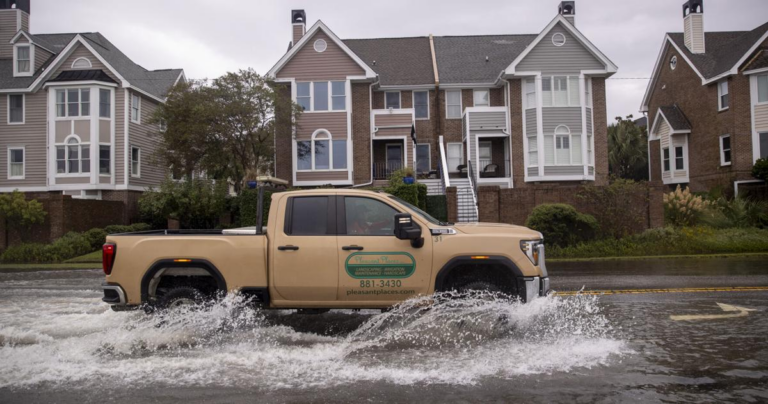
Charleston Mayor William Cogswell is asking a very good, timely — and probably controversial — question:
“People want to get to their homes, but they can’t because the road is underwater,” Cogswell explains. “All of these roads flood, and we can’t afford to fix them. How is that not a road project?”
His logic would convince many, and if not, the mayor is well-prepared to debate it … but we’re not there yet. Because first he has to convince Charleston County Council.
Mayor Cogswell and City Council are compiling a long list of projects for the 2026 transportation sales tax referendum, including major road improvements for Johns Island, James Island and West Ashley.
They’ll also ask for a portion of the $455 million the city needs for a $1.5 billion Battery extension. That’s where this gets controversial.
But Cogswell argues it shouldn’t. That money would leverage more than $1 billion in federal funds and, he says, increase the odds of leveraging more federal funds to fix flooding problems across the county.
And, truth is, the city simply can’t raise its match alone. That $455 million is what it costs to run the entire city for nearly two years.
This will no doubt be one of the biggest questions the county faces as it crafts the details for the upcoming referendum, which is critical to the Lowcountry’s infrastructure needs for the next two decades.
If the proposed sales tax fails, well, our current traffic woes will become fond memories of better times … and downtown Charleston may have to rebrand itself as America’s Venice.
Officially, county officials have said little about the city’s plan. Some have suggested support, but most remain noncommittal … and a couple outright bristle at the idea. One county official says there’s no way a seawall project gets included in the referendum.
Those folks fear any part of the Battery extension — which the city may list as Lockwood Drive improvements (that’s the part it wants to fund with sales tax money) — would become this campaign’s Interstate 526. That controversial $2.3 billion highway project is often blamed for the defeat of the 2024 transportation sales tax.
To complicate matters, county officials aren’t sure the idea’s even legal. State officials want to see the ballot wording before making a ruling, but getting to that point requires County Council’s approval.
Council has asked municipalities to submit their priorities, which is a good idea. Cogswell says it’s inspired, because cities know what their most critical needs are.
Mount Pleasant, for instance, might want greenbelt money to buy Highway 41 property that otherwise would be developed and flood the town with more traffic.
That’s a smart strategy, and highlights the complexity of all this: Transportation funds can be used to buy property, which is only tangentially related to traffic; so Cogswell plausibly reasons that fixing chronic flooding on existing roads certainly qualifies as a transportation issue.
Cogswell also contends that giving municipalities greater say in what goes on the ballot exponentially increases the odds of voters approving the sales tax.
“The burden is on us to be thoughtful and fair, and I think it will pass,” the mayor told me. “People are really hungry for something like that. Ninety percent of what people tell me they want is for us to fix traffic.”
Many of the city’s road priorities include a flooding component — around Church Creek, for instance — because flooding is one of Charleston’s biggest transportation problems. Cogswell says the peninsula is just the lowest-hanging fruit because the project is so far along. And if it’s successful, it opens the door for the city to leverage federal dollars to, say, improve Highway 17 drainage.
County Council is under tremendous pressure to get a new half-percent transportation sales tax approved before the current one expires, and giving every community a reason to support the proposal — and, as importantly, not vote against it — is unsurprisingly political.
But math dictates Charleston should be a huge part of the referendum. The state’s largest city, along with North Charleston, drives the county’s economy. As Charleston’s fortunes go, so go the county’s.
Road projects in 30 suburbs are on hold amid IDOT review into contractor with ties to Palumbo family

As the old cliche goes, there are two seasons in Chicago: winter, and road construction.
But there’s a chill over the construction season in parts of the region as 20 projects totaling more than $50 million are now on hold — with their groundbreaking likely not happening until next year or beyond — amid an ongoing, year-long dispute between the Illinois Department of Transportation and the apparent low bidder on the jobs, Builders Paving LLC.
Those projects are planned for parts of Chicago and 30 suburbs, including: Arlington Heights, Aurora, Berwyn, Bloomingdale, Broadview, Buffalo Grove, Cicero, Des Plaines, Elburn, Elgin, Elk Grove Village, Glencoe, Kenilworth, Lincolnwood, Lockport, Lyons, Maywood, Morton Grove, Niles, North Riverside, Park Ridge, Riverwoods, Rosemont, St. Charles, Schaumburg, Skokie, Stickney, Sugar Grove, Wheeling and Winnetka.
Much if not all of the work — which involved resurfacing and other infrastructure improvements — was slated to start in 2025, but now that’s probably not happening, meaning some communities will have to deal with bad pavement for a while longer.
Communities with impacted road projects
Note: Map markings are approximations of project locations.
Source: Illinois Department of Transportation
“As result of recent lettings” — bid solicitations — “the number of contracts in which Builders Paving is the low bidder but awards have not been made is now 20, valued at more than $50 million,” an IDOT spokeswoman says.
Referring to a pending lawsuit by Builders against IDOT, the spokeswoman adds, “It is likely that construction activities may not proceed on any of those projects this construction season due to the ongoing litigation and approaching winter season.”
Those projects involve more than 40 miles of roadway, records show.
Based in Hillside, Builders is allowed to bid on IDOT construction projects but the state government agency is not formalizing contracts with the company because officials say they’re still conducting an internal investigation to try to determine whether felon Sebastian “Sam” Palumbo is, or has been, secretly involved in the business.
Top Builders executives include a Palumbo daughter, Kaitlyn Palumbo Gandy, and her husband Ryan Gandy.
Sebastian “Sam” Palumbo was banned from state and federal projects after he and several other construction firms were caught up in a massive fraud case in the 1990s that revealed taxpayers, and employees, were ripped off. Palumbo, a brother and their father did prison time.
A lawyer for Builders and Palumbo has denied Palumbo has anything to do with Builders, but he’s declined to answer certain questions, including whether Palumbo helped seed the company or served in any kind of advisory role.
Builders sued IDOT this year to try to force the agency to award road contracts the company says it’s entitled to — undoing the “pause” IDOT has placed on the business.
IDOT officials countered in court filings they “received reports that Palumbo is involved in the day-to-day operation of plaintiff’s business” and are continuing their internal review.
The Builders lawsuit has gone after IDOT’s top lawyer, Michael Prater, who the company has been trying to make sit for a sworn deposition. The agency has resisted.
A court hearing is scheduled for next month.
Builders officials haven’t responded to questions in recent weeks.
In previous hearings, they’ve asserted the delays are not only harming the company — which is believed to be growing, and has done work for numerous other government agencies including Cook County’s highway department and the Illinois State Toll Highway Authority — but also depriving local towns of needed road improvements for residents.
In northwest suburban Wheeling, municipal officials completed a more-than-$3 million water main replacement project on Dundee Road on an “accelerated basis” so it would be ready in time for IDOT to break ground on a resurfacing initiative along the same stretch this past summer.
But then, the village got word from IDOT that its bid process would be moved to September and the start date on the resurfacing work would be delayed to next year, though no explanation was given.
Builders appears to have been the low bidder.
“I don’t know if there’s any correlation between their contractors and the timeline,” said Wheeling’s deputy village manager and public works director, Dan Kaup, adding that while it’s not costing the village additional money, “our residents will have to live with bad pavement for at least another year.”
LaFox Road closures begin Oct. 17 in Kane County
A portion of LaFox Road will close for a month starting Oct. 17 to allow construction crews to work on the new Bunker and LaFox roads intersection, according to the Kane County Department of Transportation.
The closure is in effect from Oct. 17 through Nov. 17.
The roadway will be closed between Dillon Field Road and 1,000 feet north of the Union Pacific Railroad tracks.
Planned construction includes large heavy equipment around the roadway shoulders and intersection.
Crews also will prepare for new Metra train station access in 2026. Work is weather dependent.
Motorists should be aware of a detour route that will include Illinois Route 38, Keslinger Road, and Peck Road once the closure begins.
Home access along LaFox Road also will be maintained. Train station commuters are encouraged to allow for additional travel time.
Motorists should expect delays, consider alternate routes and expect additional commute time. Drivers also must obey flaggers and traffic control devices, watch for construction workers and vehicles and reduce their speed.
Elon Musk vs. the regulators

Welcome back to TechCrunch Mobility, your hub for all things “future of transportation.” To get this in your inbox, sign up here for free — just click TechCrunch Mobility!
Elon Musk has never had the best relationship with regulators, often bumping up against or outright sidestepping local and state laws where his numerous companies operate.
This week has been particularly active on the regulatory front.
Musk’s tunneling and infrastructure firm The Boring Company is accused of nearly 800 violations by Nevada regulators, including digging without approval, dumping untreated water onto city streets, failing to install silt fences, and tracking dirt from construction sites onto nearby roadways, a ProPublica investigation discovered.
Then there is Tesla, which was hit with an enforcement action by California’s Department of Insurance for routinely denying or delaying customer claims despite years of warnings from the state regulator. Reminder: Tesla is an insurance provider in certain states.
Tesla also has the attention, once again, of the National Highway Traffic Safety Administration. The agency opened an investigation into Tesla’s Full Self-Driving tech after receiving reports the software caused vehicles to run red lights or cross into wrong lanes.
The NHTSA has investigated Tesla before. But this one is notable because it specifically targets Tesla’s Full Self-Driving (FSD) driver-assistance software. And Musk, as well as Tesla shareholders, have pinned the company’s future on its ability to be a leader in autonomous vehicle technology, as well as robotics and AI.
This single investigation likely won’t derail Tesla’s plans; the company just rolled out the newest version of FSD (v14). But it is another example of increased scrutiny on the technology that Tesla is trying to put front and center and raises questions about its robotaxis, which uses a version of its FSD software.
A little bird
A Wired article from July discovered that General Motors repurposed a few Chevy Bolt EVs that had been part of the shuttered Cruise robotaxi program and was driving them on select highways in Michigan near Austin, Texas, and the San Francisco Bay Area to develop simulation models and new driver-assistance technology.
Now it seems that General Motors might be moving forward with its autonomous vehicle development but in potentially surprising ways. When GM absorbed Cruise in December 2024, it said it would combine Cruise’s tech with its own ADAS efforts to develop fully autonomous personal vehicles.
We’re hearing chatter here and there that GM is building out an AV team across Austin and Mountain View. This comes just a couple months after GM started rehiring laid-off Cruise employees, per Bloomberg.
We’re poking around and if you know anything, reach out.
Got a tip for us? Email Kirsten Korosec at kirsten.korosec@techcrunch.com or my Signal at kkorosec.07, or email Sean O’Kane at sean.okane@techcrunch.com.
Deals!
Joby Aviation sold 30.5 million shares to raise about $514 million, money that the company said would be used to fund certification and manufacturing efforts and prepare for commercial operations, as well as for general working capital and other general corporate purposes. The company plans to start carrying passengers in its electric vertical takeoff and landing aircraft in Dubai in 2026, followed by the United States.
Investors didn’t react too favorably, though, because shares went for a discount. Under the deal, they sold for $16.85 per share, nearly 11% lower than the previous close.
Other deals that got my attention this week …
I forgot this one last week. Futurail, a European startup developing an autonomy stack for self-driving trains, raised €7.5 million in seed funding co-led by Asterion Ventures and Leap435, joined by EIT Urban Mobility and U.S. investors Zero Infinity Partners and Heroic Ventures. Side note: The Autonocast, a podcast I co-host, recently had Alex Haag, CEO and co-founder of Futurail, on the show. Take a listen.
Nexcade, a London-based startup developing end-to-end automation for freight forwarders, raised $2.5 million in a pre-seed round led by Connect Ventures. MMC Ventures, Entropy Industrial Capital, and Inovia also participated.
Toyota and Metal Mining have struck a deal to work together on the mass production of cathode materials for all-solid-state batteries to be installed in battery electric vehicles.
Tycho AI, an autonomous drone navigation startup, raised $10 million in a Series A round led by FirstMark.
Utilimarc, a Minneapolis-based fleet analytics and benchmarking company, was acquired by Smith System. The terms were not disclosed.
Notable reads and other tidbits
California governorGavin Newsom signed a bill that gives Uber and Lyft drivers in the state the right to unionize as independent contractors.
Just last week, we featured DoorDash’s efforts to build its own autonomous delivery robot. But that internal program isn’t stopping the company from outside partnerships. DoorDash and Serve Robotics announced a multi-year partnership that would see them using autonomous robots to make deliveries across the United States.
Lucid delivered a record number of EVs in the third quarter. While it’s still nowhere near the projections it shared back when it was going public, the recent sales report does show progress.
Lyft has locked in another AV partnership — this time with Tensor Auto. The plan, the companies said, is to deploy robotaxis in Europe and North America starting in 2027. Tensor Auto might not sound familiar, but Chinese robotaxi company AutoX might. Tensor Auto’s roots are from AutoX, although the San Jose-based company has told TechCrunch in the past that AutoX’s Chinese operations were fully divested.
Transportation includes infrastructure like bridges. Climate tech reporter Tim De Chant looked into Allium Engineering, a startup developing paper-thin stainless steel that could change how bridges are built.
Tesla revealed bare-bones versions of the Model 3 and Model Y, which start at $36,990 and $39,990, respectively. These “standard” versions are pretty stripped down. Senior reporter Sean O’Kane provides more detail here.
A few things jumped out at me. For one, I was surprised this standard version doesn’t include Autopilot. Also, Tesla is really known for innovating, from its manufacturing process and software-first approach to its business model. But this wasn’t an act of innovation or even cleverness. It was merely stripping away — and the end result wasn’t the deep discounts that had been previously touted. Remember, Elon Musk was once pushing a $25,000 vehicle, a program that was later scrapped.
Zero Motorcycles has moved its key operations from California to a new European headquarters in the Netherlands. The company told TechCrunch the move is designed to accelerate growth and sharpen focus on global opportunities.
One more thing …
If you’re in San Francisco later this month, come say hello. I’ll be at TechCrunch Disrupt 2025, which will be held October 27 to October 29 at Moscone West. And there are a few transportation-related talks you won’t want to miss.
How do top US electric vehicle models stack up globally?

As the race to develop artificial intelligence that rivals human cognition heats up across China, Europe and the U.S., a similar competition is unfolding in the electric vehicle industry.
Automakers like Tesla, BYD and Volkswagen are competing for consumers in the growing global transportation market with features like double-laminated glass, sustainable materials, tray tables and a frunk — a front trunk.
Each region brings its own approach. China’s top EV models blend affordability with tech, European EVs blend sustainability and refinement, and the U.S. emphasizes performance and luxury at scale.
Chinese EV standouts
While not available for purchase in the U.S. due to trade restrictions, Chinese electric automakers emphasize the latest technology while maintaining affordability.
BYD Dolphin
The electric hatchback prioritizes affordability, with the European market price starting at €22,900, or $26,701, for the 200-mile range batteries. The cost is €26,207, or $29,138, for vehicles with 315-mile range.
The EV’s design mimics “ocean aesthetics,
Helicopter pilot in Huntington Beach crash is famous for his daring stunts

The pilot whose helicopter spun out of control and crashed into a Huntington Beach pedestrian bridge on a busy Saturday afternoon is an aviation influencer famous for his daring stunts.
Eric Nixon was piloting the helicopter when it crashed, his father-in-law, Jerry Miller of Redlands, confirmed in a brief interview on Saturday night.
“He’s in the hospital with some broken ribs, crushed vertebrae and several bruises,” Miller said.
The National Transportation Safety Board is investigating the cause of the crash. Videos circulating online showed a potential problem with the tail rotor, which appeared to be ejected as the helicopter lost control.
“Eric Nixon – a self-styled aviation enthusiast known to thousands online for his heart-stopping stunts – has spent years posting footage of himself performing jaw-dropping maneuvers across the skies of the American West,” the Daily Mail reported late Saturday night.
“His Instagram account is filled with adrenaline-pumping clips of low-altitude dashes, tight turns, and desert skims … in one recent post, Nixon can be seen hurtling across a desert floor barely 20 feet above ground level with a truck speeding toward him from the opposite direction,” the Mail wrote.
Many of Nixon’s videos, the report continued, feature him “threading between palm trees, banking over beaches, or roaring past friends on dirt buggies in the Baja Nevada desert, often sometimes just feet from the ground.”
In addition to Nixon and another person in the helicopter with him, a child and two adults were injured on the ground. All five were hospitalized. Officials have not released their names or details about their injuries.
A GoFundMe is seeking donations to help the family of Oliver Holland, a boy who was “enjoying a day at the beach when suddenly a helicopter malfunctioned and came crashing down on him.
“He is currently in the hospital receiving surgery; he has a collapsed lung and brain bleed. We are praying for a safe recovery …” the GoFundMe says.
The crash occurred at 2:09 p.m. on the 21000 block of Pacific Coast Highway in a beach parking lot between Twin Dolphins Drive and Beach Boulevard.
The chopper was a 1980 Bell 222 helicopter that took off from Redlands Municipal Airport, the Aviation Safety Network reported.
Videos from the scene, including many taken by bystanders at the beach, showed the helicopter spinning until it wound up lodged in palm trees near a hotel where the Waterfront Beach Resort and Hyatt Regency Huntington Beach Resort and Spa are located.
A “helicopter landing party” preview to Sunday’s Cars ‘N Copters on the Coast event was taking place in the beach parking lots in front of the hotels.
Car ‘N Copters is going on as planned on Sunday.
5 hurt in Huntington Beach helicopter crash caught on video
IL lawmakers could address energy, transit, during veto session

The revised regional transit fiscal cliff is estimated to be around $300 million, down from $770 million during the spring and summer.
State Sen. Willie Preston, D-Chicago, said nobody likes taxes.
“But I think everything is on the table right now. I just want to make sure we don’t burden working class and poor people more than we already have,” Preston told The Center Square.
When asked Friday at an unrelated event in Hickory Hills, Gov. J.B. Pritzker did not say if he would approve potential tax hikes.
Lawmakers may revisit a bill Pritzker vetoed. Senate Bill 246 would allow the state treasurer to set up an investment pool for nonprofits.
In his veto message, the governor said the measure would allow fringe and extremist groups to benefit from Illinois’ financial investments.
Illinois State Treasurer Michael Frerichs disagreed and promised to discuss potential next steps with lawmakers.
“I strongly disagree with the governor’s misguided belief that hate groups would use a state investment pool,” Frerichs said in a statement provided to The Center Square in August.
Energy legislation is expected to be a top priority during veto session after lawmakers held hearings on various energy-related issues in recent weeks.
Pritzker blamed Illinois’ high energy prices on President Donald Trump removing taxpayer subsidies for solar and wind. He also pointed the finger at regional grid operators PJM and MISO.
“They are not bringing online those solar and wind projects that are already completed and ready to go,” Pritzker said.
The governor did not say whether he would consider relaxing the state’s decarbonization mandates which Republicans say have caused energy bills to rise across Illinois.
Preston said he wants the state to broaden its energy portfolio to include battery storage, but he expressed concern about the cost. Another line item on a utility bill could crush working-class people, he said.
“I am a hard ‘no’ as of right now on an energy omnibus until we can address the issue of raising rates on ratepayers and taxpayers,” Preston said.
The General Assembly is scheduled to meet this Tuesday through Thursday, Oct. 14-16, and again Oct. 28-30.
$132.7 million contract awarded for next part of I-83 Capital Beltway Project
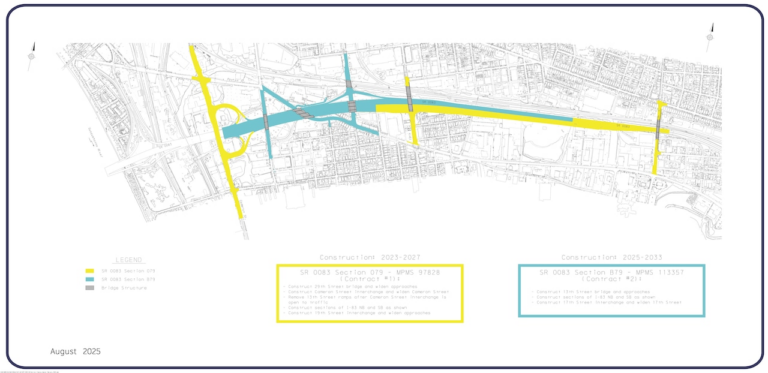
Even though the U.S. has a stark shortage of air traffic controllers, ones who call in sick instead of working without a paycheck during the federal government shutdown risk being fired, the U.S. transportation secretary warned.
Transportation Secretary Sean Duffy said this week that he understands the controllers’ frustrations and worries. But during an appearance Thursday on Fox Business, he said that by calling in sick they are causing major disruptions to air traffic, and it won’t be tolerated.
“If we have some of our staff that aren’t dedicated like we need, we’ll let them go,” Duffy said, noting that more than 90% of controllers have been showing up to work during the shutdown.
Air traffic controllers who duck unpaid work during the gov’t shutdown could be fired, Duffy warns
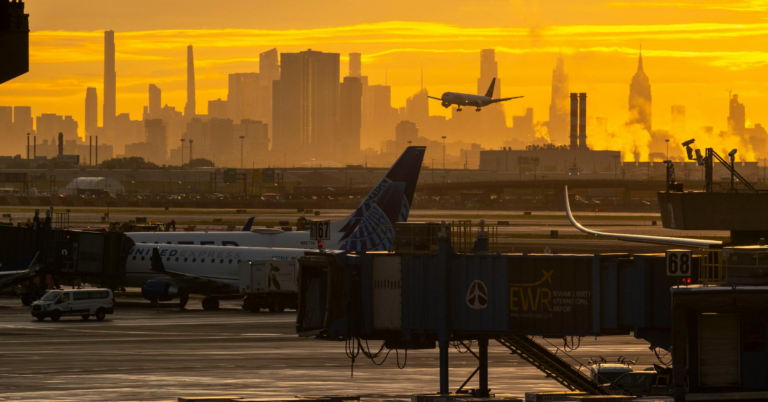
The Pennsylvania Department of Transportation has awarded the second contract for the East Shore section three, part of the massive Interstate-83 Capital Beltway project.
The contract was awarded to J.D. Eckman of Atglen, Chester County. The company submitted a low bid of $132,727,725.31. PennDOT said three companies submitted bids.
East Shore section three “includes widening and reconstructing I-83 from two lanes to three lanes in each direction, construction of new collector-distributor lanes in each direction, reconstructing and widening of two I-83 mainline bridges …”
Also included in the project is a new 13th Street bridge, reconstruction of the 17th Street interchange, widening of 17th Street and a new, wider 17th Street bridge over the railroad as well as “realignment and improvements along the Paxton Steet corridor” that includes retaining walls, overhead signs, guiderails and lighting.
Construction is expected to begin this fall and continue through 2033.
The first contract for East Shore section three is currently being executed. That $154.6 million contract is held by New Enterprise Stone and Lime Company of New Enterprise. All work on that contract is expected to be completed by Oct. 12, 2027.
The work in the New Enterprise contract, PennDOT said, “includes widening and reconstructing portions of the I-83 roadway, construction of overhead bridges at 29th Street and 19th Street, construction of the new Cameron Street Interchange, removing the 13th Street interchange, and roadway improvements along the Cameron Street, 19th Street and 29th Street corridors.”
PennDOT said East Shore section two of the project will include five contracts and is expected to begin in 2028.
The entire project, according to PennDOT, is estimated to be completed around 2040.
East Shore section two two “includes widening I-83 from just south of the Union Deposit Interchange to 29th Street and includes the reconstruction of the Eisenhower Interchange and portions of US 322, I-283, and Eisenhower Boulevard …”
Arkansas partners with Quarterhill to modernize freight checkpoint operations for $2.7M
Even though the U.S. has a stark shortage of air traffic controllers, ones who call in sick instead of working without a paycheck during the federal government shutdown risk being fired, the U.S. transportation secretary warned.
Transportation Secretary Sean Duffy said this week that he understands the controllers’ frustrations and worries. But during an appearance Thursday on Fox Business, he said that by calling in sick they are causing major disruptions to air traffic, and it won’t be tolerated.
‘’If we have some of our staff that aren’t dedicated like we need, we’ll let them go,’’ Duffy said, noting that more than 90% of controllers have been showing up to work during the shutdown. “… It’s a small fraction of people who don’t come to work. They can create this massive disruption. And that’s what you’re seeing rippling through our skies today.’’
Airports across the country have experienced delays this week because of a shortage of controllers, more than half of which Duffy attributed to work no-shows. The worst problems have come at smaller airports in Burbank, California, and Nashville, Tennessee, but there have also been delays at major hubs in Newark, New Jersey, Chicago, Denver and Dallas-Fort Worth.
Even a small number of controllers not showing up for work is causing problems because the Federal Aviation Administration has a critical shortage of them. Duffy has made it a priority to increase hiring to try to eliminate the shortage in the next few years, but he said controllers who are ‘’problem children’’ could still be fired.
A Transportation Department spokesperson reinforced that message in a statement Friday, saying, ‘’if there are rare bad actors that don’t show up purposefully and cause disruptions to our operations, consequences are inevitable.’’
‘’We must be clear. NATCA does not condone a coordinated activity that disrupts the national airspace system or damages our reputation. Such actions are illegal. Risk your careers and destroy our ability to effectively advocate for you and your families,’’ Mick Devine, the union’s executive vice president, said in a video to members.
Like other affected federal workers, controllers are worried about how they will pay their bills during the shutdown when they won’t get paychecks. Duffy and the union’s president have acknowledged the unfairness of their situation, which only adds more stress to their already stressful jobs.
NATCA President Nick Daniels said controllers might have to take time off to work a second job just to make ends meet during the shutdown. But Duffy said that right now, he thinks the controllers who are missing work are ‘’lashing out’’ in frustration.
‘’It’s going to eventually be that when people don’t have money, they have time to start making life choices and life decisions. And it shouldn’t be waiting for air traffic controllers to break because of having to take out loans, credit card debt, paying bills, gas, groceries, mortgages. Those things aren’t going to stop,’’ Daniels said.
Flight disruptions caused by controllers missing work might add to the pressure on Congress to reach an agreement to end the shutdown. That’s what happened in 2019, but so far Democrats and Republicans have shown little sign of getting close to ending their standoff.
Anthony Souffle/The Minnesota Star Tribune
The letter released Friday counters an earlier letter from others who want to comply with a federal demand to ban transgender athletes in girls sports.
State Highway Administration prepares for weekend nor’easter that could hit Maryland
The Arkansas Department of Transportation has confirmed a new project with Quarterhill Inc. and the Arkansas Highway Police, aimed to modernize and improve sorter systems at two freight entry points into the state.
The initiative, which will cost $2.7 million, will deploy an advanced sorter system near exit 271 at Lehi on Interstate 40 just west of West Memphis and at Marion on Interstate 55.
A transportation department spokesperson said the project is being funded by a $2.1 million federal grant, with the rest of the balance funded by the department.
The new system includes an integrated suite of artificial intelligence-driven and sensor technologies that will streamline inspection, improve safety and keep commerce moving efficiently through the state.
Arkansas Highway Police Chief Jeff Holmes said the partnership allows for cutting-edge tools to be used at two of the most important state freight gateways.
Expect six weeks of single-lane closures on I-69 in Genesee County
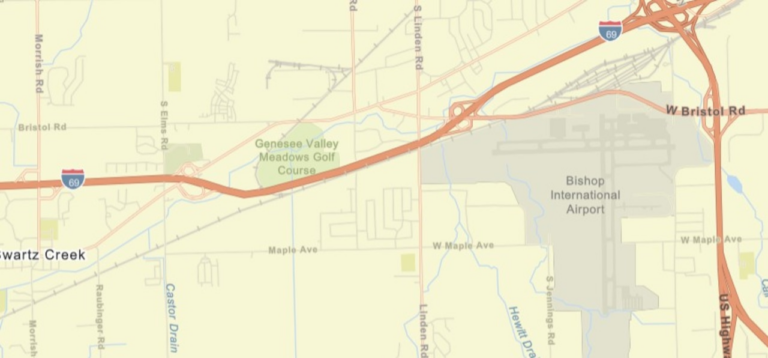
GENESEE COUNTY, MI — Drivers heading east or west on I-69 in Genesee County could face slowdowns during the next six weeks because of single-lane closures by the Michigan Department of Transportation.
MDOT said in an advisory that the closures are expected to start on Wednesday, Oct. 15, and continue through Nov. 26 between I-75 and Morrish Road.
The closures are needed to build crossovers ahead of $33.3 million in bridge improvement work that’s expected in the area during the next two years, according to the announcement.
MDOT said repairs and upgrades are planned on 15 structures in the construction area as well as two structures near Sheridan Road (M-13) in Shiawassee County.
Expected to begin in early 2026 and to continue through October 2027, the expected work includes shallow and deep overlays, partial deck replacements, steel repairs, guardrails and approach work, according to the agency.
MDOT said additional traffic restrictions for the project will be announced in the future.
Governor signs bill to spur housing near public transit
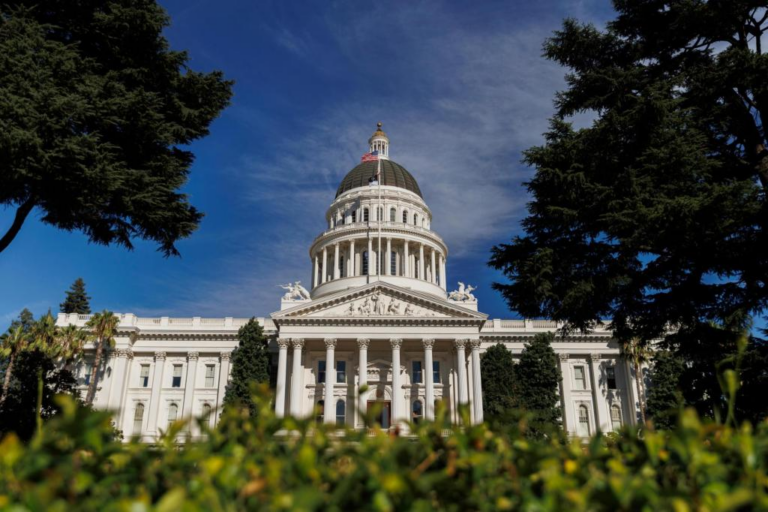
Gov. Gavin Newsom signed a Bay Area lawmaker’s bill Friday aimed at spurring more housing development near public transit.
Senate Bill 79 by Sen. Scott Wiener, a San Francisco Democrat, allows taller housing developments near major transit hubs, aiming to create much needed housing and boost transit ridership.
“For too long, California has poured billions into transit without building the housing density needed for those systems to reach their potential,” Newsom wrote in a signing statement. “SB 79 helps change that by focusing more homes near rail stations — boosting ridership, cutting traffic and pollution, lowering household costs, and expanding access to jobs, schools and services.”
Wiener, who had seen two prior attempts at similar legislation fail to pass out of the Legislature and struggled through multiple amendments and dealmaking with colleagues to get this version passed last month, described the signing as a “historic step.”
“In California, we talk a lot about where we don’t want to build homes, but rarely about where we do — until now,” Wiener said in a statement. “It’s been a long road to tackle these decades-old problems, but thanks to Governor Newsom’s leadership, today marks a new day for affordable housing and public transportation in California.”
The new law was supported by the Bay Area Council, a business-sponsored, public-policy advocacy organization. Housing affordability and traffic congestion have been major hurdles for Bay Area companies to attract talent to the region.
“By signing this measure, Governor Newsom is making housing in California more affordable and the Bay Area a more attractive place to live and start a business,” said Bay Area Council President and CEO Jim Wunderman.
But the legislation also had critics, who argued it would weaken local authority over land-use planning.
To neutralize opposition from a powerful trade union, Wiener agreed to require union labor on any building taller than 85 feet. To placate tenant groups, the senator added protections for low-income neighborhoods. And to win over suburban lawmakers, he narrowed the bill’s reach to counties with more than 15 major transit stations, leaving out places like Marin and Contra Costa counties. Currently, it applies to only seven counties within the state: Alameda, San Francisco, Santa Clara, San Mateo, Sacramento, Los Angeles and San Diego counties. Orange County will be included after completion of a streetcar project next year.
Even with those concessions, the legislation had critics and barely garnered enough votes to pass. Sen. Aisha Wahab, a Democrat from Fremont, opposed it because she felt it favored developers without requiring them to provide enough affordable housing.
Wiener and Newsom insisted the new law provides enough safeguards to preserve local land use authority.
“Far from limiting local control, the bill strengthens it,” Newsom said in his signing message. “Cities and counties can craft their own alternative plans tailored to their communities or build on existing local policies, so long as they meet the baseline housing capacity required by this measure.”
Stay In LA Suggests Permit Reforms To Bolster Production

A group of campaigners looking to bolster production across Los Angeles have unveiled a set of reforms that they hope will make the city more “film-friendly”.
Stay in LA has released eight “targeted” permitting reforms spanning fire, police, recreation & parks, Department of Transportation and the City Council that would help reduce costs for small and mid-sized productions.
“They address unnecessary costs, outdated rules, and structural inefficiencies. Together, these changes would make Los Angeles more film-friendly, while maintaining public safety and community balance,” the group noted.
The recommendations come from 50 hours of StayinLA’s on-the-ground research and conversations with location managers, city departments, key staffers from the Mayor’s and City Council offices, and FilmLA.
They noted that while the major studios can “absorb” the permitting costs, smaller productions can’t, which does have a knock-on effect across the industry. They also point to the fact that smaller productions often help develop the “next generation of crew, producers, and creative talent”.
The recommendations comes after West Hollywood began exploring lowering or waiving fees altogether to attract more production and see if volume offsets the loss and a new state tax credit system is poised to bring more work back to California.
This campaigned was supported by Julie Plec, Nick Antosca, Pamala Buzick Kim, Noelle Stehman, Cale Thomas, Zack Pulliam, Christopher Sadler, Cori Glazer, A.J. Del Cueto, Rufus Burnham, Meiyee Apple Tam, Michael Sucsy, April Jones, Wes Bailey, Diego Mariscal, Christopher Racster, James Babbin, Ron Lydick and Adrian Casas.
RECOMMENDATIONS:
Fire (LAFD)
1. 1-Year Pilot: Waive Spot Check Fee for Low-Impact Shoots
Run a 1-year pilot waiving the spot check fee for low-impact shoots, defined as productions with 20 or fewer people and no pyrotechnics, special effects, or drones. Despite its name, this fee is not a safety inspection but a cost-recovery charge for labor and materials required to review fire-related activity. Waiving it would reduce barriers for smaller productions while allowing the City to measure impact and volume.
2. Ensure Leadership Continuity in the LAFD Film Unit
Unlike LAPD and Recreation & Parks, where staff remain in place for years and build deep expertise and relationships, LAFD rotates the Film Unit captain every three years under union rules. This turnover erases institutional knowledge, disrupts relationships, and leads to inconsistent policy enforcement. The City should explore transferring day-to-day Film Unit responsibilities to a civilian employee under the direction of a sworn Fire Captain, ensuring both safety and continuity over time.
Police (LAFD)
3. Create a Standing Process to Revisit and Remove Outdated Restrictions
LAPD and FilmLA maintain internal restrictions on locations when areas become unsafe or overloaded with filming. These are different from special conditions, which require Council action. These restrictions are intended to be flexible and removable, yet they are only revisited sporadically. The City should require LAPD and FilmLA to conduct regular reviews of restrictions tied to a clear timeline, where they must either be renewed with justification or automatically expire. The Mayor’s Film Liaison office should ensure this process happens consistently.
Recreation & Parks (RAP)
4. 1-Year Pilot: Waive Location Fees for Low-Impact Shoots
Run a 1-year pilot eliminating location and parking fees for low-impact shoots to measure impact and volume. Work with RAP to define what qualifies as low-impact (e.g. 20 or fewer crew members and no pyrotechnics, special effects, or drones, which is how Mountains Recreation and Conservation Authority defines low-impact).
5. 1-Year Pilot: Waive Admin Fee for Special Facilities
Run a 1-year pilot eliminating the $150 RAP admin surcharge added on top of already higher fees for special fees to measure impact and volume.
Department of Transportation (DOT)
6. Posting Requirements: Align with State Minimum of 24 Hours
DOT requires 48 business hours for posting, even though the state only requires 24. DOT argues this gives the community more notice, but because weekends don’t count and DOT staff hours differ from standard office hours, the 48-hour rule creates unnecessary delays. Aligning with the 24-hour state minimum would still balance community use while reducing permitting friction.
7. 1-Year Pilot: Waive Lane Closure Fee for Low-Impact Shoots
Run a 1-year pilot eliminating lane closure fee for low-impact shoots. Work with DOT and LAPD to define what qualifies as low-impact (e.g. 20 or fewer people and no filming activity on the street). This would reduce barriers for smaller productions while allowing the City to measure impact and volume.
Los Angeles City Council
8. Create a Standing Process to Revisit and Remove Outdated Special Conditions
Special conditions set by council members often remain long after the original issue has passed, limiting production without improving community outcomes. The City should require regular review of these conditions with FilmLA at set intervals –for example, midway through each councilmember’s term every two years. Reviews should ensure special conditions reflect a balance between community needs and production, rather than one-off complaints. FilmLA, in coordination with City Council, should also be tasked with standardizing conditions across districts and making clear commitments so that new special conditions are rarely needed.
Air traffic controllers who avoid unpaid work during gov’t shutdown could be fired
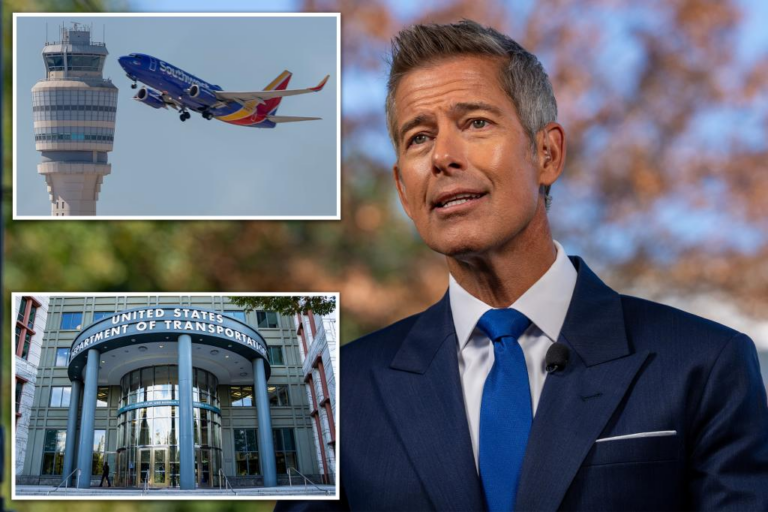
Even though the U.S. has a stark shortage of air traffic controllers, ones who call in sick instead of working without a paycheck during the federal government shutdown risk being fired, the U.S. transportation secretary warned.
Transportation Secretary Sean Duffy said this week that he understands the controllers’ frustrations and worries.
But during an appearance Thursday on Fox Business, he said that by calling in sick they are causing major disruptions to air traffic, and it won’t be tolerated.
“If we have some of our staff that aren’t dedicated like we need, we’ll let them go,” Duffy said, noting that more than 90% of controllers have been showing up to work during the shutdown.
“… It’s a small fraction of people who don’t come to work. They can create this massive disruption. And that’s what you’re seeing rippling through our skies today.”
Airports across the country have experienced delays this week because of a shortage of controllers, more than half of which Duffy attributed to work no-shows.
The worst problems have come at smaller airports in Burbank, California, and Nashville, Tennessee, but there have also been delays at major hubs in Newark, New Jersey, Chicago, Denver and Dallas-Fort Worth.
Even a small number of controllers not showing up for work is causing problems because the Federal Aviation Administration has a critical shortage of them.
Duffy has made it a priority to increase hiring to try to eliminate the shortage in the next few years, but he said controllers who are “problem children” could still be fired.
A Transportation Department spokesperson reinforced that message in a statement Friday, saying, “if there are rare bad actors that don’t show up purposefully and cause disruptions to our operations, consequences are inevitable.”
The controllers’ union, the National Association of Air Traffic Controllers, has also stressed that members need to keep working during the shutdown.
“We must be clear. NATCA does not condone a coordinated activity that disrupts the national airspace system or damages our reputation. Such actions are illegal. Risk your careers and destroy our ability to effectively advocate for you and your families,” Mick Devine, the union’s executive vice president, said in a video to members.
Like other affected federal workers, controllers are worried about how they will pay their bills during the shutdown when they won’t get paychecks.
Duffy and the union’s president have acknowledged the unfairness of their situation, which only adds more stress to their already stressful jobs.
NATCA President Nick Daniels said controllers might have to take time off to work a second job just to make ends meet during the shutdown.
But Duffy said that right now, he thinks the controllers who are missing work are “lashing out” in frustration.
“It’s going to eventually be that when people don’t have money, they have time to start making life choices and life decisions. And it shouldn’t be waiting for air traffic controllers to break because of having to take out loans, credit card debt, paying bills, gas, groceries, mortgages. Those things aren’t going to stop,” Daniels said.
Flight disruptions caused by controllers missing work might add to the pressure on Congress to reach an agreement to end the shutdown.
That’s what happened in 2019, but so far Democrats and Republicans have shown little sign of getting close to ending their standoff.
Editorial cartoon: Rainbow crosswalks

The latest from our opinion pages:
Editorial | Abbott’s order to remove rainbow crosswalks isn’t about political neutrality
Commentary | Wilonsky: Dallas radio icon Bo Roberts offers the goodbye he wasn’t allowed to say on air
Advertisement
Commentary | De Vinck: What is AI doing to our imperfect humanity?
Submit a letter to the editor
We welcome your thoughts in a letter to the editor. See the guidelines and submit your letter here.
If you have problems with the form, you can submit via email at letters@dallasnews.com.
ex.co script has been added to the page
1000 employees out of work as flatbed operator files for bankruptcy

Background of the Company’s Financial Troubles
According to internal communications shared by employees, Montgomery Transport’s financial troubles began unfolding earlier this year. In June 2025, the company’s principal owner, One Equity Partners, reportedly decided to exit the trucking industry and sell the company. By July 2025, P and S Transportation had begun due diligence to purchase Montgomery Transport, with a planned closing date of September 30.
However, on September 26, a lawsuit and restraining order filed by Rollins Montgomery reportedly halted the sale process. With the traditional purchase agreement derailed, the company attempted to proceed with the sale through Chapter 11 bankruptcy proceedings. By October 8, the situation deteriorated further when creditors failed to reach consensus terms, forcing the company to convert to Chapter 7 bankruptcy and shut down operations completely.
Financial Provisions for Affected Employees
In its communication to drivers, Montgomery Transport has stated that payroll is being protected for work already performed. Drivers currently delivering loads have been instructed to complete those deliveries with assurances they will be compensated. The company directed drivers near the Birmingham terminal to return there, while those closer to their homes were told to return home and await further instructions. Despite these provisions, the sudden closure leaves significant uncertainty regarding final payments, benefits, and other employment-related matters.
Emotional Impact and Community Response
The announcement has had a profound emotional impact on employees. One employee shared: “It’s an emotional day as Montgomery Transport is out of business effective immediately, asking for prayers as hundreds of drivers and office employees are now without a job today.” Another stated: “I poured my heart and soul into that company. I love the truck industry. I love my truck driver buddies. I’m sorry, and I’m heartbroken.”
The trucking community has responded quickly, with competing carriers reaching out to displaced drivers with employment opportunities. Several companies have specifically directed their recruiting departments to contact former Montgomery Transport drivers, recognizing the skilled workforce suddenly available in the market.
The sudden closure of Montgomery Transport represents not only a business failure but a significant disruption for hundreds of families. While truck drivers may find new opportunities due to their specialized skills, office staff and support personnel face a more challenging job market. The collapse highlights the fragility of transportation companies in today’s economy and the ripple effects when such operations cease. As the situation continues to develop, the focus remains on supporting the displaced workers while the legal and financial aftermath of the bankruptcy unfolds in the weeks ahead.
Insurance Companies Likely to Take Hard Stance on Non-Domiciled CDLs
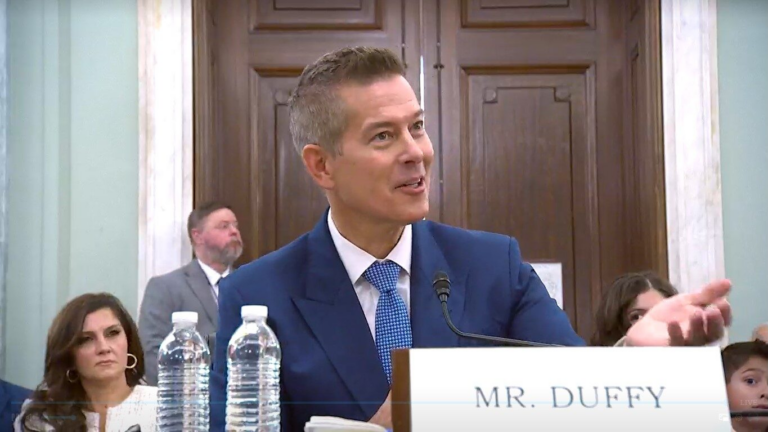
Potential Liability for Brokers
The implications extend beyond just the carriers themselves. The same insurance executive warned that freight brokerages utilizing motor carriers known to hire non-domiciled CDL holders could potentially face legal culpability. Plaintiffs’ attorneys may target brokers as well as carriers in lawsuits involving accidents with non-domiciled CDL drivers.
Several carriers have already reported increased scrutiny from their insurance providers.
One fleet executive commented that his insurance renewal was more stringent than prior periods, demanding:
Pictures of drivers’ licenses
Verification that driver domiciles match their CDLs and business entity
Clean MVRs (Motor Vehicle Records)
Correct address information on payment documentation
Signed statements confirming certain previously leased drivers would not be affiliated with the company
Damian Gunjak, a trucking fleet executive, confirmed this trend: “Our captive provider already told us as much this year. A non-issue for us since we don’t hire unqualified, inexperienced drivers.”
Expert Recommendations for Risk Mitigation
Greg Reed, a partner at Hanson Bridgett LLP, advises that both trucking and logistics companies should take immediate steps to mitigate increased exposure to drivers with non-domiciled CDLs. His recommendations include:
Conducting a comprehensive audit of all existing employee or contract drivers to identify those holding non-domiciled CDLs
Engaging with frequently used carriers to determine the scope of exposure to non-domiciled CDLs
Consulting with legal counsel to assess whether identified drivers have sufficient documentation to demonstrate their CDLs will not be revoked in ongoing audits
Implementing processes to limit utilization of these drivers until their non-domiciled CDLs are confirmed or renewed
Incorporating or reinforcing contractual language specifying that drivers must be properly licensed, have lawful employment status, and be qualified to operate commercial vehicles
Real-Time Risk and Coverage Concerns
Industry experts highlight a particularly concerning scenario: non-domiciled CDL holders may find their licenses revoked in real time as the Department of Transportation and state driver’s licensing agencies conduct audits. This could result in a situation where a driver behind the wheel suddenly lacks a valid commercial license.
According to Trucking Made Successful, “Many insurance companies will now be taking a very close look at the CDLs of drivers listed on the policy. According to several insurance agents, insurance companies are looking to deny coverage in cases of non-domiciled CDLs.”
The reasoning is straightforward: under the new rule, if a state becomes aware that a limited-term CDL holder no longer qualifies under the updated regulations, that license must be downgraded. With downgrades already occurring, insurance companies are understandably reluctant to insure drivers whose credentials could become invalid at any moment.
As the industry adapts to these new realities, carriers and brokers who proactively address these compliance issues will be better positioned to avoid both legal and insurance complications in the rapidly evolving regulatory landscape.
How Will Brokers Know About the Driver’s Status?
This is a big question that everyone is asking. If the broker isn’t aware of the legal status of a truck driver, how can they be held accountable? This might require additional screening or strict policies in carrier vetting for freight brokers.
Even if the freight broker lacks the knowledge or awareness of the driver’s validity or credentials, in the event of a major truck accident, the broker might be caught defending a potential nuclear lawsuit.
As my father, the founder of mega-fleet US Xpress, once told me, “In the court system, it’s not what you know that matters. It’s what a jury believes that you should have known that gets you in trouble. This is how nuclear lawsuits are often won against truckers in court.”
Sean Duffy to Newsmax: Dems Should Support Americans, Not Illegals
Transportation Secretary Sean Duffy told Newsmax on Thursday the shutdown shows that Democrats want to inflict pain on the American people.
Appearing on
Study links ELP violations to unsafe motor carriers

Using roadside inspection data from May 1 through September 21, the study found that inspections with an ELP violation had 2.5 times the number of total non-ELP violations relative to a comparison group, and almost 3 times the rate for the most egregious driver violations.
Carriers with ELP violations, the study found, have “bad” safety scores as measured by FMCSA. Bad scores were especially true for the vehicle maintenance and unsafe driving categories, where average carrier scores would often be in “alert” status as defined by FMCSA, which indicates a serious violation was found.
The study also revealed a “steady uptick” in enforcement in June and July, following President Trump’s April executive order cracking down on English language requirements for truck drivers – but not everywhere: California basically ignored the order, the research found, with state inspectors there citing fewer ELP violations after the order was issued compared to before.
In fact, ELP violations were found at “vastly different rates across states,” the report notes, as well as when comparing federal with state inspectors, with federal inspectors reporting ELP violations at much higher rates. Rates of ELP violations on the federal level were more than 3.5 times that of Wyoming, the state with the highest rate.
Safety ratings of carriers with ELP violations were worse on average than carriers without ELP violations (see table – the higher the score the worse a carrier’s safety performance).
The average BASIC measure score in the Vehicle Maintenance category for carriers with ELP violations was 9.06, and the score for Unsafe Driving was 6.23.“These are very high scores, indicating poor safety performance,” the study notes.
Hours-of-service compliance for carriers with ELP violations was also higher, for all carriers as well as for for-hire interstate non-passenger carriers.
The study also looked at safety scores of U.S.-based versus non-U.S. based carriers – carriers based in Canada or Mexico – which are also tracked by FMCSA (for violations that occur within the U.S.).
Carriers based in the US had much higher (i.e., less safe) HOS Compliance BASIC scores compared to non-US carriers, “likely explained by the fact that US-based carriers are likely traveling longer distances and performing typical over-the-road operations,” the study notes, whereas non-US carriers likely are traveling shorter distances for border crossings during the day, when HOS violations are unlikely to occur, it speculates.
US-based carriers also had high unsafe driving scores. Both US based and non-US based carriers had bad Vehicle Maintenance scores, but non-US based carriers had an average score of 12.25, which is “very high,” the study acknowledges.
Causal relationship lacking
While the study could be used to support enforcement of ELP regulations as a way to identify an unsafe segment of the trucking industry, it does not prove that restricting this population based on language alone will directly eliminate the safety risk.
“The findings … do not suggest that a lack of English-language proficiency causes these violations and poor carrier safety scores, just that they are correlated,” the study points out, noting two possible explanations for the correlation.
“First, if a driver cannot speak English, then the driver is unlikely to be able to understand the extensive federal rules and regulations governing trucking. This could contribute to a lack of understanding of how trucks are expected to be maintained or how hours of service rules are expected to be followed.
“Second, it is possible that non-English speaking drivers are taken advantage of by unscrupulous carriers and managers at those carriers. It is possible that unsafe carriers hire drivers who cannot speak English and then push them to perform unsafely. If that is the case, then actions should be taken to protect drivers from those management practices.”
Lawmaker pushes to end Mexico/Canada trucking reciprocity
Duffy’s halt of non-domiciled CDLs could wipe out illegal operators
California, Oregon halt non-domiciled CDLs amid federal crack down
Guy Fieri’s $1M tequila heist reveals how thieves prey on US trucks

No guns. No midnight ambush.
Just a phone call.
That’s all it took for thieves to hijack two truckloads carrying $1 million worth of Guy Fieri and Sammy Hagar’s tequila.
In one of the most high-profile cargo heists in recent memory, criminals posing as company officials used cyber deception to reroute 24,000 bottles of the celebrity duo’s Santo Spirits tequila to a fake Los Angeles warehouse — instead of its intended destination in Pennsylvania.
After duping legitimate drivers in Laredo, Texas, they spoofed the trucks’ GPS, making the booze that took nearly four years to produce disappear without a trace.
“Oh, it hurt. It hurt bad,” TV chef Fieri told “60 Minutes” this week as he revealed details of the plunder.
“I mean, this is a semi-tractor truck,” said Fieri. “My mind is swimming in exactly how do you lose, you know, that many thousands of bottles of tequila.”
The heist underscores a much larger and more alarming truth: Cargo theft has metastasized into an organized, global enterprise that now costs the US trucking industry $7 billion per year.
That’s $19 million every single day.
Thieves may still smash locks in the middle of the night, but now they’re also using ever-evolving digital deception to hijack goods — even impersonating the websites of legitimate trucking companies to fool unsuspecting shippers.
Because of the remote nature of cyber tactics, cargo theft is a high-profit, low-risk proposition.
With fragmented jurisdictions and minimal penalties to prosecute and enforce cargo theft, thieves can steal millions of dollars in minutes with little fear of arrest.
And as Fieri and Hagar’s experience shows, no one is immune.
That’s why we need Congress to pass the bipartisan Combating Organized Retail Crime Act, which would give law enforcement and industry a unified framework to fight back.
The law would create a long-overdue task force to pursue these criminal rings, and would also establish a badly needed national cargo-theft database to track this exploding crisis.
Currently cargo theft data is self-reported, so the extent of the damage is likely underestimated.
Still, the stats we do know are alarming.
Strategic theft — deception, fraud, and cybertheft that tricks shippers, brokers and carriers into handing loads over to thieves instead of legitimate receivers — skyrocketed 1,500% from 2022 to 2024.
Cargo-theft losses surged 27% in 2024 and are projected to climb another 22% in 2025, with logistics-service providers seeing nearly $2 million in cargo stolen from them on average every year.
And the true cost goes far beyond the stolen goods themselves.
These thefts are disrupting deliveries, raising insurance rates, eroding trust in the supply chain — and ultimately, imposing higher prices on consumers.
It’s encouraging to see this issue gain national attention, even if it took celebrity victims to spark it.
But the greater victims are the small business owners, truck drivers and carriers who quietly absorb devastating losses that rarely make headlines.
Fieri and Hagar’s stolen tequila is no anomaly, but a warning of how brazen these criminal networks have become.
They target anything that moves quickly and sells easily, from electronics and food to clothing and household goods — and they’re getting more sophisticated every year.
It’s proof of an emboldened, international criminal network exploiting America’s open roads and digital vulnerabilities.
But every day Congress delays, the networks grow stronger, the technology sharper and the economic toll higher.
“If it can happen to us with what I believe were pretty strong measures and security and awareness and, you know, communication . . . then everybody’s vulnerable,” Fieri said.
Let’s pass the Combating Organized Retail Crime Act to give law enforcement the authority, coordination and data they need to dismantle these rings before the next multimillion-dollar load disappears.
Truckers show up for America every single day. It’s time for Congress to show up for them.
Chris Spear is president and CEO of the American Trucking Associations.
City road closures going into effect for Baltimore Running Festival

On your mark, get set, go! — The Baltimore City Department of Transportation is advising drivers of temporary road and lane closures, parking restrictions and commercial vehicle restrictions going into effect for the 25th annual Baltimore Running Festival, which will be held on Saturday, October 18.
More than 14,000 runners are expected to participate in the event, according to officials.
ALSO READ |
The 26.2 mile marathon kicks off from Paca and Camden Streets starting at 8 a.m.
Race start times and locations:
7:30 a.m. – 5K race begins at Light & Pratt Streets / McKeldin Square
8 a.m. – Marathon & 10K begin at Paca & Camden Streets / Brooks Robinson Statue
9:30 a.m. – Half-Marathon begins at Pratt & Calvert Streets
3 p.m. – All courses closed
Officials are also warning drivers that traveling from inside the footprint of the race to destinations beyond the race borders, and vice versa, will be difficult throughout the day. Traffic stops will be implemented for the safety of runners and drivers will encounter significant delays.
Baltimore City DOT said residents and visitors should plan for the event and allow additional travel time.
Drivers should use alternate routes outside of the race route including roads north of 33rd Street, south of McComas Street, west of Martin Luther King Jr. Boulevard and east of Highland Avenue.
The city has launched an to help residents and visitors plan their commutes.
Drivers should also pay attention to posted parking restrictions as cars parked in violation will be ticketed and towed.
People are encouraged to use public transportation during the festival such as the MTA Metro SubwayLink.
The ‘s Orange, Green, Purple and Banner routes will not operate from 9 a.m. to 4 p.m. on Saturday, October 18. Service will resume from 4 p.m. until midnight.
The Cherry route will run regular service hours south of Henrietta Street.
ALSO READ |
Street and lane closures going into effect prior to the Baltimore Running Festival for race setup:
Left lane closure (next to median) of southbound Light Street from Pratt to Conway Streets begins at 10 a.m. on Thursday, October 16.
Full closure of Pratt Street from Charles to Light Streets begins at 9 p.m. on Friday, October 17. This portion of Pratt Street will remain closed until the event clears late Saturday afternoon.
Parking restrictions going into effect from 8 p.m. on Friday, October 17 through 6 p.m. on Saturday, October 18:
Linwood Avenue between Eastern Avenue and Madison Street
Madison Street between Linwood Avenue and Washington Street (north side)
Washington Street between Madison Street and Sinclair Lane
Eastern Avenue between Linwood and Patterson Park Avenues (north side)
Boston Street between Aliceanna Street and Lakewood Avenue (north side)
Lancaster Street between President Street and Central Avenue
33rd Street between Hillen Road and Guilford Avenue
28th Street between Howard and St. Paul Streets
St. Paul Street between 28th and Baltimore Streets
Maryland Avenue/Cathedral Street/Liberty Street/Hopkins Place/Sharp Street between 29th and Pratt Streets
Camden Street between Howard and Paca Streets
Baltimore Street from President Street to Patterson Park Avenue (south side)
Key Highway between Light and Lawrence Streets
Fayette Street between Calvert and Gay Streets (south side)
Hillen Road between Harford Road and 33rd Street (east side)
Harford Road between St. Lo Drive and Hillen Road (east side)
Hillen Road between 33rd Street to Mervo High School entrance
Calvert Street between Pratt and Fayette Streets
Druid Park Lake Drive Access Road between Lakeview Avenue and Mt. Royal Terrace
Charles Street between North and Lafayette Avenues
Lafayette Avenue between Charles Street and Maryland Avenue
McCulloh Street between Paca Street and Druid Park Lake Drive (east side)
Howard Street between 29th and 28th Streets
Patterson Park Avenue from Baltimore Street to Eastern Avenue (east side)
Aliceanna Street between Caroline and Boston Streets
O’Donnell Street between Lakewood and Linwood Avenues
Guilford Avenue between 33rd and 29th Streets
29th Street between Guilford and Maryland Avenues
Point Street between Central Avenue and Wills Street (north side)
Point Street between Wills Street and Caroline Street
Caroline Street between Point Street and Aliceanna Street
Light Street between Pratt and Lee Streets (west side)
Light Street between Lombard and Pratt Streets (east side)
Central Avenue between Dock and Point Streets (west side)
Charles Street between Pratt and Lombard Streets (west side) – parking restrictions along Charles Street begin at 6 p.m. on Friday, October 17
Streets that will be significantly impacted and/or closed on Saturday, October 18:
6 a.m. to 6:30 a.m.:
Russell Street from Lee to Pratt Streets 6 a.m. – 10 a.m.
Camden Street from Paca to Howard Streets 6 a.m. – 3:30 p.m.
Eutaw Street from Pratt to Camden Streets 6 a.m. – 3:30 p.m.
Paca Street from Camden to McCulloh Streets 6:30 a.m. – 10 a.m.
Key Highway from Light Street to the Key Highway Extension 6:30 a.m. – 12 p.m.
7 a.m. closures:
Charles Street from Conway to Pratt Streets until 9:30 a.m.
McCulloh Street from Paca Street to Gwynns Falls Pkwy until 10 a.m.
Gwynns Falls Pkwy from McCulloh Street to Mansion House Drive until 10 a.m.
Beechwood Drive, Safari Place, Mansion House Drive, and East Drive within Druid Hill Park until 10 a.m.
Russell Street at Hamburg Street until 10 a.m.
Wyman Park Drive from East Drive/Druid Hill Park to 29th Street until 11 a.m.
San Martin Drive between Wyman Park Drive and Wyman Parkway/Howard Street until 11 a.m.
Howard Street from 29th to 28thStreets until 11 a.m.
28th Street from Howard to St. Paul Streets until 11 a.m.
Calvert Street from Pratt to Baltimore Streets until 1 p.m.
Pratt Street from Greene to Eutaw Streets (until the marathon and half-marathon clear the area) until 1 p.m.
Pratt Street from Howard to President Streets until 6 p.m.
Hamburg Street Bridge from Russell to Leadenhall Streets until 1 p.m.
7:30 a.m. closures:
Druid Park Lake Drive from McCulloh Street to Lakeview Avenue until 10 a.m.
Druid Park Lake Drive access road from Lakeview Avenue to Mt. Royal Terrace until 10 a.m.
Lakeview Avenue from Druid Park Lake Drive to the Druid Park Lake Drive access road until 10 a.m.
Mt. Royal Terrace from Druid Park Lake Drive to North Avenue until 10 a.m.
North Avenue (eastbound) from Mt. Royal Terrace to Charles Street until 10 a.m.
Charles Street from North to Lafayette Avenues until 10 a.m.
Lafayette Avenue from Charles Street to Maryland Avenue until 10 a.m.
St. Paul Street/Light Street (southbound) from 28th to Lombard Streets until 11:30 a.m.
8 a.m. closures:
Key Highway Extension from Key Highway to Haubert Street until 12 p.m.
Light Street (southbound) from Lombard Street to Key Highway until 12 p.m.
Light Street (northbound) from Henrietta Street to Key Highway until 12 p.m.
President Street (southbound) from Pratt to Lancaster Streets until 1 p.m.
Lancaster Street from President Street to S. Central Avenue until 1 p.m.
S. Central Avenue from Lancaster to Point Streets until 1 p.m.
Point Street from S. Central Avenue to S. Caroline Street until 1 p.m.
S. Caroline Street from Point to Aliceanna Streets until 1 p.m.
Aliceanna Street from Caroline to Boston Streets until 1 p.m.
Boston Street from Aliceanna Street to Lakewood Avenue until 1 p.m.
Lakewood Avenue from Boston to O’Donnell Streets until 1 p.m.
O’Donnell Street from Lakewood to Linwood Avenues until 1 p.m.
Linwood Avenue from O’Donnell to Madison Streets until 1 p.m.
Jones Falls Expressway/I-83 Southbound Exit Ramp to 28th Street until 12 p.m.
Jones Falls Expressway/I-83 Southbound Exit Ramp to North Avenue until 12 p.m.
8:30 a.m. closures:
Madison Street between Linwood Avenue and Washington Streets until 2 p.m.
Washington Street/St. Lo Drive between Madison Street and Harford Road until 2 p.m.
Harford Road between St. Lo Drive and Hillen Road until 3 p.m.
33rd Street, Whitman Drive, and Curran Drive at Lake Montebello until 3 p.m.
33rd Street (westbound) between Hillen Road and Guilford Avenue until 3 p.m.
Hillen Road (northbound) between Harford Road and 33rd Street until 3 p.m.
Hillen Road between 33rd Street and Kennewick Road until 3 p.m.
9 a.m. closures:
Baltimore Street between President Street and Patterson Park Avenue until 1 p.m.
Fayette Street between President and Calvert Streets until 1 p.m.
Patterson Park Avenue between Fayette Street and Eastern Avenue until 1 p.m.
Eastern Avenue between Patterson Park and Linwood Avenues until 1 p.m.
Guilford Avenue between 33rd and 29th Streets until 4 p.m.
29thStreet between Guilford and Maryland Avenues until 4 p.m.
Maryland Avenue/Cathedral Street/N. Liberty Street/Hopkins Place between 29th and Pratt Streets until 4 p.m.
Pratt Street between Howard and Light Streets (until the marathon and half marathon clear the area) until 4 p.m.
Officials said residents should be advised that the road closure and race impact times are approximate and may change on race day. Additional road and lane closures as well as parking restrictions may be put into place throughout the day if needed.
Commercial vehicle, including tanker trailers, restrictions going into effect on Saturday, October 18 from 2 a.m.-4 p.m.:
Fayette Street from Martin Luther King, Jr. Boulevard (MLK) to President Street (no commercial vehicles will be allowed to travel on or south of Fayette Street)
President Street from Aliceanna to Fayette Streets (no commercial vehicles will be allowed to travel on or west of President Street)
Light Street from Pratt Street to Key Highway
Key Highway from Light to McComas Streets
Hanover Street from McComas to Montgomery Streets (no commercial vehicles will be allowed on or north of McComas Street, including Hanover Street)
Pratt and Lombard Streets from Martin Luther King, Jr. Boulevard to President Street
This commercial vehicle restriction excludes cabs, buses and other mass transportation vehicles.
City officials warn that commercial vehicle restrictions will be strictly enforced in the downtown area.
MassDOT Capital Committee recommends $850 million investment in the MBTA
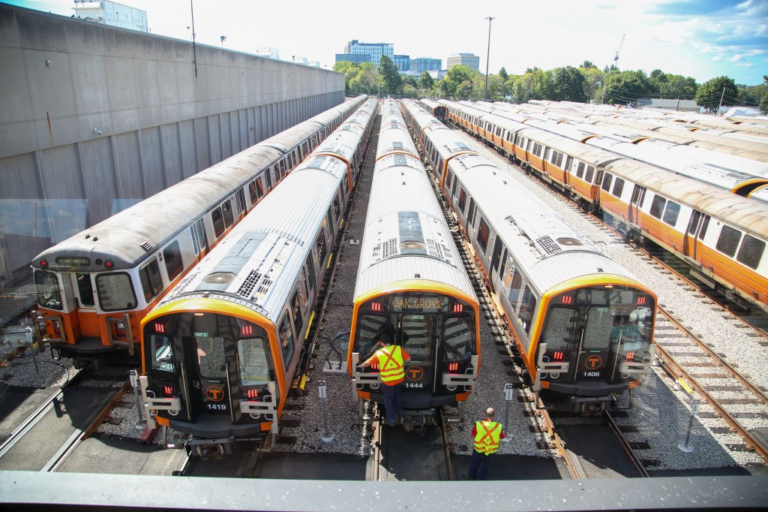
MassDOT’s capital projects team is recommending that the state’s transportation department send hundreds of millions in bonding capacity to the MBTA to backfill holes in the transit agency’s budget.
The Capital Programs Committee on Wednesday voted unanimously to recommend that the full MassDOT Board of Directors send $850 million in bonding from the state’s Commonwealth Transportation Fund to the MBTA to help cover the cost of four major projects.
The funding, if approved by the board at their next regular business meeting, would be used for “maintenance facility and power system modernization and resiliency” at the MBTA.
The specific projects covered are phase one of the Widett Regional Rail Layover Facility planned for South Boston, which includes demolition of the facilities currently on site and ground preparation for new construction, as well as the planned 200-bus capacity Arborway Battery Electric Bus Maintenance Facility in Boston, several Green Line infrastructure projects, and procurement of new train cars.
How much the T spends on each project, according to David Mohler, the executive director of MassDOT’s Office of Transportation Planning, will be up to leadership at the transit agency to decide. Budget writers at the MBTA may decide to spend all of the capital allocated to them on one of the four projects or to split the funds evenly across them, Mohler told the Capital Programs Committee.
“That will be decided by the MBTA board and the [general manager], through their processes,” Mohler said. “The four projects you see here cost more than $850 [million].”
The allocated funds can only be used for those four capital projects, according to Mohler.
An infusion of cash at the MBTA is made possible by the state’s Fair Share Amendment, a voter-approved law which adds a surtax to any income earned over $1 million. The amendment, passed as a ballot measure in 2022, has thus far outpaced its projected yearly revenues, resulting in a windfall for state education and transportation initiatives.
Money raised by the surtax is — by law — meant to be used for education and transportation, and the fiscal 2026 budget alone, Mohler told the Capital Committee, set aside an extra $550 million for the Commonwealth Transportation Fund.
The fund saw $2.5 billion in revenue in fiscal 2025, according to information provided by the state comptroller’s office.
MassDOT’s board will next meet on Oct. 15.
Disneyland Files First Construction Permit for Upcoming Expansion

Disneyland has a filed a permit for the site of the upcoming parking structure and transportation hub on the east side of the resort, making this permit the first signs of construction of the new DisneylandForward expansion project.
Permit Filed for DisneylandForward Construction Fence
The new construction permit, named BLD2025-05043, lists the address of 1509 S Harbor Blvd in Anaheim, California, and is currently categorized under Plan Review. The whole description of the permit is as follows:
DLR – East Esplanade – Site Work: Install 15 ln ft x 8 ft high chain link fence and 128 ln ft x 8 ft high wood fence.
The permit relates to the construction of a new parking structure and pedestrian bridge on the east side of Disneyland Resort. Construction will begin in fall 2026 and is expected to take multiple years to complete. The fence will likely be used to mark off the upcoming construction areas.
DisneylandForward
DisneylandForward is the ambitious expansion plan for Disneyland Resort, unanimously approved on May 7, 2024, by the Anaheim City Council.
Updates at the resort on the California Adventure side started quickly, with construction on the Avengers Campus expansion to add two new attractions, Avengers: Infinity Defense and Stark Flight Lab.
Construction at California Adventure is also expected to start soon on the first-ever Coco attraction, envisioned in the concept art as a boat ride through the vibrant Land of the Dead.
Additional Disneyland Resort expansion projects include the addition of an Avatar land replacing Monsters, Inc. Mike & Sulley to the Rescue.
Other public records show that the city of Anaheim is considering a Skyliner-esque aerial gondola system with a stop at Disneyland Resort.
Are you excited to see the first signs of Disneyland’s latest expansion? Let us know in the comments and on social media.
For more Disneyland Resort news and info, follow Disneyland News Today on Twitter, Facebook, and Instagram. For Disney Parks news worldwide, visit WDWNT.
How the Browns and Brook Park are trying to control regional transportation without input
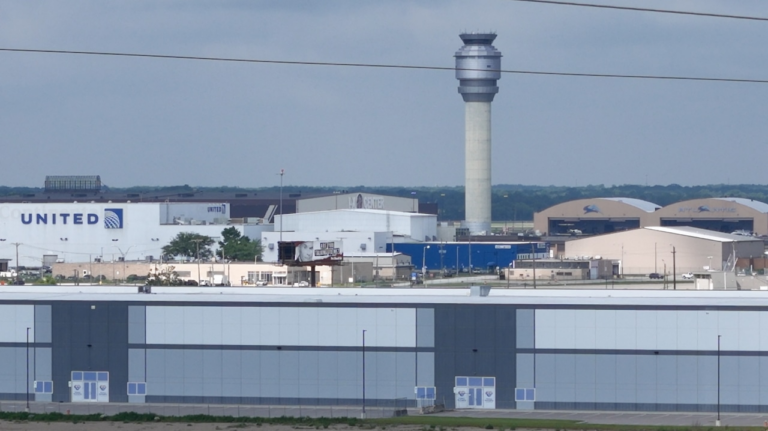
The Cleveland Browns’ push for a new domed stadium in Brook Park is turning into a full-blown brawl, and Wednesday’s episode of Today in Ohio dissects the chaos. The hosts unleashed a torrent of criticism, questioning everything from the project’s safety to the brazen political maneuvering designed to steamroll regional planning.
At the heart of the controversy are two explosive issues: Is the proposed stadium a flight hazard for Cleveland Hopkins International Airport? And who gave the small suburb of Brook Park the right to dictate the entire region’s transportation future?
US airlines say it is ‘imperative’ FAA get quick wins in air traffic overhaul
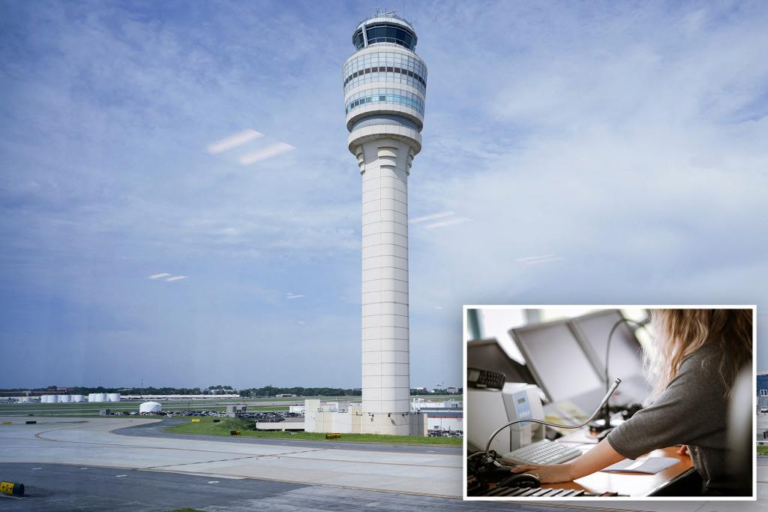
A group representing major U.S. airlines said it is imperative the Federal Aviation Administration accomplish some “quick wins” in the $12.5 billion overhaul of the aging air traffic control system, according to a letter seen by Reuters on Wednesday.
Airlines for America CEO Chris Sununu in a previously unreported letter to Transportation Secretary Sean Duffy said the FAA should quickly implement airspace modernization designs, buy simulators to improve controller training, lay telecommunications fiber and buy new radars and radios.
“These initial wins will create tangible benefits for the traveling and shipping public, help coordinate messaging on progress and boost optimism on the prospects of moving the project to completion,” Sununu, who heads the group that represents American Airlines (AAL.O), United Airlines (UAL.O), Delta Air Lines (DAL.N), and Southwest Airlines (LUV.N), wrote.
Duffy has said he wants air passengers to see progress by the start of next summer’s travel season.
He wants Congress to approve another $19 billion on top of the initial $12.5 billion to completely overhaul the system.
USDOT and FAA did not immediately comment.
The FAA has faced criticism for prior lagging modernization efforts.
The U.S. air traffic control system is badly in need of overhaul and routinely suffers serious technology outages.
Duffy has said the FAA has been forced at times to go to eBay to get spare parts.
A government report last year said 51 of its 138 air traffic control systems are unsustainable.
The letter said the FAA should reduce training time for new controllers, accelerate plans to eliminate paper strips to track planes, deploy remote tower technology at several untowered locations, move faster to eliminate floppy disks and deploy new cloud-based controller displays.
“Reducing the controller training washout rate would increase the number of controllers,” Sununu wrote.
The air traffic control network’s woes were years in the making, but a rush of high-profile mishaps, near-misses and a catastrophic crash in January between a U.S. Army helicopter and regional American Airlines jet that killed 67 spiked public alarm.
A shortage of controllers for more than a decade has repeatedly delayed flights and many are working mandatory overtime and six-day weeks.
The FAA is about 3,500 air traffic controllers short of targeted staffing levels.
USDOT last week interviewed the two candidates vying to become the project manager of the multi-billion dollar effort.
No more rainbow crosswalks? Texas gov. orders removal of ‘political ideologies’ from roads

The Texas Department of Transportation (TxDOT) announced it intends to follow Gov. Greg Abbott’s new directive and .
TxDOT said that in compliance with the SAFE ROADS initiative brought forward by U.S. Transportation Secretary Sean Duffy, state officials will be removing any symbols that do not serve to direct the flow of traffic.
Pavement markings such as decorative crosswalks, murals, or markings conveying artwork or other messages are prohibited on travel lanes, shoulders, intersections, and crosswalks unless they serve a direct traffic control or safety function,
Altoona-Blair County Airport to operate despite government shutdown

Editor’s note: After the following story went to press, the federal government sent a letter to affected airports, announcing that the Department of Transportation had secured more funding to extend EAS and AEAS through Nov. 2. Operations would continue as usual and airports — including the Altoona-Blair County Airport — would be reimbursed on schedule through the new deadline. All the information in the following article was accurate at the time of publication.
MARTINSBURG — Although there will not be any funding for the Essential Air Service program after Sunday amid the government shutdown, Contour Airlines plans to continue its service at the Altoona-Blair County Airport, officials said.
According to airport manager Tracy Plessinger, officials received a notification from the federal Department of Transportation stating the airport will not receive funding for future flights after Sunday while the shutdown is in place.
Plessinger said the Altoona-Blair County Airport is part of the Alternate Essential Air Service program, which is similar to the EAS program. But they differ in terms of how airline services get paid, he said.
Under the AEAS program, Plessinger said the federal Department of Transportation provides grant funding to the Altoona-Blair County Airport and airport officials pay Contour Airlines for each flight to the Charlotte Douglas International Airport.
The government pays airlines directly under the EAS program, Plessinger said.
Plessinger said he contacted Contour Airlines Chief Executive Officer Matt Chaifetz to notify him that the AEAS payments will be delayed after Sunday.
Chaifetz reportedly said Contour intends to continue flying out of the airport with uninterrupted service, according to Plessinger.
“They’re going to keep flying the flights as normal,” Plessinger said.
Plessinger said federal Transportation Security Administration employees are still working — unpaid — at both the Altoona and Charlotte airports.
He said some airports are experiencing delays due to a shortage of available air traffic control staff during the shutdown. Plessinger said he hasn’t heard of any significant delays at the Charlotte airport.
Board member Herb Bolger pointed out that the Philadelphia International Airport, Contour’s former service destination, is one of the airports experiencing delays.
“But luckily … we no longer go there,” Bolger said.
The airport authority canceled its meeting Wednesday due to a lack of quorum, but officials continued to celebrate the successful transition of the Charlotte route.
According to Plessinger’s written report, Contour’s overall completion rate for September was 100%.
Officials don’t have the final passenger numbers for September yet, but they know — based on TSA screenings — that they’ve enplaned over 10,000 passengers from Oct. 1, 2024, to Sept. 30, Plessinger said.
La Fiesta’s sales for September were down 13% from August and down 2% year over year, according to Plessinger’s report.
Although officials don’t have sales totals for the airport’s Avis/Budget location for September, Avis/Budget manager Nick Bechtel noted September was the fourth consecutive month the rental car business has sold over 200 units.
Year over year, Avis/Budget is up 71 units, Bechtel said.
Plessinger noted in his report that Contour now has a full-time mechanic based at the airport.
“This should make its service even more reliable as the on-site mechanic will be able to handle regular maintenance items and any other issues that arise,” Plessinger said in his report.
Mirror Staff Writer Matt Churella is at 814-946-7520.
Transportation Secretary Sean Duffy urges air traffic controllers to show up for work
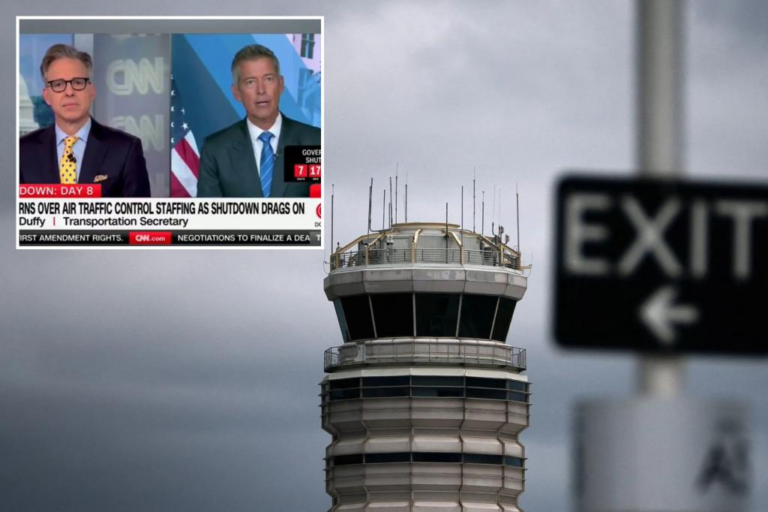
Transportation Secretary Sean Duffy has a simple message to air traffic controllers as the government shutdown wreaks havoc on travel across the United States.
“I’m encouraging air traffic controllers to show up for work,” Duffy said on Wednesday during an interview with CNN’s Jake Tapper.
Several major airports are experiencing staffing shortages as the shutdown leaves air traffic controllers unpaid – along with an uptick in workers calling in sick.
However, Duffy stressed the importance of air traffic controllers manning their posts.
“They need to go to their jobs,” Duffy added. “They need to control the airspace.”
Duffy acknowledged that air traffic controllers could express some “rebellious” behavior over the current situation, but said they would be paid once the shutdown ends.
He also acknowledged the heightened stress they face.
“They are stressed out. They are wondering, how do they put food on the table? How do they pay their mortgages if their paycheck doesn’t come through?” Duffy said.
DHHS must protect transportation options for Maine’s seniors and disabled
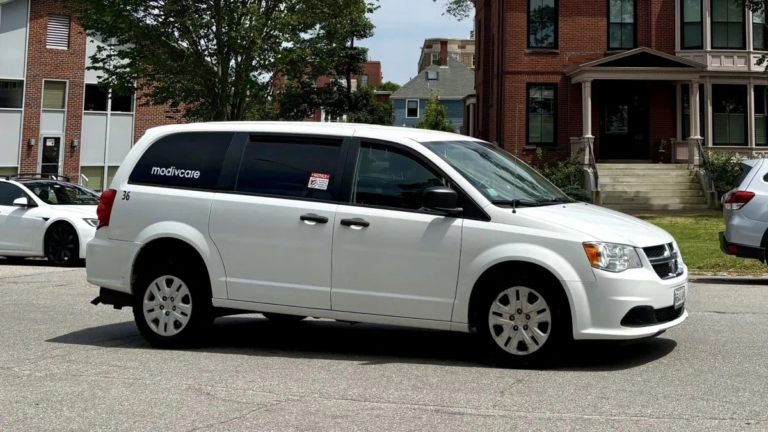
The BDN Opinion section operates independently and does not set news policies or contribute to reporting or editing articles elsewhere in the newspaper or on bangordailynews.com
Joe Baldacci is a state senator representing Bangor and Hermon. He is the member of the Health Coverage, Insurance and Financial Services Committee and chair of State and Local Government and Inland Fisheries and Wildlife committees. He served 12 years on the Bangor City Council and twice as council chair.
Of vital importance to protecting the health, dignity, and mobility of Maine people is the transportation infrastructure that makes this possible. That is why I and many of my legislative colleagues are very concerned about the state’s current $750 million contract with an out-of- state entity called Modivcare. That company’s recent bankruptcy and complaints about failures to meet performance standards raise serious questions about the future of this lifeline.
That is why I think the Department of Health and Human Services needs to reissue the non-emergency transportation (NET) contract RFP now.
Modivcare has filed for Chapter 11 bankruptcy with more than a billion dollars in debt. If the reorganization falters, it could convert to Chapter 7, a liquidation that would directly threaten service continuity. This $750 million contract is significant, and it demands rigorous oversight, strong results, and financially stable providers.
The restructuring may satisfy investors, but I believe it does not address the needs of Maine people. Reliable transportation means getting people to dialysis, cancer treatment, counseling, and other critical appointments. If cost-cutting accelerates, these risks could grow while DHHS remains without reliable performance indicators to track real-world impact.
Even before bankruptcy, Maine people were experiencing ongoing problems. Complaint rates under Modivcare are higher than local nonprofits, and the cost per ride is higher despite lower quality. Moving forward without change will only deepen these concerns and put greater strain on riders and providers.
Local capacity is already under pressure. In two of Modivcare’s four regional brokerages, primary transportation agencies have ceased operations, raising urgent questions about service in all eight counties. Downeast Community Partners has closed its program. It is likely the combined loss for Penquis and KVCAP is estimated at $6.76 million in transportation assets, with nearly 200 jobs and 200 volunteer drivers at risk, Penquis CEO Kara Hay said in an impact statement. If transportation services decrease further, Maine loses drivers and trusted local partners who connect people to care, reduce isolation, and link to resources that keep them healthy and independent.
Modivcare’s Chapter 11 bankruptcy and restructuring represent significant changes to its financial condition and corporate control. Under state procurement law, those changes provide legal grounds for DHHS to reassess the non-emergency transportation contract.
This is a $750 million contract and it demands rigorous oversight, strong results, and financially stable providers.
By reissuing the non-emergency transportation contract RFP, I believe Maine can ensure reliable rides, support strong local providers, and protect the transportation network that so many people count on. Protecting health outcomes, safeguarding transportation infrastructure, and ensuring responsible investment of public dollars demands urgent, decisive action.
Construction work begins Oct. 13 on 2 Whiteside County bridges

The Illinois Department of Transportation has announced that, weather permitting, construction on two Illinois 84 bridges in Whiteside County will begin Monday, Oct. 13.
The work zone will be located at crossings over Johnson Creek north of Illinois 136 and over the BNSF railroad 2 miles south of the Carroll County line.
The project will clean and paint the bridges. One lane will be open at the bridges and controlled by temporary traffic signals during the work, which is anticipated to wrap up in mid-December.
Drivers are urged to pay close attention to changed conditions and signs in the work zone areas, obey the posted speed limits, refrain from using mobile devices and be alert for workers and equipment.
Over the next six years, IDOT is planning to improve more than 3,200 miles of highway and nearly 9 million square feet of bridge deck as part of Rebuild Illinois, which is investing $33.2 billion into all modes of transportation.
Accomplishments through Year Six of Rebuild Illinois include almost $20.8 billion of improvements statewide on 7,897 miles of highway, 815 bridges and 1,181 additional safety improvements.
Government shutdown disrupts flights, air traffic control : NPR
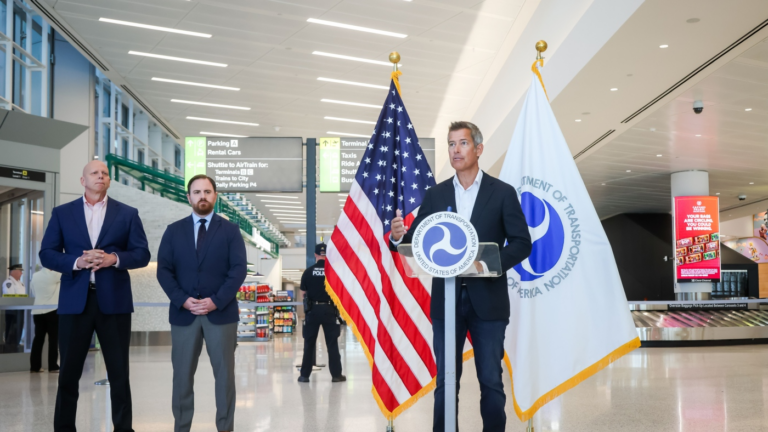
Travelers across the U.S. are beginning to feel the impacts of the government shutdown, as air traffic control staffing shortages disrupt flights across the country.
A dozen Federal Aviation Administration (FAA) facilities saw staffing shortages on Monday, according to an evening advisory from the agency.
Transportation Secretary Sean Duffy held a press conference at one of them, Newark Liberty International Airport in New Jersey, where he blamed the nationwide delays on a
Portland proposes steeper fines for parking violations during snow bans
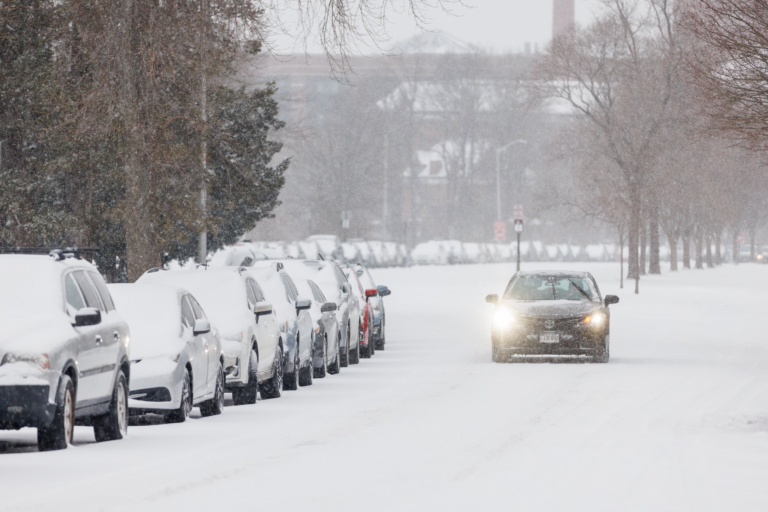
Portland is considering a major overhaul of its winter parking enforcement policies, including a sharp increase in fines for vehicles left on the street during snow bans.
One of the most significant changes proposed would raise the fine for violating a snow-related parking ban from $40 to $175.
The proposed changes, introduced by city staff, aim to improve compliance and allow for quicker snow removal during storms, according to a news release from the city.
The City Council’s Sustainability & Transportation Committee is scheduled to review the proposal at its meeting Wednesday at 5 p.m. Residents will have an opportunity to offer public comment during the meeting.
If approved by the committee, the plan would move to the full City Council for a final vote later this fall.
City spokesperson Jessica Grondin said in a news release that low compliance with parking bans in recent years has made it harder for plows to fully clear streets and for emergency vehicles to get through. Limited access to tow trucks — which the city contracts from private companies — has also hindered efforts to enforce snow bans, Grondin said.
Advertisement
The plan also proposes changes to how towing costs are handled. Currently, if a vehicle is towed during a snow ban, the owner must pay $210, which includes a $135 towing fee and a $40 citation. Under the proposed policy, the city would eliminate the citation if the vehicle is towed, lowering the total cost to the owner to $135.
Another factor at play is the upcoming closure of the city’s impound lot at the Ocean Gateway site near Commercial and India streets. That lot is set to close permanently in November as the area is redeveloped into Harbor Commons Park. City staff have not yet identified a new location to impound cars and are now considering storing towed vehicles at private tow yards instead.
To support compliance, the proposal would expand the number of off-street parking areas available during snow bans. Five new locations and an extension to an existing spot would be added to the current 22 areas.
The new locations are:
Baxter Boulevard (Back Cove side), between Preble Street Extension and Bates Street
Douglass Street (next to Dougherty Field)
Rainbow Mall Road (next to the woods)
St. James Street (next to Dougherty Field)
Valley Street (south of C Street, next to the Western Promenade)
The city also wants to expand snow parking on the Eastern Promenade toward Major Charles Loring Memorial Park.
The additional areas are focused on high-density neighborhoods and places near parks, where on-street parking is typically scarce, Grondin said in the news release.
The proposal was first presented at the Sustainability & Transportation Committee’s Sept. 10 meeting. If adopted, the new fine structure and expanded parking options would take effect before the start of the upcoming winter.
Airport staffing shortages cause flight delays a week into the government shutdown
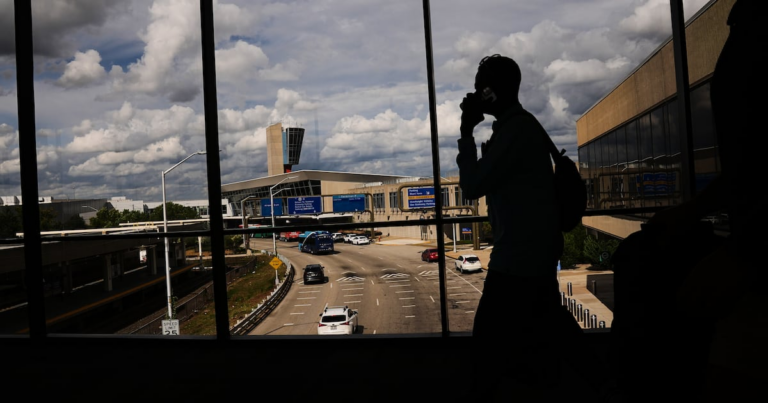
Staffing shortages have delayed flights in several U.S. cities this week, shortly after Transportation Secretary Sean P. Duffy warned the government shutdown could lead to delays and cancellations.
Federal Aviation Administration advisories on Monday showed there were no air traffic controllers at Hollywood Burbank Airport in California, causing delays. Staffing issues were also linked to delays at the Newark, Phoenix and Denver airports. According to the flight-tracking website FlightAware, more than 6,000 U.S. flights were delayed Monday – although it was unclear how many of those were related to staffing issues, because weather and traffic volume also can cause delays. The Thursday before the government shutdown, nearly 7,000 flights were delayed, according to the site.
In a statement, the National Air Traffic Controllers Association (NATCA) said it is not unusual for people to call in sick, and it emphasized that the vast majority of controllers remain on the job, even though they are not being paid during the shutdown. However, the union added that the shutdown underscores the fragility of the system.
“NATCA has consistently warned that the controller staffing shortage leaves the system vulnerable, and [Monday’s] events underscore the urgent need to accelerate training and hiring,” the union said. According to NATCA’s estimates, the system is roughly 3,800 short of the number of qualified controllers it needs.
Essential workers such as air traffic controllers and Transportation Security Administration officers are expected to continue working without pay during the shutdown, which began Wednesday, and receive back pay once the government reopens. On Monday, Duffy said there had been a “slight tick-up” in sick-leave calls, adding that this could lead to flight delays. The shutdown had exacerbated the pressure on air traffic controllers, who are due to receive their next paychecks Oct. 14, he said.
Nick Daniels, president of NATCA, who appeared with Duffy at a news conference held at Newark Liberty International Airport, urged Congress to end the shutdown so that controllers could focus on their jobs.
“We need to bring this shutdown to a close so that the Federal Aviation Administration and the committed aviation safety professionals can put this distraction and focus put this distraction behind us and completely focus on their vital work,” he said. “We do not have the luxury of time.”
Duffy said that some areas had seen a 50 percent reduction in staffing and warned that if staff levels fall to a level that affects safety, there could be further delays or cancellations.
In a separate statement on its website, NATCA said that it “does not endorse, support, or condone any federal employees participating in or endorsing a coordinated activity that negatively affects the capacity” of the nation’s flight networks. It warned members that any “job action” could undermine its credibility and weaken its ability “to effectively advocate for you and your families.”
Senators returned to Washington on Monday, but there appeared to be no prospect of a deal to end the shutdown. Three-quarters of a million federal workers have been furloughed, and many others are working without pay after funding laws expired Wednesday, while several agencies and departments have been completely closed.
In an emailed response to a request for comment early Tuesday, the FAA said: “Due to a lapse in funding, the FAA will only conduct “exempt” activities. The FAA will have limited communications but will send any significant safety messaging.”
The Burbank and Denver airports did not immediately respond to requests for comment early Tuesday. Phoenix’s airport referred questions to the FAA.
The Port Authority, which operates Newark’s terminal, said in a statement that while the shutdown would not affect its ability to operate its facilities, it would affect federal workers essential to their function, “including TSA, CBP and air traffic controllers – which could result in delays and severe operating challenges at the airports.” It said it would be working to mitigate any potential impacts.
During the prolonged government shutdown from late 2018 to early 2019, unpaid air traffic controllers began waiting tables and driving for ride-hailing services such as Uber and Lyft, The Washington Post reported at the time, with the head of NATCA saying that some federal workers were calling in sick because they were unable to afford child care.
Proposed 2028 Los Angeles Olympics water taxi transportation method could make waves

With the city of Long Beach set to host 18 events as part of the 2028 Olympic Games and 2029 Paralympic Games, the most for any city other than Los Angeles, local leaders are searching for creative ways to transport spectators and tourists across the vast county.
In May, the LA County Board of Supervisors floated the idea of using a water taxi service between San Pedro and Long Beach to get visitors around while dodging air emissions from cars – and traffic. The service would be emissions-free and quick, making it perfect for a heavy-tourist season like the one that will come during the 2028 Summer Olympics.
It’s harvest season: MnDOT asks motorists, farm equipment operators to safely share the road

Getting your Trinity Audio player ready…
Motorists traveling on Minnesota roads this fall should stay alert for large farm equipment transporting crops to markets, grain elevators and processing plants, according to the Minnesota Department of Transportation.
Crash data shows there were 455 crashes involving farm equipment in Minnesota from 2022 to 2024, resulting in eight deaths and 180 injuries.
“Fall harvest season brings more farm equipment to Minnesota highways as farmers move their crops from field to market. We’re all safer when we work together and watch out for one another. Motorists should always scan the road ahead and slow down as they approach farm equipment,” said Brian Sorenson, MnDOT state traffic engineer.
Farm equipment is large and heavy, making it hard for operators to accelerate, slow down and stop. The equipment also makes wide turns and sometimes crosses over the center line. In addition, farm vehicles can create large blind spots, making it difficult for operators to see approaching vehicles.
Motorists should:
• Slow down and watch for farm equipment, particularly between sunrise and sunset on two-lane rural roads
• Use caution when approaching farm equipment
• Watch for debris dropped by farm equipment
• Drive with headlights on at all times
• Wait for a safe place to pass
Farm equipment operators should:
• Use lights as required, and flashing lights as allowed, to make equipment more visible
• Use slow-moving vehicle emblems on equipment traveling less than 30 mph.
Check height of loaded vehicle to ensure it is below the legal height limit of 13 feet six inches. Vehicles or loads measuring over 13 feet 6 inches may require a permit from the agency that owns the road (county, state, or local). Specific bridge clearances are available online at mndot.gov/bridgepermitsrpt/Content.aspx.
For state permit requirements and information visit mndot.gov/cvo/oversize/index.html.
Microtransit pilot program launched between Standish and Gorham
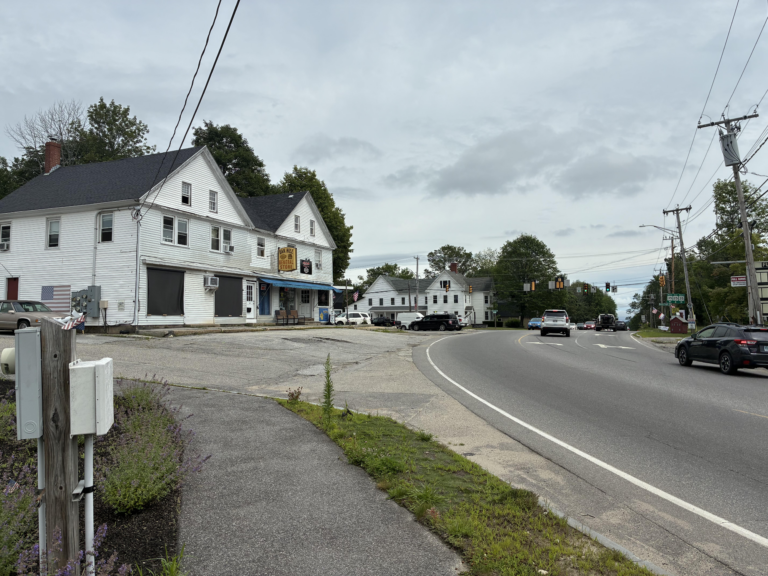
Regional Transportation Program, a nonprofit that provides transportation throughout Cumberland County, will launch a pilot microtransit route linking Standish and Gorham.
Beginning Wednesday, Oct. 15, community members can request a ride through rtprides.org.
The route stems from an $88,139 Maine Department of Transportation grant.
In addition to Standish, RTP provides public transportation for the town of Raymond, has launched a pilot program in Windham, and has received a $99,576 grant for a similar pilot program in Harrison.
Don Libby, executive director of RTP, said the microtransit program is a cost-effective solution for towns that can’t support a proper public transportation network. An on-demand service, people can be picked up from their home and taken anywhere in town for just $3. Customers, he said, range people who are unable to drive themselves to people who just need a lift home after dropping off their car at the mechanic.
The vehicles used by the program are small ADA-accessible vans, able to get into areas that larger buses can not.
“It’s a definite need, it’s been a need for those towns for a long time,” Libby said. “They’ve never really had any public transit.”
RTP has been running in Windham for a few years. Erica Bell-Watkins of Windham Aging said residents have been quite happy with it. The regular driver is kind and they find it easy to use.
“It’s always good to have another transportation program in the Lakes Region,” she said.
The Gorham-Standish and Harrison pilot programs are funded until May of next year. Regarding long-term plans, Libby said that, in an ideal world, the three towns would move toward the model that Raymond uses, where the network is jointly operated by RTP and the town government. With the Harrison program, he envisioned someone using RTP’s network to travel from there all the way to downtown Portland for as little as $6.
Column: Hampton Roads needs fair rail access at the Port of Virginia
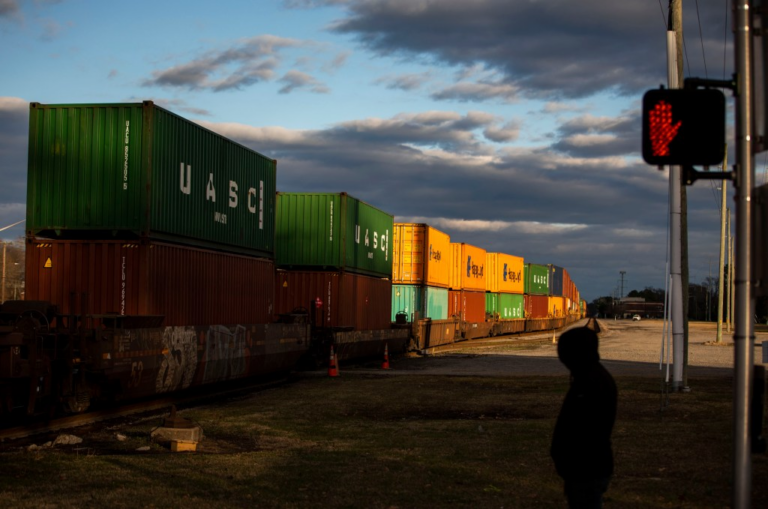
Living and working in Hampton Roads, we know the Port of Virginia is more than cranes and containers. It is a lifeline for jobs, opportunities and the economic future of our region. For decades, the port has thrived because of bipartisan vision and more than a billion dollars in public investment — investment that belongs to all of us. The port was never meant to benefit just one company.
Yet today, Norfolk Southern uses its control of the Norfolk & Portsmouth Belt Line Railroad to block another rail carrier, CSX, from gaining direct access to Norfolk International Terminals. While this may appear to be a dispute between two railroads, the consequences for our community are serious and undeniable. Because CSX is kept out, thousands of containers that could move efficiently and quietly by rail are instead forced onto trucks — more than 100 trips a day — along Hampton Boulevard, through the heart of Norfolk, past Old Dominion University, and into neighborhoods where children play.
Anyone who drives those roads sees the results: clogged commutes, heavy trucks rattling past homes and schools, greater safety risks, and costly road damage left to local taxpayers. The impact is not only on our roads and wallets, but also on our health and environment. Every unnecessary truck trip adds more diesel exhaust to our air and more carbon pollution to our skies at a time when our community — and our nation — should be moving toward cleaner transportation.
The costs, however, extend beyond traffic and pollution. With only one railroad having access to the port, competition suffers and shipping costs rise. Those higher costs are passed along to small businesses and ultimately to families who pay more for everyday goods. That is not fair, and it is not how public infrastructure was intended to work.
Moreover, limiting access to a publicly funded asset undermines the principles of transparency and accountability. The Port of Virginia was built to serve the entire commonwealth, not to entrench corporate advantage. When one company can dictate terms and exclude others, it stifles innovation and discourages investment in more efficient, sustainable logistics solutions. This is especially troubling as our region seeks to grow its role in global trade and attract new business.
Like investment in the port, ensuring competition is a bipartisan issue. Gov. Glenn Youngkin wrote the U.S. Surface Transportation Board in August, saying, “Ensuring that CSXT can access on-dock rail at [Norfolk International Terminal] would increase flexibility and efficiency for the port, increase competitive options for intermodal freight customers, and benefit the public. The Port of Virginia at NIT was always intended to be served by two railroads with on-dock rail access.” I couldn’t agree more.
If Washington approves Norfolk Southern’s bid to tighten its grip on the Belt Line, the monopoly will be locked in — and the harms to our neighborhoods, environment and economy will only grow. Rejecting the proposal, on the other hand, would restore true competition, reduce truck traffic on local streets and strengthen a Port that benefits the entire region.
This is not about opposing Norfolk Southern. It is about standing for competition, fairness and community. We want both Norfolk Southern and CSX to be engaged in our region’s economy. But Hampton Roads should never be asked to sacrifice safety, sustainability and affordability so one railroad can protect its monopoly.
Hampton Roads has always thrived when we put the public good first. The Surface Transportation Board should reject Norfolk Southern’s application and ensure that the Port of Virginia continues to serve all of us — not just one railroad that has already abandoned our community once before.
Louisa M. Strayhorn of Virginia Beach is a former member of the Virginia Port Authority Board, a former councilwoman for the city of Virginia Beach, and a former director of the Virginia Department of Business Assistance.
Geotab Ace, the Industry’s First Generative AI Assistant,

SINGAPORE, Oct. 07, 2025 (GLOBE NEWSWIRE) — Geotab Inc. (“Geotab”), the global leader in connected transportation solutions, today announced the official launch of Geotab Ace for customers in Southeast Asia. Following its successful global debut, the industry’s first fully integrated generative AI Assistant is now available in the MyGeotab platform to help local fleets boost productivity and efficiency.
Global demand for connected vehicle data and trusted insights continues to grow. Geotab Ace distills billions of data points daily, simplifying insights while democratising and streamlining access to information.
“Geotab Ace marks an exciting step forward for fleet operators in Southeast Asia. By combining trusted data with the intuitive simplicity of conversational AI, we’re helping customers overcome local challenges, unlock new efficiencies, and accelerate progress toward safer, smarter, and more sustainable transport operations,” said Chris Martin, Senior Manager, Solutions Engineering – APAC, Geotab.
Geotab Ace boasts access to an expansive array of data, including predictive safety analytics, predictive maintenance, trip data, zone activity, electric vehicle statistics, exception events, GPS tracking, and more. This allows it to provide nuanced answers to a broader range of complex questions while remembering past interactions to improve future responses. It is also able to provide personalised answers tailored to your business in the context of how your fleet has been configured in MyGeotab. The tool also provides a thorough explanation of its interpretation of the question and deconstructs the query into natural language that is easy to understand. Geotab Ace is built on privacy-by-design principles and keeps all customer telematics data within Geotab’s environment, never shared with any Large Language Model (LLM).
Processing over 100 billion data points daily from more than 5 million connected vehicles, Geotab is a trusted leader in transforming the magnitude of data into actionable insights. Geotab’s position as an industry trailblazer is reinforced by its large, dedicated data science team, focusing specifically on data and artificial intelligence, with a reach extending across 160 countries. The company’s depth of expertise and global scale enables it to develop robust AI models, unlocking unmatched value and efficiency for customers around the world.
To learn more about Geotab Ace in Southeast Asia, visit: www.geotab.com/apac/ace
Media Contact
Risa Lee
Edelman, on behalf of Geotab
Risa.Lee@edelman.com
About Geotab
Geotab is a global leader in connected vehicle and asset management solutions, with headquarters in Oakville, Ontario and Atlanta, Georgia. Our mission is to make the world safer, more efficient, and sustainable. We leverage advanced data analytics and AI to transform fleet performance and operations, reducing cost and driving efficiency. Backed by top data scientists and engineers, we serve approximately 100,000 global customers, processing 100 billion data points daily from more than 5 million vehicle subscriptions. Geotab is trusted by Fortune 500 organizations, mid-sized fleets, and the largest public sector fleets in the world, including the US Federal government. Committed to data security and privacy, we hold FIPS 140-3 and FedRAMP authorizations. Our open platform, ecosystem of outstanding partners, and Geotab Marketplace deliver hundreds of fleet-ready third-party solutions. This year, we’re celebrating 25 years of innovation. Learn more at www.geotab.com/apac and follow us on LinkedIn or visit Geotab News and Views.
GEOTAB and GEOTAB MARKETPLACE are registered trademarks of Geotab Inc. in Canada, the United States and/or other countries.
©2025 Geotab Inc. All rights reserved. All trademarks property of their respective owners in Canada and other countries. Geotab, the Geotab logo and MyGeotab are trademarks and/or registered trademarks of Geotab Inc. and/or its affiliates. All other trademarks are the property of their respective owners.
A photo accompanying this announcement is available at https://www.globenewswire.com/NewsRoom/AttachmentNg/08db0125-c4d8-4cca-aaa2-8a27537bac99
Demurrage dilemma: court overturns FMC’s trucking rule

The court’s action set aside the part of the 2024 FMC rule that blocked demurrage charges against trucks. No other parts of the rule were impacted by the court’s decision.
FMC limited who could pay detention fees
The 2024 rule was the culmination of a process that began in 2020 to set guidelines for acceptable demurrage and detention practices. In the court’s summary of the final rule, it said that its authors “adopted an approach under which only the person who contracted with the common carrier for the carriage or storage of goods may be issued an invoice.”
In a recap of the rule that was challenged by the WSC, attorneys Julie Maurer and Benjamin Nashed of the Husch Blackwell law firm, in an online commentary about the appeals court decision, said the 2024 rule “required invoices for demurrage and detention to be issued to only (their italics) the shipper that contracted with the billing party for ocean transportation or stage, i.e., the ocean carrier or a non-vessel operating common carrier (NVOCC).”
The FMC rule even barred motor carriers from being hit with demurrage charges even if the shipping company had a direct contractual relationship, known as privity, with a trucking company.
Reasoning is weak
The attorneys said of the appellate decision: “The court found that the FMC failed to adequately explain why motor carriers that contract with ocean carriers could never be the billed party for demurrage and detention.”
The trucking-focused Scopelitis law firm said in an emailed comment about the decision added that the inconsistency also was that the FMC mandated that invoices “should only be issued to parties in direct contractual privity with the steamship line, but then additionally allowing steamship lines to invoice consignees (regardless of whether the consignee was in privity with the steamship line) while disallowing invoices to motor carriers (even if in contractual privity with the steamship line).”
Scopelitis also noted that while the court rule blocked a ban on invoicing motor carriers for demurrage, it did not require that such billing occur.
In its decision, the court said motor carriers “have raised complaints that they have been billed for demurrage and detention fees even though they have no contractual relationship with the billing parties,” which were listed as ocean carriers and marine terminal operators.
While the WSC made several arguments, the court’s ruling focused on the consistency challenge and ultimately prevailed there. “The Commission failed to explain the seeming inconsistency between its contractual-privity-based rationale and its categorical bar against billing motor carriers even when in privity with the billing party,” the court argued.
More articles by John Kingston
California guts key Advanced Clean Fleet Rules; what’s next?
ATBS: how a driver can make it in a tough trucking market
Transportation Secretary says government shutdown adds stress on air traffic controllers

By JOSH FUNK
Transportation Secretary Sean Duffy said Monday that the government shutdown is putting more stress on air traffic controllers who already have an extremely stressful job, as well as threatening a program that small communities rely on to help subsidize airline service.
Controllers are expected to continue working without a paycheck, Duffy said, so they are now worried about how to pay their bills in addition to worrying about keeping flights safe.
“Now what they think about as they’re controlling our airspace is, how am I going to pay my mortgage? How do I make my car payment? I have a couple kids at home. How do I put food on the table? I’m working six days a week. Do I have to take a second job and drive Uber when I’m already exhausted from doing a job that’s already stressful to think about how I can make extra money because the government may not provide me a paycheck?” Duffy said.
Travelers at Newark Liberty International Airport, where Duffy held his news conference, said controllers should be paid for their work.
“Everyone should get paid for what they are doing. Of course it bothers me,” said Daniel Johansson from North Carolina.
A traveler from Utah, Nancy Taylor, agreed.
“Yeah, that would be hard to work for no pay,” Taylor said. “But I think they understand the importance of their job. And the safety that provides to us as travelers. They need to get paid.”
The Transportation Department has been able to keep the air traffic controller academy in Oklahoma City open for now with funding from previous years, but Duffy is still concerned about the potential impact on efforts to hire and train new controllers in the hope of eliminating a longstanding shortage. Duffy said the support staff who train controllers after they come out of the academy could be laid off.
The head of the air traffic controllers union, Nick Daniels, stayed away from political comments, but he urged Congress to end the shutdown.
“We need to bring this shutdown to a close, so that the Federal Aviation Administration and the committed aviation safety professionals can put this distraction behind us, and completely focus on their vital work,” Daniels said.
Duffy said there has already been a small uptick in controllers calling out sick in a few places. If that gets worse as the shutdown drags on, the FAA could be forced to reduce the number of takeoffs and landings, which would create delays and possibly cancellations.
The Essential Air Service program that subsidizes airline service to small communities across the country will also quickly run out of money. Duffy said that program enjoys strong bipartisan support and provides an important lifeline to many small communities. It is especially important in Alaska, where flying is the only way to travel between many communities.
“That money runs out this Sunday. So there’s many small communities across the country that will now no longer have the resources to make sure they have air service in their community,” Duffy said.
Associated Press videographer Joseph Frederick contributed to this report from Newark, New Jersey.
Duffy defends funding freeze for critical NYC projects while attacking Dems over shutdown
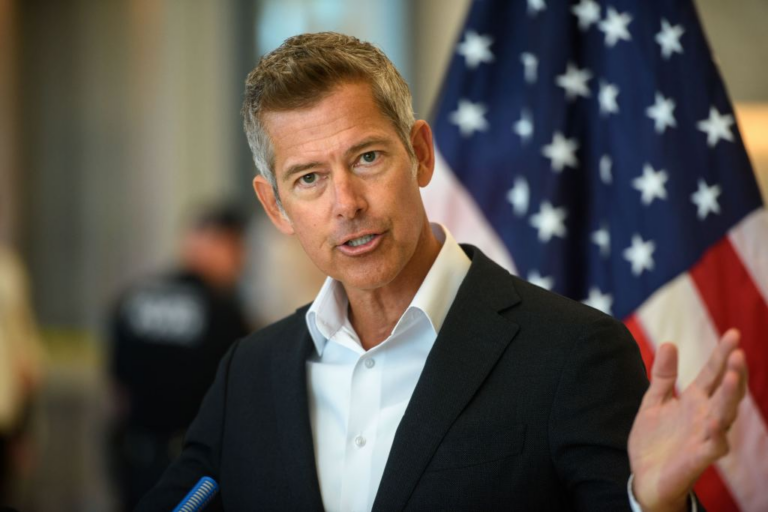
Transportation Secretary Sean Duffy defended his department’s funding pause for two major NYC transportation projects Monday —dodging the question of whether the funding freeze was payback for the government shutdown while also criticizing New York Sen. Chuck Schumer over the government shutdown.
Funding for the projects — a long awaited extension of the Second Ave. Subway into East Harlem and the construction of a new tunnel under the Hudson River to double train traffic between New York and New Jersey — was placed on hold by the Trump administration last Wednesday in the early hours of the federal government shutdown.
Duffy and Office of Management and Budget director Russel Vought both claimed at the time that the decision was made over concerns that the agencies in charge of the projects — the MTA and the Gateway Development Commission — were in arrears of a rule that had only been published hours before.
The rule — which was only published to the federal register on Friday — purports to forbid the use of race- or sex-based factors when determining whether a contractor can be considered a “Disadvantaged Business Enterprise” for the purposes of a Regan-era program meant to support large-project contracts going to disadvantaged small businesses.
Duffy spoke to reporters at Newark Airport Monday, after meeting with air traffic controllers who are working without pay while the federal shutdown continues. The secretary blamed the shutdown on Democrats in Congress, who have withheld their votes to fund the government pending a deal with the Republican majority in both houses on healthcare costs.
Asked Monday if the funding hold on Second Avenue and the Hudson River Tunnel was part of an effort to hurt Democratic states in the wake of the shutdown, Duffy dodged the question, while also blaming Senate Minority leader Chuck Schumer (D- New York)
“Several months ago I sent out a letter telling everyone who receives federal money to follow the law,” Duffy said
“There has been a tendency with some of these projects to look at race and sex as a [marker of a] disadvantaged business as opposed to the size of the company — this is unconstitutional, it’s contrary to law,” he said. “We had sent out notice, again, months ago. We let them know that this was going to go under review.”
“When the shutdown happened, our civil rights division, most of it was furloughed,” he added. “So the review process is going to take longer than what we would anticipate.”
The legality of sex- and race-based considerations in the DBE process is still a live issue, currently being litigated in federal court in the Eastern District of Kentucky.
As to whether the agencies leading the Hudson River Tunnel and Second Avenue Subway projects were warned that their DBE practices were about to come under review, sources at both the Gateway Development Commission and the MTA told The News that last Tuesday was the first they’d heard of any such plan.
Asked if he was calling the projects illegal ahead of the completion of USDOT’s review, Duffy then walked back his claim that the agencies were breaking the law.
“What I’m saying is it’s up for review,” Duffy said. “There’s been issues in New York, not using [the Disadvantaged Business Enterprise Program] appropriately — looking at the race and the sex of a business as opposed to the size of the business, which is what the law was intended for.”
The Transportation Secretary insisted that the Trump administration supported the projects.
“We’re not trying to shut down these projects – to the contrary, we’re trying to make sure these projects move forward, move forward fast. They’re important,” he said.
“The question is why would Chuck Schumer, who says he cares about the projects, shut down the government so we don’t have the staff to review the contracting authority used on these projects and if its done constitutionally?”
In a statement to The News on Monday, Schumer said Democratic lawmakers were ready to negotiate
“We’re ready to work with Republicans to reopen the government, and end the healthcare crisis that faces tens of millions of Americans,” Schumer said. “But it takes two sides to have a negotiation. We need Senate Republicans to come to the table.”
“Meanwhile, Donald Trump and Speaker Johnson seem to be on another planet because trying to stop the very popular and vital Gateway tunnel and Second Avenue subway mega-projects only screws New York and New Jersey commuters, threatens countless construction jobs and stymies our entire economy,” he added.
Federal funding for both projects serves largely to reimburse money already spent, and both GDC and MTA have said work on their respective projects can continue for now.
“Everyone gets the message that New York is getting picked on, ” MTA chariman Janno Lieber said Monday. “We’re hoping and expecting that rationality will prevail when the shutdown in resolved.”
“They want to perform a review that we’re in compliance with a rule they sent to us after they announced the review,” Lieber said. “We’re going to be able to comply with that.”
Last week, asked about the same issue, Lieber sought to assure New Yorkers that the MTA’s contracting principles would remain.
“We’re going to continue, most importantly, to have an aggressive minority- and women-owned business program in the state-funded side of our capital program,” he said.
Japan August household spending rises faster than expected

TOKYO, Oct 7 (Reuters) – Japanese household spending rose at a faster speed than expected in August, helped by an increase in travel and transportation expenditure, government data showed on Tuesday.
Consumer spending rose 2.3% from a year earlier, rising for the fourth consecutive month, internal affairs ministry data showed. It was slightly better than the median market forecast for a 1.2% rise.
Sign up here.
On a seasonally adjusted, month-on-month basis, spending edged up 0.6%, versus an estimated 0.1% rise.
Consumption and wage trends are also among key factors the Bank of Japan is monitoring to determine the timing of the next rate hike.
Japan’s ruling party on Saturday picked hardline conservative and fiscal dove Sanae Takaichi as its head, putting her on course to become the country’s first female prime minister.
Her victory spurred markets to price in the chance of big spending and reduce bets of a rate hike at the BOJ’s next policy meeting later this month.
The government raised its assessment of consumer spending for the first time since August 2024 in the latest monthly report, reflecting improvement in consumer sentiment following a tariff agreement with the U.S.
Reporting by Satoshi Sugiyama Editing by Chang-Ran Kim
Air traffic controllers union tells members to work through government shutdown

Oct. 6 (UPI) — The U.S. air traffic controllers union on Monday told its members to keep working during the government shutdown, as Transportation Secretary Sean Duffy warned that air services may be affected the longer the shutdown lasts.
Duffy told reporters on Monday that the Transportation Department has seen an increase in people calling out sick, which could make worse service issues he said will be caused by federal funds running out during the shutdown, according to the New York Times.
Flight Delays Begin as Air Traffic Staffing Shortages Worsen
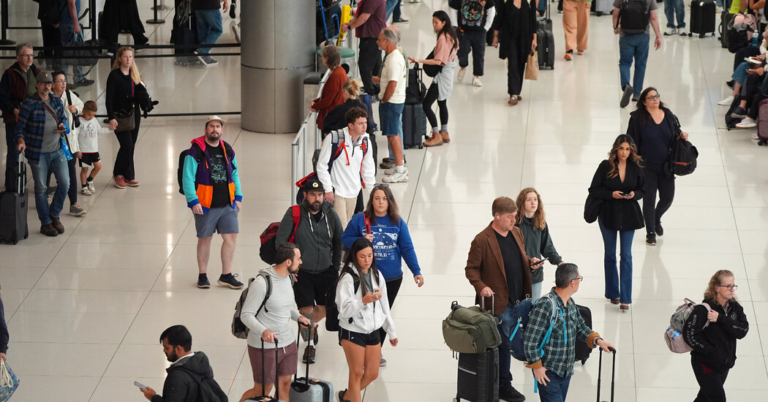
Flights into airports serving New York, Denver and the Los Angeles area were delayed on Monday night because of shortages of air traffic controllers, hours after the transportation secretary warned that flying could be disrupted by the government shutdown.
The delays began in the late afternoon at Newark Liberty International Airport in New Jersey, where incoming flights were delayed nearly an hour on average, and at Denver International Airport, where arriving flights were delayed about 40 minutes.
Later in the evening, Hollywood Burbank Airport near Los Angeles reported average incoming delays of about two and a half hours, according to a Federal Aviation Administration advisory. The air traffic control tower that serves Burbank had no controllers working on Monday night, so management of incoming flights was being assumed by counterparts at Southern California Terminal Radar Approach Control in San Diego, one of the busiest air traffic facilities in the world.
Kurt Duffens, 69, only learned of the news while waiting for his ride after flying in from Portland. He realized that the tower was unmanned while his flight was in the air. “I wouldn’t have flown,” Mr. Duffens said. “I actually would’ve gone to LAX had I known.”
The delays, which were caused by staffing shortages, according to the F.A.A. advisories, came not long after the transportation secretary, Sean Duffy, warned that air service could be disrupted by the government shutdown.
“If we think there’s issues in the airspace, we will shut it down,” he said. “We will close it down. We will delay.”
Air traffic controllers are required to work through the shutdown, but will only be paid retroactively when it ends.
As the 2019 government shutdown wore on, controllers at important facilities began calling in sick at high rates, contributing to widespread flight delays and bringing a swift end to that shutdown. On Monday, Mr. Duffy said officials had seen a “slight tick-up” in sick calls from controllers since the current shutdown began last week.
The Federal Aviation Administration slowed traffic at the three airports on Monday using a “ground delay program,” a traffic management tool in which the agency holds flights from departing other airports if they are headed for one with limited capacity.
The F.A.A. has issued many ground delays for Newark for staffing shortages and runway construction this year and also issues ground delays when airports are dealing with bad weather and other factors. Flights into Boston’s Logan International Airport were also delayed for much of Monday because of runway construction.
Mr. Duffy also said on Monday that a federal program that subsidizes flights to rural areas would run out of funding by Sunday unless the shutdown ended, threatening service.
Orlando Mayorquín contributed from Burbank, Calif.
Staffing issues cause delays at U.S. airports as shutdown persists

The Federal Aviation Administration said staffing issues were causing delays at several airports, including Newark and Denver, on Monday, just hours after the top U.S. transportation official said air traffic controllers calling in sick had risen slightly since the government shutdown began.
Some 13,000 air traffic controllers and about 50,000 Transportation Security Administration officers must still turn up for work during the shutdown. They are not being paid and controllers are set to miss their first paycheck on October 14.
Transportation Secretary Sean Duffy said that at times, air traffic staffing has been cut by 50% in some areas since the shutdown started last week.
The FAA said air traffic control staffing issues are impacting flights at numerous airports, including Newark, Phoenix, Denver, Las Vegas and Burbank. FlightAware said more than 4,000 flights in the U.S. on Monday have been delayed, including 29% arriving flights at Denver, 19% of Newark flights and 15% of Las Vegas flights. Weather issues are also impacting flights.
President Donald Trump has made transportation a focal point in a government shutdown battle with the Democrats, cutting off more than $28 billion of aid for climate programs, subways, tunnels and mass transit in Democratic-leaning states, including New York and Illinois.
Delays will result from the reduced staffing, Duffy said, adding that if sick calls increase, air traffic flow will be cut to a rate that maintains air safety.
Duffy and the president of the National Air Traffic Controllers Association spoke at a press conference at Newark Liberty International Airport to discuss the effects of the shutdown. The airport is one of three serving the heavily Democratic-leaning New York metropolitan area and is a major United Airlines UAL.O hub.
Duffy noted controllers are worried.
Sean Duffy says shutdown adds stress on air traffic controllers

Transportation Secretary Sean Duffy said on Oct. 6 that the government shutdown is adding stress to already overworked and understaffed air traffic controllers, as some areas have seen an uptick controllers in calling in sick.
Although Duffy said the nation’s airspace remains safe, he noted that some air traffic control facilities were experiencing an increase in sick calls — with some missing as many as 50% of employees on any given day since the shutdown started last week. Duffy warned that understaffed facilities could result in flight delays and cancelations as the Federal Aviation Administration limits capacity through some sectors of the airspace.
Duffy said controllers, who are mandatory federal employees, are worried about how to pay their bills while keeping the airspace safe. Thousands of controllers are expected to show up for work during the shutdown. They are not being paid and are set to miss their first paycheck on Oct. 14.
“Now, what they think about as they’re controlling our airspace is, how am I going to pay my mortgage? How do I make my car payment? I have a couple kids at home. How do I put food on the table? I’m working six days a week. Do I have to take a second job and drive Uber when I’m already exhausted from doing a job that’s already stressful to think about how I can make extra money because the government may not provide me a paycheck?” Duffy said during a news conference at Newark Liberty International Airport in New Jersey.
The FAA said air traffic control staffing issues were affecting flights at several airports including Newark, Phoenix, Denver, Las Vegas and Burbank. FlightAware reported that more than 5,000 flights in the U.S. on Oct. 6 have been delayed, including 31% arriving flights at Denver, 21% at Newark, and 18% at Las Vegas. Weather issues are also impacting flights.
California governor blames Trump for lack of air traffic controllers at Los Angeles area airport
In a post on X, California Gov. Gavin Newsom blamed President Donald Trump for the lack of air traffic controllers at the Hollywood Burbank Airport in Los Angeles County.
Business People: Deb Barber named interim Met Council chair

To place an obituary, please include the information from the obituary checklist below in an email to obits@pioneerpress.com. There is no option to place them through our website. Feel free to contact our obituary desk at 651-228-5263 with any questions.
General Information:
Your full name,
Address (City, State, Zip Code),
Phone number,
And an alternate phone number (if any)
Obituary Specification:
Name of Deceased,
Obituary Text,
A photo in a JPEG or PDF file is preferable, TIF and other files are accepted, we will contact you if there are any issues with the photo.
Ad Run dates
There is a discount for running more than one day, but this must be scheduled on the first run date to apply.
If a photo is used, it must be used for both days for the discount to apply, contact us for more information.
Policies:
Verification of Death:
In order to publish obituaries a name and phone number of funeral home/cremation society is required. We must contact the funeral home/cremation society handling the arrangements during their business hours to verify the death. If the body of the deceased has been donated to the University of Minnesota Anatomy Bequest Program, or a similar program, their phone number is required for verification.
Please allow enough time to contact them especially during their limited weekend hours.
A death certificate is also acceptable for this purpose but only one of these two options are necessary.
Guestbook and Outside Websites:
We are not allowed to reference other media sources with a guestbook or an obituary placed elsewhere when placing an obituary in print and online. We may place a website for a funeral home or a family email for contact instead; contact us with any questions regarding this matter.
Obituary Process:
Once your submission is completed, we will fax or email a proof for review prior to publication in the newspaper. This proof includes price and days the notice is scheduled to appear.
Please review the proof carefully. We must be notified of errors or changes before the notice appears in the Pioneer Press based on each day’s deadlines.
After publication, we will not be responsible for errors that may occur after final proofing.
Online:
Changes to an online obituary can be handled through the obituary desk. Call us with further questions.
Payment Procedure:
Pre-payment is required for all obituary notices prior to publication by the deadline specified below in our deadline schedule. Please call 651-228-5263 with your payment information after you have received the proof and approved its contents.
Credit Card: Payment accepted by phone only due to PCI (Payment Card Industry) regulations
EFT: Check by phone. Please provide your routing number and account number.
Cash: Accepted at our FRONT COUNTER Monday – Friday from 8:00AM – 3:30PM
Rates:
The minimum charge is $162 for the first 10 lines.
Every line after the first 10 is $12.20.
If the ad is under 10 lines it will be charged the minimum rate of $162.
On a second run date, the lines are $8.20 per line, starting w/ the first line.
For example: if first run date was 20 lines the cost would be $164.
Each photo published is $125 per day.
For example: 2 photos in the paper on 2 days would be 4 photo charges at $500.
Deadlines:
Please follow deadline times to ensure your obituary is published on the day requested.
Hours
Deadline (no exceptions)
Ad
Photos
MEMORIAM (NON-OBITUARY) REQUEST
Unlike an obituary, Memoriam submissions are remembrances of a loved one who has passed. The rates for a memoriam differ from obituaries.
Please call or email us for more memoriam information
Please call 651-228-5280 for more information.
HOURS: Monday – Friday 8:00AM – 5:00PM (CLOSED WEEKENDS and HOLIDAYS)
Please submit your memoriam ad to memoriams@pioneerpress.com or call 651-228-5280.
GOVERNMENT
The Metropolitan Council, a quasi-governmental agency overseeing jointly shared public and transportation services for Minneapolis, St. Paul and surrounding suburbs, announced that Gov. Tim Walz has appointed Deb Barber as interim chair, following the retirement of Charlie Zelle in September. Barber was appointed to the Met Council in 2015 by Gov. Mark Dayton and previously served as the District 4 Council Member. She is co-founder and senior partner of Canopy Medical.
FINANCIAL SERVICES
Wells Fargo announced the opening of a branch at 835 W. Broadway Ave., North Minneapolis. Wells Fargo, based in San Francisco, is Minnesota’s second-largest bank by deposit market share. … The American Fraternal Alliance, a national trade group representing fraternal benefit societies, announced the election of Sharon Brosnan as board chair. Brosnan is vice president of government affairs at Thrivent, a Minneapolis-based Fortune 500 financial services company. … GFC Planning announced its launch as an independent registered investment advisory firm in Woodbury. It was founded by Lance Huebner, a U.S. Army combat veteran who previously spent over a decade as a financial adviser at Morgan Stanley.
HEALTH CARE
The Integrated Body Center, a health and wellness clinic, announced its opening in in Hastings’ historic Olde Armory Building, 121 3rd St E. Angie Thompson is founder and CEO.
LAW
Moss & Barnett, Minneapolis, announced that attorney Bethany L. Maski has joined the firm’s family law team. Maski previously clerked for the
Honorable Richard Stebbins, referee of Hennepin County Family Court. … Fredrikson announced the election of the following new shareholders in its Minneapolis office: Megan A. Bowman, Rachel L. Dougherty, Devin T. Driscoll, Christian V. Hokans and Aaron C. Nyquist. Fredrikson is based in Minneapolis. … Maslon, Minneapolis, announced the return of attorney Joe Ceronsky to the firm’s Litigation Group as counsel. Ceronsky joined the firm in 2010. In 2024, he left the partnership for a year-long RV trip with his family. … Gov Tim Walz announced the appointment of Michael Grover as a District Court Judge in Minnesota’s Ninth Judicial District. Grover will replace the Honorable Donna K. Dixon and will be chambered in Roseau in Roseau County. … Spencer Fane announced the addition of Aaron D. Quinby to the firm’s St. Cloud office as an of counsel attorney in the real estate practice group.
MANUFACTURING
Mate Precision Technologies, an Anoka-based provider of metal-fabricated products and services for industry, announced the promotion of Joe Schneider to president. He succeeds Kevin Nicholson, who is retiring after 19 years in the position. Schneider has 31 years with the company and was appointed vice president of marketing in 2006.
NONPROFITS
The Eagan Community Foundation announced the awards of $62,000 in community grants to 30 nonprofits, including the launch of funding from the Art Works Legacy Fund, a $1 million endowment, and the Youth in Philanthropy program, empowering seven teens to make grant decisions.
REAL ESTATE
Cushman & Wakefield, a national commercial real estate firm, announced Anders Pesavento as managing principal for the Minneapolis/St. Paul market. Pesavento joins the firm from developer Ryan Cos., where he was senior vice president, capital markets. Cushman & Wakefield has offices in Bloomington and Minneapolis.
RETAIL
Best Buy, a Richfield-based national electronics retailer, announced the appointment of Meghan Frank to its board of directors. Frank is chief financial officer of Lululemon, a global athletic apparel, footwear, and accessories company. … Mall of America, Bloomington, announced the planned opening of Primark, an Ireland-based fast-fashion chain, in the mall. It will be the chain’s first Minnesota location.
SPONSORSHIPS
The Minnesota Wild NHL franchise and Blaze Credit Union, Falcon Heights, announced a multi-year partnership as the team’s home helmet partner. The Blaze logo will appear on the Wild’s home helmets starting this season. As part of their partnership, Blaze will continue the Blaze Credit Union’s Hockey Kids4Kids Program.
TECHNOLOGY
Inkit, a Minneapolis-based digital file management platform for business, announced the opening of a St. Paul office.
EMAIL ITEMS to businessnews@pioneerpress.com.
There’s only one way to end TSA’s political weaponization of surveillance
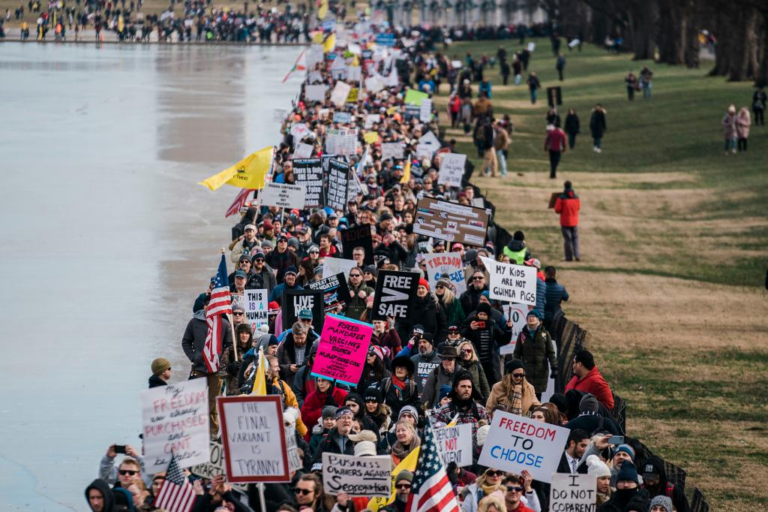
Only in Washington would an edict to banish all dissidents be labeled Operation Freedom to Breathe.
The Transportation Security Administration in 2021 created a secret watchlist of individuals who publicly opposed President Joe Biden’s COVID mask mandate.
Operation Freedom to Breathe resulted in dozens of individuals being either banned from flying or hit with additional groping or patdowns.
The covert crackdown only ended when a federal judge struck down Biden’s mask mandate in April 2022.
That was only one of a trifecta of TSA surveillance-gone-wild programs Congress and the Department of Homeland Security exposed last week.
Hundreds of Americans were hit by the Biden administration’s secret condemnation of anyone tied to the Jan. 6, 2021, Capitol protests.
TSA approved “enhanced screening” and watchlists for anyone “suspected of traveling to the National Capital Region” for those, Sen. Rand Paul (R-Ky.) revealed.
TSA bloated the list of Jan. 6 suspects by tapping a George Washington University database of alleged extremists — which was as credible as randomly selecting names of Trump donors.
A TSA privacy officer protested: “TSA is punishing people for the expression of their ideas when they haven’t been charged, let alone convicted of incitement or sedition.”
New dirt also came to the surface about the Quiet Skies program, which sent TSA air marshals to covertly surveil travelers on the flimsiest pretexts.
If you fell asleep, used the bathroom or glared at noisy kids during a flight, those incriminating facts might have been added to your federal dossier.
Air marshals noted whether suspects gained weight or were balding or were paranoid about the undercover federal agents who followed them into the parking lot to their cars.
Quiet Skies, which cost $200 million a year, provoked a scandal last year after targeting former Rep. Tulsi Gabbard (now director of national intelligence) after she criticized Democratic presidential nominee Kamala Harris.
Turns out Quiet Skies was also tracking three Republican congressmen before the program was abolished in June. TSA has not yet revealed the names of those congressmen.
DHS Secretary Kristi Noem declared Quiet Skies had been used to “target political opponents and benefit political allies,” spurring her to remove five senior TSA officials.
“President Trump promised to end the weaponization of government against the American people, and we are making good on that promise,” she said.
But will Noem make TSA less odious to average Americans?
Thus far, Noem’s biggest reform is that travelers no longer need remove their shoes at TSA checkpoints. This is progress, but not quite the equivalent of Lincoln’s Emancipation Proclamation.
What about other TSA vexations such as the pointless prying patdowns that do nothing for security?
It takes less than a minute to find busloads of women bitterly complaining on X/Twitter about heavy-handed TSA screeners grabbing their vaginas (“I swear it’s not a bomb!”) or breasts.
But screeners have legal immunity almost no matter how brazenly they abuse travelers.
If a woman pushes a TSA screener’s hands away from her breasts, she can placed on the TSA “95 list” of potentially troublesome travelers.
The agency’s official watchlist defines troublemaker to include someone who merely “loiters” near a TSA checkpoint or demonstrates any “concerning behavior.”
TSA can also place people on the watchlist simply because they are “publicly notorious.”
Did getting denounced by TSA chief John Pistole in 2014 for “maligning” and “disparaging” TSA agents in an op-ed qualify me for the list and endless TSA supplemental patdowns when I travel?
Or maybe I got nailed by the most boneheaded terrorist warning sign ever: “Very arrogant and expresses contempt against airport passenger procedures.”
How many other secret watchlists has TSA or DHS not yet revealed?
A 2023 Senate Homeland Security and Governmental Affairs Committee report noted, “U.S. travelers may be screened for at least 22 different reasons.”
DHS receives requests from almost 20,000 people a year complaining about being banned from flying or otherwise penalized, and 98% of those people are not on terrorist watchlists.
If Noem truly wants to reform TSA, she should cease shrouding probably its most damning failure.
TSA whole-body scanners and checkpoints failed to detect 80% of the fake bombs and weapons smuggled past them by undercover agents in 2017.
The Trump administration tightened secrecy, and subsequent TSA failure rates have not leaked out.
But endless false alarms at TSA checkpoints are a clue the agency is still on par with a blindfolded drunk swinging at a piñata.
We have no idea how many Americans’ rights and liberties continue to vanish into TSA black holes.
Privatizing airport-passenger screening is the only way to prevent further outrages and future political weaponization of an agency that long ago forfeited its right to exist.
Duffy’s halt of non-domiciled CDLs could wipe out illegal operators
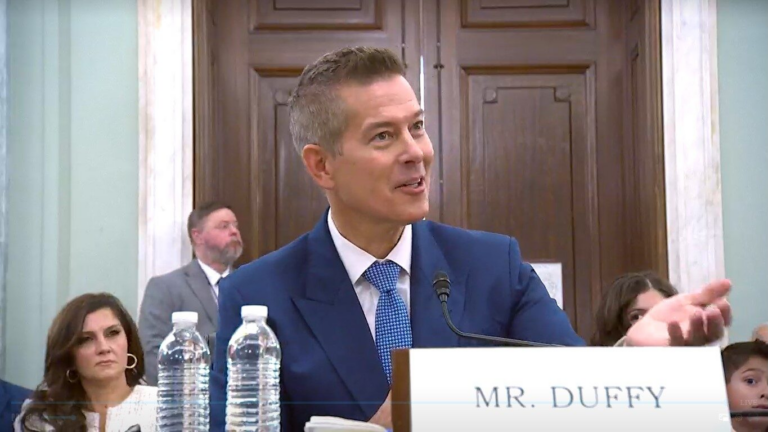
Many non-domiciled CDL holders are individuals who might otherwise be homeless and are prepared to live in their trucks, as living conditions in their home countries are often far worse than those in a truck cab. A significant number of these drivers hail from Eastern Europe or the Indian subcontinent.
Trucking firms, frequently owned and operated by foreign individuals, have developed a compelling business model: import drivers from their home countries, pay them below-average wages, and have them operate nearly nonstop. While these working conditions are grueling for anyone, they are often preferable to conditions back home, with wages far exceeding what drivers could earn there. Additionally, since drivers live in their trucks, housing and personal transportation costs are eliminated. This model has proven highly effective.
While much of the trucking industry has endured its deepest downturn in history, these operators have exploited their willingness to flout regulations and employ labor under harsh conditions to undercut the pricing of American-owned competitors. Trucking profitability is largely driven by maximizing asset utilization and controlling variable costs, and this approach has allowed such firms to thrive.
The freight handled by these carriers often comes from brokers unconcerned with their practices. Though few would admit it, brokers have kept these carriers loaded because their rates are well below what American firms can offer for the same routes. Moreover, a solo driver willing to run nonstop on 1,000-mile hauls can provide service akin to a team operation.
Carriers Exploiting the Rules
Non-domiciled CDL holders have become integral to many trucking operations, especially those focused on maximizing miles while minimizing costs. Industry observers note that these drivers often work under different expectations than American drivers.
As Miranda from Trucking Made Successful (@TMSuccessful) explained on X: “Many carriers who hire primarily non-domiciled CDL holders have built a business model which can survive ONLY if drivers are ready to make up for the bad rates by running more miles in a shorter period of time (1000 miles in a day for example…hint hint, nudge nudge).”
This has distorted the market, with brokers expecting unrealistic delivery timelines. The same source highlights brokers “EXPECTING you to do a 800-900 mile run in a day,” sometimes even advancing delivery dates to match these expectations.
Federal Crackdown
Addressing safety and compliance issues, the U.S. Department of Transportation (DOT) issued an emergency order mandating that states cease issuing or renewing limited-term legal presence CDLs and commercial learner’s permits until new federal standards take effect.
Secretary Duffy was blunt about the findings: “What our team has discovered should disturb and anger every American. Licenses to operate a massive, 80,000-pound truck are being issued to dangerous foreign drivers — oftentimes illegally. This is a direct threat to the safety of every family on the road, and I won’t stand for it.”
States including California, Oregon, Colorado, Pennsylvania, South Dakota, Texas, and Washington have already suspended non-domiciled CDL issuances in compliance. The action follows a Federal Motor Carrier Safety Administration (FMCSA) audit revealing that over 25% of California’s non-domiciled CDLs were improperly issued, including extensions years beyond drivers’ lawful U.S. presence.
The rule provides a two-year grace period before existing non-domiciled CDLs lose privileges, but it will eventually curb the growth of these operators, especially as English proficiency requirements and other rules take hold. By halting new issuances, the pipeline of such drivers will dry up.
Operational Challenges and Bankruptcy Risks
This regulatory shift poses existential threats to many carriers, particularly small and mid-sized ones reliant on this labor pool. Analysts predict a surge in bankruptcies as companies confront operations without their traditional workforce.
Many firms built models unsustainable under full regulatory compliance. Miranda from Trucking Made Successful added: “For a lack of a better word, some carriers are not built to survive if they have to follow the law…and that is a HUGE problem.” She concluded: “If you build your company on quicksand, there is only one thing you can be sure of: one day, it will crumble.”
Economic Factors
Economic pressures have fueled these practices. Operating costs for truckers have risen over 40% per mile in the past five years, while rates have dropped nearly $0.30 per mile. This squeeze has pushed operators toward alternative solutions.
Many runs are now at a loss. To survive, mid-sized carriers hired these drivers, enabled by government oversight that allowed CDLs based on foreign licenses without U.S. testing or work permits.
Safety and Market Implications
The crackdown underscores safety concerns and market inequities. American truckers adhering to HOS rules—limited to 11 driving hours—typically max out at 500 miles daily. This disadvantages them against non-compliant competitors.
Non-domiciled holders often ignore HOS, running nonstop. These rules exist for safety, yet they’ve handicapped rule-abiding American truckers who value their careers and avoid violations.
If successful, this enforcement could end the Great Freight Recession by reducing excess capacity from illegal operators, restoring rule of law and improving market conditions regardless of demand.
Sunday marks final night of lane closures on I-70 in Columbia near Range Line Street
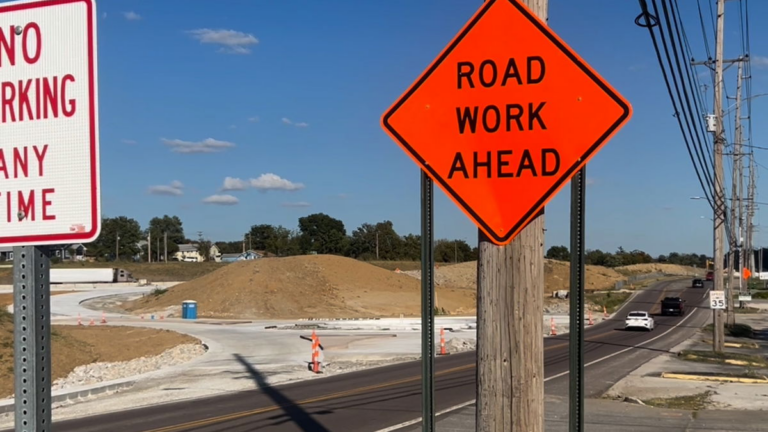
COLUMBIA, Mo. (KMIZ)
Drivers traveling along eastbound Interstate 70 near Range Line Street can expect some relief beginning Monday morning.
The Missouri Department of Transportation said Sunday night marks the final night of lane closures in the area, as crews complete ongoing paving and striping work.
Over the weekend, one lane of eastbound I-70 between Range Line Street and U.S. 63 was closed around the clock. MoDOT crews have been working continuously since Friday to construct new eastbound lanes near Paris Road, part of a major infrastructure improvement project.
“Just leave ahead of time. That is key,” driver Damian Dean, who frequently travels through the construction zone said. “Normally, I leave early enough that it doesn’t bother me, but when you forget about it, or when traffic backs up near Stadium Boulevard, that becomes a problem.”
All ramps in the area remain open, though MoDOT is encouraging people to drive with caution tonight as crews finish the final phase of this weekend’s work.
The department expects the road to fully reopen by 6 a.m. Monday.

NYC continues to deter dangerous ‘subway surfing’ after deaths of two young girls

NEW YORK (AP) — Ka’Von Wooden loved trains. The 15-year-old had an encyclopedic knowledge of New York City’s subway system and dreamed of becoming a train operator.
Instead, on a December morning in 2022, Ka’Von died after he climbed to the roof of a moving J train in Brooklyn and then fell onto the tracks as it headed onto the Williamsburg Bridge.
He is one of more than a dozen New Yorkers, many young boys, who have been killed or badly injured after falling off speeding trains. Other risks include being crushed between the train and tunnel walls and being electrocuted by high-voltage subway tracks. “Subway surfing” dates back a century but it has been fueled by social media.
Two girls found dead Saturday
Early Saturday morning, New York City police found two girls dead — ages 12 and 13 — in what apparently was a subway surfing game that turned fatal, authorities said. Metropolitan Transportation Authority President Demetrius Crichlow said in a statement that “getting on top of a subway car isn’t ‘surfing’ — it’s suicide.”
Authorities have tried to address the problem with public awareness campaigns — including a new one featuring Grammy Award-winning rapper Cardi B — and by deploying drones to catch thrill-seekers in the act. But for some, a more fundamental question is not being addressed: Why are kids like Ka’Von able to climb on top of subway cars in the first place?
“When Ka’Von died … literally two weeks later, another child died. And another one. That makes no sense,” his mother, Y’Vonda Maxwell, told The Associated Press, saying transit and law enforcement officials haven’t done enough. “Why should my child have not been the end?”
MTA says it is studying the issue
Making trains harder to climb, and train surfers more easy to detect with cameras and sensors, could be part of the solution, some experts say. The MTA, which operates the subway system, has said it is studying the issue. But it has yet to report any broad new rollout of technology or physical barriers that might make it harder for people to get on top of trains.
In June, Crichlow told a news conference to introduce a new public awareness campaign that the MTA was experimenting with pieces of circular rubber tubing designed to prevent a person from being able to climb between two cars to the top of a train.
It was being piloted in between two cars to make sure it would fit into the tight spacing of the tunnels and that it wouldn’t break down or harm service or riders, he said.
“So far the equipment seems to be holding up,” he said.
Six deaths last year from subway surfing
Six people died surfing subway trains in the city last year, up from five in 2023.
Tyesha Elcock, the MTA worker who operated the train Ka’Von rode the day he died, is among those who thinks more should be done to prevent deaths.
The first sign of trouble that day was when the train’s emergency brake kicked in, she said.
Elcock discovered Ka’Von’s body between the train’s seventh and eighth cars. A group of sad-faced teens on the train made it clear what had happened. “Did y’all leave your friend back there?” she asked them.
Elcock said another operator traveling in the opposite direction saw Ka’Von on the train’s roof and reported it over a radio. Because of patchy radio service, she said, she didn’t get the warning.
But she thinks an even simpler solution could have saved Ka’Von’s life: locking the doors at the ends of subway cars. That would cut off access to the narrow gaps between train cars where subway surfers use handholds to hoist themselves onto the roof.
“Lock it when we’re in service so people can’t climb up and be on top of the train,” Elcock said.
The MTA’s leaders have said that they looking into possible ways to prevent subway surfing, including engineering solutions, but the agency declined to make any of its safety experts available for an interview.
In 2023, Richard Davey, then the head of buses and subways for the MTA, said officials were “weighing” the option of locking doors between cars — which is now done only on a handful of 1980s-era trains. But he said that locking doors “brings its own risk.” Some New Yorkers have complained that locking the passageways between train cars might prevent them from escaping to another part of the train during an emergency.
Under questioning from City Council members and reporters last year, MTA officials ruled out some other physical interventions, including building more barriers to prevent access to tracks, or putting covers over the gaps between train cars to prevent would-be surfers from climbing up.
“Listen, you have to be able to do work on top of a train car,” MTA CEO Janno Lieber said at a news conference, adding that you can’t “cover it with barbed wire.”
MTA asks social media companies to help stop the trend
The MTA has asked social media companies to take down videos glamorizing subway surfing, and reported in June that, in 2025, more than 1,800 videos had been taken down.
It’s also promoted public service announcements telling people to “Ride inside, stay alive,” in voices of local teens and, with the city’s schools, released a comic-book themed campaign this past summer designed to show the dangers of subway surfing and impact on loved ones.
More than 300,000 New York City school children use the subway to get to and from school each day.
The NYPD reported that arrests of alleged subway surfers rose to 229 last year, up from 135 the year before. Most were boys, with an average age of around 14, according to police. The youngest was 9 years old.
Branislav Dimitrijevic, an engineering professor of the New Jersey Institute of Technology, said retrofitting trains to prevent roof access would be expensive.
“There’s so many stories in transportation where things can be fixed, but they cost a lot of money. And then you ask the public, ’Are you willing to (pay) for us to fix this? But your taxes would go up tremendously.’ And people say ‘no,’” Dimitrijevic said.
Dimitrijevic suggested the MTA might be able to install cameras and use artificial intelligence to detect riders trying to climb a train. Andrew Albert, a nonvoting member of the MTA board, said he has been asking the agency about the plausibility of physical sensors but hasn’t gotten a response.
The NYPD has patrolled popular subway surfing routes with field response teams and drones, reporting in July that it had used them to make 200 rescues, mostly of teens. But the missions can’t be everywhere at once. They also say they make home visits to the homes of subway surfers they’ve identified.
Trains in some other cities, such as Hong Kong and Dubai, aren’t easily climbable. They have streamlined bodies, lack handles on the outside and don’t open between cars.
Some rail systems have resorted to extreme tactics to keep people from riding on top of trains. In Indonesia, railway officials once installed hanging metal flails to try and deter passengers from riding atop train cars to avoid overcrowding. They also tried spraying riders with red paint and hitting them with brooms.
The MTA purchased a few new subway cars that don’t have the outdoor gaps exploited by subway surfers, but they represent just a sliver of the number currently in service, and won’t be deployed on lines popular for surfing anytime soon.
____
A subheading in this story has been corrected to show that there were six deaths last year, not this year.
____
Associated Press reporter Marc Levy in Harrisburg, Pennsylvania, contributed to this report.
Trucking industry facing ‘horrible’ rates, tariffs, Werner CEO says

With the theme of “The Road Ahead,” this year’s summit features keynotes, and strategic discussions on the trends shaping transportation, including fuel management, fraud protection, payments technology and more.
The second day of the conference featured a keynote address from Leathers, who cited weak rates, new tariffs, driver shortages and cargo theft as key risks — even as nearshoring fuels U.S.–Mexico trade growth.
Leathers, whose company is one of the largest U.S. trucking and logistics providers, noted that freight rates have been challenging in recent years, leaving many small carriers unable to reinvest in equipment or operations.
Omaha-based Werner Enterprises (NASDAQ: WERN) was founded in 1956 and has around 8,000 trucks and over 24,000 trailers. The company provides service across North America.
“What’s going on in the freight environment right now? Obviously, rates have been depressed, and although it is stable, they are stably horrible for the most part over the last several years, well below people’s operating costs in many cases. At a minimum, not a reinvestable rate level,” Leathers said.
With Class 8 truck orders at historic lows and OEMs scaling back production, he predicted it could take years to rebuild manufacturing capacity, leading to higher truck prices “at the time we can least afford for them to be more expensive.”
Tariffs squeeze supply chains
Tariffs were another key focus of his address. Leathers cautioned that only about half of the tariff impact has reached consumers so far, with the rest absorbed by suppliers and retailers — a strain he expects will increasingly filter through the supply chain.
He also raised concerns over new tariffs on trucks made in Mexico, despite USMCA’s trade protections, arguing they will further inflate equipment costs.
“On the truck side, two thirds of all or three fourths of all truck makers actually exist and make their trucks in Mexico. If I had been betting on this stage a year ago, I would have lost that bet because I would have said that USMCA would supersede and that there would be no additional tariffs on trucks from our neighbors. Clearly that is not the case as we stand here today,” Leathers said.
Leathers also highlighted the industry’s growing safety and compliance challenges, including renewed enforcement of English-language proficiency rules for CDL holders and the scrutiny of B-1 visa drivers operating cross-border routes.
Nearshoring strengthens U.S.–Mexico trade
Looking at broader trends, he pointed to nearshoring as a lasting shift that will deepen U.S.–Mexico trade ties. Werner already moves more than 300 cross-border loads daily, a number he expects to grow as U.S. companies boost investment in Mexico.
“Mexico is the only neighboring country or even nearshoring option that actually has good demographics,” Leathers said. “Very few places in the world do and Mexico actually does have as many people coming into the population. as they’re losing from the population and that’s true for the next 10 to 20 years.”
Cargo theft and supply chain security
Beyond the macroeconomic headwinds, Leathers also addressed rising cargo theft, calling it a “terrifying” trend fueled by organized crime. He urged shippers and carriers to strengthen vetting and technology safeguards to protect supply chains.
“Cargo theft has continued to rise. I think when you see a population that feels underdressed, that’s when risky behavior seems to always increase over time,” Leathers said.
“I think this is an area where not having proper vetting of every single man or woman on the road makes a difference. We know factually speaking from the FBI and others, there are in fact many criminal organizations outside the United States that are heavily involved in this work. There are organizations inside the U.S. as well, but the numbers are staggering.”
Trucking leaders say data will drive sustainable freight
Executives from FedEx, J.B. Hunt, and NFI Industries said the trucking industry’s path to sustainability hinges on efficiency and data-driven reporting, as customers and regulators press for greater transparency.
Speaking at the “Driving Green with Data: Executive Insights on Sustainability and Reporting” panel on Thursday, FedEx Express executive Mickey Black highlighted the company’s pledge to reach carbon neutrality by 2040.
“That commitment gave the entire organization a clear mandate,” Black said.
J.B. Hunt’s Jared Mounce outlined the carrier’s 32% greenhouse gas intensity reduction target by 2034, stressing that intensity goals better reflect efficiency as freight volumes grow.
NFI’s Alexa Branco emphasized the importance of tracking fuel consumption, idling, and emissions intensity to prove ROI and prepare for stricter reporting.
Panelists agreed shippers increasingly require emissions reporting in contracts, some now demanding lane- or package-level detail.
Sean ‘Diddy’ Combs sentenced to 50 months in prison for prostitution-related conviction

CNN
By Lauren del Valle, Nicki Brown, Kara Scannell, and Elizabeth Wagmeister
New York (CNN) – Sean “Diddy” Combs has been sentenced to 50 months, or just over four years, in prison for his conviction on two counts of transportation to engage in prostitution.
Federal District Judge Arun Subramanian announced the decision on Friday, Oct. 3, saying “a substantial sentence must be given to send a message to abusers and victims alike that abuse against women is met with real accountability.”
The judge noted that this is “hard time” away from Combs’ family, but also noting Combs will have a life after prison.
The judge said outpatient treatment and mental health programs were warranted. Subramanian also ordered Combs to serve five years of supervised release.
Combs’ lawyers had argued he should be released almost immediately, asking the judge to sentence him to no more than 14 months including time served. Prosecutors said he should’ve faced more than 11 years in prison.
Combs was found guilty of two counts of transporting individuals for prostitution in July but was acquitted of more serious sex trafficking and racketeering charges that could have led to a life sentence.
Subramanian said Cassie Ventura and “Jane” have “been through abuse and trauma that most of us cannot imagine.”
Subramanian thanked the victims for coming forward and said “I want to say first we heard you.”
“To Ms. Ventura, Jane, and the other victims here who came forward, I can only say — your families are proud of you and your children, when they’re old enough will be proud of you, and I am proud of you for telling the world what really happened,” Subramanian said.
“You were speaking to the millions of women out there who have been victims but feel invisible and powerless and had to suffer in silence,” he said. “You told those women and the world that violence behind closed doors doesn’t have to stay hidden forever. The number of people who you reached is incalculable.”
Arick Fudali, a lawyer who represents others who have filed lawsuit against Sean “Diddy” Combs, said he hope’s today’s sentencing encourages other victims to come forward.
Mining giant Grupo Mexico returns with new offer for Citi’s Banamex

Grupo Mexico said in a filing that the bid showed its
Sen. Arellano announces $1.5 million in state funding for Ashton streets project
State Sen. Li Arellano Jr., R-Dixon, has announced state funding for local infrastructure projects across counties in the 37th Legislative District.
The Village of Ashton was awarded $1.5 million that will cover its 2026 street project.
“Projects like these are crucial to our communities,” Arellano said. “By investing in local infrastructure, whether it’s sidewalks, bikeways, or streets, we’re improving both safety and usability. These improvements will not only make daily life easier but also help fuel local development and long-term growth.”
The Illinois Department of Transportation is awarding grants to support the maintenance and improvement of well over a dozen major infrastructure projects throughout the district. These include road resurfacing and maintenance, corridor and thoroughfare upgrades, pedestrian and bicycle path improvements, and more.
One of the largest projects receiving funding is Project ROCK in Dixon. IDOT is contributing more than $4.6 million toward the effort, which will expand recreation and mobility options for residents and visitors with a new pedestrian bridge over the Rock River and more than two and a half miles of recreational paths.
Sterling is receiving multiple investments, including a major award toward improvements on West LeFevre Road, which will receive nearly $5 million in state support. West LeFevre Road is a vital thoroughfare that carries two lanes of traffic and connects several key community destinations, including local high schools, medical facilities, parks, and sports complexes.
“These local cities and governments deserve praise for putting together strong projects, which were absolutely critical,” Arellano said.
He thanks IDOT for its support in making these projects possible.
“These investments mark a strong state/local partnership committed to safer travel and greater accessibility across the 37th District,” he said.
Chicago transit fiscal cliff smaller, major cuts still possible
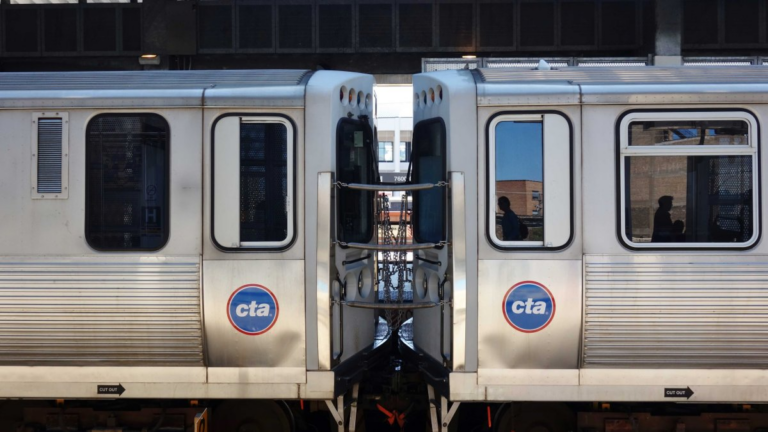
Transportation officials said Friday the fiscal cliff isn’t as bad as first thought, but layoffs and service cuts are still a possibility in the Chicago area.
In recent weeks, the Regional Transportation Authority warned of a $771 million shortfall, created in part by the end of federal COVID relief money. The RTA, which includes the CTA, Metra and Pace, warned of a smaller budget shortfall, which could mean Chicago-area transit will be safe for this year, but higher deficits remain on the horizon.
Previously, the transit agencies were talking about service cuts as high as 40% and mass layoffs of employees. Those agencies are looking at fare increases of about 10% across the system. At the CTA alone, that could account for $30-35 million dollars.
Other increases could bring in more than $450 million in revenue.
This buys the transit agencies some time, but big deficits could have everyone talking about service cuts next year. Without an increase in state funding, the 2027 deficit is expected to be almost $780 million. In 2028, that number could top $888 million.
That’s why Chicago Mayor Brandon Johnson said he is looking to build a coalition in Springfield to bring in the needed funding.
Seattle Black Limo Named Among Seattle’s Trusted Limo

SEATTLE, Oct. 03, 2025 (GLOBE NEWSWIRE) — As Seattle’s demand for premium ground transportation grows, Seattle Black Limo has been recognized as one of the most trusted providers of Seattle limo service. Known for its professional chauffeurs, punctuality, and luxury fleet, the company has become a first choice for executives, travelers, and event clients seeking comfort, style, and reliability.
Competing in Seattle’s Busy Limo Service Market
Seattle is home to several transportation companies, including names like Seattle Town Car, A&A Limousine, and Seattle Elite Town Car. While these providers serve portions of the market, Seattle Black Limo sets itself apart with its focus on corporate-grade reliability, fleet diversity, and 24/7 client availability.
Unlike services that specialize only in airport transfers or event bookings, Seattle Black Limo delivers a complete suite of chauffeur-driven solutions, making it a preferred choice for both local residents and international travelers.
Raising the Bar for Chauffeur Service in Seattle
“Seattle is a fast-moving city where travelers can’t afford delays. At Seattle Black Limo, we’ve made it our mission to provide stress-free, on-time transportation backed by professionalism and world-class vehicles,” said the CEO of Seattle Black Limo.
With a fleet of luxury sedans, SUVs, and limousines, Seattle Black Limo provides services including:
Seattle Airport Limo Service – Reliable transfers to and from Seattle-Tacoma International Airport (SEA).
Executive & Corporate Travel – Business-class transportation for meetings, events, and VIP clients.
Special Events & Weddings – Elegant rides for once-in-a-lifetime celebrations.
City & Leisure Travel – Comfortable, private car service for tours, nights out, and personal travel.
Why Seattle Black Limo is Trusted by Clients
Accredited and recognized as a leading Seattle limo service provider
Luxury fleet designed for both individuals and groups
Transparent pricing with no hidden costs
Courteous chauffeurs available 24/7
Reputation built on punctuality and professionalism
Seattle’s Growing Demand for Chauffeur Services
With Seattle-Tacoma International Airport ranking among the busiest hubs on the West Coast, the city’s need for reliable transportation has never been higher. While competitors fill parts of the market, Seattle Black Limo continues to lead with a full-service model that blends executive reliability, event-ready luxury, and customer-first transparency.
About Seattle Black Limo
Seattle Black Limo is a premier provider of Seattle limo service, offering airport transfers, corporate travel, wedding transportation, and city rides. Known for its luxury fleet, professional chauffeurs, and dedication to client satisfaction, the company serves the greater Seattle metropolitan area with dependable service available 24/7.
For booking Seattle Limo Service, visit: https://www.seattleblacklimo.com/reservation/
Seattle Black Limo
Website: https://www.seattleblacklimo.com Phone: (855) 463-5466
Email: info@seattleblacklimo.com
Address: 2640 S Holly St, Seattle, WA 98108, United States
Disclaimer: This content is provided by Seattle Black Limo. The statements, views, and opinions expressed in this content are solely those of the content provider and do not necessarily reflect the views of this media platform or its publisher. We do not endorse, verify, or guarantee the accuracy, completeness, or reliability of any information presented. This content is for informational purposes only and should not be considered financial, investment, or business advice. All investments carry inherent risks, including the potential loss of capital. Readers are strongly encouraged to conduct their own due diligence and consult with a qualified financial advisor before making any investment decisions. Neither the media platform nor the publisher shall be held responsible for any inaccuracies, misrepresentations, or financial losses resulting from the use or reliance on the information in this press release. Speculate only with funds you can afford to lose. In the event of any legal claims or concerns regarding this article, we accept no liability or responsibility. Globenewswire does not endorse any content on this page.
Legal Disclaimer: This media platform provides the content of this article on an
Transportation Sec Sean Duffy shares FAFO video targeting Dems amid shutdown

NEWYou can now listen to Fox News articles!
With Washington, D.C., gridlocked over the government shutdown, Transportation Secretary Sean Duffy took his case to social media Friday, sharing a viral meme video that uses the
TSA abuse of no-fly lists was more Biden-era ‘quiet tyranny’
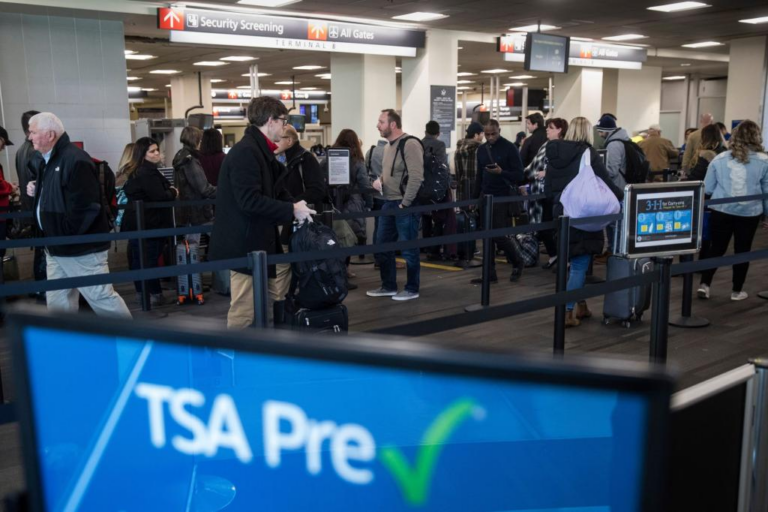
It wasn’t just Tulsi Gabbard: The “quiet tyranny” under President Joe Biden saw no-fly lists used to punish countless average Americans.
Simply resisting mask mandates was enough to get 19 Americans stuck on watchlists, more than half on no-fly lists, the Department of Homeland Security revealed Tuesday.
This would be demented at any time, but the targeting of non-maskers under Biden’s Transportation Security Administration chief David Pekoske was part of “Operation Freedom to Breathe” (such a sick name), which launched in September 2021 — long after the worst of the pandemic was over, and nearly six months after the CDC relaxed its rules on indoor masking.
So the Biden crew was penalizing Americans not for posing any danger to others, but for having the audacity to buck the regime’s obsessive micromanaging during COVID.
The TSA put another 280 people on watchlists, and five on no-fly lists, for alleged involvement in the Jan. 6 protests — on the basis of half-baked “intelligence,” such that one no-fly designation hit a National Guardsman who was deployed to DC for Biden’s inauguration and wasn’t even at the Capitol during the riot.
The TSA ignored warnings from its own ranks, including its chief privacy officer’s reported email: “TSA is punishing people for the expression of their ideas when they haven’t been charged, let alone convicted of incitement or sedition.”
The federal no-fly list is supposed to focus on people with suspected terror ties, and for good reason: Being barred from boarding any domestic flight can be life-altering, a consequence to mete out only in the most extreme cases — not because someone is on the wrong side of the party in power.
Even being put on a watchlist is a pain, meaning at least constant hold-ups at airport security.
And the creepy directives even had air marshals diverted to spying on these “suspects,” often even as they left the airport.
The Biden TSA’s abuses are obscene, but also completely in line with how the rest of the administration behaved.
From the FBI pressing social-media sites to censor conservatives to its probing of right-wing organizations to the Justice Department’s relentless lawfare campaign against President Donald Trump, using state power to target political opponents was the norm under Biden.
And “prestige” media completely ignored it all — because someone on their side was sitting in the Oval Office.
Yes, the right as well as the left is capable of weaponizing the state against political enemies, but only Democrats get a pass.
And the same media “watchdogs” are still turning a blind eye as the full truth slowly surfaces about the Biden team’s stomping on Americans’ freedoms.
MBTA responds to Trump administration’s safety questions

The MBTA has responded to the Trump administration’s demand for information on how it’s working to make travel safer in the Boston area.
Transportation Secretary Sean Duffy sent a letter last month to MBTA General Manager Phillip Eng, giving the agency until Thursday to explain how it is keeping passengers and workers safe and how it is paying for those efforts.
Duffy said the federal government may redirect or withhold funding from the MBTA if it did not respond to the request.
In a letter to Duffy, dated Thursday, Eng pointed to progress the MBTA has made in recent years.

Diddy Sex Worker, Exotic Male Dancer ‘The Punisher’ Weigh in on Sentencing

We finally know how much time Diddy will spend behind bars after his transportation for prostitution convictions … and a sex worker and exotic dancer involved with the case are weighing in on the conclusion.
As you know … Judge Arun Subramanian ordered Diddy to serve a little over 4 years in a federal prison … but he’s already spent over a year in jail and will get credit for time served.
Sharay Hayes — the exotic male dancer nicknamed
White Paper: State of the Industry – October 2025

The October 2025 “State of the Industry Report” — presented in affiliation with Ryder — shares an in-depth overview across the trucking, maritime and intermodal markets, as well as what to expect in the coming weeks. The data contained within the report provides breakdowns of capacity, volumes and rates.
In this report, you will find:
Carriers are struggling to keep container rates stable as seasonality is upended by tariff disruptions, increasingly turning to blank sailings to do so.
Truckload demand is on an unseasonal decline, yet tender rejections and carrier rates suggest a nationwide tightening of capacity — albeit a slow one.
Although international intermodal volumes have been contracting since early July, rising domestic volumes have more than compensated for this decline.
Sentiment among manufacturers is growing darker, but consumer spending has been surprisingly robust throughout the summer so far.
Weakness in the U.S. labor market overshadowed strength in other pockets of the economy at the Federal Reserve’s September meeting, after which the Fed resumed its cutting cycle for interest rates.
Download the complimentary report today to access the full insights.
What A Government Shutdown Means For The DOT & The Trucking Industry

It’s official: There’s a government shutdown, which federal agencies expect will lead to the furlough of numerous government employees. The trucking industry, while comprised of mostly private businesses, still relies on government entities to ensure that operations are safe and going smoothly. The Federal Motor Carrier Safety Administration (FMCSA), a division of the Department of Transportation, deals with safety as it pertains to trucks and also handles CDLs (commercial drivers licenses) used by semi-truck drivers. The DOT is also responsible for weighing semi-trucks at stations along the side of the road. Naturally, those in the trucking industry might have concerns about how or if this government shutdown will affect them.
According to the Department of Transportation’s Government Shutdown Plan, the agency isn’t going to furlough any of the 1,084 employees in the Federal Motor Carrier Safety Administration division, which handles trucking. According to the plan,
WEX OTR Summit unveils digital fueling tools and AI-driven vision

Portland, Maine-based WEX is a provider of payment processing and information management services to the commercial and government vehicle fleet industry.
The OTR summit kicked off with remarks from Carlos Carriedo, WEX’s COO of Americas payments and mobility, underscoring the company’s vision for the future.
“The road ahead for trucking is being shaped by digital transformation, from how fleets fuel to how they pay and protect against fraud,” Carriedo said on Wednesday. “WEX is here to help our customers navigate that change and thrive in the years to come.”
Product Roadmap: From friction to digital-first fueling
During the session “Fueling the Future: The WEX OTR Product Roadmap,” WEX executives Ryan Taylor and Cade Mund outlined a shift away from traditional, error-prone fueling processes to an app-driven, digital wallet model.
The company highlighted its 10-4 mobile app, designed to give small fleets and independent operators access to discounts and faster payments, reporting a 50% month-over-month growth in September usage.
“Every transaction and every route matters,” Taylor said. “Margins are tighter than ever, and digital-first fueling combined with AI-driven efficiency is where the industry must go next.”
A Wednesday panel discussion, “New Roads, New Rules: Innovation Changing the OTR Game,” moderated by WEX Chief Digital Officer Karen Stroup, brought together technology leaders from Platform Science, Trucker Path, Storyboard, and Envoy AI.
The panelists pointed to AI-driven voice assistants, predictive parking analytics, and interoperability of connected-vehicle platforms as breakthrough areas already transforming daily operations.
Robert Nathan, founder and CEO of Envoy AI, said AI could soon eliminate the industry’s overreliance on fragmented point solutions.
“AI will start to gravitate towards larger, data-centric platforms … trucking companies and brokers can’t manage dozens of point apps anymore,” Nathan said.
Chris Oliver, chief marketing officer of Trucker Path, pointed to predictive analytics for parking availability as a concrete AI use case improving driver productivity and safety.
The panel also discussed how voice-based interfaces could reduce distractions in the cab while enabling real-time workflow automation.
“What I am enthusiastic about when it comes to voice is — No. 1, how can we start to use voice to connect into all these systems where a driver could ask questions, do the things that they need to,” JP Gooderham, CEO of Storyboard, a platform that enables operations teams to stay connected with drivers and other employees.
“No. 2 is the nature of driving … We know that every time a driver looks away from the road, there’s a higher increase in the likelihood of an incident. We already know that phones and calls and things like that (16:41) are so central to the industry. So as an interface, I think we’re going to see some tremendous voice products.”
From Clipboards to Control Towers: The Business of Reinventing School Transportation

For decades, the yellow school bus has been a static fixture of American education — dependable, but rarely innovative. Today, it is becoming a testbed for artificial intelligence, electrification, and real-time logistics once reserved for airlines and supply chains. Among the strategists shaping this shift is Ravindra Kumar Patro, whose work with districts from Los Angeles to Roanoke has helped reimagine student transportation as a technology-driven, mission-critical service. By applying the rigor of modern logistics to a legacy system, Patro has shown how efficiency, safety, and sustainability can be built into the everyday ride to school.
Raising Tech standards in Los Angeles, CA
At the Los Angeles Unified School District (LAUSD), one of the largest education systems in the country, Ravi initiated the adoption of AI-powered routing algorithms with predictive traffic modeling. The tech setup he designed re-optimized route-based, live road conditions, weather data, and student attendance patterns, comparing dynamic dispatch systems, being used by new-age rideshare fleets.
School Districts have now rolled out apps that give families real-time tracking and automated alerts of their kids’ movement — a service that parents and school administrators have long demanded. Independent reporting noted LAUSD’s move toward
Sean ‘Diddy’ Combs says he’s ‘humbled and broken’ in letter to judge ahead of sentencing

Sean “Diddy” Combs made an impassioned plea to the judge who oversaw his trial in a letter on Thursday, one day before Combs is set to be sentenced after being convicted in July on two counts of transportation to engage in prostitution.
“I lost my way. I got lost in my journey. Lost in the drugs and the excess. My downfall was rooted in my selfishness. I have been humbled and broken to my core,” Combs wrote, adding, “The old me died in jail and a new version of me was reborn. Prison will change you or kill you—I choose to live.”
Each count for which Combs was convicted carries a maximum sentence of ten years in prison. He was acquitted of the more serious charges of sex trafficking and racketeering conspiracy.
Combs’ federal criminal case played out over two months in a Manhattan courtroom over the summer.
“I realize that this trial has received a tremendous amount of global press and Your Honor may be inclined to make an example out of me,” Combs wrote. “I would ask Your Honor to make me an example of what a person can do if afforded a second chance.”
His letter follows in full below:
Dear Judge Subramanian:
I hope this letter finds you well and in good health and spirits. Thank you for the opportunity to express my thoughts to you. First and foremost, I want to apologize and say how sincerely sorry I am for all of the hurt and pain that I have caused others by my conduct. I take full responsibility and accountability for my past wrongs. This has been the hardest 2 years of my life, and I have no one to blame for my current reality and situation but myself. In my life, I have made many mistakes, but I am no longer running from them. I am so sorry for the hurt that I caused, but I understand that the mere words “I’m sorry” will never be good enough as these words alone cannot erase the pain from the past.
Over the past thirteen months, I have had to look in the mirror like never before. My pain became my teacher. My sadness was my motivator. I have to admit, my downfall was rooted in my selfishness. The scene and images of me assaulting Cassie play over and over in my head daily. I literally lost my mind. I was dead wrong for putting my hands on the woman that I loved. I’m sorry for that and always will be. My domestic violence will always be a heavy burden that I will have to forever carry. The remorse, the sorrow, the regret, the disappointment, the shame. I honestly feel sorry for something that I couldn’t forgive someone else for: if they put their hands on one of my daughters. This is why it is so hard for me to forgive myself. It is like a deep wound that leaves an ugly scar.
Your honor, I thought I was providing for Jane concerning her and her child, but after hearing her testimony, I realized that I hurt her. For this I am deeply sorry.
I lost my way. I got lost in my journey. Lost in the drugs and the excess. My downfall was rooted in my selfishness. I have been humbled and broken to my core. Jail is designed to break you mentally, physically and spiritually. Over the past year there have been so many times that I wanted to give up. There have been some days I thought I would be better
off dead. The old me died in jail and a new version of me was reborn. Prison will change you or kill you—I choose to live.
Every day since my incarceration, as difficult as my circumstances currently are, I have made the best of my time by reading books, writing, working out, or in therapy obtaining the tools and knowledge to deal with my past drug abuse and anger issues. I have been putting in the work and working diligently to become the best version of myself to ensure that I never make the same mistakes again.
I realize that I am in a situation where no amount of money, power or fame can save me. Only God can save me. My grandmother used to teach me that God makes no mistakes and that everything He does is for your good. I believe that a bad situation can be used for good. Although this situation has been the hardest and darkest time in my life, good things have come out of my incarceration. For starters, I am now sober for the first time in 25 years. I have been trying my best to deal with my drug abuse and anger issues and take accountability as well as positive steps towards healing. One of the most beautiful things I have experienced is being asked by my fellow inmates to teach and mentor them. They wanted to learn what I did to become a successful business man. I was inspired by their hunger and desire to learn information in order to not only set goals but achieve any goal/dream that their hearts desire. I started teaching a 6 week program called Free Game (title given by my fellow inmates), which I was able to have approved and sanctioned by the Bureau of Prisons (BOP). I don’t just teach about my success, I also teach about my mistakes and failures. It has truly been a blessing to do something positive in a negative situation. It has been beautiful to see the newfound hope in my fellow inmates’ eyes. The most shocking thing was to see the unity and the peace this class has produced. As you are probably aware, jails and prisons are segregated places. However, in our class, we have Black, Spanish, White and Asian all together in one room learning and working together. We even have an interpreter for the Spanish speaking inmates. The biggest miracle that I’ve seen with this class is all of the gangs such as Bloods, Crips, MS-13s, Trinitarios and 18th Streets, in one room working together. I am also proud to say that since this class started, there have been no fights in our unit. This class has also helped me in my time of need and despair. Being able to do something good for others has also given me much needed hope. God blessed me with this opportunity to help others and I will continue to do so.
I ask you for mercy today, not only for my sake, but for the sake of my children. God blessed me with 7 beautiful children—3 sons and 4 daughters. Their names are Quincy, Justin, Christian, Chance, Jessie, D’lia and the newest addition, a 2 year old daughter, Love. Four of my children lost their mother, Kim Porter, as she tragically passed away in 2018. I am their only parent. I have failed my children as a father. My father was murdered when I was 3 years old so I know first-hand what it is to not have a father. More than anything, I just want the opportunity to return home and be the father that they need and deserve. God also blessed me with the greatest mother in the world. My mother sacrificed her life and dreams to provide for me and my younger sister, Keisha. She worked 3 jobs to make sure we had a roof over our heads, clothes on our backs and the best education. My mother is now 84 years old and she recently had brain surgery. Despite her own health challenges, she attended my trial every day. I have always been her primary caregiver. It breaks my heart that I put myself in this situation and for the first time, I am unable to be there for my mother when she needs me most . As I write you this letter, I am scared to death. Scared to spend another second away from my mother and my children. I no longer care about the money or the fame. There is nothing more important to me than my family. I understand that one factor the Court has to consider is deterrence. Deterrence for me and for others to ensure that no one follows in my footsteps and makes the same mistakes.
For over a year, I have been locked in one room with twenty-five other incarcerated people, sharing the same one room. In this room that I share, there are no windows, there is no natural/clean air, there is no sunlight and we all live in one room. We eat, sleep, use the toilet, take showers, and prepare meals all in the same room. The conditions that my actions have placed me in are inhumane. I don’t tell you this for pity or sympathy. I’m simply sharing my truth and the truth of my fellow incarcerated people. We have no clean drinking water and we boil our drinking water. We all share one washing machine (which is broken). I am surrounded by drugs and live every day with the constant threat of being stabbed or losing my life. Again—I am not expecting pity or sympathy, but my time at MDC has changed me forever!
Prior to being in jail, I took care of and was present for my family. Being in jail, and because of my conduct, I lost the ability to care for my mother. I lost the ability to effectively raise and support my children. I have missed my three (3) daughter’s proms and graduations. I have missed taking one of my daughters to college. I have lost the freedom to teach my two year old how to speak, dance, play, or be there to console her when she falls down or has a nightmare.
I started from nothing and worked hard to earn everything I had. But because of my conduct, I have lost all of my businesses. I have lost my career. I lost the charter schools that I started and I have destroyed my reputation and stained the reputation of those that worked for me. I lost my being present with my family. Between of all of my losses and lessons, I can state for a fact that I will never be in another criminal Courtroom again and I do not believe any other person would do anything similar from fear of similar punishment. If you give me a chance, I would like the opportunity to share my story with people to prevent at least one person from making the mistakes that I’ve made.
I can’t change the past, but I can change the future. I know that God put me here to transform me. Since incarceration, I have gone through a spiritual reset. I’m on a journey that will take time and hard work. I’m proud to say I’m working harder than I ever have before. I’m committed to the journey of remaining a drug free, non-violent and peaceful person. I thank God that I’m stronger, wiser, clean, clear and sober. God makes no mistakes. I realize that this trial has received a tremendous amount of global press and Your Honor may be inclined to make an example out of me. I would ask Your Honor to make me an example of what a person can do if afforded a second chance. If you allow me to go home to my family, I promise I will not let you down and I will make you proud.
Today, I humbly ask you for another chance—another chance to be a better father, another chance to be a better son, another chance to be a better leader in my community, and another chance to live a better life. I am writing this not to gain any sympathy or pity, this experience is simply the truth of my existence and has changed my life forever and I will never commit a crime again
Thank you for your time and consideration.
Sean Combs
Diddy Writes Apologetic Letter To Judge For Causing
Diddy has gotten a lot of supportive letters to the judge ahead of his sentencing for Mann Act violations tomorrow (Friday, October 3). Federal Manhattan court convicted him of transporting individuals across state lines with intent of prostitution. The day before Sean Combs’ sentencing hearing (Thursday, October 2), he chose to submit a letter of his own to Judge Arun Subramanian apologizing for his actions and asking for compassion.
The four-page letter, obtained by TMZ, opens with an apology for all the
Diddy’s Doctors To Testify About His Sex Life At Sentencing

Tomorrow (October 3), Diddy will finally learn his fate in his criminal case. In July, he was found not guilty of racketeering conspiracy and sex trafficking following roughly a month of trial. He was found guilty of two counts of transportation for prostitution.
Each count carries a maximum sentence of ten years, meaning he could face up to 20 years in prison total. The prosecution is recommending 11 years and three months while the defense is pushing for as little time as possible.
TMZ reports that two doctors are expected to take the stand tomorrow during the sentencing. One of them, Columbia University psychiatrist Dr. Kreuger, has reportedly evaluated the mogul and determined that he’s
Diddy apologizes for ‘hurt and pain’ in court letter before sentencing hearing

NEWYou can now listen to Fox News articles!
Sean
Amazon to resume drone delivery following crash in Arizona

Amazon will restart its drone delivery service in Arizona beginning Friday as two federal agencies continue to investigate a crash that occurred earlier this week.
Amazon suspended operations in the West Valley of the Phoenix Metro area — currently its only commercial market — following a crash Wednesday. Two of the company’s Prime Air delivery drones collided with the boom of a crane near its same-day site in Tolleson, Arizona, which sent them crashing to the ground.
Amazon has been delivering packages, weighing up to five pounds, to customers via its Prime Air drone service in the West Valley of Phoenix since November 2024.
Amazon spokesperson Terrence Clark said the company will continue to support “ongoing reviews by relevant agencies.” The National Transportation Safety Board and Federal Aviation Administration announced Thursday that investigations into the crash are underway.
“Safety is our top priority, and we’ve completed our own internal review of this incident and are confident that there wasn’t an issue with the drones or the technology that supports them,” Clark said in an emailed statement. “Nonetheless, we’ve introduced additional processes like enhanced visual landscape inspections to better monitor for moving obstructions such as cranes.”
The program has faced several setbacks over the years, including the departure of key executives, as the company pushes towards its goal of using drones to deliver 500 million packages per year by the end of the decade.
Amazon halted testing of its drones after a mid-air collision involving two of its models in Oregon in December 2024. At the time, Amazon said it would suspend drone deliveries in College Station, Texas and Arizona pending a software update to its drone fleet. Amazon no longer has operations in College Station.
Lawmakers voting on 2026 budget, but fate of marijuana tax uncertain

The budget votes began two days into the start of the 2026 fiscal year, after lawmakers passed a stopgap budget Oct. 1.
The budget cuts many state agencies but provides about $1.1 billion extra for the Michigan Department of Transportation.
LANSING — Michigan lawmakers unveiled a long-awaited budget deal Oct. 2 that makes funding cuts to many state agencies while allocating an extra $1.1 billion to the Michigan Department of Transportation, which is responsible for fixing state roads and bridges.
The budget proposals totaled $51.8 billion for general government and $24.1 billion for education, for a $75.9 billion budget total. But a House Fiscal Agency report shows that total artificially reduced by the way billions in federal funding is accounted for, by moving Medicaid money to contingency funds where they are not included in the budget total. It’s not yet clear how the total topline number will compare to the 2025 fiscal year’s $82.5 billion total.
For the fiscal year ending Sept. 30, 2026, lawmakers have crafted a K-12 education budget that proposes almost $21.3 billion in school aid funding, which is up slightly from 2025, according to a Senate and House Fiscal Agency analysis.
The proposed school aid budget would increase the per-pupil funding grant from $9,608 to $10,050, a $442 increase.
Though the spending plans for general government and school aid were approved with unanimous bipartisan votes in conference committees charged with resolving differences between the House and Senate, prior to expected votes in the full House and Senate, questions lingered Oct. 2 about the fate of a controversial proposed 24% wholesale tax on marijuana, which is a key element of the road funding plan reached between Gov. Gretchen Whitmer and lawmakers from both parties.
State Rep. Alabas Farhat, D-Dearborn, who served on the conference committee that sent the spending plan to the floor, kicked off a House vote on the general government budget with a bit of levity and a victory all lawmakers could celebrate.
“Among other things, the Detroit Tigers won today,” he said. He celebrated the spending plan, including tax cuts, road funding and social safety net programs. He said that it also provided proof that Democrats and Republicans can come together. While the budget is “not perfect,” he said, “it is what we were sent here to do.”
House Appropriations Committee Chair state Rep. Ann Bollin, R-Brighton Township, followed Farhat to say that the budget process reflected a different approach that included greater transparency and going through each spending item line by line, with the intent of rooting out waste, fraud, and abuse..
“We put principles and people first,” Bollin said.
The budget bill passed the House 101-8 and moved on to the Senate.
The proposed $51.8 billion general government budget finds savings in multiple departments. The comparable total for the 2025 fiscal year was $54.7 billion, according to the House Fiscal Agency. House Speaker Matt Hall has spoken out strongly against the unfilled state government positions, describing them as
NTSB, FAA to investigate after 2 Amazon delivery drones crash in Arizona

WASHINGTON — The National Transportation Safety Board and Federal Aviation Administration said Thursday that they would investigate the collisions of two Amazon Prime Air delivery drones with the boom of a crane in Tolleson, Arizona, a day earlier.
Amazon began drone deliveries in the Phoenix metro area’s West Valley from its same-day site in Tolleson in November, allowing customers to purchase an eligible item weighing 5 pounds or less and receive it by drone in under an hour.
The online retailer, which paused drone deliveries in Arizona on Thursday, said they would resume on Friday.
“Safety is our top priority, and we’ve completed our own internal review of this incident and are confident that there wasn’t an issue with the drones or the technology that supports them,” Amazon spokesperson Terrence Clark said.
“Nonetheless, we’ve introduced additional processes like enhanced visual landscape inspections to better monitor for moving obstructions such as cranes,” he added.
Amazon has a goal of delivering 500 million packages annually by drone by the end of 2030.
In 2023, it began delivering prescription medications by drone in partnership with Amazon Pharmacy to customers in College Station, Texas.
In August, the U.S. Transportation Department proposed new rules to speed deployment of drones beyond the visual line of sight of operators, a key change needed to advance commercial uses like package deliveries.
“It’s going to change the way that people and products move throughout our airspace … so you may change the way you get your Amazon package, you may get a Starbucks cup of coffee from a drone,” Transportation Secretary Sean Duffy said at the time.
FAA Would Furlough 11,000 Workers in Govt Shutdown
WASHINGTON (Reuters) — The Department of Transportation said on Tuesday that more than 11,000 employees at the Federal Aviation Administration will be furloughed if government funding lapses at midnight Eastern time.
U.S. airlines have warned that a partial federal government shutdown could strain American aviation and slow flights, as air traffic controllers and security officers would be forced to work without pay and other functions would be halted.
The Transportation Department said the FAA would continue to hire air traffic controllers, and field training of controllers would continue. During prior government shutdowns, the FAA suspended hiring and most training of air traffic controllers.
More than 13,000 current controllers would be required to continue working but would go unpaid until the shutdown ended, the FAA said.
The FAA has about 45,000 employees. In total, the Transportation Department would furlough 12,200 of 53,717 employees, including those at the FAA.
The FAA also said certification activities would continue for operational safety functions of aircraft and engines, as well as commercial space launch oversight and licensing.
NTSB report reveals what was going on inside the San Diego control tower when two planes nearly collided on the runway

By Aaron Cooper, CNN
(CNN) — A distracted controller, along with a supervisor trying to fix a broken printer, led to two planes nearly colliding in 2023, a new report from the National Transportation Safety Board found.
Southwest Airlines Flight 2493 was waiting to take off on San Diego International Airport’s Runway 27, when controllers cleared a Cessna Citation private jet to land on the same runway, CNN reported at the time.
The Citation pilot saw the Southwest Boeing 737 and asked the tower what was going on.
“Verify 4HV is still clear to land?” asked the pilot of the Citation.
“Citation 4HV, go around. Fly the published missed approach,” the controller responded.
Now, the final investigative NTSB report illustrates what was happening in the air traffic control tower during those crucial moments.
The local controller was distracted, the report said, talking to another air traffic control facility about the wrong altitude assigned to a different departing aircraft.
“They stated that they had used poor judgment in prioritizing their duties,” the report read. ”This duty prioritization was not consistent with guidance.”
Meanwhile, the operations supervisor in the tower was focused on trying to fix a printer which prints strips of paper with flight information and had jammed.
“They stated that they chose to troubleshoot the primary printer rather than switching to the backup, and that this drew their attention away from the operation at the time of the incident,” the report read.
A surface radar alarmed in the tower and warned the controllers about the near collision, but the planes were already dangerously close.
The NTSB report concluded the controller’s “poor judgment in duty prioritization” caused the incident, and the supervisor’s focus on the printer contributed.
CNN’s Pete Muntean and Alexandra Skores contributed to this report.
Highway 54 repairs this week to affect access to roads in Callaway County
COLUMBIA, Mo. (KMIZ)
Pavement repairs are scheduled this week for different parts of Highway 54 in Callaway County, according to a Tuesday press release from the Missouri Department of Transportation.
On Wednesday, MoDOT crews will close the driving lane of eastbound Highway 54 that will require closing access to Route T.
On Thursday, the passing lane will be closed, along with the crossover between east- and westbound traffic and the entrance to County Road 176, the release says.
The closures are expected to last from 6 a.m.-4:30 p.m. each day, the release says.
Charleston County hears recommendation for future transportation sales tax
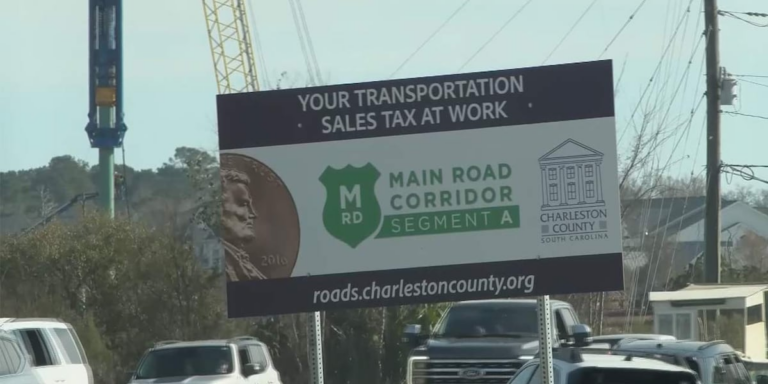
NORTH CHARLESTON, S.C. (WCSC) – As the current sales tax in Charleston County is soon set to expire, the county council will hear a recommendation for a potential future transportation sales tax at the council meeting on Tuesday night.
The current half-cent sales tax that has helped the county with transportation, infrastructure and greenspace since 2004 is set to expire in 2027.
“County council is considering extending the local option sales tax so that we can continue to invest in our infrastructure and preserve our quality of life here in Charleston, whether that be with traffic, green space or transit,” Eric Adams, Charleston County Public Works Director, says.
The council recently created a new committee to help guide the future of the county’s transportation funding. The committee, made up of the nine current council members, will look back at the sales tax program’s success, what remains to be done, and what the future could bring. Their main goal is to seek community input for the potential future sales tax. Over the next few months, the county will host meetings, sessions and collect feedback through surveys.
This approach also comes after community members voted against a referendum when the transportation sales tax was on the November ballot in 2024. Officials say they don’t want to move forward with the sales tax without first hearing from the community.
“We’ve started a new process as we move forward into November of 2026 to be very transparent and also seek public input on what the public wants to see as far as investment categories, but also projects that they would like to see,” Adams says. “We’re going out to our municipal partners, to stakeholders and to the public at large.”
County officials say the sales tax would be the same as it has been, and the only thing that would change is what projects it would fund.
Since 2004, two different transportation sales taxes have directed 62% of funding to infrastructure projects, including bike and pedestrian improvements, 25% to public transit and 13% to greenbelt preservation.
Some of the major infrastructure projects include resurfacing roads, creating bike and pedestrian paths and improving intersections. The tax is also helping fund the Lowcountry Rapid Transit system and the Palmetto Commerce Interchange.
A recently released report revealed that all the funding generated from taxes led to a total of $4.56 billion in community infrastructure investments.
Officials say the transportation sales tax must continue because of the population growth throughout Charleston County. The population has grown more than 50% since 2004, and it’s projected to increase by over 42,000 in the next decade.
“The population is increasing significantly, which also means we need to keep up with our infrastructure so that we can preserve that quality of life that we enjoy so much,” Adams says.
The recommendation at tonight’s meeting is preliminary, and officials say their priority is to hear from the community before a decision is made.
Charleston County moves forward with potential future transportation sales tax
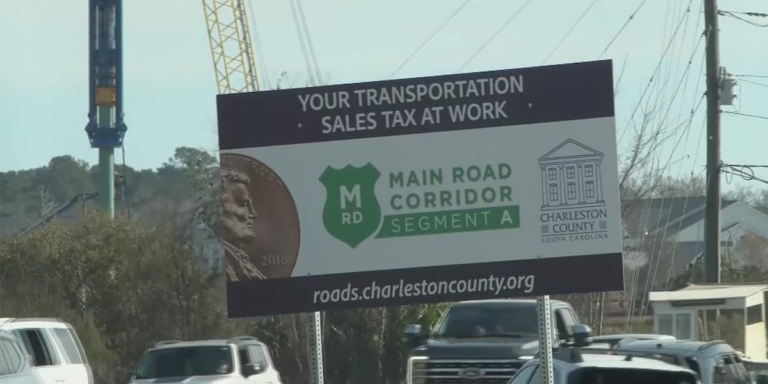
NORTH CHARLESTON, S.C. (WCSC) – As the current sales tax in Charleston County is soon set to expire, the county council decided to move forward with a potential future transportation sales tax at the council meeting on Tuesday night.
The current half-cent sales tax that has helped the county with transportation, infrastructure and greenspace since 2004 is set to expire in 2027.
“County council is considering extending the local option sales tax so that we can continue to invest in our infrastructure and preserve our quality of life here in Charleston, whether that be with traffic, green space or transit,” Eric Adams, Charleston County Public Works Director, says.
The council recently created a new committee to help guide the future of the county’s transportation funding. The committee, made up of the nine current council members, will look back at the sales tax program’s success, what remains to be done, and what the future could bring. Their main goal is to seek community input for the potential future sales tax. Over the next few months, the county will host meetings, sessions and collect feedback through surveys.
This approach also comes after community members voted against a referendum when the transportation sales tax was on the November ballot in 2024.
“The community said no, and so we heard that and we respect that,” Rev. Kylon Middleton, Charleston County Council Chairman, says. “We work for them right, and so we had to go back to the drawing board, trying to figure out how we could better, more robustly engage the community so that they are able to be aware of the things that we have done well and the things that we intend to do so that we can improve the quality of life for everybody.”
Officials say they don’t want to move forward with the sales tax without first hearing from the community.
“We’ve started a new process as we move forward into November of 2026 to be very transparent and also seek public input on what the public wants to see as far as investment categories, but also projects that they would like to see,” Adams says. “We’re going out to our municipal partners, to stakeholders and to the public at large.”
County officials say the sales tax would be the same as it has been, and the only thing that would change is what projects it would fund.
Since 2004, two different transportation sales taxes have directed 62% of funding to infrastructure projects, including bike and pedestrian improvements, 25% to public transit and 13% to greenbelt preservation.
Some of the major infrastructure projects include resurfacing roads, creating bike and pedestrian paths and improving intersections. The tax is also helping fund the Lowcountry Rapid Transit system and the Palmetto Commerce Interchange.
A recently released report revealed that all the funding generated from taxes led to a total of $4.56 billion in community infrastructure investments.
Officials say the transportation sales tax must continue because of the population growth throughout Charleston County. The population has grown more than 50% since 2004, and it’s projected to increase by over 42,000 in the next decade.
“The population is increasing significantly, which also means we need to keep up with our infrastructure so that we can preserve that quality of life that we enjoy so much,” Adams says.
Officials say this is just the beginning of a potential future transportation sales tax, and their priority is to hear from the community before an official decision is made.
“I know everybody doesn’t want to fill out a survey, but fill that survey out so that we might be able to hear your voice,” Middleton says.
New York AG James sues Homeland Security for nearly $34 million over transit funding freeze
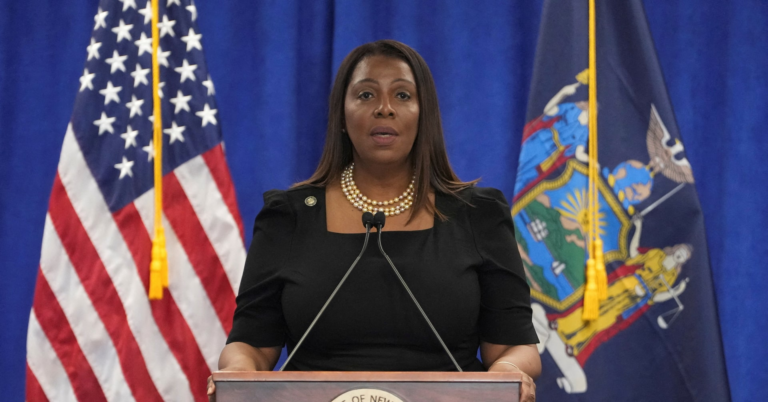
Sept 30 (Reuters) – New York Attorney General Letitia James on Tuesday filed a lawsuit and an emergency motion seeking a temporary restraining order against U.S. Secretary of Homeland Security Kristi Noem and the department, accusing them of unlawfully withholding nearly $34 million in funding requested by the state’s Metropolitan Transportation Authority (MTA).
The MTA is the state agency that operates New York City’s subway and buses, as well as commuter rail lines that serve nearby suburbs.
Sign up here.
In a late Tuesday lawsuit filed in the U.S. District Court for the Southern District of New York James is seeking an emergency order by midnight to safeguard the MTA’s funding.
The Department of Homeland Security did not immediately respond to a Reuters request for comment.
NYC turning Manhattan’s 34th St. into busway by end of 2025, cars to be sharply limited

A long stretch of 34th St. will be reserved for buses and cars going to local businesses only by year’s end, according to the Department of Transportation, as the city prepares to begin work next month to turn the east-west thoroughfare into a crosstown busway.
According to a letter sent by DOT to local elected officials Monday, reviewed by the Daily News, work on the busway is expected to begin in the second week of October.
The project — initially proposed by the city in May before Mayor Adams’ administration paused the plan in July — will restrict traffic along the 34th St between Third Ave. and Ninth Ave. to bus traffic from 6 a.m. until 10 p.m.
Private cars will be allowed to enter the street in order to visit local businesses, but will not be permitted to travel more than a single block at a time for that purpose.
In addition to signage indicating the new busway rules, work on 34th St. will include parking meters in an effort to discourage long-term parking on the street.
The work is expected to take several weeks.
“Busway regulations will go into effect at the conclusion of implementation, which is anticipated for November or December 2025,” the letter reads.
The busway is meant to build on the success of it’s southern counterpart, the 14th St. busway, which sped up bus travel significantly in 2019.
City data shows buses on 34th St. currently travel at speeds ranging from 3 mph on the low end to 5 mph — slower than the Manhattan-wide average bus speed of 6 mph.
“Most commuters in Midtown are traveling by transit and they deserve world-class, fast, and reliable buses,” DOT commissioner Ydanis Rodriguez said in a statement. “Busways bring dramatically faster and more reliable service and we are excited to get started on this transformative project.”
Foulkes leads McKee, 35 percent to 19 percent, in UNH poll
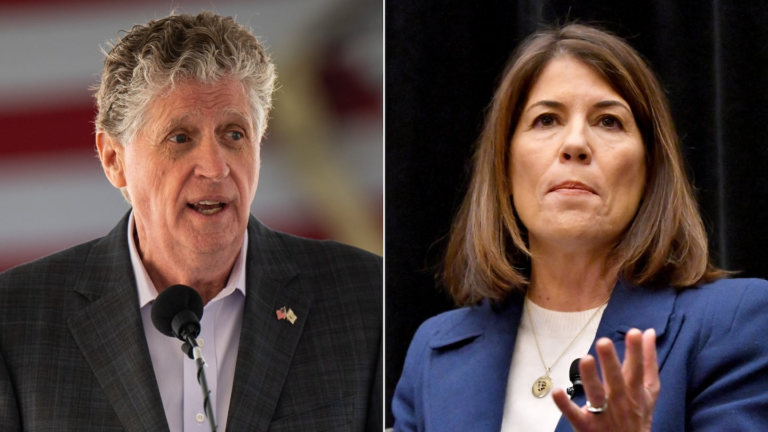
The biggest factor in McKee’s disapproval rating was, at 35 percent, his “handling of transportation/infrastructure” — a reflection of his administration’s handling of the failure of the westbound side of the Washington Bridge. Another 12 percent who disapprove of his performance cited “poor leadership.”
“Most troubling for McKee is that only 36 percent of Democrats approve of his performance, although this is up from 27 percent in May,” the poll said. By contrast, 11 percent of Republicans and 10 percent of independents approve of his job performance.
Foulkes’ campaign spokesman Jon Romano issued a statement, saying, “It’s no surprise that when our state leaders fail to handle our biggest challenges, the most glaring example being the Washington Bridge, Rhode Islanders are frustrated and fed up. Rhode Islanders deserve competent leadership and shouldn’t settle for less. Helena will fight for every vote and restore trust in government.”
A McKee campaign spokesperson issued a statement, saying, “Rhode Islanders don’t need more political jockeying — they need results. Governor McKee is laser-focused on fighting for Rhode Island working families and standing up to extremism in Washington. That’s the kind of leadership that delivered fewer school absences, reduced overdose deaths, and strong economic growth to our state over the last four years – and that’s why Rhode Islanders can count on him to keep delivering in the years ahead.”
The poll also gauged whether voters want House Speaker K. Joseph Shekarchi, a Warwick Democrat, to run for governor. It found that just 13 percent of likely general election voters want him to run, 39 percent don’t want him to run, and another 49 percent don’t know or have no opinion.
Among likely Democratic primary voters, 18 percent want Shekarchi to run, while 40 percent don’t want him to enter the race.
Shekarchi issued a statement, saying, “I believe the University of New Hampshire poll confirms what other polling is showing at this time: that this is a wide open race for governor with the majority of voters yet undecided. As Speaker, I’m focused on the important issues facing Rhode Islanders, such as housing, health care affordability, jobs and the economy.”
Shekarchi noted he has not decided whether to enter the race. “However, I am encouraged by the poll results considering I have not run statewide for public office,” he said. “I do believe a great many voters recognize the accomplishments I’ve made on behalf of Rhode Islanders.”
The poll found that 51 percent of voters believe US Senator Jack Reed, a Democrat, deserves to be re-elected to another six-year term in 2026, while 30 percent believe he does not deserve re-election, and 19 percent don’t have an opinion. Among Democrats, 80 percent back Reed for another term.
The poll found that few voters have an opinion about another Democratic candidate for Senate, elder care worker Connor Burbridge. Just 4 percent have a favorable opinion of Burbridge, while 45 percent have a favorable opinion of Reed.
The University of New Hampshire Survey Center conducted the poll, and 737 Rhode Islanders completed an online survey between Sept. 17 and 23. The overall margin of error was 3.6 percent, but it was 5.9 percent among likely Democratic primary voters.
Earlier this month, a University of Rhode Island poll pegged McKee’s job approval at 29 percent, down 26 percentage points from the same poll conducted last year. This year’s poll had McKee’s disapproval rating at 37 percent, and 34 percent said they weren’t sure.
The URI poll tested a hypothetical four-way Democratic primary and found McKee leading at 18.5 percent, while Attorney General Peter Neronha was second at 15 percent, Foulkes was third at 14.3 percent, and Shekarchi was fourth at 7.3 percent. Another 40.6 percent said they weren’t sure.
Watch live at 3:30 p.m.: Gov. Tina Kotek holds press conference on transportation tax hikes, federal troop deployment to Portland
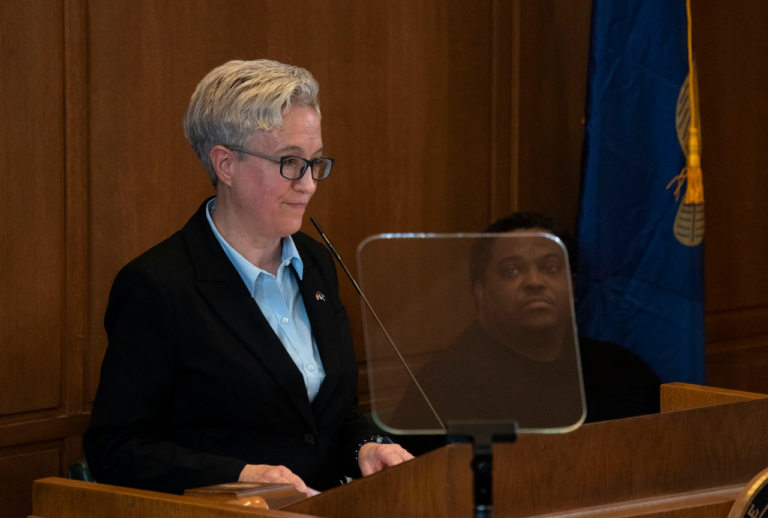
Oregon Gov. Tina Kotek will hold media availability Monday at 3:30 p.m. to answer questions about the passage of the state’s transportation funding plan.
Reporters will also ask questions about the planned federal troop deployment to Portland.
Watch the livestream:
The transportation package will increase the state’s 40 cents per gallon gas tax by 6 cents in January, significantly hike title and registration fees, require electric vehicle users to soon pay a fee per mile driven and double the state’s 0.1% payroll tax for transit for two years.
The media availability will focus on the transportation package before opening up to other topics.
Department of Public Safety suspends commercial driver licenses for Texas migrants
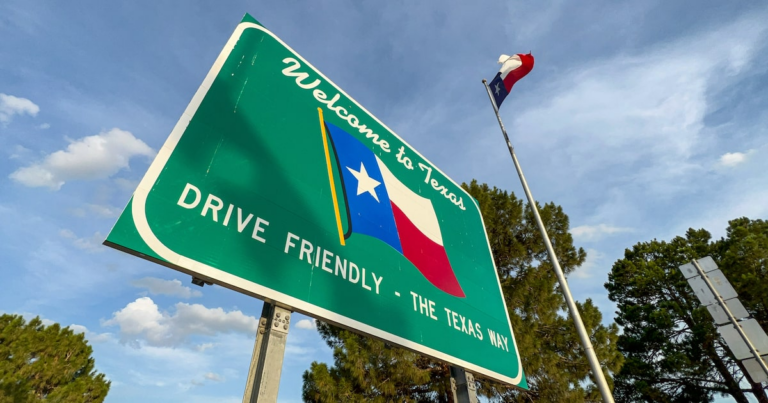
The Texas Department of Public Safety has suspended the issuance of certain commercial driver licenses to comply with an emergency rule change by federal regulators, according to a news release Monday.
U.S. Transportation Secretary Sean P. Duffy on Friday announced an emergency action to restrict who is eligible for a non-domiciled commercial learner’s permit and driver’s license.
The state move was made in response to a nationwide audit by the Federal Motor Carrier Safety Administration, which uncovered “both a catastrophic pattern of states issuing licenses illegally to foreign drivers, as well as the fact that even if the current regulatory framework is followed, it can fail,” according to a news release by the association.
The decision by FMCSA means DPS is now suspending the issuance of non-domicile CDLs and all CDLs to refugees, asylees, or Deferred Action for Childhood Arrivals, or DACA, recipients. This will also impact the issuance of learner’s permits in the state, according to the agency.
“The department has never issued any type of license to asylum seekers who have not been approved for lawful presence,” the release said.
According to the news release, applicants with a pending issuance will not be allowed to continue any written or skills testing until services for non-domicile licenses and permits are reinstated.
Couple Welcomes Baby on the Side of the Road During Rush Hour Traffic in N.Y.C.

A baby was safely delivered on the side of the road thanks to the Metropolitan Transportation Authority Police Department (MTAPD).
MTAPD Highway Patrol Sergeant Joseph Casale and his partner, Officer Eric Li, were traveling southbound on I-678 on Monday, Sept. 22, when a driver waved them down as they passed Exit 18, the last exit before the Whitestone Bridge Span in New York City.
According to the MTAPD, the driver had pulled over onto the right shoulder as his wife was in labor and needed help.
In addition to rush hour, there was extreme gridlock on the Bronx Whitestone Bridge at the time of the incident due to the U.N. General Assembly, and a disabled tractor-trailer was blocking two lanes of the Queens-bound span.
The MTAPD said Sgt. Casale and Officer Li sprang into action, gathering the necessary medical supplies from their vehicle to assist with the delivery.
Realizing that the woman was moments away from giving birth to her baby, Sgt. Casale and Officer Li called for backup from MTAPD Highway Patrol Officers Sam Vira and Brian Gilligan.
According to the MTAPD, moments later, a baby girl was born and safely handed to her mother.
The FDNY-EMS then arrived to transport the family to New York Presbyterian in Queens, where the MTAPD says
ODOT layoffs canceled after transportation package passes Oregon Senate

The Oregon Senate passed a transportation funding package to prevent layoffs at the Oregon Department of Transportation.
The package will generate $4.3 billion over a decade through increased gas taxes, vehicle fees, and a new charge for electric vehicles.
The bill passed without any Republican support, and some GOP lawmakers may seek a voter referendum on the tax increases.
The Oregon Senate passed a transportation funding package Sept. 29 that is expected to raise $4.3 billion over the next decade and will avert layoffs at the Oregon Department of Transportation.
The package was approved a month after lawmakers began the special session to consider Gov. Tina Kotek’s proposal. The session was delayed twice to allow Sen. Chris Gorsek, D-Gresham, to recover from back surgery complications.
The transportation package passed in the House on Sept. 1.
A new charge for electric vehicles, bumps to the payroll tax, vehicle registration and title fees and an extra six cents per gallon on gas are expected to bring in $4.3 billion over the next decade.
That revenue will go toward funding transportation throughout the state and prevent nearly 500 layoffs at the Oregon Department of Transportation.
It’s a far cry from Democrats’ initial proposal, which would have brought in $11.7 billion over the next 10 years but fell apart at the end of the session in June.
While several Democrats criticized the bill for not doing enough, the caucus unanimously voted in favor of the proposal. Both bills passed with an 18-11 vote, the exact number of
Prosecutors Want Sean Combs to Spend 11 Years and 3 Months in Prison

Federal prosecutors argued in a new brief that Sean “Diddy” Combs should be sentenced to 11 years and three months in prison on Friday for his role transporting male prostitutes across state lines for drug-fueled sex marathons with ex-girlfriends that Combs directed and filmed.
“Punishment for his crimes of conviction must take into account the manner in which he committed them,” prosecutors wrote in their 164-page memo filed Monday right at the midnight deadline. “His crimes of conviction are serious and have warranted sentences over ten years in multiple cases for defendants who, like Sean Combs, engaged in violence and put others in fear.”
In accompanying victim impact statements, Combs’ former girlfriends, Casandra “Cassie” Ventura and a woman who testified under the pseudonym “Jane,” asked the judge to carefully consider their harrowing trial testimony. On the witness stand, the women detailed how they felt coerced to participate in the highly orchestrated threesomes with escorts, known as freak-offs. Ventura wrote in her new letter that Combs groomed, manipulated, and threatened her during their decade-long relationship. She said he also regularly beat her, punched her, stomped on her face, and threw her body to the ground.
“I was forced into lingerie and heels, told exactly how to look, and plied with drugs and alcohol so he could control me like a puppet. These events were degrading and disgusting, leaving me with infections, illnesses, and days of physical and emotional exhaustion before he demanded it all again,” she wrote. “While the jury did not seem to understand or believe that I engaged in freak-offs because of the force and coercion the defendant used against me, I know that is the truth, and his sentence should reflect the reality of the evidence and my lived experience as a victim.”
Jane told the judge that Combs “trapped” her “in a world of terror, abuse, humiliation, and coercive control.” She said her relationship with Combs left her in a state of “constant fear.” The “years of abuse have rewired my brain. Even today, I feel trapped in the mental and emotional patterns that he created. I live with chronic and severe PTSD, depression, and crippling anxiety. I suffer from deeply intrusive thoughts, derealization, panic attacks, night terrors, and insomnia,” she said, asking for a sentence “that reflects the full measure of harm that he has caused: the years of coercion, financial abuse, humiliation, physical and sexual violence, and the profound trauma that he has inflicted as a result.”
Editor’s picks
Combs, 55, has already spent more than a year in federal custody after his September 2024 arrest in the felony case. On July 2, a jury convicted him of two counts of transportation to engage in prostitution. Jurors rejected a trio of more serious charges, finding that prosecutors failed to prove Combs ran a racketeering conspiracy or sex trafficked two former girlfriends. The acquittals meant Combs was no longer facing the possibility of life in prison. At the time, the mogul pumped his fist and dropped to his knees as he celebrated in the courtroom.
For his two convictions, federal probation officials have recommended a sentence of 70 to 87 months in prison, or roughly six to seven years. Combs’ defense has asked for no more than 14 months, which likely would see him released by the end of the year, if not immediately. (Federal prisoners sentenced to more than 12 months can earn “good time credit” that can shave up to 15 percent off their sentences.)
In their dueling, 182-page sentencing brief filed last week, Combs’ defense laid out his life story in an apparent bid for mercy, saying Combs struggled as a child after his father was murdered when he was only three years old. They argued the loss caused a “profound form of trauma” that set the stage for the substance abuse issues Combs wrestled with during his admittedly violent relationships with the two ex-girlfriends involved in his convictions.
Related Content
“For decades, Mr. Combs struggled with serious substance abuse issues, anger and anxiety, and other flaws that he did not properly or professionally address until his incarceration last year,” the filing stated. “Like every addict, his behavior while on painkillers was erratic and unpredictable, and often the reason behind any assaults discussed at the trial.”
His lawyers also attached more than 75 letters of support from family and friends, including Combs’ mother Janice; his sister Keisha; his three teen daughters, Chance, Jessie and D’Lila; Dana Tran, the mother of Comb’s two-year-old daughter, Love; and Combs’ former girlfriend Yung Miami, the City Girls rapper born Caresha Brownlee.
Combs’ two prostitution charges, violations of a century-old law known as the Mann Act, each carry a maximum sentence of 10 years in federal prison. Back in July, before the probation department weighed in with its recommendation, prosecutors gave a preliminary estimate that Combs’ sentencing guidelines range was around four to five years behind bars.
In Combs’ sentencing memo filed Sept. 22, his high-powered defense team, comprised of Mark Agnifilo, Teny Geragos, Alexandra Shapiro, Brian Steel, Nicole Westmoreland, Xavier Donaldson, and Anna Estevao, argued that a review of more than 60 other Mann Act cases determined the average sentence was 14.9 months of incarceration. Combs and his lawyers claimed it would be improper for the court, during its sentencing deliberation, to consider evidence from his trial that they argue would not have come in without the government’s pursuit of the failed racketeering and sex trafficking charges.
“It would be unlawful, and a perversion of justice, for the court to sentence him as if the jury had convicted him of sex trafficking and RICO, or to increase his sentence based on the court’s own findings about force or coercion or racketeering,” they wrote. “What is the point of a jury trial if the defendant can be acquitted, but then sentenced as if he had been convicted? Doing so nullifies the entire purpose of a jury.”
Federal judges aren’t required to follow guidelines. In the Southern District of New York, judges stuck to guideline ranges 34.5 percent of the time in the last fiscal year, according to the U.S. Sentencing Commission.
U.S. District Judge Arun Subramanian will have wide latitude at Combs’ Oct. 3 sentencing. It’s not clear how he will rule, but on the day of the verdict, when many speculated that Combs’ acquittal on his top charges would lead to his immediate release on bail pending sentencing, Judge Subramanian took a hard line. He denied the release on the basis that Combs’ defense voluntarily admitted during the trial that Combs was violent with Ventura and Jane. In his closing argument, Agnifilo explicitly told jurors that the defense wasn’t challenging the women’s claims of domestic violence.
“In terms of owning, just as a matter of personal responsibility … owning the domestic violence, we own it. It happened,” Agnifilo told the panel in his final address on June 27. “If he was charged with domestic violence, we wouldn’t all be here having a trial, because he would have pled guilty — because he did that.”
Rejecting the defense bid for immediate bail on July 2, Subramanian pointed to the disturbing video of Combs’ 2016 assault of Ventura inside Los Angeles’ now-shuttered InterContinental Hotel before sending a seemingly stunned Combs back into custody. Taking a serious tone, Subramanian also noted the video wasn’t the only violence acknowledged by the defense. He pointed to the days Ventura spent at the London Hotel in Los Angeles to recover after Combs allegedly stomped on her face in a vehicle. (“Obviously, there was some physical event, and she had injuries, okay? So she goes to the hotel as much for her own good as anyone else’s,” Agnifilo told jurors about the fight that landed Ventura at the London Hotel.)
Trending Stories
“This type of violence, which happens behind closed doors in personal relationships, sparked by unpredictable bouts of anger, is impossible to police with conditions,” the judge said on July 2. Turning to the June 2024 incident at Jane’s house, where, according to Agnifilo, Combs admittedly kicked Jane and restrained her “around the neck” during a blowout fight, the judge called out the timing. He noted the incident came after Combs’ homes were raided by federal authorities in March 2024. “At a time when [Combs] should have known that he needed to stay clean,” the mogul instead showed “a disregard for the rule of law and the propensity for violence,” the judge said.
Sean ‘Diddy’ Combs deserves at least 11 years in prison, prosecutors say

Sean Combs deserves at least 11 years in prison when he is sentenced Friday on two counts of transportation for the purposes of prostitution, federal prosecutors said in a memo to the judge, arguing that despite his acquittal on more serious charges Combs is
Sean Diddy Combs Should Get 11 Years In Prison, Feds Recommend

The judge in Sean Combs’ sex-trafficking trial hasn’t decided yet if the Grammy winner should get a new trial or be acquitted, but prosecutors today want Diddy to serve over 11 years behind bars and pay “a hefty fine” in the six-digit range for the two counts of transportation to engage in prostitution, he was found guilty of this summer.
If Judge Arun Subramanian doesn’t grant the defense motions and goes ahead with the October 3 scheduled sentencing hearing, the chasm is deep and wide between what Combs’ Marc Agnifilo and Teny Geragos-led team are proposing and what the U.S. Attorneys Office for the Souther District of New York have put on the table tonight.
As the government’s 164-page sentencing memo signed by current U.S. Attorney Jay Clayton states: “Throughout this case and over the course of a seven-week trial, this Court has seen extensive evidence demonstrating the defendant’s criminal conduct perpetrated across more than a decade.”
“At trial, the defendant disputed that the Government had made out particular elements of the charged federal offenses, but he largely conceded his conduct: the violence, domestic abuse, drug use and distribution, and bribery,” Clayton continues for the once Maurene Comey-led (now fired and suing) prosecution team and the wide-ranging (some may say, overreaching) case it put on. “The defendant will not be punished for any crimes of which he was acquitted, of course, but punishment for his crimes of conviction must take into account the manner in which he committed them. His crimes of conviction are serious and have warranted sentences over ten years in multiple cases for defendants who, like Sean Combs, engaged in violence and put others in fear. Consistent with those cases and based on the corroborated evidence presented at trial, this Court should impose a sentence of no less than 135 months’ imprisonment.”
Found not guilty on July 2 by the eight men and four women jury of the sex-trafficking and racketeering charges that could have seen the 55-year old Combs in prison for the rest of his life, the 135 months recommendation from the SDNY equals 11 year and three months to be specific. That’s lot longer than the 14 months, with time served since the much accused and much sued Combs’ September 2024 arrest thrown in, that his defense have asked for — a sentence that would see Diddy out of Brooklyn’s Metropolitan Detention Center before Christmas.
“A substantial term of imprisonment is also needed in this case because the defendant is unrepentant,” the feds’ extensive document filed early September 30 East Coat time adds before putting the bricks to the self-described domestic abuser and swinger Bad Boy Records founder. “The defendant tries to recast decades of abuse as simply the function of mutually toxic relationships. But there is nothing mutual about a relationship where one person holds all the power and the other ends up bloodied and bruised.”
While both the prosecution and the defense are drawing from the federal sentencing guidelines (which have a maximum sentence of 10-years for each of the counts Combs was found guilty of), they clearly are interpreting them very differently. Which interpretation lands best with Judge Subramanian will be made clear at Friday’s sentencing hearing — which Sean “Diddy” Combs, as well as various family members and hangers-on, will be in NYC’s Daniel Patrick Moynihan United States Courthouse for.
That’s if Judge Subramanian doesn’t toss the whole thing or send it back to Square One. Reading judicial tea leaves is almost always a losing endeavor. However, the fact that the usually circumspect Judge Subramanian said at the end of the September 25 motions hearing that he would be putting out his ruling “very shortly and otherwise will see everyone back here next Friday,” and still hasn’t put anything in the docket has to make both sides pause at this late hour.
States scramble to plug transportation funding holes
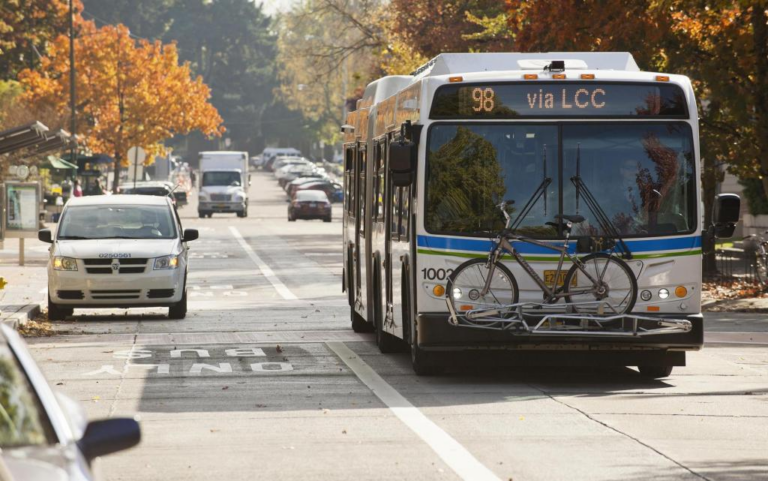
By Erika Bolstad, Stateline.org
States are scrambling for the money to fill potholes, plow roads, maintain bridges and pay bus drivers as they confront inflation- and tariff-driven cost increases and declining gas tax revenues.
States also face uncertain federal funding as the Trump administration reduces the size of government and zeroes out some Biden-era transportation programs. As the Infrastructure Investment and Jobs Act expires next year and Congress considers its next transportation funding bill, cities are clamoring for the federal government to bypass states and give cities a larger share of federal infrastructure money distributed by formula.
Drivers will have to pay higher vehicle registration fees and gas taxes to make up for the shortfalls. Long-planned construction projects and safety improvements will be delayed. And bus riders may see fewer routes and longer wait times.
The chaos in a pair of state legislatures on either side of the country illustrates the dire state of highways and transit systems – and might foretell a bumpy road ahead.
In Oregon, nearly 500 transportation employees, about 10% of the department’s workforce, might lose their jobs as state lawmakers consider a transportation funding bill in a special legislative session. The political balance is so delicate that lawmakers have delayed a vote on a $4.3 billion transportation package for more than two weeks while a Democratic state senator recovers from surgery; his vote is necessary to pass the funding measure, a tax increase that requires a supermajority. The Senate is now expected to vote on Sept. 29.
And in Pennsylvania, a budget impasse over transit funding between the state’s Republican-dominated Senate and Democrat-led House continues. Philadelphia’s transit system, SEPTA, has said it will reverse deep cuts that threatened a near-shutdown of the buses and trains in one of the country’s largest transit systems.
The move, approved by Democratic Gov. Josh Shapiro, allows the transit agency to shift $394 million from capital funding to operational expenses for the next two years.
Shapiro said he acted after he learned there was a 63% increase in late arrivals to Philadelphia schools when the service cuts began, according to the Pennsylvania Capital-Star.
“It was just clear to me that is not something we can allow to continue,” Shapiro said at a news conference.
Pandemic-era funding ends
Pennsylvania and other states are confronting the end of pandemic-era federal funding that kept transit systems afloat. The so-called fiscal cliff threatens to bring about fare hikes and service cuts to bus and rail systems in both big cities and rural America in the coming years. To address the shortfalls, many states are, like SEPTA, shifting money that was earmarked for capital investment toward operating expenses.
“It’s financial gymnastics,” said Joe Kane, a fellow at the left-leaning Brookings Institution who studies transportation issues. “We fundamentally as a country have a challenge in reliably and durably having a revenue source to pay for these improvements across the country. It’s put even more pressure on states and localities to cobble together the resources — however and wherever they can — to make up for some of those gaps.”
The funding crisis has been particularly drastic for the country’s transit systems, said Corrigan Salerno, a policy manager at Transportation for America, an advocacy organization for safe transit. Ridership hasn’t fully recovered from pandemic-era declines, he said, meaning that transit agencies aren’t collecting as many fares as they did before 2020. The cost of labor, parts, software and fuel to maintain and operate transit systems has exceeded inflation, too.
Without high-quality or frequent-enough service, buses and trains are unable to attract riders, he said. Service cuts and fare hikes can make the system less attractive to riders, as well as bring in less money from riders.
“And that’s really the nature of the fiscal cliff and the death spiral that transit agencies are really trying so desperately to avoid,” Salerno said. “Because once they have to make these service cuts to square their budgets, people are going to stop riding some of these systems.”
Chicago; San Francisco; Seattle; Tucson, Arizona, and the state of Rhode Island have all faced transit funding gaps in recent months, Salerno said. In North Carolina, voters will consider a ballot measure in November to increase a local sales tax to support transit and road improvements in Charlotte, the state’s biggest city. In California, local transit agencies are seeking temporary operating loans from the state.
Eliminating bus routes
In Oregon, lawmakers have been at work on a transportation bill for several years, but the funding crisis came to a head after the legislature failed to pass a new spending plan before the end of the regular legislative session in June.
The state’s Department of Transportation faced an immediate $300 million shortfall in the two-year budget cycle that began July 1. The transit agency for the Portland area, Tri-Met, announced it would eliminate up to eight bus lines as well as reduce the frequency of service on other lines as soon as November.
Oregon Gov. Tina Kotek, a Democrat, announced this summer that the state would lay off 483 transportation workers and close a dozen maintenance facilities. Among those who may lose their jobs are programmers who maintain software for Driver & Motor Vehicle Services, and maintenance workers who stripe roads, clear brush, and clean up graffiti and debris.
Kotek pushed back the layoffs after House lawmakers passed a new funding plan during a special session that began in September. But if the Senate fails to approve the measure, the layoffs are scheduled for Oct. 15.
The transportation package would raise the state gas tax by six cents a gallon, increase vehicle title and registration fees, and temporarily double a statewide payroll tax for transit from 0.1% to 0.2%, according to the Oregon Capital Chronicle.
The legislation would allow the payroll tax to sunset in 2028, a move that critics warn will force the state, once again, to confront how to avoid cuts to bus service. It also requires electric vehicle drivers to pay a mileage fee to support road maintenance, a move that could dampen EV sales, but that captures some of the gas tax revenue lost to the transition to electric cars.
Without new funding in Oregon, local road departments will continue to face impossible choices that lead to reduced services and delayed implementation of safety projects, said Lamar Wise, the political director for Oregon AFSCME, the union representing 850 road workers, engineers and surveyors in the state. Failure to increase taxes and fees means asking fewer workers “to do more with less,” putting their safety and the driving public at risk, Wise told a legislative committee in August, as it considered the transportation package.
“It is about keeping our roads safe and ensuring that the public can count on reliable transportation in every corner of the state,” Wise said.
In Portland, the state’s largest city, it’s impossible to absorb more cuts to service, Mayor Keith Wilson told the same panel. If lawmakers don’t pass a spending plan, the city will likely lose 50 transportation staffers who repair streetlights, upgrade traffic signals and manage construction projects. The city bureau has faced cuts each of the past seven years, Wilson said.
“If you drive down the streets of Portland, or ride on a bus or a bike, the roads under your tires are crumbling,” he said.
But Jake Seavert, a county commissioner in Union County, a rural county of 26,000 in Eastern Oregon, told lawmakers that his constituents object to the spending plan, particularly the increase in fuel taxes and registration fees. The hike in annual registration fees places an undue burden on businesses and rural families who require multiple vehicles, he testified.
Oregon’s Department of Transportation must look for efficiencies, Seavert said, a nod to the Trump administration’s lacerating cuts to federal jobs and spending.
“Do more with less,” Seavert said.
©2025 States Newsroom. Visit at stateline.org. Distributed by Tribune Content Agency, LLC.
Sean Duffy TORCHES Gavin Newsom’s Silence: “California Issued 25% of Non-Domiciled CDLs ILLEGALLY – Fix It or Lose Federal Funding!”
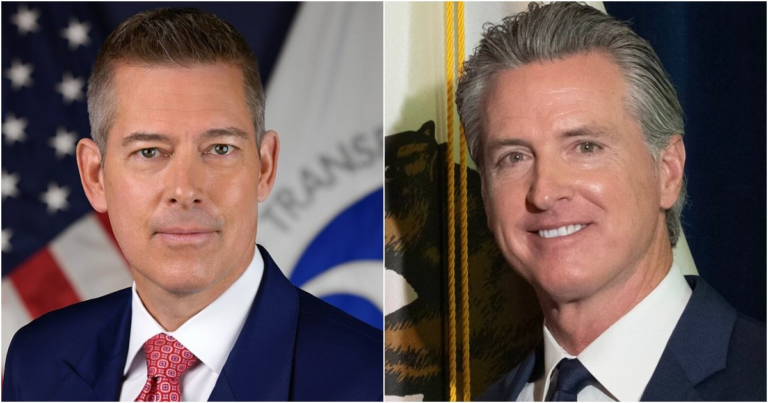
Transportation Secretary Sean Duffy is taking a sledgehammer to one of the most overlooked, yet dangerous scandals in our nation’s transportation system: states issuing commercial driver’s licenses (CDLs) to illegal aliens.
This comes just one month after a major trucking accident involving an illegal alien driver. And now, the Department of Transportation’s nationwide audit has exposed a systemic breakdown that is putting every American family at risk on our highways.
Duffy revealed on Friday that the DOT’s audit uncovered widespread abuse and incompetence by state agencies responsible for issuing CDLs. The details are beyond infuriating:
States are failing to validate legal presence. Licenses are being issued to individuals without confirming their lawful immigration status.
CDLs are being extended far beyond lawful presence. In some cases, licenses are valid months — even years — after a driver’s work permit has expired.
Computer flaws and procedural errors have compounded the crisis, allowing unqualified, nondomiciled drivers to hit American roads.
Duffy didn’t hold back in his Friday announcement:
DUFFY: “We have launched a nationwide audit of nondomiciled CDLS to get the bottom of what we think in causing this crisis. Something was seriously wrong.
It was alleged that the open borders policies of the last administration has led to an exploitation of our nation’s trucking licensing system.
So I’m here to tell you that after an audit; these reports are all true!
What our audit has discovered should anger every single American.
Our audit revealed a systemic breakdown among states to follow the law and issue licenses properly. States are failing to follow even the most basic procedures.
We even uncovered widespread procedural errors, computer programming flaws, and a gross lack of oversight in the states that issue CDLs.
This means that thousands of licenses that should never have been issued actually were issued. States are issuing licenses that extend months and even years beyond a driver’s lawful presence in the US!
This is a direct incentive to stay in our country illegally beyond their authorized work permit. In some disturbing cases, they have failed to validate a driver’s lawful presence before handing them a commercial license.
It’s deeply disturbing, but even worse, our second finding was that the current federal regulations are allowing dangerous, unqualified drivers on American roadways. This means that even when the rules are being followed, dangerous individuals who shouldn’t be near a big rig, are getting behind the wheel and causing crashes on our roadways.”
Read more:
Transportation Secretary Sean Duffy Releases Stunning Details Involving Nationwide Abuse In Issuing Commercial Drivers’ Licenses to Illegals – Issues a New Emergency Rule to Address Crisis (VIDEO)
In a blistering post on X, Duffy singled out California Governor Gavin Newsom’s administration:
TechCrunch Mobility: Self-driving trucks startup Kodiak goes public and a shake-up at Hyundai’s Supernal

Welcome back to TechCrunch Mobility — your central hub for news and insights on the future of transportation. To get this in your inbox, sign up here for free — just click TechCrunch Mobility!
The autonomous vehicle industry is years — maybe decades — from maturing. And so there’s still a Wild West quality to the sector, in spite of the steady stream of announcements that do show marked progress. Two such news items from this week illustrate my point of progress, possibility, and even a bit of peril (at least to the ups and downs a public market can provide).
First up is Gatik, an AV and logistics startup that is applying its tech to middle-mile trucks. The startup, which I first wrote about in 2019, announced a multi-year and expanded commercial partnership with Canada’s largest retailer, Loblaw. Under the deal, Gatik will deploy 20 autonomous trucks by the end of 2025 to provide driverless delivery to Loblaw’s network of stores in the greater Toronto area. Co-founder and CEO Gautam Narang told me the company will add another 30 autonomous trucks to the fleet by the end of 2026.
The deal is notable, and not just because of the fleet size. As Narang explained to me, the trucks will be handling the full regional network for Loblaw. This means these third-generation AV trucks will operate autonomously to pick up products from two distribution centers and make deliveries to over 300 retail stores. “These are multiple brands within the Loblaw umbrella,” he said.
In other words, this is not some fixed-route pilot program. It’s commercial, and it’s complex.
Next up is Kodiak Robotics, another startup I have reported on since its founding. The company, which is developing self-driving trucks for highway, industrial, and defense uses, began trading on Nasdaq this week under the tickers KDK and KDKRW.
The company, which is now called Kodiak AI, went public via a merger with special-purpose acquisition company Ares Acquisition Corporation II, an affiliate of Ares Management. The deal valued the startup at about $2.5 billion.
Kodiak raised $275 million in financing. More than $212.5 million came from certain institutional investors, including $145 million in PIPE funding and about $62.9 million in trust cash from Ares. It should be noted that the trust cash is smaller (it was $562 million), as some SPAC investors redeemed their shares.
I spoke to founder and CEO Don Burnette the day before Kodiak’s big debut about why he took the company public — let alone via a SPAC. It was a big moment for Burnette, whose family was on hand to watch him ring the bell and mark the milestone. The stock was trading at about $7.70 Friday, down about 10% from its market open.
“As you can imagine, building and scaling a transformative autonomous driving company is very capital intensive, and we were looking to access the public markets as a path forward for the company. And when choosing between, you know, traditional IPO or a SPAC, we considered all the options,” he said. “We felt like, from a timing perspective, it was the right decision for the company (to take the SPAC route).”
It should be noted that Burnette is also quite bullish on defense. Here’s why:
“I think autonomy is the future of ground transportation broadly,” he said, before noting the benefits within defense for logistics and reconnaissance operations for ground vehicles. “One of the key things is defense requires unstructured autonomy, and this is one of the areas where we become specialists.”
A little bird
A few weeks ago, we wrote about some trouble at Hyundai‘s electric air taxi startup Supernal, including that the company had stopped work on its air taxi program and that its CEO and CTO were out.
This week, a little bird told us that a wider reorg of Supernal’s C-suite was afoot — something Hyundai Motor Group has now confirmed to us.
Chief strategy officer Jaeyong Song and chief safety officer Tracy Lamb are part of a “transition to new leadership,” according to the Korean conglomerate. Song’s departure is particularly notable, as he was once the VP of Hyundai’s Advanced Air Mobility division, which Supernal was spun out of in 2021. Also gone is Lina Yang, who most recently served as chief of staff to the startup’s now-former CEO, but who also served as Supernal’s “Head of Intelligent Systems” before that.
Got a tip for us? Email Kirsten Korosec at kirsten.korosec@techcrunch.com or my Signal at kkorosec.07, or email Sean O’Kane at sean.okane@techcrunch.com.
Deals!
RememberMoxion Power, the portable battery startup that raised $110 million before going bankrupt? The founders are back with a new startup called Anode Technology Company, which has designed a mobile battery and inverter that can be used for EV charging and supplying remote power to construction sites and live events. The startup just raised $9 million in seed funding in a round led by Eclipse Ventures; its partner, Jiten Behl, who spearheaded the deal, was previously Rivian’s chief growth officer. Apparently, Behl’s interest was sparked by his experience at Rivian.
Side note: Palo Alto-based venture capital firm Eclipse sure has been busy this year. The VC firm led the $105 million round of Also, the micromobility startup that spun out of Rivian, and recently hired longtime T. Rowe Price Group investor Joe Fath as partner and head of growth.
The firm doesn’t explicitly focus on transportation, but some of its portfolio companies in this sector include Arc, Bedrock Robotics,Reliable Robotics, Skyryse, and Wayve.
Other deals that got my attention …
Rapido, a popular ride-hailing platform in India that competes with Uber, doubled its valuation to $2.3 billion following a secondary share sale by food delivery giant Swiggy. The share sale comes just weeks after Rapido began piloting food deliveries, edging into Swiggy’s core territory.
Telo, the tiny electric truck developer, raised $20 million in a Series A funding round co-led by designer and Telo co-founder Yves Béhar and Tesla co-founder Marc Tarpenning, who is on Telo’s board. Additional investment came from Salesforce CEO Marc Benioff and early-stage funds like TO VC, E12 Ventures, and Neo.
TheTrump administration is seeking up to a 10% stake in Lithium Americas in exchange for renegotiating the repayment period of a $2.26 billion Department of Energy loan. GM is a major investor in the Canadian company, which is developing a lithium mine in Nevada that is expected to be the largest in the Western Hemisphere.
Notable reads and other tidbits
Hackers have had quite an active week in the transportation sector. Stellantis confirmed a data breach involving customers’ personal information. The breach is linked to a hack of its Salesforce database. Meanwhile, a hack that began last Friday and targeted check-in systems provided by Collins Aerospace caused delays at Brussels, Berlin, and Dublin airports, as well as London’s Heathrow. The U.K.’s National Crime Agency has arrested a man in connection to the ransomware attack. And finally, Jaguar Land Rover said it will not resume production at its factories for yet another week as it continues to grapple with fallout from a cyberattack.
Battery materials startup Sila started operations at its facility in Moses Lake, Washington, a milestone that could pave the way for longer-range, faster-charging EVs. The factory is the first large-scale silicon anode factory in the West and will initially be capable of making enough battery materials for 20,000 to 50,000 EVs. Future expansion could fulfill demand for as many as 2.5 million vehicles.
Automakers continue to pull back on EVs and electrified vehicles. Honda is ending U.S. production of its Acura ZDX electric vehicle that was being built by General Motors in Tennessee, CNBC reported. And Stellantis has canceled plans to produce a 4xe plug-in hybrid Jeep Gladiator in North America by the end of 2025. Which EV is next on the chopping block?
The National Highway Traffic Safety Administration opened an investigation into Rivian over issues with the seat belts in its electric delivery vans that could introduce additional risk in the event of a crash, Bloomberg reported.
Tesla asked the Environmental Protection Agency not to roll back current vehicle emissions standards, breaking from other major automakers that want to see the rules eased.
TuneIn, an audio streaming service, is collaborating with the Federal Emergency Management Agency to deliver emergency alerts directly to drivers.
Volvo Cars is pledging a commitment to U.S. production. The company said it will continue to invest in its U.S. car plant near Charleston, South Carolina, and announced plans to expand the factory to produce a hybrid vehicle by the end of the decade.
Waymo launched “Waymo for Business,” a new service designed for companies to set up accounts so their employees can access robotaxis in cities like Los Angeles, Phoenix, and San Francisco.
Zoox has asked federal regulators for an exemption that would allow the Amazon-owned autonomous vehicle company to commercially deploy its custom-built robotaxis, which lack traditional controls like pedals and a steering wheel.
One more thing
Finally, proof of life from Luminar founder Austin Russell.
You may remember that Russell was mysteriously and suddenly replaced in May as CEO of the lidar company he created. The company has never truly explained his departure, only that it was the result of a “code of business conduct and ethics inquiry” initiated by the board.
Russell has been silent; while he remains on Luminar’s board, he hasn’t signed any of the filings the company has submitted with the U.S. Securities and Exchange Commission since he was replaced. This week, he reappeared as the co-founder of a new company called Russell AI Labs. It’s billed as a “platform that backs and builds transformative AI and frontier technology companies.”
It doesn’t seem like his troubles at Luminar have affected his ability to attract high-profile support or make eyebrow-raising deals. Russell’s co-founders are Markus Schäfer, CTO and board member at Mercedes-Benz Group AG, and Murtaza Ahmed, who served as a managing director at Goldman Sachs before joining SoftBank and was a partner in the $100 billion Vision Fund and managing partner of its $5 billion Latin America Fund.
As part of Russell AI Lab’s debut, the startup announced it has taken a $300 million stake in agentic AI company Emergence AI.
Lawmakers push transit reform, funding despite delayed fiscal cliff

State Sen. Seth Lewis, R-Bartlett, said new revenues and Regional Transit Authority transfers have pushed back the estimated $770-million fiscal cliff. Lewis said Pace would not implement a cliff until 2027.
“We have time,” Lewis said.
State Sen. Ram Villivalam, D-Chicago, agreed that the regional cliff had pushed back six months to a year, but he said systemic issues have not changed. Villivalam said a massive fiscal cliff would get worse in 2028 if the issues were not addressed.
Villivalam proposed a retail delivery tax, real estate transfer tax and environmental impact fees in a transit-funding bill that failed to clear the Illinois House before the 2025 spring legislative session ended.
Lewis said there’s no need for a tax increase this fall. He said lawmakers could reform transit governance and save funding for the spring.
“We can start that now. We can get that process going in veto so we can understand our potential cost savings, potential operating costs,” Lewis suggested.
Illinois lawmakers say they hope to pass transit legislation during the fall veto session next month, even though the fiscal cliff is not as near as previously reported.Lincoln Forum and the Union League Club Transportation Subcommittee
State Rep. Kam Buckner, D-Chicago, said cities grow when they invest in transit.
“In our state, Illinois, Abraham Lincoln made his name not just in courtrooms and cornfields, but he rode the rails. He rode the circuit by train, and he argued for railroads in court. He understood when he ran for the House in 1832, that internal improvements, infrastructure through transportation—it was a different transportation back then—but transportation was how you move a state forward and how you make it a place that people want to live,” Buckner said.
Buckner and Villivalam both predicted that the General Assembly would pass transit legislation during the fall veto session. Villivalam said he wanted legislation to pass, and he did not want to kick the can down the road.
Villivalam said it is inefficient to have four different transit agencies and 21 different appointing authorities.
“It’s not working. We have seven different apps. We have three different service plans, three different capital plans. It’s not where we need to be, and it causing us not to have the efficiencies and meeting the performance metrics that we need to have,” Villivalam said.
REPUBLICAN FORMER ILLINOIS STATE SENATOR LAUNCHES 2026 GUBERNATORIAL RUN
State Rep. Brad Stephens, R-Rosemont, said it is important to look to the future. Stephens said the transit situation is not as dire as some people believe.
“We need to have some input from the governance board on how they’re going to find efficiencies before we start throwing a bunch of money at them. You know the billion and a half that’s been talked about? While, yes, it could be needed, we also need to find out what the efficiencies can be and how we can manage this better,” Stephens said.
ITS Logistics September Supply Chain Report: Industry

RENO, Nev., Sept. 26, 2025 (GLOBE NEWSWIRE) — ITS Logistics released the September ITS Supply Chain Report. This month, the report highlights that, although the U.S. economy showed mixed signals in August, growth and consumer spending remained positive, while inflation stubbornly remained above target. As of now, a recession doesn’t appear imminent, but momentum is clearly slowing, and economic uncertainty continues to rise heading into Q4. This news comes just as industry professionals prepare for the onset of the domestic logistics peak season, further evaluating strategies related to tariff arbitrage, assessing de minimis opportunities, seeking new warehouse locations throughout the U.S., and evaluating the trucking sector’s capacity gains.
Containerized imports at the top 10 U.S. ports fell 4.1% month-over-month in August 2025, with sharp declines at key West Coast gateways offset by gains at Seattle, Savannah, and Norfolk. The mixed results reflect both seasonal trends and shifting trade patterns as shippers respond to tariff uncertainty. Import volumes remain above pre-pandemic levels but show heightened sensitivity to policy changes, including the recent repeal of the de minimis exemption on low-value parcels and the upcoming US-China tariff truce expiration.
According to a recent article from Supply Chain Dive, the end of the de minimis exemption has the potential to create new challenges for e-commerce supply chains’ peak season plans. The exemption, which ended on August 29 for imports in the U.S., allowed those valued under $800 to enter the country duty- and tax-free. Eliminated to combat drug trafficking and prevent importers from avoiding tariffs, it was initially expected to end on July 1, 2027, thereby leaving many direct-to-consumer marketplaces scrambling to adjust their peak season strategies. Now that it has been completely eliminated, companies are struggling to adjust their operations ahead of the Q4 holiday shopping rush.
“We’re now seeing ecommerce companies implement a tariff arbitrage strategy in response to the ongoing changes in global trade,” said Josh Allen, chief commercial officer of ITS Logistics. “These companies include everything from the luxury sector on down to those that provide what are considered to be lower-valued goods. This strategy is being leveraged to mitigate shifting tariff impacts and keep overall costs down for their consumers. It is a genius evolution in how companies are adapting to the economic impacts of tariffs and global supply chain management overall.”
As confirmed by CNBC, the business model, formally referred to as business-to-business-to-consumer (B2B2C), is changing the way retailers handle orders placed by consumers on a company’s website. Transactions are being routed to a wholesale platform as the middleman. For the consumer, the process is essentially seamless from purchase to receipt of the merchandise, and for the retailer, the difference in paying tariffs on wholesale prices as opposed to retail prices ranges from 30% to 60%. Despite the clear positives from the newly adopted strategy, some logistics experts are concerned that “tariff hacking” is not a sustainable long-term strategy and will ultimately not be able to keep inflation down.
“Inflation has decreased from peaks but remains above the Fed’s 2% target and rising expectations risk making it more persistent,” continued Allen. “In August, core inflation was 3.1% which signals sticky underlying inflation, remaining above the Federal Reserve’s usual 2% target. The 2.9% headline rate is the highest since January 2025, and the rise above 2.7% and a stronger month-to-month increase (0.4%) suggest inflation picked up pace in August. As a result, consumer confidence in August 2025 showed a slight decline.”
The Organization for Economic Cooperation and Development (OECD) confirmed this week that the full impact of U.S. tariff hikes is still unfolding, but the U.S. and global economies are expected to continue losing momentum in 2026 as higher tariffs take an increasingly large toll on activity. As companies further leverage this newly adopted tariff arbitrage strategy — especially during peak seasons with returns — U.S. warehouses will need to be utilized more by retailers in strategic parts of the U.S. to avoid sending products back from overseas, thereby incurring a new tariff fee.
This month’s index highlights the modest Producer Price Index (PPI) increase in August, indicating a small but notable upward movement in costs or prices within the warehousing and storage industry. This relatively minor change suggests that the sector experienced stability with no significant disruptions occurring between July and August.
Allen added that, “as a result, businesses that rely on warehousing and storage services should anticipate slightly higher costs moving forward, particularly those with contracts that contain variable labor or utility components. As for the trucking sector, spot and contract rates continue to see minimal shifts at the onset of peak season. The ongoing capacity gains since January, combined with easing price growth at the start of peak season, suggest an ongoing softer truckload environment.”
ITS Logistics offers a full suite of network transportation solutions across North America and distribution and fulfillment services to 95% of the U.S. population within two days. These services include drayage and intermodal in 22 coastal ports and 30 rail ramps, a full suite of asset and asset-lite transportation solutions, omnichannel distribution and fulfillment, LTL, and outbound small parcel.
The monthly ITS Supply Chain Report serves to inform ITS employees, partners, and customers of marketplace changes and updates. The information in the report combines data provided through DAT and various industry sources with insights from the ITS team. Visit here for a comprehensive copy of the report with expected industry insights and market updates.
About ITS Logistics
ITS Logistics is one of North America’s fastest-growing, asset-based modern 3PLs, providing solutions for the industry’s most complicated supply chain challenges. With a people-first culture committed to excellence, the company relentlessly strives to deliver unmatched value through best-in-class service, expertise, and innovation. The ITS Logistics portfolio features North America’s #18 asset-lite freight brokerage, a top drayage and intermodal solution, an asset-based dedicated fleet, an innovative cloud-based technology ecosystem, and a nationwide distribution and fulfillment network.
Media Contact
Amber Good
LeadCoverage
amber@leadcoverage.com
A photo accompanying this announcement is available at https://www.globenewswire.com/NewsRoom/AttachmentNg/235c6491-b8e7-4a4d-b87d-b743e10fe524
New rules make it harder for non-US citizens to get a commercial driver’s license

It is now significantly harder for non-U.S. citizens to obtain a commercial driver’s license under new rules the Transportation Department imposed Friday.
Transportation Secretary Sean Duffy said an audit that was done after a deadly crash in Florida last month that was caused by a truck driver attempting an illegal U-turn showed that the previous rules weren’t strict enough and a number of states weren’t following them consistently. Duffy has said that truck driver should have never received a commercial license because of his immigration status.
That review found that commercial driver’s licenses were improperly issued in California, Colorado, Pennsylvania, South Dakota, Texas and Washington. But Duffy said the problems were so egregious in California that he is threatening to pull $160 million in federal funding.
Here’s what is changing and what led to the changes:
Florida crash put the spotlight on immigrant drivers
The nationwide audit was kicked off after Harjinder Singh, an India-born truck driver, made an illegal turn on Florida’s Turnpike, according to the Florida Highway Patrol. A minivan behind it wasn’t able to avoid the truck’s trailer and crashed into it. The driver and two passengers were killed, while Singh and a passenger in his truck were not injured.
Singh lived in California and was originally issued a commercial driver’s license in Washington before California issued him one. He has been charged with three state counts of vehicular homicide and immigration violations.
Singh’s attorney, Natalie Knight-Tai, declined to comment immediately on the case.
Officials have also pointed to two other fatal crashes this year they say were caused by immigrant truck drivers who never should have received licenses. A driver in Texas failed to brake and crashed into a line of cars, resulting in a 17-car pileup that killed five people. And in Alabama, a driver struck four vehicles stopped at a red light, killing two people.
Crash and investigations incite heated political fight
The Florida crash and subsequent investigations have fueled arguments between the governors of Florida and California while eliciting outrage from President Donald Trump and Transportation Secretary Sean Duffy.
Duffy said the audit found instances in which California, Colorado, Pennsylvania, South Dakota, Texas and Washington issued licenses improperly, saying the rules need to be stricter.
But he has homed in on California, where he said investigators found that one in four of the 145 commercial drivers licenses for noncitizens issued since June that they reviewed should have never been issued under the current rules. California now has 30 days to audit its program and present a plan for complying or risk losing its funding.
California has pushed back on these claims, with a spokesperson for Gov. Gavin Newsom saying Duffy doesn’t understand federal law and claiming that commercial driver’s license holders from California have a significantly lower rate of crashes than both the national average and the Texas average, which is the only state with more licensed commercial drivers.
Duffy had previously threatened to strip some federal funding from California, Washington and New Mexico after he said they didn’t enforce English proficiency requirements for truckers that went into effect this summer.
California has been a battleground for the Trump administration, with the president and Newsom regularly taking to social media to air their grievances about the other.
Immigrants will have a hard time getting commercial licenses
The new rules only allow noncitizen drivers who have three specific visas to qualify. And states will be required to verify their immigration status. Only drivers who hold either an H-2a, H-2b or E-2 visa will qualify. H-2B is for temporary nonagricultural workers, while H-2a is for agricultural workers. E-2 is for people who make substantial investments in a U.S. business
The licenses will only be valid for up to one year unless the applicant’s visa expires sooner than that.
Officials said that out of 200,000 noncitizens who currently have commercial licenses, only about 10,000 of them would qualify under the new rules. But the rules aren’t retroactive, so those drivers will be able to keep their licenses at least until they come up for renewal.
All states must pause issuing commercial driver’s licenses to noncitizens until they can comply with the new rules.
Will this worsen the shortage of truckers?
The 200,000 noncitizen truck drivers on the road represent about 5% of all the commercial drivers. Duffy said he thinks there are enough American drivers to deliver all the loads.
Removing noncitizen drivers from the industry could force trucking companies to increase wages for entry-level operators and draw more job seekers, said Jonathan Marques, founder of the Driving Academy in Linden, New Jersey.
Marques said that could even make the industry more attractive.
What to know about the stricter rules coming to noncitizen truck drivers after fatal Florida crash
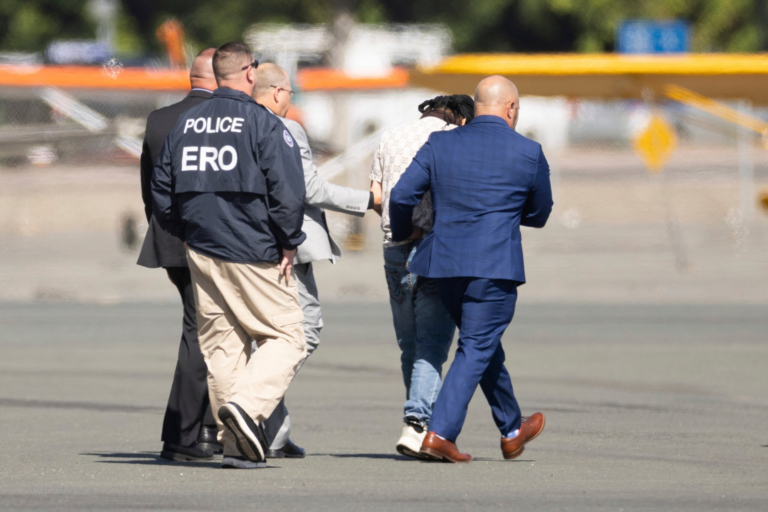
It is now significantly harder for non-U.S. citizens to obtain a commercial driver’s license under new rules the Transportation Department imposed Friday.
Transportation Secretary Sean Duffy said an audit that was done after a deadly crash in Florida last month that was caused by a truck driver attempting an illegal U-turn showed that the previous rules weren’t strict enough and a number of states weren’t following them consistently. Duffy has said that truck driver should have never received a commercial license because of his immigration status.
That review found that commercial driver’s licenses were improperly issued in California, Colorado, Pennsylvania, South Dakota, Texas and Washington. But Duffy said the problems were so egregious in California that he is threatening to pull $160 million in federal funding.
Here’s what is changing and what led to the changes:
Florida crash put the spotlight on immigrant drivers
The nationwide audit was kicked off after Harjinder Singh, an India-born truck driver, made an illegal turn on Florida’s Turnpike, according to the Florida Highway Patrol. A minivan behind it wasn’t able to avoid the truck’s trailer and crashed into it. The driver and two passengers were killed, while Singh and a passenger in his truck were not injured.
Singh lived in California and was originally issued a commercial driver’s license in Washington before California issued him one. He has been charged with three state counts of vehicular homicide and immigration violations.
Singh’s attorney, Natalie Knight-Tai, declined to comment immediately on the case.
Officials have also pointed to two other fatal crashes this year they say were caused by immigrant truck drivers who never should have received licenses. A driver in Texas failed to brake and crashed into a line of cars, resulting in a 17-car pileup that killed five people. And in Alabama, a driver struck four vehicles stopped at a red light, killing two people.
Crash and investigations incite heated political fight
The Florida crash and subsequent investigations have fueled arguments between the governors of Florida and California while eliciting outrage from President Donald Trump and Transportation Secretary Sean Duffy.
Duffy said the audit found instances in which California, Colorado, Pennsylvania, South Dakota, Texas and Washington issued licenses improperly, saying the rules need to be stricter.
But he has homed in on California, where he said investigators found that one in four of the 145 commercial drivers licenses for noncitizens issued since June that they reviewed should have never been issued under the current rules. California now has 30 days to audit its program and present a plan for complying or risk losing its funding.
California has pushed back on these claims, with a spokesperson for Gov. Gavin Newsom saying Duffy doesn’t understand federal law and claiming that commercial driver’s license holders from California have a significantly lower rate of crashes than both the national average and the Texas average, which is the only state with more licensed commercial drivers.
Duffy had previously threatened to strip some federal funding from California, Washington and New Mexico after he said they didn’t enforce English proficiency requirements for truckers that went into effect this summer.
California has been a battleground for the Trump administration, with the president and Newsom regularly taking to social media to air their grievances about the other.
Immigrants will have a hard time getting commercial licenses
The new rules only allow noncitizen drivers who have three specific visas to qualify. And states will be required to verify their immigration status. Only drivers who hold either an H-2a, H-2b or E-2 visa will qualify. H-2B is for temporary nonagricultural workers, while H-2a is for agricultural workers. E-2 is for people who make substantial investments in a U.S. business
The licenses will only be valid for up to one year unless the applicant’s visa expires sooner than that.
Officials said that out of 200,000 noncitizens who currently have commercial licenses, only about 10,000 of them would qualify under the new rules. But the rules aren’t retroactive, so those drivers will be able to keep their licenses at least until they come up for renewal.
All states must pause issuing commercial driver’s licenses to noncitizens until they can comply with the new rules.
Will this worsen the shortage of truckers?
The 200,000 noncitizen truck drivers on the road represent about 5% of all the commercial drivers. Duffy said he thinks there are enough American drivers to deliver all the loads.
Removing noncitizen drivers from the industry could force trucking companies to increase wages for entry-level operators and draw more job seekers, said Jonathan Marques, founder of the Driving Academy in Linden, New Jersey.
Marques said that could even make the industry more attractive.
Copyright © 2025 The Associated Press. All rights reserved. This material may not be published, broadcast, written or redistributed.
Maryland officials reassure public Bay Bridge is safe after social media picture prompts questions

Maryland transportation leaders are reassuring the public that it’s safe to drive across the Chesapeake Bay Bridge, after a picture circulating on social media prompted some drivers to question whether there was an infrastructure issue.
The image, which Kimberly Hutson told WJZ News her husband took while he was fishing last weekend, includes a yellow circle drawn around a support structure that looks to be off-center. It shows a section of bridge’s westbound span.
But the Maryland Transportation Authority said in a statement that it inspected the pier and “confirmed that there is no indication of movement or distress at the location.”
The agency said the picture of the pier cap looks to be off center, but the bridge girders, “the key structural components supporting the span — are aligned and centered with the pier cap.”
Positioning hasn’t changed since the bridge’s construction, the statement said.
“We want to reassure the public that both spans of the bridge are safe,” the agency said.
MDTA said it regularly conducts condition inspections on all of its facilities, “and ensuring the safety of these critical structures is the MDTA’s highest priority.”
The Chesapeake Bay Bridge is an hour south of where the wreckage of the Francis Scott Key Bridge stands in Baltimore.
Get breaking news and daily headlines delivered to your email inbox by signing up here.
© 2025 WTOP. All Rights Reserved. This website is not intended for users located within the European Economic Area.
How Automatic Transmissions Changed Everything About Trucking

From Intimidation to Integration
Old-school truckers remember when commercial vehicles came with separate transmissions that required two gear shift levers. These were genuinely intimidating to newcomers. Operating a twin-stick setup demanded precise timing between the main transmission and auxiliary transmission, deep mechanical understanding of how power flowed through the drivetrain, physical coordination that took months to master, and mental bandwidth that left little room for distraction.
The learning curve was steep enough that many potential drivers took one look and walked away. But those who persisted gained something valuable: an intuitive understanding of how trucks actually worked. They learned why you couldn’t force a gear, how engine braking worked with the transmission, and what it meant when something didn’t sound right coming from the drivetrain.
The industry’s move to single-lever transmissions in the 1980s and 1990s represented the first major simplification. Suddenly, you only needed to master one shifter, though the underlying skills remained demanding. Drivers still had to perfect double-clutching technique for smooth shifts, understand RPM matching between engine and transmission speeds, grasp gear ratios and their relationship to load and terrain, and maintain mechanical sympathy for the equipment.
This era produced drivers who could diagnose transmission problems by sound, knew exactly when to downshift for a grade, and understood the relationship between gear selection and fuel economy. The barrier to entry dropped, but competence requirements remained high. These drivers developed an almost telepathic connection with their equipment, sensing problems before they became failures and optimizing performance through skill rather than computer algorithms.
The numbers tell the story of how quickly the industry transformed in the 2000s and beyond. In 2005, over 95% of trucks still had manual transmissions, with early AMT adoption just beginning. By 2010, automatic transmissions had captured 20-25% of the market as fleets began to recognize the fuel efficiency benefits. The surge came between 2014 and 2017, with AMT adoption jumping from 25-70% depending on manufacturer to a 50/50 split across the industry. By 2018-2019, major OEMs reported 75-80% AMT take-rates, and today that figure has reached 90+% for new builds, with manuals mostly relegated to vocational applications.
This was a fundamental shift in what trucking required from its workforce. The mechanical knowledge that once defined professional drivers became optional, then irrelevant, then forgotten.
Cognitive Transformation
Driving a manual transmission truck was about constant cognitive engagement. Drivers continuously calculated engine speed, road speed, load weight, grade, and traffic conditions to determine optimal shift points. Both hands and feet were actively involved in the driving process, leaving less capacity for secondary tasks. Understanding why you couldn’t force a gear, why floating gears required precise timing, and how transmission temperature affected shifting created deeper vehicle knowledge that extended far beyond just operating the truck.
In city traffic, on mountains, or in challenging conditions, manual transmissions require complete attention to driving dynamics. There was no autopilot mode, no set-it-and-forget-it operation. Every mile required active participation in managing the machine, creating a level of situational awareness that many veterans argue is missing from modern driving.
AMTs fundamentally changed these cognitive demands. Push a button, select drive, and the computer handles shift timing, engine protection, and fuel optimization. Without gear management responsibilities, drivers have more cognitive bandwidth for other activities, but they also lose the mechanical connection that once kept them intimately involved with vehicle operation. The computer makes thousands of decisions that drivers once made instinctively, removing both the burden and the education that came with manual operation.
This transformation freed mental capacity that could be directed toward safety and efficiency, but it also created opportunities for distraction that simply didn’t exist when both hands and full attention were required for basic vehicle operation. The question becomes whether this trade-off improved or degraded overall driving performance.
The Barrier-to-Entry Revolution
Manual transmissions created a natural selection process that the industry didn’t fully appreciate until it was gone. The intimidation factor alone deterred many potential drivers who were overwhelmed by the perceived complexity of learning to shift correctly. Those who persisted had to develop genuine competence before becoming productive, creating a workforce that was filtered not just by interest but by ability to master complex mechanical skills.
The learning process taught drivers about truck systems in ways that no classroom instruction could match. Understanding how to float gears required grasping the relationship between engine RPM, transmission input shaft speed, and gear ratios. Learning to downshift properly meant understanding engine braking, weight distribution, and the physics of momentum. These weren’t abstract concepts but practical skills that had immediate consequences if performed incorrectly.
The commitment level required to master manual shifting meant drivers were more likely to stay in the industry once they’d invested the time to become competent. There was a sunk cost in education that created loyalty and professional identity. Drivers who conquered the twin-stick or mastered the 18-speed felt they’d earned their place in the profession through skill development rather than just completing a training program.
Automatic transmissions democratized commercial driving by creating a broader labor pool, enabling faster training, lowering the intimidation factor, and making careers accessible to drivers with physical limitations. Anyone comfortable driving a car could theoretically operate a truck, reducing CDL school time and creating quicker transitions to productivity.
This accessibility came with trade-offs that the industry is still processing. The natural filter that once separated serious candidates from casual interest disappeared, potentially changing not just who enters trucking but who stays and how they approach the profession.
The Distraction Equation
The cognitive demands of manual transmission driving created built-in distraction resistance that many didn’t recognize until it was gone. Hands and mind were continuously occupied with driving tasks, creating immediate consequences for poor attention to shifting and physical constraints that limited the ability to multitask while managing clutch and shifter. Gear selection required continuous assessment of driving conditions, maintaining a level of situational awareness that extended beyond just steering and speed control.
AMTs removed many of these natural constraints. Free hands mean availability for other activities, reduced vigilance requirements allow mental wandering, and the physical and mental capacity once devoted to transmission management becomes available for secondary tasks. The immediate mechanical feedback that punished inattention to driving dynamics disappeared, replaced by computer systems that compensate for driver errors without necessarily alerting the driver to their mistakes.
This freedom has undeniable benefits, reduced fatigue, improved fuel economy through optimized shifting, and the ability to focus on traffic and road conditions rather than mechanical operations. But it also created opportunities for distracted driving behaviors that were physically impossible with manual transmissions. The industry hasn’t fully grappled with whether this increased capacity for distraction has contributed to changing crash patterns or driver behavior.
Veterans argue that the constant engagement required by manual transmissions created better drivers, not just because of the mechanical skills they developed, but because of the attention habits they formed. When every shift requires active participation, drivers develop patterns of continuous situational assessment that extend beyond transmission operation to overall vehicle management and road awareness.
The Competence Question
The shift to automatics coincided with a broader decline in mechanical knowledge among drivers that extends far beyond just transmission operation. Fewer drivers understand how the engine, transmission, and differential work together as integrated systems. The era of drivers who could change oil, adjust brakes, or diagnose problems is essentially over, replaced by operators who view trucks as appliances rather than complex mechanical systems requiring understanding and respect.
This knowledge gap has created new challenges for fleets. Maintenance dependence has increased as drivers become less capable of identifying developing problems or performing basic roadside repairs. Equipment abuse has become more common as reduced mechanical sympathy leads to operation beyond design limits without recognition of the consequences. Training programs now focus heavily on regulations and compliance while spending less time on vehicle systems and mechanical principles.
The loss is about professional identity and the relationship with the equipment. Drivers who understood their trucks developed a respect for mechanical limits, an appreciation for proper maintenance, and a pride in operating complex machinery skillfully. Modern drivers may view trucks as tools for completing transportation tasks rather than as sophisticated machines that require mastery and care.
This transformation raises fundamental questions about what constitutes professional competence in commercial driving. Should mechanical knowledge remain a professional requirement even as technology eliminates the practical need for such understanding? How much should drivers know about the systems they operate, and what are the safety and efficiency implications of reduced mechanical literacy?
Safety Considerations
AMTs present both safety benefits and concerns that the industry is still evaluating. Potential benefits include reduced driver fatigue from the elimination of clutching, consistent shift timing regardless of driver skill level, engine protection features that prevent over-revving, and improved fuel economy through computer-optimized shifting patterns. These improvements can enhance safety by reducing physical stress, preventing mechanical failures, and optimizing vehicle performance beyond what most drivers could achieve manually.
Potential concerns include increased capacity for distracted driving behaviors, reduced situational awareness of vehicle dynamics, less mechanical connection to vehicle performance, and potential overconfidence in vehicle capabilities. The industry lacks comprehensive data on whether transmission type correlates with crash rates, though anecdotal evidence suggests some troubling trends.
The freedom that AMTs provide for secondary tasks has coincided with increased use of mobile devices, mobile computing systems, and other in-cab technologies that compete for driver attention. While correlation doesn’t prove causation, the timing of increased distraction-related incidents with AMT adoption raises questions about whether easier vehicle operation has enabled behaviors that contribute to crashes.
More subtly, the reduced mechanical awareness that comes with AMT operation may affect emergency response capabilities. Drivers who don’t understand engine braking, gear selection for specific conditions, or the relationship between transmission operation and vehicle control may be less prepared to handle equipment failures or extreme driving situations that require manual intervention.
The Cultural Shift
The transmission transition reflects broader changes in trucking culture that extend far beyond mechanical operation. Traditional drivers took pride in mechanical knowledge and shifting skill, maintaining self-reliance for basic maintenance and repairs while developing a deep understanding of equipment limitations and respect for the complexity of commercial driving. This created a professional identity built around mastery of difficult skills and intimate knowledge of complex machinery.
Modern drivers are more technology-focused than mechanically focused, dependent on fleet maintenance support, and prioritize regulatory compliance over mechanical knowledge. They may view trucking more as a transportation service than as a skilled trade, changing the profession’s identity from mechanical mastery to logistics execution.
This cultural shift raises questions about the professional identity and future direction of trucking. Has trucking evolved from a skilled trade requiring years to master into a logistics function that can be learned in weeks? Should mechanical competence remain a professional requirement, and how much vehicle knowledge should modern drivers possess? Does reduced complexity affect long-term career development and professional satisfaction?
The answers aren’t clear, but the transformation is undeniable. The generation of drivers who learned to drive on manual transmissions is retiring, taking with them institutional knowledge and professional attitudes that may not be transferable to drivers who learned on automatics. Whether this represents progress or loss depends on how you define professional competence and what you believe trucking should require from its practitioners.
Industry Implications and the Road Ahead
Fleet managers report significant operational benefits from AMT adoption, including expanded candidate pools, reduced training barriers, improved fuel economy, reduced maintenance costs, and increased productivity through faster driver training and reduced fatigue. These advantages are compelling and have driven the widespread adoption that makes AMT prevalence irreversible.
Yet, some managers express concerns about driver quality, mechanical knowledge, technology dependency, and the preservation of long-term skills. The industry faces the challenge of balancing accessibility with competence, maintaining trucking’s identity as a skilled profession while embracing technological advancements, and ensuring that easier operations do not compromise safety standards or professional development.
The transmission transition is largely complete, but its lessons become more relevant as trucking continues evolving toward greater automation. Each technological simplification changes who can do the job and how they do it. Autonomous vehicles, electric powertrains, and advanced driver assistance systems will further transform what professional driving requires and who it attracts.
The question isn’t whether AMTs are good or bad, they’re clearly here to stay and offer undeniable benefits. The question is whether the industry recognizes what it’s gained and lost in the transition and how to preserve the positive aspects of driver competence and engagement while embracing technological progress.
What We’ve Gained and Lost
The transition from manual to automatic transmissions represents a fundamental transformation of what the profession requires and who it attracts. The benefits are undeniable: improved efficiency, reduced physical demands, expanded accessibility, and enhanced performance optimization. AMTs have made trucking more inclusive and, in many measurable ways, more efficient.
That transition also eliminated what may have been an important natural filter, creating competent, engaged, mechanically aware drivers who viewed trucking as a skilled profession requiring mastery, rather than a transportation job requiring compliance. Manual transmissions required commitment, created mechanical knowledge, demanded constant attention, and produced drivers who understood their equipment and respected its limitations.
The great transmission shift is complete. Now comes the harder task of figuring out what it all means for the future of professional driving, and whether the industry can maintain the competence, professionalism, and safety culture that made trucking work while embracing the technological advancement that makes it more efficient and accessible.
The debate continues in fleet break rooms, truck stops, and industry conferences nationwide. What’s clear is that trucking today is fundamentally different from trucking twenty years ago, and the transmission transition played a central role in that transformation. Whether that change represents progress or loss may depend on what you believe professional driving should require and who it should serve.
Trucking Crisis: Why Regulation Reform Is Urgent

The quality truckers could soon be replaced by the fraudulent chameleon carriers, which represent the worst of the trucking industry.To address these issues, it’s time for Congress to intervene with targeted reforms aimed at restoring financial stability, enhancing safety and bolstering security.
A key proposal: Permanently cap the number of for-hire motor carriers in the U.S. at 225,000.
This modest increase from the current 212,000 would prevent further flooding of the market with new entrants. The industry simply doesn’t need more trucking firms; unchecked growth has fueled overcapacity and driven down rates, making it unsustainable for legitimate operators.
Additionally, an approval process should be required for the transfer or sale of operating authority. This would verify that the acquiring entity meets rigorous safety, financial and insurance standards before taking control of a trucking company. Such measures could help curb the rise of “chameleon carriers”—unsafe operators that evade shutdowns by reopening under new names, often tripling accident risks and bypassing oversight. These reincarnated firms have been linked to 217 deaths and over 3,500 injuries in crashes from 2018 to 2023. While the FMCSA’s 2025 rules aim to phase out MC numbers to combat this, implementation delays have limited their impact.
Drawing inspiration from the airline industry, ownership rules must also be tightened: Non-U.S. citizens should be limited to owning no more than 25% of a for-hire motor carrier. Those seeking greater control would need to become American citizens or partner with a U.S. majority owner. This is critical, as foreign entities already control 10-15% of U.S. trucking, including operations tied to Serbian firms accused of faking logs and posing security threats.
Abuse of visas allows foreign truck drivers to haul domestic loads illegally, undercutting rates and displacing American jobs.
To be clear, this is not a call for an ICC-style regulatory framework, where every rate and lane had government oversight. The market should control the freight rates. This is how a market should operate. What is needed is for Congress to take the lead in ensuring the safety and qualifications of the industry. By restricting the operating authorities that are issued, it will place a market premium on those authorities. So rather than a chameleon carrier deciding it can commit a heinous act without repercussions, it will cherish its operating authority because it has real value, and doing something nefarious would destroy it.
Without these changes, the trucking sector will remain vulnerable to unqualified and unsafe carriers, many influenced by dubious foreign entities that undercut prices through risky practices. This not only erodes the viability of safe, compliant competitors but also heightens broader risks, including cargo theft surging to $1 billion in 202. Sometimes, these firms use lease-purchase scams to trap drivers in debt.
Congress must act now to protect this vital industry. By implementing these reforms, we can foster a more stable, secure and equitable trucking landscape for all stakeholders.
Fall River, MA traffic: Route 24 Exit 4 closed due to flooding

Flooding has forced the closure of a highway exit off Route 24 in Fall River, Massachusetts, on Thursday.
Exit 4 on Route 24 south is shut down due to
Produce Consumption Patterns are Driving Cold Chain Recovery

Shifting Channel Dynamics: Traditional grocery stores are losing market share to value-forward channels like supercenters (18.6% share, up from 17.1% in 2019) and club stores (13.7% share, up from 11.7% in 2019). This consolidation could streamline transportation routes, but it may also increase pressure on delivery timing.
Value-Added Growth: While value-added produce represents only 8% of volume, it commands higher rates and requires more specialized handling, creating opportunities for carriers with advanced reefer capabilities.
E-commerce Acceleration: Millennials’ digital-first shopping habits are driving online grocery expansion, requiring last-mile cold chain solutions that many carriers are still developing.
Cold Chain Market Heating Up
While traditional freight struggles, the cold chain logistics market showed resilience. The global cold chain market size was estimated at USD 316.34 billion in 2024 and is projected to reach USD 1,611.0 billion by 2033, growing at a CAGR of 20.1% from 2025 to 2033.
In the U.S., specifically, the cold chain logistics market size was valued at USD 34.67 billion in 2024 and is projected to reach USD 75.96 billion by 2032, at a CAGR of 10.3% from 2025 to 2032. This growth trajectory suggests that reefer carriers may be better positioned for recovery than their dry van counterparts.
The Bright Spot in a Dark Market
As a fleet owner, I have always had a reason to diversify heavily in reefer freight. Even during the freight recession’s worst periods, refrigerated transportation maintained better rate stability. High-volume regional lanes like Yuma to Los Angeles are averaging $3.73 per mile, nearly 50 cents per mile higher than last year, demonstrating the premium that temperature-controlled freight commands.
The reefer market’s resilience stems from several factors:
Essential nature of perishable goods transportation
Weather-driven demand spikes during severe winter conditions
Limited capacity compared to dry van markets
Higher barriers to entry due to equipment costs
Geographic Shifts
The produce report reveals significant implications for transportation, particularly in terms of geography. California and Florida remain major production centers, but consumption patterns are shifting:
Regional Distribution Changes: As club stores and supercenters gain share, fewer but larger shipments may flow to distribution centers rather than individual stores
Seasonal Volatility: Winter storms like the recent Winter Storm Cora can drive reefer tender rejection rates to 36% in affected markets like Buffalo, well above the national average of 15.4%
Cross-Docking Growth: Value-added produce often requires faster turnover, increasing demand for efficient cross-docking facilities
Technology and Efficiency
Millennial consumers’ demand for transparency and sustainability is driving the adoption of technology in cold chain logistics. The report shows that 85% of consumers are interested in innovations such as different textures, improved nutrition, and easier preparation, all of which require precise temperature control and faster delivery times.
2025 will see continued investments in software that can improve visibility on cold chain operations, with real-time monitoring becoming standard rather than optional. For carriers, this means:
Investment in telematics for temperature monitoring
Route optimization software to minimize waste
Blockchain integration for supply chain transparency
Motive is helping carriers capitalize on these opportunities with comprehensive reefer monitoring solutions that address the precise demands of Millennial-driven produce markets. Motive’s Reefer Monitoring platform integrates real-time temperature and humidity tracking with fleet telematics data in a single dashboard, enabling carriers to remotely control reefer units, reduce programming errors, and provide the transparency that modern shippers demand. Fleet managers using the system report saving 5-10 hours per week in productivity while preventing spoilage through 15-minute interval monitoring, the kind of operational efficiency that could help carriers maintain premium rates in a recovering market. With integrations for both Thermo King and Carrier units, plus automated FSMA compliance reporting, the platform positions reefer operators to meet the evolving demands of health-conscious consumers while protecting margins through proactive maintenance and dispute resolution capabilities
The Challenges Ahead
Despite growth opportunities, reefer carriers face significant headwinds:
Rising Operational Costs: ATRI’s annual Operational Costs of Trucking research documented industry cost increases of more than 22% over the past two years, resulting in the highest recorded costs in the research’s 16-year history. Reefer operations face additional costs from:
Higher fuel consumption for refrigeration units
Specialized maintenance requirements
Regulatory compliance for food safety
Capacity Management: The produce report shows consumption peaks around holidays and seasonal events, creating demand volatility that’s challenging for capacity planning.
SONAR data indicates the freight recession may be ending, with several positive indicators for reefer carriers:
Spot Rate Stabilization: National reefer spot rates have found a floor around $2.35-$2.39 per mile
Tender Rejection Rates: Reefer rejection rates have shown more stability than dry van, suggesting a healthier supply-demand balance
Contract vs. Spot Gap: The premium for contract rates ($0.35-$0.40 per mile) provides stability for well-positioned carriers
Strategic Implications for Carriers
For Large Fleets:
Invest in technology for real-time monitoring and route optimization
Develop partnerships with value-added produce processors
Consider dedicated lanes for high-volume Millennial-focused retailers
For Small and Medium Carriers:
Focus on regional niche markets where flexibility provides advantages
Develop expertise in specialized commodities (organic, value-added)
Consider partnerships for technology investments
For Owner-Operators:
Target consistent regional routes rather than spot market volatility
Develop relationships with local/regional produce distributors
Invest in fuel-efficient reefer units to manage operating costs
The Long Game, 2025 and Beyond
The produce industry’s generational shift toward Millennials represents a fundamental realignment that will drive transportation demand for the next decade. As Millennials reach peak earning years and household formation, their preference for fresh, convenient, and sustainably-sourced produce will create new opportunities for innovative carriers.
The convergence of ending freight recession, growing cold chain demand, and changing consumer preferences positions 2025 as a potential inflection point for reefer transportation. Carriers who can adapt to new requirements around technology, sustainability, and customer service will find themselves well-positioned for the recovery.
Key Success Factors Moving Forward:
Technology adoption for visibility and efficiency
Sustainability initiatives to meet Millennial preferences
Flexibility to handle diverse shipping requirements
Financial discipline to weather the remaining market volatility
As the freight recession hopes for an official end and produce consumption patterns continue evolving, refrigerated transportation stands at the intersection of necessity and opportunity. The carriers who recognize and adapt to these changing dynamics will be the ones driving the industry’s next growth cycle.

This Driverless Trucking Company Just Went Public. Welcome to the Future of Transportation

An autonomous trucking company just went public.
Kodiak kicked off trading on the Nasdaq Thursday morning following a successful merger between autonomous trucking company, Kodiak Robotics, and special purpose acquisition company (SPAC) Ares Acquisition Corporation II. The new combined company, called Kodiak AI, started trading at $8.75 per share under the ticker symbol “KDK.” The stock quickly shot up to $10.47 per share before paring some of those gains.
Kodiak AI CEO and founder Don Burnette rang the opening bell at the Nasdaq Thursday morning in celebration. The company also said it was planning to exhibit one of its autonomous trucks in Times Square.
“What a moment this is for Kodiak, for our customers and for the future of transportation. As we ring this bell, our customer-owned driverless trucks are delivering freight with nobody in the vehicle,” he said. “Autonomy isn’t a distant promise. It’s here now, operating safely on roads today.”
Featured Video
An Inc.com Featured Presentation
Burnette said Thursday that he was inspired to tackle autonomous technology and improve road safety after losing a friend in a tragic car accident. An Uber expat, he left the ride-hailing company to found Kodiak Robotics in 2018 and develop software to power autonomous trucks. Kodiak Robotics ranked 20th on the 2024 Inc. 5000.
“The transportation industry faces growing challenges, including safety risks, rising costs, and driver shortages,” Burnette said in a statement. “Going public with the support of our partners at AACT marks an important step in Kodiak’s journey to help transform how freight moves by providing our driverless solution to customers.”
Although Burnette previously told Inc. that Mountain View, California-based Kodiak didn’t start as an AI company, the technology has become core to its operations. Burnette said Thursday the company has logged over 3 million autonomous miles, and its trucks have exceeded 3,000 hours of commercial operation.
“The Kodiak Driver is already on the road, safely and reliably delivering freight every day for paying customers without a human in the cab. Our driverless operations show that autonomy is no longer a future promise but a reality today,” Burnette said in a statement.
The company also noted that its customer Atlas Energy Solutions, which currently owns and operates a fleet of eight Kodiak Driver-powered autonomous trucks, placed an order for 100 in 2025.
Kodiak disclosed it received some $212.5 million worth of institutional investment in connection with business combination with Ares, which includes $145 million in private investment in public equity (PIPE) funding and roughly $62.9 million in trust cash. Shareholders voted to approve the transaction at a September 23 meeting.
Special purpose acquisition companies, also known as blank check companies, are formed with the sole purpose of raising funds through an IPO to take a company public, according to Investopedia. Those funds are placed in a trust after which point the SPAC has a limited amount of time to identify and merge with a company. In the event that an acquisition is not successful, investors get their money back. SPACs had made a major resurgence in past years as companies sought faster and less expensive ways to go public.
With that rise in popularity came a rise in fraud and scams, as well as increased oversight by the Securities and Exchange Commission.
Elgin transportation leaders featured in this year’s cemetery walk

You may not know the name Theodore J. Schmitz but you definitely know of his legacy.
It was the Elgin man’s idea to mark the center of roads with yellow paint as a means of dividing traffic and keeping cars in the proper lanes, a concept first applied on the streets of Elgin.
It’s his story and six others that will come to life Saturday and Sunday during the 38th annual Bluff City Cemetery Walk presented by the Elgin History Museum. Actors portray the people featured in the walk and dress in costume.
The theme of this year’s walk are local people who made innovations in transportation, a fitting concept given that U.S. 20 marks its 100th anniversary this year, walk co-chair John Devine said.
Schmitz, a 28-year employee of the Elgin National Watch Co., became interested in automobiles early on and would go on to help establish the Elgin Motor Club and become an advocate for road safety measures like speed limits. He also helped ensure that Route 20 went through Elgin.
But his lasting impact came with the concept of a simple painted line — later known as the “Illinois line” — to keep car drivers on the right side of the road to reduce collisions.
“(It was) quickly adopted by the state of Illinois, the U.S. and then around the world,” Devine said. “People who know their transportation history have heard the story, but for a lot of people it will be an eye-opener.”
Another of the people to be featured on the walk this year is Alice Byrd Potter, the first woman to drive from Chicago to New York.
“The best way to describe her is a renaissance woman, a modern renaissance woman,” Devine said.
Born and raised in Elgin, Potter taught dance and piano and was known for her involvement in the arts.
“When the automobile age arrived, she was tremendously interested,” Devine said. “So much so that she learned how to be her own mechanic to maintain her own car.”
When she and two friends decided in 1908 to take a road trip to the East Coast — unheard of at the time for women — people greeted her along the route and newspapers wrote articles about her, he said.
Potter had just one flat tire during the journey, and she changed it herself.
“She was really a remarkable person, taking that kind of risk and initiative,” Devine said. “It’s a pretty special achievement.”
The other prominent Elgin residents included on this year’s walk are:
David McBride, an inventor and early car dealership owner;
Leo McGrath, who founded three car dealerships and built the first freestanding Honda dealership in the Chicago area;
Clarence W. (C.W.) Helm, who helped open Elgin’s first airport and flight school;
Charles Harrison Burnidge, Elgin Township’s first road commissioner;
Frank Wood, credited with bringing the Elgin National Road Races to the city.
Tour guests will see a rare 1927 Buick sedan, an Elgin Sweeper and a cutout of the “Elgin Piston Pin Special,” a race car entered in the 1940 Indy 500.
The cemetery walk is held rain or shine, Devine said, and has had an attendance of about 600 in recent years. Interest among people under age 40 is growing, he said.
“I think part of it is just an interest in being involved in the community,” he said. “Also, we’ve had a few actors under 40. Of course, they invite their friends, and they discover what a warm-hearted event the cemetery walk is.”
Learning the history of some of Elgin’s more prominent residents is appealing because it helps guests appreciate the town in which they live, but there’s also the “quiet beauty of Bluff City Cemetery, which is something very special,” he said.
The walks, which last about 90 minutes, will be held at 3 and 5:30 p.m. Saturday and 11 a.m. and 1:30 p.m. Sunday. A tram is available but space is limited.
Tickets are $20 for museum members and $25 for guests. They can only be purchased online at www.elginhistory.org/2025-cemetery-walk.
Gloria Casas is a freelance reporter for The Courier-News.
Transportation Secretary begs European airports: Don’t cut US flights

Since the start of President Donald Trump’s second term in the White House, lower numbers of travelers coming into the U.S. have pushed airlines from all over the world to cut their capacities.
Norwegian budget carrier Norse Atlantic Airways redirected a number of its Boeing 787-9 Dreamliners (BA) to flights connecting several Scandinavian capitals with Thailand.
It also cut flights from Oslo and Berlin to Miami and London Gatwick Airport to Las Vegas. In addition, the airline’s final flight to JFK and Paris Charles de Gaulle Airport (CDG) is slated to run on Oct. 17.
Icelandic low-cost airline Play Airlines, which launched in 2019 and quickly built a market running flights from the East Coast of the U.S. to European capitals, is suspending all flights between the U.S. and Europe by October 2025 amid low demand.
Play CEO Einar Örn Ólafsson classified the change as
OTR Solutions transforms access to fuel credit for carriers nationwide

OTR Solutions, a full-service freight factoring and transportation technology company, has announced the launch of its new fuel credit offering, the OTR Fuel Card. This offer provides both new and established carriers with reliable access to credit backed by their factoring relationship, not their credit score. The factoring integration ensures carriers can fuel today and pay later through flexible weekly billing or directly through factored invoices.
“At OTR Solutions, our mission has and always will be to put carriers first.” said Jimmy Wittpenn, vice president of fuel product. “Our new fuel credit offering is just another way we are delivering on that promise. Whether you’re a brand-new authority or a seasoned fleet, you now have access to the credit, fuel savings, and support you need to grow your business and be successful.”
OTR Solutions has eliminated the long-standing barriers that once stood between carriers and fuel credit, bringing a self-backed fuel credit offering to market that leverages factored receivables to reliably extend credit to virtually any carrier, even those with zero credit or operating history, without upfront deposits. OTR Solutions expects this new offering to serve as a lifeline to over-the-road carrier operations in a market that has been working against them for years.
The credit offering is built into the OTR Fuel Card, a long-trusted discount fuel card sold by OTR Solutions that offers some of the industry’s deepest discounts on commercial diesel, largest savings on maintenance, and integrated features and service offerings with the company’s suite of transportation focused solutions. Every carrier looking to take advantage of the OTR Fuel Card will now be automatically evaluated for a credit line as the offering requires no hard credit checks nor multi-day reviews to issue approval.
“For too long, a large subset of freight carriers has been overlooked by the outdated and rigid fuel credit providers in the transportation space,” continued Wittpenn. “Critical financing services that our nation’s carriers need to survive have been withheld from those who need them most, and that industry challenge now has a solution through our new product offering.”
Expanded access to fuel credit is just one of the many advantages the OTR Fuel Card now has over competing discount fuel cards, it redefines the rules of who qualifies and how credit works in trucking. The new offering creates a unique opportunity for carriers in the industry with:
No credit checks. Ever.
Eligibility for all carriers who factor with OTR Solutions—new and existing.
Self-backed model: OTR Solutions directly funds and approves carriers, not a third-party bank.
Cashflow flexibility: Fuel now, pay later.
Weekly billing that eliminates the hassle of making multiple payments each week.
The launch of fuel credit with OTR Solutions is more than just another fuel card enhancement—it’s a step towards reshaping how carriers manage their cashflow. By eliminating outdated barriers to credit, the OTR Fuel Card is leveling the playing field and giving new authorities the ability to compete with established fleets from day one.
With OTR Solutions Factoring and the OTR Fuel Card, carriers can start fueling on credit immediately after approval, including the fuel needed to pick up their first load. Carriers interested in learning more about the fuel credit offering can visit https://otrsolutions.com/freightwaves-fuel/ to learn more and connect with their team.
Road closures coming to downtown Baltimore for Pigtown Festival, other events

The Baltimore City Department of Transportation (BCDOT) is warning drivers of temporary road closures and traffic modifications coming to downtown Baltimore this weekend for the 23rd Annual Pigtown Festival and other events.
Officials encourage drivers to download the Waze.com app for live detour navigation.
All activities are weather permitting.
ALSO READ |
Traffic modifications for the 23rd Annual Pigtown Festival will go into effect from 6 p.m. Friday, September 26 until 11 p.m. Saturday, September 27:
Washington Boulevard closed between W. Barre and W. Cross Streets
Scott Street closed between Ramsay and Carroll Streets
Poppleton Street closed between Washington Boulevard and Ramsay Street
Road closure for the 17th Annual Race to Embrace Independence 5k will go into effect Saturday, September 27 from 7 a.m. to 12 p.m.:
Gorsuch Avenue closed between Ellerslie Avenue and Independence Street
The race will kick off on Gorsuch Avenue in front of the Marian House driveway, just east of #937. Participants will head east on Gorsuch Avenue, cross over Independence Street, left on Loch Raven Boulevard, and right on E. 33rd Street, until Whitman Drive at Lake Montebello. Runners will turn right on Curran Drive and continue to marked turnaround point, then run in the opposite direction on Curran Drive to Whitman Drive, turn right onto E. 33rd Street, left onto Ellerslie Avenue and then left onto Gorsuch to return to finish.
One lane of travel will be coned off for runners along the race route where possible.
In addition, drivers should be advised that temporary traffic stops may be implemented during the race for the safety of the runners.
Road closure for the 17th Annual Donate Life Family Fun Run, which will be held at the Camden Yards Sports Complex, will go into effect Saturday, September 27 from 7 a.m. to 1 p.m.:
Hamburg Street closed between Leadenhall and Russell Streets
The race will kick off along Ravens Walk. Participants will head north on S. Eutaw Street, left onto W. Camden Street, slight left onto S. Paca Street/Russell Street, right on Lee Street, left onto Russell Street, right on W. Hamburg Street, left onto W. Ostend Street, left on Leadenhall Street, left onto W. Hamburg Street, left onto Ravens Walk to circle M&T Bank Stadium, and north on Ravens Walk crossing over W. Hamburg Street to finish.
One lane of travel will be coned off for participants along the race route where possible.
Temporary traffic stops may be implemented during the race for the safety of participants.
Traffic modifications for the Abell Community Street Fair will go into effect from 9 p.m. Saturday, September 27 until 8 p.m. Sunday, September 28:
Abell Avenue closed between E. 30th and E. 32nd Streets
32nd Street closed between Guilford Avenue and Barclay Street
31st Street closed between Guilford Avenue and Barclay Street
Road closures for weekend activities:
Friday, September 26:
Linwood Avenue closed between O’Donnell and Dillon Streets starting at 6 p.m. Friday, Sept. 26th through 8 a.m. Sunday, Sept. 28th (special event – We’re Not Worthy Festival Episode 4)
Saturday, September 27:
Payson Street closed between W. Lombard and W. Pratt Streets from 8:30 a.m. to 5 p.m. (special event – WDC grand opening)
Potomac Street closed between Dillon and O’Donnell Streets from 9 a.m. – 10 p.m. (special event – SoProToberFest)
Carey Street closed between Baker and Cumberland Streets from 10 a.m. – 8 p.m. (special event – Penn North Recovery Festival)
Eastbound Route 40 underpass / I-70 closed between Warwick Avenue and Martin Luther King, Jr. Boulevard from 6 a.m. to 4 p.m. (cleaning and repair activities)
Monument Street closed between Broadway and Rutland Avenue from 6 a.m. to 4 p.m. (crane operation)
Jones Falls Expressway / I-83 southbound right lane closures 29th Street to Guilford Avenue from 6 a.m. – 4 p.m. (graffiti removal)
29th Street entrance ramp to the southbound Jones Falls Expressway / I-83 from 6 a.m. – 4 p.m. (graffiti removal)
Sunday, September 28:
Jones Falls Expressway / I-83 northbound and southbound left lane closures Fayette Street to the city/county line from 6 a.m. – 2 p.m. (cleaning activities)
Street and lane closures for the Baltimore Farmers’ Market, which is held under the Jones Falls Expressway along Saratoga Street between Holliday and Gay Streets, will go into effect on Sunday, September 28 from 6 a.m. to 2 p.m.:
Sierra’s Dream Chaser is starting to resemble a nightmare

The Dream Chaser spaceplane, which has been under development for two decades, now seems like it might be further than ever from taking flight.
On Thursday, NASA, confirming an earlier Ars Technica report, said the first flight of the winged spacecraft will no longer berth with the International Space Station. Rather, the space agency said, the Dream Chaser program would be
Susquehanna Downgrades Knight-Swift Transportation (NYSE:KNX) to Neutral

Knight-Swift Transportation (NYSE:KNX – Get Free Report) was downgraded by Susquehanna from a “positive” rating to a “neutral” rating in a report issued on Wednesday, MarketBeat reports. They currently have a $43.00 price objective on the transportation company’s stock, down from their prior price objective of $52.00. Susquehanna’s target price would indicate a potential upside of 9.98% from the company’s previous close.
A number of other research analysts also recently weighed in on KNX. Robert W. Baird increased their price objective on shares of Knight-Swift Transportation from $55.00 to $60.00 and gave the company an “outperform” rating in a research report on Friday, July 25th. Wells Fargo & Company boosted their price objective on shares of Knight-Swift Transportation from $46.00 to $50.00 and gave the stock an “overweight” rating in a research note on Wednesday, May 28th. Barclays dropped their price objective on shares of Knight-Swift Transportation from $58.00 to $55.00 and set an “overweight” rating on the stock in a report on Thursday, July 10th. Baird R W upgraded shares of Knight-Swift Transportation to a “strong-buy” rating in a research report on Tuesday, July 1st. Finally, UBS Group cut shares of Knight-Swift Transportation from a “buy” rating to a “neutral” rating and increased their target price for the company from $46.00 to $51.00 in a research report on Friday, September 5th. Two investment analysts have rated the stock with a Strong Buy rating, nine have given a Buy rating and six have assigned a Hold rating to the company’s stock. According to data from MarketBeat, the company currently has a consensus rating of “Moderate Buy” and an average target price of $53.13.
Get Knight-Swift Transportation alerts:
Read Our Latest Stock Analysis on Knight-Swift Transportation
Knight-Swift Transportation Stock Down 0.2%
KNX opened at $39.10 on Wednesday. The company has a 50 day moving average of $42.75 and a 200 day moving average of $43.22. The company has a current ratio of 0.89, a quick ratio of 0.89 and a debt-to-equity ratio of 0.30. Knight-Swift Transportation has a 12 month low of $36.69 and a 12 month high of $61.51. The company has a market cap of $6.35 billion, a PE ratio of 38.33, a price-to-earnings-growth ratio of 0.66 and a beta of 1.19.
Knight-Swift Transportation (NYSE:KNX – Get Free Report) last posted its quarterly earnings data on Wednesday, July 23rd. The transportation company reported $0.35 earnings per share (EPS) for the quarter, topping analysts’ consensus estimates of $0.34 by $0.01. The company had revenue of $1.86 billion during the quarter, compared to the consensus estimate of $1.87 billion. Knight-Swift Transportation had a net margin of 2.22% and a return on equity of 3.03%. The firm’s revenue was up .8% compared to the same quarter last year. During the same period in the previous year, the firm posted $0.24 EPS. Knight-Swift Transportation has set its Q3 2025 guidance at 0.360-0.420 EPS. On average, sell-side analysts expect that Knight-Swift Transportation will post 2.13 EPS for the current year.
Insiders Place Their Bets
In other Knight-Swift Transportation news, EVP Michael K. Liu sold 3,420 shares of the firm’s stock in a transaction that occurred on Wednesday, September 3rd. The shares were sold at an average price of $43.41, for a total transaction of $148,462.20. The transaction was disclosed in a legal filing with the SEC, which is available at this hyperlink. Insiders own 3.00% of the company’s stock.
Hedge Funds Weigh In On Knight-Swift Transportation
Institutional investors have recently modified their holdings of the business. Larson Financial Group LLC grew its position in Knight-Swift Transportation by 9,383.3% in the 1st quarter. Larson Financial Group LLC now owns 569 shares of the transportation company’s stock valued at $25,000 after buying an additional 563 shares during the last quarter. Brooklyn Investment Group boosted its position in shares of Knight-Swift Transportation by 93.4% during the 1st quarter. Brooklyn Investment Group now owns 642 shares of the transportation company’s stock worth $28,000 after purchasing an additional 310 shares in the last quarter. UMB Bank n.a. raised its stake in shares of Knight-Swift Transportation by 40.0% during the 1st quarter. UMB Bank n.a. now owns 1,133 shares of the transportation company’s stock worth $49,000 after buying an additional 324 shares during the last quarter. Oliver Lagore Vanvalin Investment Group acquired a new position in shares of Knight-Swift Transportation during the 2nd quarter worth $55,000. Finally, Employees Retirement System of Texas acquired a new position in shares of Knight-Swift Transportation during the 2nd quarter worth $58,000. 88.77% of the stock is owned by institutional investors and hedge funds.
About Knight-Swift Transportation
(Get Free Report)
Knight-Swift Transportation Holdings Inc, together with its subsidiaries, provides freight transportation services in the United States and Mexico. The company operates through four segments: Truckload, Less-than-truckload (LTL), Logistics, and Intermodal. The Truckload segment provides transportation services, which include irregular route and dedicated, refrigerated, expedited, flatbed, and cross-border operations.
See Also
Five stocks we like better than Knight-Swift Transportation
Asset Allocation Strategies in Volatile Markets
Lower Rates Put RV Stocks Back in the Fast Lane
How to find penny stocks to invest and trade
Alphabet: Time to Take Profits, Buy, or Wait for a Pullback?
How to invest in marijuana stocks in 7 steps
Hershey vs. Mondelez: Which Stock Wins Chocolate Season?
Road Safety Audit Highlights Needed Changes for Highway 169
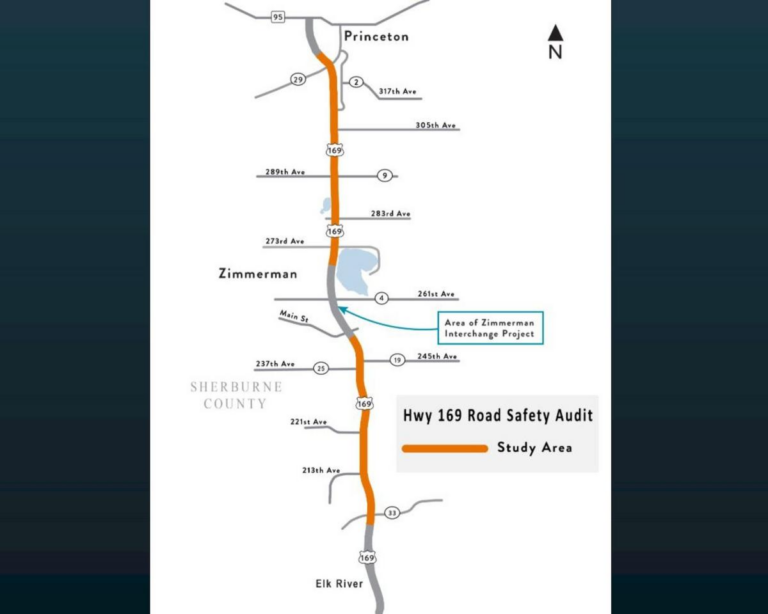
ST. CLOUD (WJON News) — The Minnesota Department of Transportation has completed a road safety audit on Highway 169 between Princeton and Elk River.
The audit was completed to examine current conditions, gather crash data, conduct field reviews, gather public feedback, and identify potential improvements. It’s the first step in identifying both short-term and long-term solutions.
Some short-term improvements include installing high-tension cable barriers, curve signage, and intersection lighting. Long-term improvements will be determined during the next phase with a corridor study in late 2026.
MnDOT says a total of 12 fatal crashes and 17 serious injury crashes happened along that corridor between 2015 and 2024. Eight of those crashes involved motorcycles.
Hackers Are Selling Swiped Maryland Transit Data for Millions in Bitcoin

In brief
Ransomware group Rhysida reportedly stole sensitive data and personal information from the Maryland Department of Transportation.
The collective is now auctioning off the contents for 30 BTC, or about $3.4 million worth.
Ransomware payments were down 35% in 2024, but still amounted to $813 million in total.
Sensitive data swiped during a cybersecurity incident at the Maryland Department of Transportation is reportedly being auctioned for 30 Bitcoin, or $3.4 million worth, by hacking collective Rhysida Ransomware.
Based on auction details gathered by Dark Web Daily, the hacking collective allegedly stole sensitive personal data and information like social security numbers, addresses, dates of birth, and other identifying information.
It is now reportedly offering the data to a single party in the next seven days.
As part of a cybersecurity investigation, the Maryland Department of Transportation “confirmed incident-related data loss” related to unauthorized access of Maryland Transit Administration systems.
It urged users and state employees of the transportation authority to take action to help mitigate the potential effects, like updating passwords and software, and enabling two-factor authentication on their accounts.
The department did not elaborate further on the types of data and information that were subject to loss, and said the investigation was ongoing as of Monday. A representative for the Maryland Department of Transportation did not immediately respond to Decrypt’s request for comment.
Rhysida’s hacking collective has been operating since at least 2023, primarily targeting education, healthcare, manufacturing, information technology, and government sectors according to a memo from the Cybersecurity and Infrastructure Security Agency (CISA).
CISA adds that Rhysida actors typically threaten to publish sensitive data if ransom payments are not made, and direct victims to send those payments via Bitcoin.
Crypto is often used by ransomware operators due to the comparative difficulty of tracking payments compared to traditional, centralized methods.
In July, the Department of Justice sought forfeiture of $2.3 million worth of Bitcoin tied to ransomware attacks and operator group, Chaos. A month later, authorities in Texas sought a similar amount in forfeitures from a different ransomware operator which had extorted victims worldwide.
King Combs Pleads For Diddy’s Freedom Before Sentencing

In July of this year, Diddy’s federal trial came to an end after roughly a month. The jury found him not guilty of sex trafficking and racketeering, and guilty of two counts of transportation for prostitution. Each of the two counts carries a maximum sentence of ten years behind bars, meaning that the Bad Boy founder could be looking at up to 20 years total. His sentencing is currently scheduled to take place on October 3.
As the sentencing approaches, various members of Diddy’s circle have submitted letters to the court pleading for leniency. This includes his son Christian
Lane closure scheduled next weekend for I-70 in Columbia
COLUMBIA, Mo. (KMIZ)
A temporary single-lane closure of eastbound Interstate 70 is scheduled to begin next weekend in Columbia, according to a Wednesday press release from the Missouri Department of Transportation.
The closure will last from 7 p.m. Friday, Oct. 3 through 6 a.m. Monday, Oct. 6, between Range Line Street and Highway 63, the release says.
“This single-lane closure is necessary for construction crews working with the Missouri Department of Transportation to construct the new eastbound I-70 lanes near Boone County Route B (Paris Road). All work is weather-permitting and subject to change,” the release says.
Calls for transportation secretary to resign come after service plaza bid fails
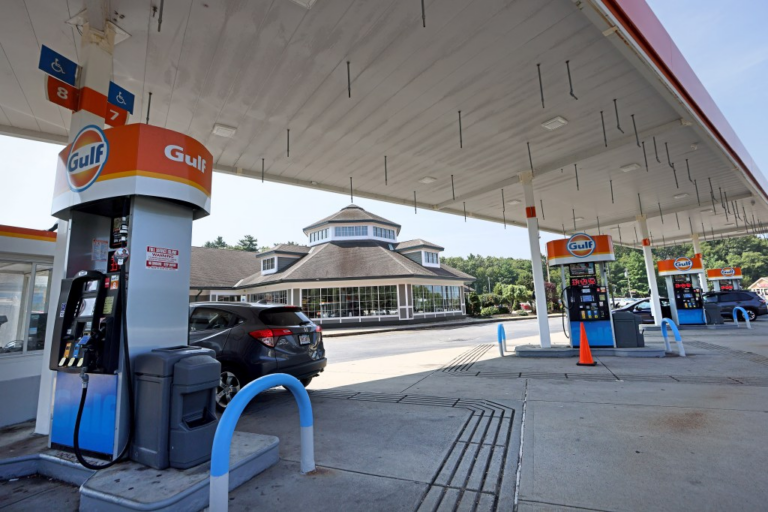
The crash and burn of a controversial contract to upgrade and operate the state’s highway plazas has given rise to calls for the state’s highway secretary to resign.
Dublin-based Applegreen’s decision to step away from a partnership with MassDOT makes an already fishy situation “stink to high heaven,” said a member of the state Senate’s oversight committee.
That committee was due to hold a hearing on the embattled deal that was scuttled with Applegreen backed out and MassDOT told legislators they would not participate.
Republican Sen. Ryan Fattman said the Irish company’s sudden decision to abandon the contract demonstrates that something is seriously amiss at the state’s multi-billion dollar transportation department.
“It just feels like they got caught with their hand in the cookie jar,” Fattman told the Herald.
Applegreen said it’s walking away because “Applegreen and MassDOT have not reached agreement on definitive terms for the redevelopment of 18 motorway service areas in Massachusetts.” The company said extended costs and litigation have made the deal unworkable.
The decision comes after it was revealed that Scott Bosworth, the MassDOT official in charge of the transportation agency’s bid committee, had exchanged numerous text messages with Applegreen executives, the construction company tapped to rebuild the service plazas as part of their bid, and Applegreen’s lobbyist.
Fattman told the Herald that when the oversight committee initially questioned MassDOT over the bidding process, they were told that no communications between MassDOT employees and the winning bidder existed. Such communications, he said, would have disqualified Applegreen’s bid.
The public release of the text exchanges, which came after Global Partners, the losing bidder for the lucrative contract, sued to get their hands on the communications, shows that there is something seriously wrong at MassDOT, said Fattman.
“Their answer was totally unacceptable. You either didn’t know — you lost control and one of the largest state agencies is rudderless — or it’s a coverup,” Fattman said.
The fact that Applegreen walked away demonstrates that lawmakers must get to the bottom of what happened, Fattman said.
“I think before you go back out to bid you have to examine the process that took place,” he said. “We have to have this hearing.”
Transportation Secretary Monica Tibbits-Nutt said in a statement that Applegreen was selected after a “comprehensive, transparent selection process” but that it’s become apparent their partnership will no longer serve the interests of the commonwealth.
“It is now clear that Applegreen is no longer the right partner to deliver on this project. Our focus is on moving forward to deliver the highest quality service plazas as quickly as possible for the people of Massachusetts,” she said.
Calls for Tibbits-Nutt’s resignation started to pour in once the contract failed.
“Monica Tibbits-Nutt should resign from her post immediately because Massachusetts cannot afford this level of incompetence and arrogance in its leadership,” Republican gubernatorial candidate Mike Kennealy said in a statement.
According to Paul Craney, executive director of the Massachusetts Fiscal Alliance, Applegreen’s bid was going to cost the state $900 million in lost rent revenue. The entire debacle, he said, shows there is a problem at the top of the agency that can only be fixed with a change in leadership.
“The taxpayers of Massachusetts deserve better and they deserve answers. They deserve to know why Secretary Tibbits-Nutt and MassDOT pushed a deal that was not allegedly financially sound, not transparent, and not in the public’s interest. Her resignation is the only step that can begin to restore confidence in this agency,” Craney said.
Brian Shortsleeve, another Republican vying for the gubernatorial nomination, said the problem actually goes higher than the Transportation Secretary.
“The lease with Applegreen’s was a sweetheart contract cooked up behind closed doors and was exactly the kind of Beacon Hill inside dealing and financial mismanagement that drives costs up and erodes public trust. Taxpayers deserve a governor who works for them, not for special interests,” he said.
MassDOT did not respond to questions about the secretary’s future with the department, the next steps in the request for proposal process, or whether agency officials would make themselves available to lawmakers for their rescheduled October 22 hearing.
Federal government is rescinding funding for traffic safety projects, including one in downstate Illinois

Officials in downstate McLean County had been waiting about a year to obtain a federal grant that would have led to finishing the last nine miles of a county-long pedestrian and bike trail along the original Route 66 path.
The county’s application for the grant had already been approved in June 2024, but two weeks ago, the county learned it wouldn’t receive the $675,000 grant because the project didn’t plan to address vehicular traffic.
The U.S. Department of Transportation has recently been canceling similar grants for traffic safety projects across the country, including one for $1.2 million in San Diego that a U.S. DOT official described as “hostile to motor vehicles,” and another in Boston that an official wrote would, “impede vehicle capacity and speed,” according to news first reported by Bloomberg.
In its Sept. 9 letter to McLean County Assistant Administrator Cathy Dreyer, a U.S. DOT official said the county’s project “no longer aligns with DOT priorities,” which, according to the letter, include focusing on projects that “promote vehicular travel.”
The grant would have funded preliminary engineering and an environmental review for the county’s plan to finish the roughly 47-mile Historic Route 66 Bike/Pedestrian Trail in a partially rural county that’s surrounded by highways and railroads, according to planning documents.
Some McLean County roadways have been graded as “moderately low, very low or extremely low due to high traffic volume/speed roadways,” planning documents state. County officials also argued the project would have a positive impact on the local economies.
“The completion of this trail segment will assist rural communities along the corridor in achieving their goals of economic self-determination. Numerous studies from around the country suggests the economic impact of this project, which would be a portion of a regional, state and quite possibly national trail, are likely to be significant,” the documents state.
In the Chicago area and across Illinois, officials have not received notice of any other lost federal grants, according to spokespersons for the Chicago, Cook County and Illinois departments of transportation.
But each of those departments are working on projects that prioritize cyclist and pedestrian safety, as many municipalities, including Chicago, have adopted the “Vision Zero” goal to eliminate annual traffic fatalities.
A decade ago, Chicago set out to eliminate traffic deaths by 2026, but last year it saw 109 deaths on the road.
Kyle Lucas, executive director of the traffic safety advocacy group Better Streets Chicago, said the federal government pulling out of funding for projects that emphasize pedestrian safety is “flat out absurd.”
“We have fought very hard for many years to get to a point in this city and in this country where we are investing in giving people the choice of how they want to get around,” Lucas said.
A shift toward building more pedestrian and bike-friendly pathways and taking focus off roads for only motor vehicles could also help to reduce the country’s carbon emissions, advocates say.
President Donald Trump, meanwhile, has worked to undo many of former President Joe Biden’s climate policies, and his transportation agenda — “America is Building Again” — has targeted more roads and bridges, with many grant announcements lacking money for pedestrian and bike ways.
A spokesperson for the U.S. DOT did not respond to a request for comment.
Dreyer said McLean County officials applied a couple months ago for a state grant “in anticipation” of potentially losing the federal grant because “things were not moving very fast” in obtaining the U.S. DOT grant.
The county plans to apply for a separate U.S. DOT grant that will open later this year, she said, in hopes of kickstarting the final construction phase of its pedestrian and bike trail.
Lucas, with Better Streets Chicago, said the country and local municipalities should be investing more in walkable infrastructure, public transit and safe cycling.
“These are investments that we desperately need and it’s about giving people choice, giving people true freedom,” Lucas said. “Freedom isn’t being forced to get around by a car. Freedom is being able to choose the mode that’s best for you, and right now, most Americans don’t have that choice.”
A truck driver not paying attention caused a chain-reaction crash that killed 6 people and injured 41, the NTSB found

By Alexandra Skores, CNN
Washington (CNN) — A truck driver’s “inattention and failure to respond” to traffic slowing down in front of him caused a multivehicle crash that killed six people and injured 41, the National Transportation Safety Board concluded in a final report published Wednesday.
On November 14, 2023, a Mid State Systems tractor trailer traveling west on Ohio’s I-70 did not slow down for a traffic backup that formed after an earlier crash, the NTSB reported. The semi slammed into the slow-moving vehicles at 72 miles an hour, which triggered a chain-reaction collision.
The truck first hit an SUV but went over it and slammed into the back of a motorcoach. The bus then hit an SUV, spinning it to the side before slamming into another truck. Even before the vehicles stopped moving a fire broke out, which quickly spread to the back three vehicles.
The bus, which was carrying students from the Tuscarawas Valley Local School District to a band performance, did not have seat belts for passengers.
Three students on the motorcoach and three parent chaperones and a teacher in one of the SUVs were killed. The truck driver had minor injuries.
The NTSB could not determine why the truck driver was not paying attention, the report noted.
Contributing to the crash was authorities’ lack of a strategy to monitor and communicate the traffic slowdown, the report determined.
An in-vehicle monitoring system, which could have helped return the truck driver’s attention to the roadway, and the speed difference between the truck and the slow-moving traffic also contributed, the NTSB concluded.
The board issued eight new safety recommendations and reiterated two previous recommendations. They called for stronger federal guidance on managing traffic queues and communications between agencies, performance standards for collision avoidance technology in commercial vehicles, requirements for driver monitoring systems in commercial vehicles and more rigorous interior fire safety standards for motorcoaches.
The Ohio Department of Transportation was also urged to implement a statewide strategy for the use of variable speed limits, where traffic can be slowed in the event of congestion.
The board also recommended the school district prioritize bus operators that provide and require the use of seat belts.
Salem Mayor Julie Hoy’s transportation funding letter draws criticism

Salem Mayor Julie Hoy sent a personal letter opposing two state transportation funding bills, contradicting a city council letter of support she had previously signed.
Fellow council members criticized the mayor for using city letterhead for her personal position, arguing it created a perception of speaking for the city.
The controversial bills aim to fund Oregon’s transportation system by raising the gas tax and other vehicle-related fees.
Salem Mayor Julie Hoy penned a letter on Sept. 20 to an Oregon Legislature committee strongly opposing two House bills tied to transportation funding.
The move contradicted a letter on behalf of Salem City Council supporting the bills signed by Hoy and drew criticism from her peers on council during the Sept. 22 meeting.
In her letter to the members of the Joint Interim Committee on Transportation Funding, Hoy said she was out of town for a funeral when councilors on the Legislative Committee voted to send a letter supporting the transportation funding package.
She said she signed it upon her return as part of the city’s standard legislative process.
Hong Kong reopens after world’s most powerful cyclone Ragasa

HONG KONG, Sept 25 (Reuters) – Hong Kong resumed flights out of its international airport on Thursday after a 36-hour suspension, reopening businesses, transportation services and some schools after the world’s most powerful tropical cyclone this year lashed the financial hub.
Ragasa brought the densely populated city to a standstill from Tuesday afternoon, after sweeping through the northern Philippines and Taiwan where it killed 14, before making landfall on the southern Chinese city of Yangjiang on Wednesday.
Sign up here.
More than 100 people were injured in Hong Kong, where authorities imposed the highest typhoon signal 10 for most of Wednesday.
On Thursday, the observatory maintained its second-lowest typhoon signal 3, keeping kindergartens and some schools shut as Ragasa moved away from the city and weakened into a tropical storm.
Huge waves crashed over areas of Hong Kong’s eastern and southern shoreline on Wednesday, with widespread flooding submerging some roads and residential properties.
Seawater surged through the Fullerton hotel on the island’s south, shattering glass doors and inundating the lobby. No injuries were reported and the hotel said services were operating as normal.
Hong Kong’s Airport Authority said airlines would gradually resume flights starting from 6 a.m. (1000 GMT) on Thursday, with all three runways operating simultaneously.
Diddy’s Legal Team Demands Zero Jail Time In Letter To The Judge

Diddy’s legal team has put together a 182-page memo presenting their reasoning as to why the Bad Boy mogul deserves a lenient sentence. His lawyers, led by Marc Agnifilo and Teny Geragos, believe that the 13 months Diddy has already spent in jail are sufficient and, in turn, are seeking a sentence with supervised release mandating drug treatment, therapy, and group therapy, according to TMZ. A jury found him guilty on two counts of transportation to engage in prostitution in his high-profile criminal trial back in July.
“It is the only just and fair sentence that could be imposed. Mr. Combs’s near-13 months in prison has been life changing, productive, and a testament to his desire to return to his family and community and lead the best life possible,” his lawyers state, as caught by People. “He has taken the time to achieve necessary rehabilitation from day one at the MDC [Metropolitan Detention Center] — including getting clean of all substances.”
From there, they cite his past drug use. “Like every addict, his behavior while on painkillers was erratic and unpredictable, and often the reason behind any assaults discussed at the trial,” they add.
Read More: Sara Rivers Moves To Appeal Dismissal Of Diddy Sexual Assault Case
When Is Diddy’s Sentencing?
Jul 25, 2023; Fort Lauderdale, FL, USA; Recording artist DJ Khaled and Sean Combs attend the game between Inter Miami CF and Atlanta United at DRV PNK Stadium. Mandatory Credit: Jasen Vinlove-USA TODAY Sports via Imagn Images
“He has served over a year in one of the most notorious jails in America—yet has made the most of that punishment,” the lawyers continue. “It is time for Mr. Combs to go home to his family, so he can continue his treatment and try to make the most of the next chapter of his extraordinary life. A sentence no greater than 14 months is plainly ‘sufficient, but not greater than necessary’ to accomplish the purposes of sentencing.
A Comprehensive List Of Every Single Person Who Wrote A Character Letter For Diddy

As for Miami, she reflected on their three-year relationship with her letter, noting that the man she dealt with was a
Tariff Pressures Mask Upside in LSTR and WFG Stocks

All stocks in the transportation sector suffer from the same epidemic in the United States; the price pressures from trade tariffs are slowing down the business activity in this industry for logical reasons, but that doesn’t mean all stocks in the space should be ignored today.
A specific combination and loophole in this entire situation creates two buying opportunities for investors who are bold enough (and have the stomach) to be contrarians.
For the transportation sector, specifically trucking, investors should watch for shares of Landstar Systems Inc. NASDAQ: LSTR and West Fraser Timber Co. NYSE: WFG. However, before the individual factors drive the upside present in these two companies, investors should first understand what the industry setup looks like today and where the mispricing opportunity comes from.
A rare mix of slowing activity and price increases has taken trucking; at the same time, trade tariffs have created a tailwind for Canadian timber imports. That being said, it makes sense to see markets react by sending stocks like Landstar and West Fraser lower, though there is one element of surprise in each of these companies that can bring them into higher prices.
Why Markets Discount Landstar and West Fraser
Inside the services PMI index, investors will see executive commentaries expressing their concerns for the trucking industry. These comments suggest that the space is in worse shape than the 2008 financial crisis, which explains why Landstar stock has been discounted to a low of 64% of its 52-week high today.
As business activity slows down and prices continue to rise for shipping and products, it is understandable to observe this dynamic today. This has created a significant earnings per share (EPS) headwind that is now being reflected in stocks like Landstar. However, there is one reason the stock is a buy today, which will become clear in a minute.
For West Fraser, the American housing market is the problem. Building permits have been on a decline for the past few quarters, and mortgage applications have also declined, creating less demand for new residential construction and thus trickling into less demand for building products (like Canadian timber).
That being said, a few homebuilders in the United States have been rallying recently, suggesting that the recent interest rate cuts by the Federal Reserve will positively impact demand. West Fraser now trades at 71% of its 52-week high as it prices in the housing slowdown and the tariffs on Canadian goods.
This is where investors can flip the script and profit in the coming months.
Landstar Has a Secret Ace Up Its Sleeve
Not many investors are aware that Landstar is not only a trucking company but also offers software nationwide to organize and optimize its logistics network and that of other major players in the space. Considering that volume is slowing while prices rise, efficiency becomes a priority for trucking companies, and that’s where Landstar wins.
In fact, a simple financial ratio measuring capacity (sales divided by total assets) suggests Landstar is now operating at 280% of its baseline capacity. The industry average is roughly 75.8%, which means Landstar is not oversubscribed on the trucking side but rather on the software side.
This explains why Wall Street analysts still carry a consensus price target of $145.17 for Landstar stock, implying 16.8% upside from where it trades today. This view could be boosted higher if momentum returned to the stock. More than this higher ceiling potential, some savvy investors in the institutional space have already acted on this view.
Those from Boston Partners boosted their Landstar holdings by 14.2% as of August 2025, bringing their net position to a high of $197.3 million or 4% ownership in the entire company. Fundamentally, the stars are aligned for investors to profit from this misunderstood trade with an EPS growth consensus of 21% through the end of 2025.
West Fraser Can Bring an EPS Surprise
Everyone knows that the trade between Canada and the United States is becoming increasingly challenging, exacerbated by the housing slowdown. However, in the company’s latest quarterly press release, investors will notice management mentions the Section 232 clause for Canadian imports as a hidden opportunity.
This article aims to protect national security in the United States regarding domestic labor and production. However, its most recent version has been narrowed down to metals like aluminum and steel.
In that sense, Section 232 does create a mispricing opportunity as markets placed a bearish filter on West Fraser’s imports.
Suppose interest rate cuts have a bullish impact on the housing market, and timber comes into high demand again. In that case, markets may be in for a surprise in West Fraser’s earnings, especially if the narrowing of this Section 232 article helps with timber imports into the United States.
Wall Street analysts have a consensus price target of $100 per share, which is 40.7% above today’s compressed prices. Considering this situation, the risk-to-reward ratio significantly favors the buyers today, as recent trading activity shows.
Over the past month, 1.2% of West Fraser’s short interest declined to show potential bearish capitulation as short sellers realize minimal downside at this price compared to where the stock could jump on this tariff loophole.
Should You Invest $1,000 in Landstar System Right Now?
Before you consider Landstar System, you’ll want to hear this.
MarketBeat keeps track of Wall Street’s top-rated and best performing research analysts and the stocks they recommend to their clients on a daily basis. MarketBeat has identified the five stocks that top analysts are quietly whispering to their clients to buy now before the broader market catches on… and Landstar System wasn’t on the list.
While Landstar System currently has a Hold rating among analysts, top-rated analysts believe these five stocks are better buys.
Opinion: Air Canada must restore Kingston flights as part of Alto deal

Editor’s note: The following is an op-ed on Kingston’s place in the transportation networks of Ontario and Canada, particularly with regard to restoring commercial flights in and out of the city.
The federal government’s Alto high-speed rail project is a landmark investment in Canadian transportation. By linking Toronto, Ottawa, Montréal, and Québec City with fast, electrified trains, Alto promises to change how Canadians move in the corridor.
Yet as this vision comes to life, Belleville, Kingston, and Brockville, in the very middle of it all, are at risk of being left further behind.
Since the pandemic, Kingston has been without scheduled Air Canada service. For a community of more than 135,000 — home to Queen’s University, CFB Kingston, and a growing regional economy — this absence is a glaring failure. Students, business leaders, and military families must now drive for hours to Ottawa or Toronto to connect with the national air network. That not only inconveniences travellers but actively undermines Kingston’s competitiveness and economic potential.
Ottawa has leverage. Air Canada is a member of the Cadence Consortium, the group selected to design, build, and operate Alto. The airline stands to benefit from privileged access to a federally backed transportation project. The government should make its participation conditional: restore Kingston’s air service in exchange for the rights to operate Alto.
This is not unprecedented. The federal government already compels airlines to serve remote northern communities because of their strategic importance. Kingston, positioned squarely in the busiest economic corridor in Canada, deserves similar recognition. Without federal intervention, Air Canada will not return – apart from through a bus service from the YGK Airport to their flights in Toronto.
Only Ottawa can make it happen.
And what if it does not?
Kingston will become an outlier in the very corridor it anchors. The city will watch high-speed trains speed by without a direct rail stop, while also seeing dwindling VIA rail service, and lacking a connection to the national air system. Businesses will not make investments in a city that is hard to access and effectively cut off from modern transportation networks. Queen’s will struggle to attract top students and faculty. Military operations will suffer unnecessary delays. Most of all, Kingston and regional residents will remain unfairly disadvantaged compared to their peers in Ottawa, Toronto, and Montréal.
High-speed rail will redefine Canadian travel for generations. But rail alone cannot provide a complete network. Air Canada’s inclusion in Cadence and the decades-long financial gain from Alto should come with responsibility. Only the federal government can compel Air Canada to restore Kingston’s flights. The federal government must leverage the Alto deal to reconnect Kingston with regular air service, or risk leaving one of Canada’s most important regions stranded without a connection to the age of modern mobility.
A.J. Keilty
Kingston resident
Co-Publisher of Kingstonist, Quinteist, Lanarkist, and Brockvilleist
US criticizes climate, social focus of UN aviation group
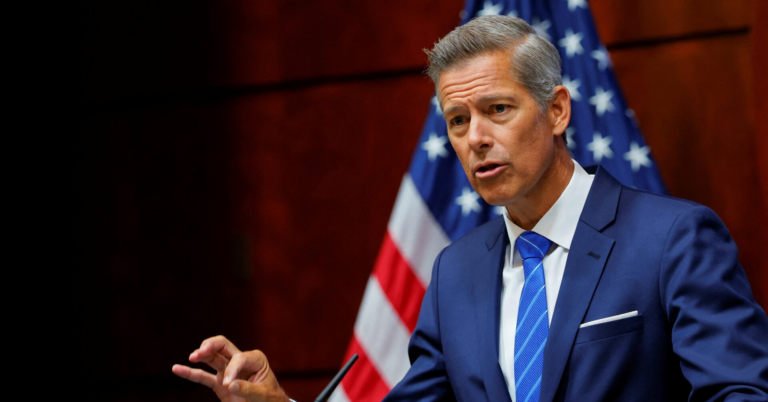
WASHINGTON/MONTREAL Sept 23 (Reuters) – U.S. Transportation Secretary Sean Duffy on Tuesday criticized a United Nations aviation group for not focusing enough on safety and security and called for reform.
Applegreen drops out of Mass. highway service plaza deal
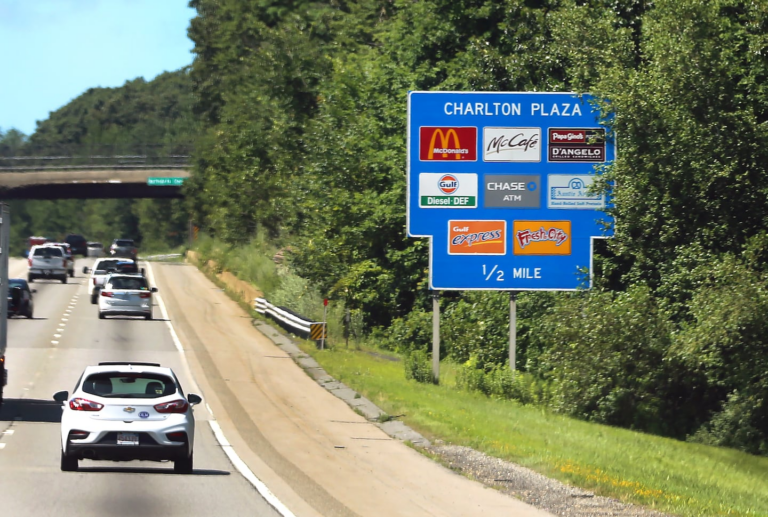
Irish retailer Applegreen said on Tuesday afternoon that it has terminated lease negotiations with the Massachusetts Department of Transportation to redevelop 18 highway service plazas, including the 11 along the Mass. Turnpike.
MassDOT originally awarded the lucrative lease to Applegreen in June, but losing bidder Global Partners has waged a media and government relations battle to overturn the bid, and also has a lawsuit pending in Suffolk Superior Court aimed at preventing MassDOT from going forward with the lease.
Applegreen, which is backed by private equity firm Blackstone, indicated in a brief statement that Waltham-based Global’s opposition played a role in the decision to back away at this time.
The company said: “After three months of good faith negotiations, Applegreen and MassDOT have not reached agreement on definitive terms for the redevelopment of 18 motorway service areas in Massachusetts. The open issues have significant implications for the commercial viability of the concession award. These commercial realities have been coupled with costly and continued litigation threats from an opposing bidder that have jeopardized the project’s timeline and financing. In light of these circumstances, Applegreen has terminated ongoing lease discussions.”
Advertisement
Jon Chesto can be reached at jon.chesto@globe.com. Follow him @jonchesto.
Dredging project ahead in Ocean County
A dredging project is scheduled to begin this month in Barnegat Light and Barnegat, Long Beach, Ocean and Lacey townships, the state Department of Transportation said Tuesday.
Listen now and subscribe: Apple Podcasts | Spotify | RSS Feed | SoundStack | All Of Our Podcasts
The $6.2 million Waretown Channel Complex project will restore channels to a safe, navigable depth of six to nine feet, the DOT said in a news release. Contractor JF Brennan will dredge approximately 90,000 cubic yards of fine sand and silt from multiple channels in the area.
Dredging operations are expected to be completed in December, the DOT said. Work will be conducted 24 hours a day, seven days a week. The area is expected to remain open for the duration of the project.
The public is advised to use caution when boating in the area. The dredge pipeline will be marked with buoys and lights for safe navigation, the DOT said. Channel closures are not expected but will be communicated. State aids to navigation will be removed as necessary during the project.
Contact Dan Grote:
609-272-7234
dgrote@pressofac.com
X @ACPress_Grote
Get local news delivered to your inbox!
Subscribe to our Daily Headlines newsletter.
* I understand and agree that registration on or use of this site constitutes agreement to its user agreement and privacy policy.
Dan Grote
News editor
Get email notifications on {{subject}} daily!
Your notification has been saved.
There was a problem saving your notification.
{{description}}
Email notifications are only sent once a day, and only if there are new matching items.
Followed notifications
Please log in to use this feature
Log In
Don’t have an account? Sign Up Today
Trump has thrown a wrench in some Mass transportation plans. Here’s a list of the impacted projects.
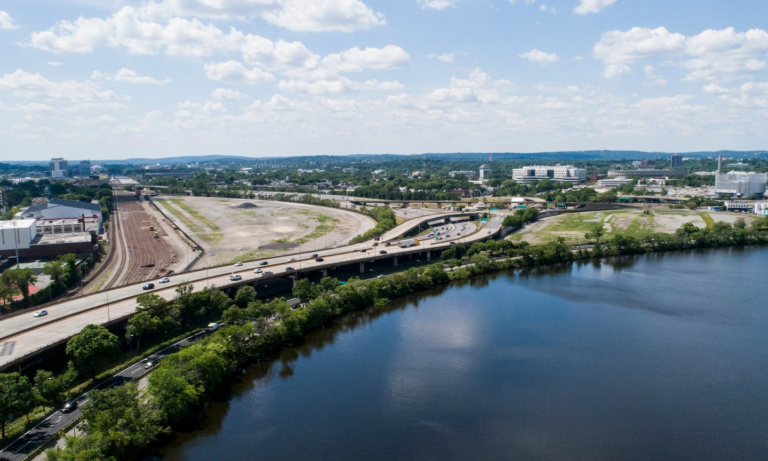
This summer, Trump signed a spending bill that gutted federal funding to support a long anticipated megaproject to straighten out a bend in the Mass. Pike. The project, about a decade in the making, promises to reclaim open space, reinvigorate the Allston neighborhood, and expand and improve transit options.
Massachusetts was supposed to receive about $335 million from the federal government, about 17 percent of the project’s roughly $2 billion estimated price tag.. Trump’s One Big Beautiful Bill Act, signed into law July 4, scrapped any remaining “unobligated” grant money from the Neighborhood Access and Equity program, the federal initiative behind the project’s funding.
The state already has $8 million from the grant in hand. Trump’s signature erased the remaining, not-yet-obligated $327 million.
State transportation officials are taking stock of the situation.
Luisa Paiewonsky, MassDOT’s executive director of megaproject delivery, told the agency’s board of directors last week that the department is writing up an “in-depth cost analysis” of the project. Paiewonsky noted that tariffs and inflation may have also blown up the project’s expenses.
“First, we want to find out: how much does this project truly cost,” she said.
An “independent engineering review” will follow, to sort out how the project’s goals can be realized with the money still available.
“The Healey-Driscoll administration has committed to keep investing in this project,” Paiewonsky said. “We still have ample state funds that we will invest in this project.”
The city of Boston, advocacy groups, and state officials have urged MassDOT to knuckle down and fully realize the project’s goals — without needless delay.
“I do not want to see this project get into a position where it’s getting piecemealed and fragmented,” MassDOT board member Rick Dimino said after Paiewonsky’s presentation.
State transportation agencies across the country received a combined $1.2 billion from the Biden administration in November 2024 to “purchase American-made low carbon construction materials and products, including asphalt, glass, steel, and concrete for use in transportation projects.”
The program aimed, in part, to help reduce American industrial pollution, a major driver of climate change, while pumping cash into the country’s manufacturing sectors.
MassDOT raked in almost $32 million from the program. In August, the agency learned that the same federal spending bill that eliminated the remaining Allston Multimodal funding had also axed the low-carbon materials grant program, according to the state.
The. US Department of Transportation this month rescinded $20 million the Biden administration had awarded to Boston in 2022 to revamp three major Roxbury roadways.
The project, “Roxbury Resilient Corridors‚” promises to rebuild sections of Melnea Cass Boulevard, Malcolm X Boulevard, and Warren Street, in hopes of transforming the “wide, auto-centric thoroughfares” into pedestrian-friendly transit havens.
The Transportation Department sent a letter to the city on Sept. 9 stating that the federal agency is focused on “promoting traditional forms of energy and natural resources to the greatest extent possible,” among other priorities.
The Roxbury plan’s “inclusion of EV [electric vehicle] charging infrastructure” meant that it “no longer aligns with DOT priorities,” and, as such, wouldn’t receive funding, according to the letter.
The city would not say if and how the project would move forward without federal dollars.
The transportation department pulled another $2 million from Boston for a proposed redesign of Mattapan Square.
The city hopes to “reconnect two long-separated sides of Mattapan, as well as improve access to natural resources, and multimodal transportation networks,” according to a federal summary of the project.
The Trump administration said this month that the project’s plans to promote walking, cycling, and transit are “hostile to motor vehicles” and thus ran afoul of the agency’s efforts to reduce “traffic congestion by preserving or increasing roadway capacity” for cars.
A federal summary of the Mattapan project pegged its total estimated cost at $16 million. The city did not say if and how the project would move forward without federal dollars.
This is an evolving list. Know of an impacted project not yet on the list? Reach out to our transportation reporter.
Duffy torches Buttigieg-Biden for rail safety ‘backlog,’ says safety funds sat idle for years
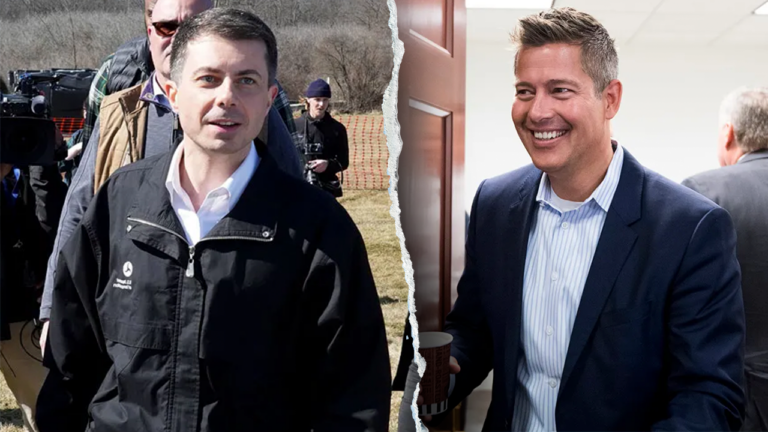
NEWYou can now listen to Fox News articles!
Transportation Secretary Sean Duffy is slamming the Biden administration, especially former Transportation Secretary Pete Buttigieg, for leaving behind an
Residents assess damage after landslides and high winds hit Elfin Cove

Power has been restored to part of Elfin Cove after multiple landslides and high winds hit the remote Chichagof Island community on Monday.
Tyler Magart lives in Elfin Cove seasonally and owns a business there. She said a response team from the Alaska Department of Transportation arrived Tuesday morning with a drone to assess the slide activity that can’t be seen from the ground. At sea level, residents are still trying to quantify the damage.
“It almost looks like a tornado came through, because the wind was just ripping the trees down and across things. So there’s one house that was completely obliterated. Several, several trees. We can’t even get to it to see how many… landed on it,” Magart said.
“Another home has one tree on it, another has several (trees) around it, and I think two on it,” she continued. “Those people also lost their shop, completely under a tree, and they also lost their fish house, and they’re fishermen, and have a massive fish house. So it’s a big, big loss.”
The state DOT owns and maintains a harbor, seaplane float and the community’s boardwalks. In an email, spokesperson Angelica Stabs told KCAW that the state will assess the infrastructure as they make plans to repair those facilities. As of Tuesday afternoon, Stabs had not received a report from the three-person team in the field.
Magart said there are at least 15 downed trees on the town’s boardwalk alone. She said, from an aerial view, the state’s response team could see a lot of blown-down trees and some isolated slides, in addition to the landslide that hit the town’s power line.
“It doesn’t look like the hillside, from initial assessment, is as unstable as we were worried about. But there is another slide in a different spot in the back of the cove that’s come over the electrical line down there and covered it over pretty good,” Magart said. “So that, and the boardwalk, the main access for houses back there, basically the state right-of-way.”
While power had been restored to the center of town as of Tuesday afternoon, the southeast side of the cove remained without utilities. Magart said her family hadn’t returned home yet – they were staying with friends in a home with access to power and water.
Propane power: A quiet innovation revolutionizes transit for Michigan’s most vulnerable
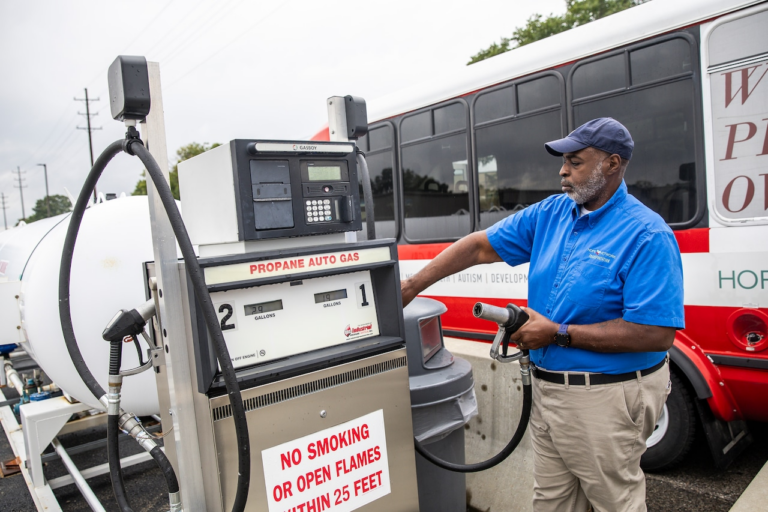
GRAND RAPIDS, MI — A fleet of red Hope Network buses idles outside the Amway Grand Plaza Hotel in Grand Rapids, ready to take Ms. Wheelchair America contestants out on the town.
The unassuming transports look like any other fully accessible bus, but reports highlight a statewide trend toward the vehicles’ clean emission and quiet hum.
Hope Network Transportation is one of several transit agencies recognized for revolutionizing community transit in Michigan with a growing propane-powered fleet that provides critical mobility services to people in need.
There are about 500 propane transit buses deployed across more than 15 agencies statewide, according to Roush CleanTech, a Livonia-based company responsible for designing and building propane engine systems.
“Our state’s transit agencies are demonstrating confidence in propane autogas as a reliable and environmentally friendly fuel option for their fleets,” said Todd Mouw, executive vice president for ROUSH CleanTech, in a news release statement. “With the support of Roush engineering and our commitment to sustainability, Michigan is leading the charge toward a greener, more cost-efficient transit future.”
The Rapid bus system, which serves Grand Rapids and its suburbs, operates demand-response services for people with disabilities beyond its fixed routes, is another transit company in Grand Rapids using propane to serve riders.
“Not only does propane work in our climate, but the vehicles also have similar engine to gasoline engines,” said Steve Schipper, chief operating officer of The Rapid, in a news release statement. “It is also important that propane is a domestic fuel produced here in the United States, supporting American jobs and reducing dependency on foreign oil.”
An expanding propane-powered fleet has become intertwined with Hope Network’s mission to serve its community. Of the organization’s 92 vehicles, 47 are currently propane-powered with two more on the way.
Jason Ulanowicz, transportation director for Hope Network, said environmental and economic benefits are substantial.
The propane vehicles offer numerous advantages, including cleaner emissions, reduced maintenance costs, and better cold-weather performance, he said.
The company burns from 55,000 to 65,000 gallons of propane and puts more than 2 million miles on its vehicles each year.
“I can buy 3 gallons of propane compared to 1 gallon of gasoline,” said Ulanowicz, who previously managed service facilities specializing in fire truck repair. “Propane is really good for the engine. It burns hot.”
Quite frankly, keep them oiled and they’ll go,” he added.
Ulanowicz said the West Michigan-based organization operates five distinct service lines to meet diverse community needs. Services include its RideLink and Wheels to Work programs.
“I can serve more, because propane is a more effective and efficient fuel. And with the price I can get it for, I’m able to serve more of the community,” Ulanowicz said. “But I can also act as a good manager of the environment for the community.”
Hope’s RideLink program provides transportation for adults over 60, primarily for medical appointments but also for everyday activities like grocery shopping, salon visits, and social outings.
Wheels to Work is a collaboration between Hope and employers. The program helps businesses reduce turnover and gain a hiring advantage.
Hope Network also coordinates group trips for nursing homes, provides specialized services for residents with special needs in Kent County, and offers a prepaid program that allows seniors to schedule rides on weekends for activities like attending church.
”This summer when we had all those ozone awareness days, it wasn’t because of my vehicles,” Ulanowicz said. ”We’re very proud of that. Hope Network aims to serve our community in any way we can, and that means doing what’s best with our vehicles.
Transit violence surges across US cities with deadly attacks nationwide
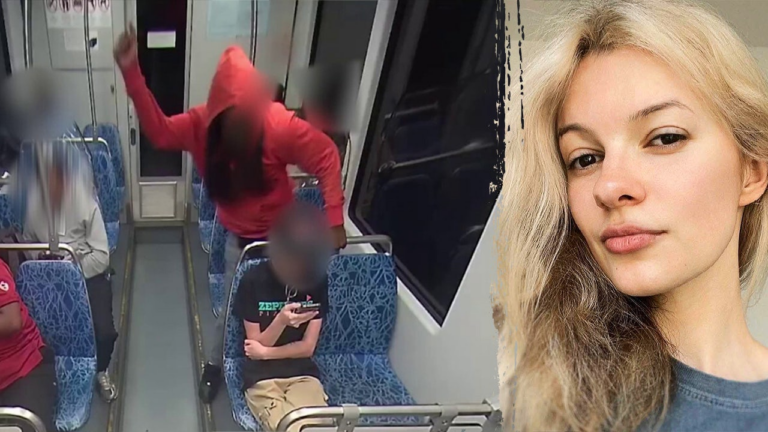
NEWYou can now listen to Fox News articles!
The killing of a commuter aboard a North Carolina train is the latest act of violence affecting the United States’ public transit systems, as reports of other attacks continue to alarm riders.
On Aug. 22, Iryna Zarutska, a 23-year-old Ukrainian refugee, finished a night of work at Zepeddie’s Pizzeria when she boarded a train in Charlotte to make her way home. Surveillance video shows Zarutska, still in her uniform, taking a seat in front of a man wearing a red hoodie. Moments later, the man can be seen pulling out a knife and stabbing Zarutska to death.
Authorities have identified the suspected attacker as Decarlos Brown, who was arrested on a murder charge.
CHARLOTTE TRAIN STABBING PUTS NORTH CAROLINA COMMUTERS ON EDGE AFTER RANDOM ATTACK
The attack sparked concern around the country, with the possibility of violence impacting low-income and middle-class Americans who rely on public transit concerning commuters.
SPDR S&P Transportation ETF declares quarterly distribution of $0.1753

Sep. 22, 2025 8:53 AM ETSPDR® S&P Transportation ETF (XTN)By: Meghavi Singh, SA News Editor
Comments
SPDR S&P Transportation ETF (NYSEARCA:XTN) – $0.1753.
30-Day SEC Yield of 0.72% as of Sep. 18.
Payable Sep 24; for shareholders of record Sep 22; ex-div Sep 22.
Recommended For You
More Trending News
About XTN ETF
SymbolLast Price% Chg
1D
5D
1M
6M
1Y
5Y
10Y
Expense Ratio
Div Frequency
Div Rate
Yield
Assets (AUM)
Related Stocks
SymbolLast Price% ChgXTN–SPDR® S&P Transportation ETF
Trending Analysis
Trending News
Bay Bridge safe, officials say, despite social media posts showing shifted beam
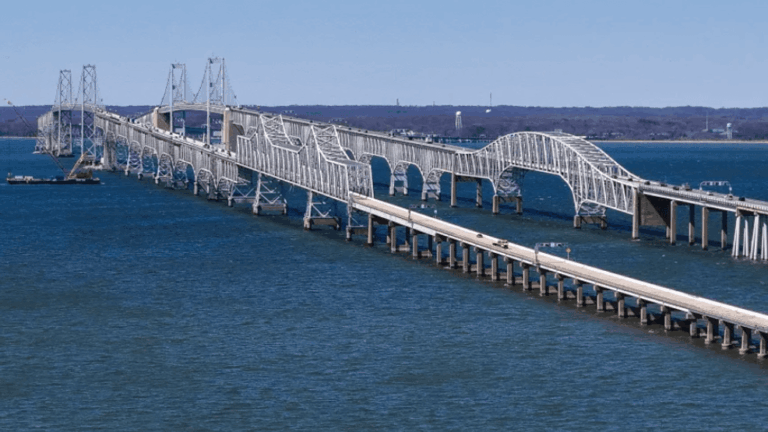
Maryland Transportation Authority officials confirmed Monday morning that the Bay Bridge is safe for drivers and passengers, despite photos circulating on social media showing that one of the supports had shifted.
“The Maryland Transportation Authority (MDTA) is aware of images circulating on social media of a section of the westbound Chesapeake Bay Bridge,” MDTA spokesman Bradley Tanner wrote to The Baltimore Sun in an email. “We want to reassure the public that both spans of the bridge are safe.”
Pictures posted to social media demonstrate that one of the supports under the Bay Bridge had shifted off center.
Earlier this year, the National Transportation Safety Board noted that Maryland had not conducted the recommended assessment on the Bay Bridge following the collapse of the Francis Scott Key Bridge that killed six after it was hit by a cargo ship in March 2024.
US should support increase in mandatory retirement age for airline pilots, Transportation Committee Chairman Sen. says

Pilots of commercial planes should be allowed to keep flying until they are 67 years old, Sen. Ted Cruz, the Chairman of the Senate Commerce, Science and Transportation committee, says in a letter to the White House urging them to support a new international standard.
Tuesday, the International Civil Aviation Organization will discuss increasing the worldwide age limit to 67 at their general assembly in Montreal.
Right now, both the United States and ICAO, which is part of the United Nations and regulates international flights, require pilots to retire when they reach 65.
“Not all senior citizens are created equal,” Cruz wrote in the letter sent Friday. “Aviation safety is of paramount importance, which is why the most experienced pilots should be permitted to keep working.”
The mandatory pilot retirement age of 65 years old has long been a topic of discussion among aviation officials and lawmakers. Cruz said other countries find the retirement age to be “arbitrary” and “unnecessary,” citing the evolution of health and lifespan of the population.
The International Air Transport Association, the trade group which represents airlines, petitioned ICAO for the increase in age.
“The proposed increase to age 67 years is a cautious but reasonable step consistent with safety,” they said, noting when the age was increased from 60 to 65 in 2006 there was no increase in problems. IATA also cited Australia, New Zealand and Canada which do not have maximum age limits for pilots.
Aviation unions oppose the change, saying older pilots could compromise safety.
“The United States is the global leader in aviation safety, and we should resist any attempts to arbitrarily make changes to the regulatory framework that has helped us achieve this record,” the Air Line Pilots Association, the largest pilots’ union in the world, said in August. “That’s why Congress rejected making a change to the pilot retirement age just last year.”
The Allied Pilots Association, which represents pilots at American Airlines, said cognitive performance and health declines with age and there is not enough research on risks associated with older pilots.
“Existing regulations governing pilot duty and rest are based on safety studies for a workforce capped at age 65 and reflect lessons learned from past accidents. Without new research, raising the retirement age would mean flying blind,” the Union’s President Nick Silva said in a statement in August.
The Southwest Airlines Pilots Association declined to comment to CNN for this report.
Older pilots should be allowed to keep flying passenger planes, Senate Transportation Committee chairman says

By Alexandra Skores, CNN
Washington (CNN) — Pilots of commercial planes should be allowed to keep flying until they are 67 years old, Sen. Ted Cruz, the Chairman of the Senate Commerce, Science and Transportation committee, said in a letter to the White House urging them to support a new international standard.
Tuesday, the International Civil Aviation Organization will discuss increasing the worldwide age limit to 67 at their general assembly in Montreal.
Right now, both the United States and ICAO, which is part of the United Nations and regulates international flights, require pilots to retire when they reach 65.
“Not all senior citizens are created equal,” Cruz wrote in the letter sent Friday. “Aviation safety is of paramount importance, which is why the most experienced pilots should be permitted to keep working.”
The mandatory pilot retirement age of 65 years old has long been a topic of discussion among aviation officials and lawmakers. Cruz said other countries find the retirement age to be “arbitrary” and “unnecessary,” citing the evolution of health and lifespan of the population.
The International Air Transport Association, the trade group which represents airlines, petitioned ICAO for the increase in age.
“The proposed increase to age 67 years is a cautious but reasonable step consistent with safety,” they said, noting when the age was increased from 60 to 65 in 2006 there was no increase in problems. IATA also cited Australia, New Zealand and Canada which do not have maximum age limits for pilots.
Aviation unions oppose the change, saying older pilots could compromise safety.
“The United States is the global leader in aviation safety, and we should resist any attempts to arbitrarily make changes to the regulatory framework that has helped us achieve this record,” the Air Line Pilots Association, the largest pilots’ union in the world, said in August. “That’s why Congress rejected making a change to the pilot retirement age just last year.”
The Allied Pilots Association, which represents pilots at American Airlines, said cognitive performance and health declines with age and there is not enough research on risks associated with older pilots.
“Existing regulations governing pilot duty and rest are based on safety studies for a workforce capped at age 65 and reflect lessons learned from past accidents. Without new research, raising the retirement age would mean flying blind,” the Union’s President Nick Silva said in a statement in August.
The Southwest Airlines Pilots Association declined to comment to CNN for this report.
Feds rescind Brightline grant opportunity, forcing county to reapply

Martin County must reapply for a grant for its proposed Brightline station in Stuart, federal officials said.
The federal grant opportunity was rescinded and no funds were awarded.
But $5 billion is available for eligible applicants and eligible projects across the country.
MARTIN COUNTY — Martin County’s plans to build a $60 million Brightline station in Stuart is delayed about nine months, as it now has to reapply for much of the grant money needed, following a U.S. Department of Transportation decision announced Sept. 22.
The decision forces applicants to reapply for the Federal-State Partnership for Intercity Passenger Rail Grant Program, rebranded as the National Railroad Partnership Program.
Mrvan asks U.S. transportation secretary to rethink Citgo grant cut

Rep. Frank Mrvan, D-Highland, said economic opportunities and future sustainability for Northwest Indiana shouldn’t be “sacrificed for shortsighted political purposes.”
Mrvan wrote in a letter to U.S. Department of Transportation Secretary Sean Duffy that he’s concerned about the rescission of federal funding for a Citgo terminal in East Chicago, according to a Friday news release.
“The Trump administration’s decision to rescind this federal investment jeopardizes millions of dollars in private sector commitments and threatens the loss of good-paying union jobs in Northwest Indiana,” Mrvan said in a Friday news release. “This reckless action also undermines efforts to establish a sustainable aviation fuel blending hub in East Chicago, a project that would reduce harmful emissions, strengthen domestic manufacturing, and open new markets for American workers and businesses.”
Mrvan encouraged Duffy to rethink the rescission. The U.S. Department of Transportation did not immediately respond to a request for comment Monday.
In September 2024, Mrvan announced that the East Chicago terminal would receive more than $18 million through the FAST program, according to Post-Tribune archives. Funding for Citgo’s East Chicago terminal was funded through the Federal Aviation Administration’s Fueling Aviation’s Sustainable Transition grant program. The Inflation Reduction Act of 2022 established the FAST grant program, which former President Joe Biden signed into law and Mrvan supported.
The FAA awarded about $291 million to 36 projects in 22 states through the grant program, according to Mrvan’s letter.
“The infrastructure proposed for construction under these awarded projects aimed to put to work our building and construction trades at the onset, then support the capacity for new jobs and develop supply chain partnerships upon completion, thereby increasing the competitiveness and efficiencies within the commercial aviation and aerospace industry,” Mrvan said in his letter.
The money would help enable delivery, unloading, blending and use of up to 42,000 gallons per day of sustainable aviation fuel, according to Post-Tribune archives. The project would also “facilitate cost-effective SAF blending and rail logistics services at the Citgo East Chicago terminal with the end result to produce lower-carbon aviation fuels that will reduce emissions.”
The Citgo terminal would be added to the existing jet fuel distribution hub and help move fuel to O’Hare, Midway, Rockford and Milwaukee airports, Mrvan said.
“As we work to create opportunities for employment and wealth throughout our nation, the disinvestment in America’s aviation supply chains and within the commercial aviation and aerospace industry is counterproductive to the efforts to invest in America, particularly in manufacturing, technology and infrastructure,” Mrvan said in his letter. “I respectfully ask for your insight as to the rescinding of FAST grant program awards and ask for similar future funding opportunities that DOT may offer.”
SCDOT repairs made days after WIS report on Jake Eargle Road in Richland County
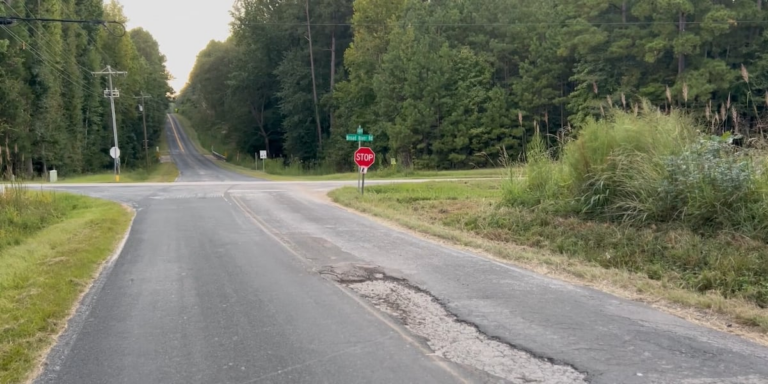
LITTLE MOUNTAIN, S.C. (WIS) – Just days after a WIS “Road to Repair” investigation spotlighted crumbling conditions on Jake Eargle Road, the South Carolina Department of Transportation (SCDOT) was out making fixes.
People who live along this mile-and-a-half stretch near Broad River Road in Richland County say they have been waiting years for attention and have felt forgotten.
The agency said its crews leveled sections of pavement, patched potholes and repainted faded road lines.
The work from SCDOT this past week targeted two of the worst sections, including a large hump near a stop sign that neighbors had flagged as particularly hazardous.
Neighbors like Ned Row said the sight of SCDOT trucks rolling in to make repairs was a welcome one.
“It’s at last,” Rowe said. “And I probably said, ‘Thank you, WIS.’”
Rowe has been at the northern corner of Richland County long enough to see the area grow. He said it is now a smoother ride and less like a “slalom course.”
“Anything’s an improvement, we’re just glad for what we can get,” he said. “It doesn’t shake my car or truck anymore.”
WIS also checked back in with Betty Jo Amick, who has lived on Jake Eargle Road for more than 5 decades.
“We are so thankful and very appreciative that they have come and taken care of the situation,” she said. “We just want them to know that we feel safer with those areas taken care of.”
Amick and others said that some rough areas remain, and they would like to see SCDOT return.
“There’s some potholes, though,” she said. “They need to come back, that’s in between the areas at the end of the road that needs a little bit of asphalt put in.”
This is the second time in as many weeks that SCDOT crews have been spotted making repairs shortly after a WIS investigation.
Earlier this month, after a look into conditions along Jamil Road in Lexington County, the agency carried out a “full-depth patching” project there, cutting out weak pavement and replacing it with new material.
This time, the work was more limited, but locals are just as pleased.
“Had y’all not come out here, we might’ve been going years and years along still, along with the same scenario and not having anything fixed,” Amick said.
Neighbors are still hoping for the road to be fully resurfaced, but SCDOT said there are currently no resurfacing projects scheduled.
The agency said it has received 22 maintenance requests for Jake Eargle Road in the past two years, 15 of them related to potholes.
SCDOT encourages anyone with concerns about state-maintained roads to contact the agency directly by calling 855-467-2368. Any maintenance work requests can also be submitted online at https://apps.scdot.org/MWRO/
Have bad roads? Click here to send us a tip or contact “Road Ranger” Nick Neville directly at Nick.Neville@wistv.com.
Feel more informed, prepared, and connected with WIS. For more free content like this, subscribe to our email newsletter, and download our apps. Have feedback that can help us improve? Click here.
Duffy Warns Chicago, Boston Could Be Defunded for Crime
Public transit systems in Chicago and Boston could lose federal support if officials fail to address rising crime and safety concerns, according to Transportation Secretary Sean Duffy.
TechCrunch Mobility: The two robotaxi battlegrounds that matter

Welcome back to TechCrunch Mobility, your hub for all things “future of transportation.” To get this in your inbox, sign up here for free — just click TechCrunch Mobility!
Seven or eight years ago, anyone consuming business tech news might have come across the phrase “the race to build autonomous vehicles.” In private conversations, company execs and startup founders I spoke to sometimes referred to the commercialization of autonomous vehicle technology as “a race.” The phrase seeped into reporting at the time — including some of my articles.
What we’ve learned is that this is not a race so much as a long, curved, and fragmented road — one that looks more like the fan of an alluvial plain than a racetrack — to develop and prove the technology works and make it a profitable business. It’s not a race against others as much as an internal contest with existential stakes.
But that doesn’t mean there aren’t real battlegrounds among those working on the technology, especially with robotaxis. Many might point to the number of cities a company has launched in as one indicator. I believe that while helpful, it’s a bit too vague and easy to manipulate.
Two recent news items got me thinking about more narrow and specific battlegrounds within cities: airports and public transit.
Airports were critical to the success of ride-hailing companies. Robotaxis are no different. Today, Waymo offers rides to and from Phoenix’s Sky Harbor Airport. And it’s clearly looking to unlock more.
This week, Waymo was granted a permit to start testing its autonomous vehicles at San Francisco International Airport, ahead of the launch of a commercial service. This comes just two weeks after Waymo was cleared to start testing at nearby San Jose Mineta International Airport — and as Tesla is also trying to elbow its way into offering ride-hail service to these airports.
Meanwhile, Waymo and transit software company Via struck a deal that could have far-reaching implications for cities. Government agencies that use Via’s software for public transit will be able to fold Waymo’s robotaxis directly into their public transit networks. The first city will be Phoenix suburb Chandler through its Chandler Flex fleet of on-demand, shared vehicle fleet.
This is meaningful, in terms of reach, although it may not be a cash cow for Waymo in the short term. As a Waymo spokesperson explained to me: When a traditional Chandler Flex vehicle isn’t available, riders may have the choice to book a trip with Waymo. Should a person choose to ride with Waymo, Chandler Flex will direct them to the Waymo app to hail a fully autonomous ride at a reduced price of $2 or less. At such a low price, it’s hard to see how this will push Waymo’s balance sheet into the black.
Still, it’s an important volume play. And Via CEO Daniel Ramot indicated in one interview that he hopes this spreads to hundreds of cities.
A little bird
I gave you three little birds last week, and this week … welp, none that I could verify. Don’t fret — there will be more in the future.
Got a tip for us? Email Kirsten Korosec at kirsten.korosec@techcrunch.com or my Signal at kkorosec.07, or Sean O’Kane at sean.okane@techcrunch.com.
Deals!
U.K. startup Wayve has garnered buzz for locking up deals — and capital — for its generalized end-to-end approach to automated driving technology. You might recall that a year ago, Wayve raised $1.05 billion in a Series C round with SoftBank Group, Microsoft, and Nvidia participating.
Wayve is now working on a Series D round, and it appears that Nvidia is ready to plunk down more capital. In a letter of intent, which the two companies recently signed, Nvidia said it will evaluate making a $500 million strategic investment in Wayve’s next round. I spoke to Wayve CEO Alex Kendall, and he wouldn’t say exactly when this round is expected to close. But he did say “we’re working quickly towards it.”
Other deals that got my attention …
Divergent Technologies was once solidly in the automotive sector. These days, the advanced manufacturing company has positioned itself as a defense company and has locked up deals with Lockheed Martin, RTX, and General Dynamics. Now it’s raised $290 million, including $40 million in debt, to expand production of missile parts and other specialized components for the military.
EV Realty, a startup focused on providing charging for semitrucks, raised $75 million in a round led by private equity investor NGP. The startup will use the funds to build additional charging hubs throughout California.
Moove, the African vehicle-financing startup backed by Uber, is trying to raise more than $300 million in a round with a post-valuation of more than $2 billion, Bloomberg reported, citing anonymous sources.
XL Batteries, a Marlborough, Massachusetts-based startup developing flow batteries for energy storage, raised $7.5 million from Merrin Investors.
Notable reads and other tidbits
Hyundai Motor Group is intent on growing, and North America is central to its plan. During its investor day, the Korean automaker said it wants to increase annual sales from 4.17 million in 2025 to 5.55 million by 2030. In the short term (meaning for this year), the company shared new targets for an increase in revenue of between 5% and 6% and an operating profit margin of between 6% and 7%.
To get there, Hyundai is investing capital, including putting $2.7 billion over three years into expanding the total production capacity of the Hyundai Motor Group Metaplant America in Georgia. The company said “electrified vehicles” (that includes 18 new hybrid models by 2030) are expected to account for 60% of total sales, reaching 3.3 million units, with significant growth anticipated in North America, Europe, and Korea.
Rivian officially broke ground on its long-planned factory near Atlanta.
Stellantis ended plans to produce the all-electric Ram 1500 REV pickup truck, citing low demand for full-size EV trucks; however, it’s holding on to the extended-range Ramcharger, which is now confusingly being renamed to Ram 1500 REV.
Tesla said it will redesign its door handles so they’re less likely to trap people inside their cars. The decision came a day after the National Highway Traffic Safety Administration opened an investigation into claims that Tesla’s door handles become inoperable in certain situations on Model Y SUVs. It also follows an investigation by Bloomberg that exposed the problem.
Meanwhile in Australia, Tesla recalled Powerwall 2 home batteries in the country after the company received reports of fires that led to “minor property damage.”
Uber will test using drones for Uber Eats deliveries in some U.S. markets by the end of this year, part of a new partnership with Israeli startup Flytrex.
Waymo is launching a commercial robotaxi service in Nashville in 2026, and it’s partnering with Lyft to expand its reach.
One more thing …
Here’s what happens when big-time lobbyists become big-name Trump officials

Before Pam Bondi was sworn in as Trump’s attorney general, the former Florida AG spent six years as a lobbyist at Ballard, where she was a partner in its D.C. office and chaired the firm’s corporate regulatory compliance practice focusing on Fortune 500 companies.
Among the clients for whom Ballard reported lobbying DOJ this year, all but one signed with the firm since Trump’s election and his nomination of Bondi for attorney general.
A similar phenomenon is occurring across K Street at lobbying firms that have former employees in top roles with the Trump administration.
At BGR Group, where now-Transportation Secretary Sean Duffy was previously a lobbyist and member of the firm’s advisory board, lobbyists have reported outreach to DOT on behalf of 19 clients who have paid the firm more than $1.8 million so far this year. That’s up from 14 clients during the Biden administration, which included the passage of the first major infrastructure bill in years. BGR contacted DOT on behalf of six different clients during Trump’s first term, according to a POLITICO analysis of disclosure filings.
Both Bondi and Duffy signed ethics agreements prior to being confirmed. They vowed not to participate “personally and substantially in any particular matter involving specific parties” involving their former firms and clients of their former firms, as well as their own former clients — unless they receive a waiver from the department’s ethics chief.
Those restrictions are up in a year. But in the meantime, firms are free to lobby anyone else in the agencies in question so long as those officials are not under ethics restrictions of their own. And there’s nothing stopping the lobbyists-turned-Cabinet secretaries from interacting with their former firms in social settings.
But the lobbying by Ballard and BGR Group illustrates how, just six months into Trump’s second term, the firms have been able to cash in on their unique ties to the administration.
Lobbying disclosures aren’t required to provide details about specific lobbying contacts within a given department or agency. But even if the former lobbyists in positions of power in the Trump administration aren’t in direct contact with their old firms, they of course still have significant sway within their departments.
“If it’s known that a Cabinet secretary wants clients to be dealt with on an amiable basis, that can happen without an express directive going out or an ethics agreement being directly violated,” said Jeff Hauser, founder of the executive branch ethics watchdog Revolving Door Project. “This is why conflicts of interest are hard to paper away” with hard-to-verify promises of throwing up firewalls.
The Bondi-Ballard connection
Ballard spokesperson Justin Sayfie said the firm has fully complied with all lobbying requirements.
“No Ballard lobbyists have communicated with Attorney General Bondi in her role as Attorney General,” he said in a statement. “We are prohibited from doing so for one year after her swearing-in, and all Ballard lobbyists have meticulously abided by that restriction.”
Sayfie declined to elaborate on the firm’s work at DOJ for any of its clients beyond what’s in the required lobbying disclosures. And he disputed the notion that Ballard would market its access to the attorney general to prospective clients — or market itself at all. “Our firm’s record of effective and successful advocacy speaks for itself in the marketplace,” he said.
Ballard has reported more than $1 million in lobbying revenues from clients for whom it lobbied DOJ in 2025.
Some Ballard clients facing off with Bondi’s DOJ have seen a distinct change in fortunes after hiring the firm. Take American Express Global Business Travel.
At the end of July, the department moved to dismiss its legal challenge of a merger between the business travel management company, which retained Ballard in March to lobby explicitly on antitrust issues, and fellow business travel company CWT Holdings.
American Express GBT paid Ballard — its only registered lobbyists at the federal level — $200,000 for its work, which only focused on the Justice Department, filings show.
DOJ’s move to allow the merger to move forward followed a turbulent few days for the department’s antitrust division, which saw a pair of top deputies fired for alleged insubordination. One of those deputies, Roger Alford, proceeded to accuse top DOJ officials of doing the bidding of “MAGA-In-Name-Only lobbyists” when it comes to antitrust enforcement. (No Ballard lobbyists or clients were among those mentioned by name, and a DOJ spokesperson told The American Prospect that Bondi had no involvement in the AmEx case.)
DOJ spokesperson Gates McGavick did not respond to a list of questions about the ethics precautions Bondi has taken while in office or whether she’d been granted any ethics waivers. “Attorney General Bondi adheres to the highest applicable ethical obligations in all matters and her prior work before taking office has no nexus with her work as Attorney General,” he said in a statement.
Sean Duffy and the DOT
BGR Group lobbied the Transportation Department on behalf of seven clients that hired the firm since around the time Trump was inaugurated, lobbying disclosures show. They include Delta Air Lines, whose CEO was one of several who met with Duffy in Washington this month to discuss modernizing the nation’s air traffic control systems.
Delta is a former client of Duffy’s, albeit indirectly.
The Transportation secretary was previously registered to lobby for the Partnership for Fair and Open Skies, a coalition of major U.S. airlines and unions that counts Delta as a member. Duffy and BGR stopped lobbying on behalf of the coalition — which was primarily focused on a dispute with Middle Eastern airlines — amid the pandemic in 2020. Financial disclosures filed during Duffy’s confirmation process show Duffy consulted for the alliance within the past two calendar years, though Duffy said during his confirmation hearing that he has “since had no relationship or contact with the partnership.”
Delta and Duffy’s other former airline clients have been on something of a winning streak for various other priorities under Trump. The GOP megabill signed into law in July included $12.5 billion in funding for upgrading air traffic control systems.
More recently, DOT revealed plans to withdraw or amend a slew of Biden-era consumer protection proposals for air travelers. Among those on the chopping block is a rule challenged by airlines in court that would have required airlines to disclose fees for things like checked or carry-on bags or making changes to their itinerary.
A department spokesperson called the premise of this story “absurd” and said “Secretary Duffy’s time in advocacy involved a very brief period of work for the Open Skies Partnership” that was “strictly focused on international affairs and encouraging access for U.S. carriers into foreign markets. No part of that work involved domestic aviation policy.”
Duffy “has and will continue to abide by his signed ethics agreement,” the spokesperson added. “The Department’s decisions are guided by President Trump’s ambitious transportation agenda and addressing the needs of the American people. That’s it. No single individual or company is given preferential treatment.”
BGR’s other new transportation clients include the U.S. High Speed Rail Association, federal IT contractor Karsun Solutions, which works with the FAA, and LNG company ST Energy.
BGR has several longer-term clients for whom the firm has lobbied DOT across presidential administrations. They include The Canadian National Railway and shipping giant DHL Express as well as pipeline company Enterprise Products, for which Duffy previously worked, according to his financial disclosures.
BGR has even lobbied DOT on behalf of one of its foreign clients: the Angolan government, which hired the firm in May.
Last October, the U.S. and Angola struck an agreement to ease the way for more flights between the two countries, and this spring, state-run carrier TAAG Angola Airlines requested approval from DOT for a direct route to Houston as one of the next steps in that agreement. DOJ filings show that BGR lobbyists provided Angola strategic advice and made several requests for meetings with DOT about the issue. It’s unclear whether those meetings took place.
BGR spokesperson Jeff Birnbaum said that the firm lets “our filings speak for themselves.”
The White House chief of staff
Susie Wiles previously served as co-chair of the lobbying firm Mercury Public Affairs’ Washington and Florida offices (she’s also a Ballard alum).
As White House chief of staff, Wiles has a sprawling portfolio. She oversees the Executive Office of the President, which comprises offices like the National Security Council, Council of Economic Advisers and the Office of Management and Budget, and she runs the White House Office, which comprises the president’s most senior aides along with the Domestic Policy Council, National Economic Council and more.
This year, Mercury has reported lobbying the Executive Office of the President or the White House Office — which are run by the chief of staff — on behalf of 26 domestic clients, nearly two-thirds of which are new.
They include Alphamin Resources Corp., the owner of a tin mine in eastern Congo, which paid the firm $160,000 for less than three months of work this spring.
Mercury pushed for the White House to intervene when advances by the rebel militia group M23 prompted Alphamin to evacuate the mine. The mine was able to reopen in April when the militia group retreated — the credit for which belongs to Trump, senior Africa adviser Massad Boulos said during a trip to the continent.
Mercury also reported lobbying the White House on behalf of the main trade association for pharmacy benefit managers after Trump pledged to “knock out” the pharmaceutical middlemen.
The firm has already reported lobbying the West Wing on behalf of more clients in the first half of this year than it did in all four years of the Biden administration. During Trump’s first term, Mercury reported lobbying the White House on behalf of 44 different clients.
White House press secretary Karoline Leavitt called Wiles an “outstanding public servant,” adding in a statement that “anyone who works with Susie knows that she holds herself to the highest ethical and moral standards.”
“The President’s entire team is working with the best interests of the country in mind,” said Leavitt.
Mercury spokespeople did not respond to a request for comment on the firm’s lobbying work targeting the West Wing.
A Washington tradition
Trump isn’t the only president whose administration has faced questions about the strength of firewalls between members of the administration and lobbying firms they worked at previously.
One of former President Joe Biden’s top White House advisers, Steve Ricchetti, was a former lobbyist. Ricchetti Inc., the firm where he once worked with his brother, Jeff, saw a huge bump in business following Biden’s election in 2020. During the first three months of Biden’s term, Jeff Ricchetti reported lobbying the West Wing on behalf of four of his clients, including a handful of pharmaceutical companies and the owner of a contentious pipeline that Biden canceled.
The White House insisted that the Ricchetti brothers did not discuss business and maintained that Steve Ricchetti recused himself from particular matters involving Ricchetti’s West Wing lobbying clients. In June 2021, Jeff Ricchetti told The Washington Post that he would no longer lobby the White House Office.
And before the Ricchetti brothers, there were the public sector-private sector power siblings John and Tony Podesta. Tony Podesta, a onetime kingmaker on K Street, reported lobbying the West Wing during all three administrations in which John Podesta served — as everything from climate czar to White House chief of staff.
“There’s always been a revolving door,” said one veteran Democratic lobbyist, granted anonymity to speak candidly. “It doesn’t shock me that a member of Congress like … Duffy becomes secretary, and then people who used to work for him, or the firm he used to work at, gets business. I mean, that’s been known to happen.”
What’s more unusual, the lobbyist said, is the increased DOJ outreach.
“DOJ has always been sort of a temple of, yes, lawyers talk to lawyers over there, but lobbyists don’t, like, go talk to the attorney general,” the person added, unlike other federal agencies like the Commerce or Transportation departments.
Hiring the former lobbying firm of a high-level official doesn’t guarantee a win.
Sealed is a startup that provides up-front cash for contractors looking to take advantage of rebate programs for energy efficiency upgrades. It retained Mercury in February to try and cajole the Trump administration and congressional Republicans into preserving the Inflation Reduction Act’s clean energy incentives in their megabill. They ultimately chose not to do so.
And despite the airline industry’s big regulatory rollbacks over at DOT’s Navy Yard headquarters, Duffy this week withdrew approval and antitrust protections for a joint venture between Delta and Aeromexico. Delta tried to fight the move earlier this summer, but Duffy ordered the carriers to wind down their partnership by the end of the year.
The DOT spokesperson pointed to the move as further evidence of Duffy’s lack of favoritism for a client of his old firm.
And over the summer, Duffy yanked billions in federal funding for a California high-speed rail project that has been among the top priorities of the U.S. High Speed Rail Association. Duffy derided the California project as a “fantasy” and a “failed experiment.” But he vowed to invest instead in “well-managed projects that can make projects like high speed rail a reality.”
Nancy Mace touts Highway 78 project funding
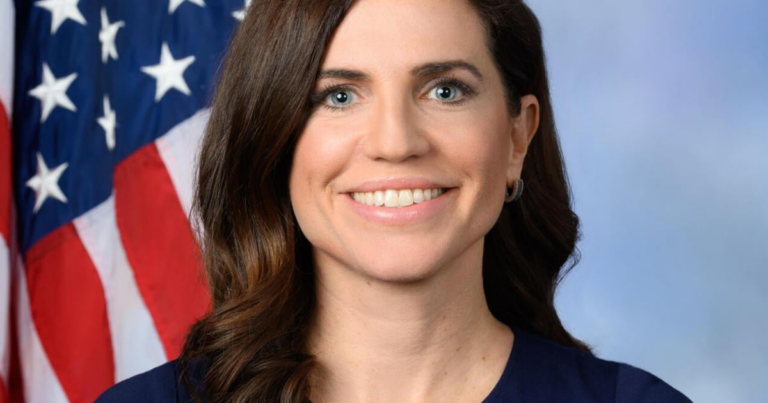
Dorchester County is growing fast, and our infrastructure is feeling the strain. Roads that were once quiet and easy to navigate now face the pressure of booming development, increasing daily traffic and the urgent demands of emergency response.
This is why helping secure a $24.6 million BUILD Grant from the U.S. Department of Transportation is such a major win for the Lowcountry. This crucial federal investment will bring critical upgrades to U.S. Highway 78, right where they’re needed most.
For the people of Dorchester County, this funding means safer roads, less congestion and better connectivity. But also, it’s a clear example of what happens when local, state and federal leaders work together with a goal and a commitment to delivering results.
Our office played an active role in this process as we so often do. We submitted a formal letter of support for Dorchester County’s grant application and worked closely with the U.S. Department of Transportation on Dorchester County’s project and announcement timeframe.
This was no accident, though. Dorchester County came to the table with a strong, detailed plan and the leadership needed to secure this grant. Dorchester’s organization and leadership are a good role model for other counties around the state.
The BUILD Grant will fund long-term improvements that go well beyond a simple repair job. Key infrastructure upgrades include widening U.S. Highway 78 from two to five lanes, covering the stretch from west of Orangeburg Road to North Maple Street. This expansion will reduce traffic congestion and improve safety for all who travel this busy corridor.
The grant also supports the addition of 3.39 miles of sidewalks, 4.9 miles of dedicated bike lanes and 0.41 miles of multi-use paths. These improvements will enhance pedestrian safety and encourage alternative transportation options, making it easier for residents to walk or bike safely throughout the area.
This project will create a more efficient and user-friendly transportation network for everyone.
Small plane that crashed near Denver and killed 2 had engine malfunction mid-air: NTSB

A small plane that crashed near Denver and killed both pilots on board in early September had an engine malfunction in mid-air, according to preliminary reports released by investigators.
One of the pilots was receiving instruction when the Beech BE35 plane suddenly crashed near Centennial Airport in Englewood, Colo. on Sept. 5, according to a report released by the National Transportation Safety Board.
The early morning endeavor was requested by one of the pilots, who wanted to receive training in that specific aircraft because he was planning on purchasing a similar model, officials said.
The pair took off around 5:45 a.m. and remained in their set traffic pattern. They performed several successful landings before the engine suddenly went silent.
After less than an hour in the air, the plane collided with several concrete pole barriers in front of a generator before it finally came to a stop. The aircraft was demolished and both pilots were killed.
The victims were later identified as Perry “Matt” Feeney and Lee “Rob” Hill, two Colorado natives.
The crash was originally reported as an explosion, likely because of the site’s proximity to the diesel-powered generator.
The aircraft was quickly engulfed in flames after the crash. The fire spread and was inching closer to a nearby building by the time first responders arrived.
Witnesses within two miles of the crash site said that they were able to hear the engine go silent while it was flying overhead, according to the report.
One woman who lives south of the airport added that she saw the small plane deviate from the flight path and start drifting lower than she was used to seeing before it banked hard to the left and started its descent.
Neither pilot sent a distress call before the fiery crash, according to the report.
Air traffic control audio posted by LiveATC.net catches an air traffic controller clearing the plane for takeoff just before the crash.
The NTSB and the FAA are still investigating the wreck.
How is transit crime being tackled?
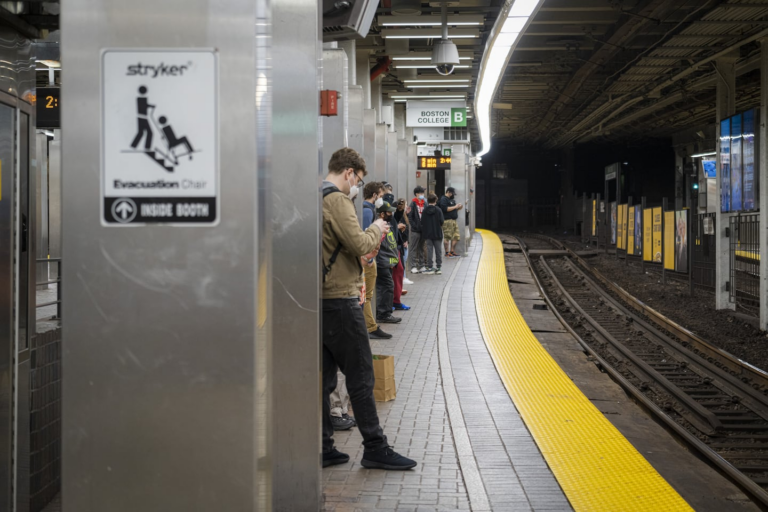
As part of its ongoing push to reduce crime on transit systems, the U.S. Department of Transportation is turning its focus again on Boston demanding answers from the MBTA. Specifically, the federal agency wants to know how the T is keeping riders safe and what money is being spent to ensure that.
U.S. Secretary of Transportation Sean Duffy sent a letter, shared by NBC10 Boston, to the T’s general manager Phil Eng dated Sept. 18 demanding a response within two weeks.
The letter states that the T must provide “information about all MBTA fiscal year 2025 budgeted and fiscal year 2026 planned funds allocated to reduce crime, the homeless population, and fare evasion on the transit system, including a comparison to prior year funding for such expenses.”
Advertisement
The letter further states: “People traveling on the MBTA system to reach their jobs, education, healthcare, and other critical services need to feel secure and travel in a safe environment free from crime and threatening encounters with drug addicts or the mentally ill.”
The letter also focuses on South Station as a place of interest for the Trump administration since August.
Jason Margolis can be reached at jason.margolis@globe.com.
Transportation secretary questions costs, contracting on Key Bridge replacement project
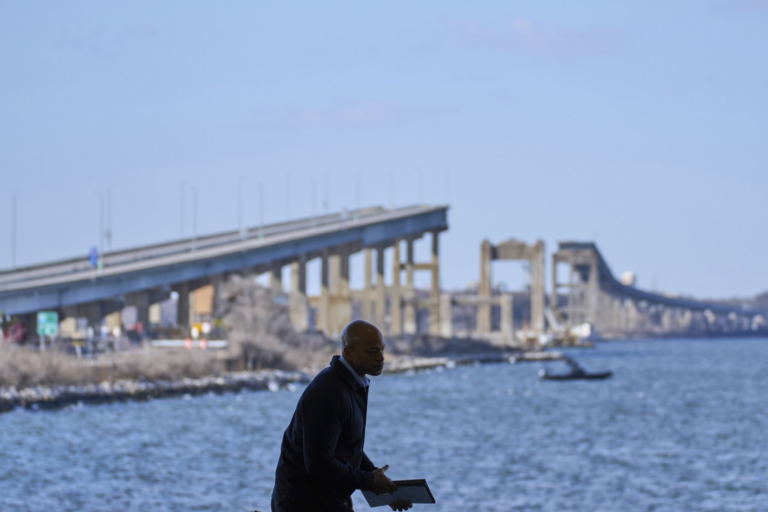
In a letter to Maryland Gov. Wes Moore, U.S. Secretary of Transportation Sean Duffy expressed concerns over the projected $1.8 billion replacement cost of Baltimore’s Francis Scott Key Bridge.
He also voiced concerns over “whether Maryland intends to award contracts” for the bridge replacement “in a manner that relies on the race or sex of contractors.”
Any reliance on factors including race or sex when determining how to award contracts, wrote Duffy, “could introduce significant legal vulnerabilities and inefficiencies” in managing the project. Duffy said DOT has asked a federal court to declare the “presumption” of disadvantage based on race or sex be declared unconstitutional.
In his response to the letter, Moore issued a statement focusing on Maryland’s ongoing efforts to replace the Key Bridge, writing “we have worked expeditiously to promote full restoration of the bridge as a critical asset to our nation’s economy.”
“We will continue to work with the Trump Administration to find ways to reduce costs and rebuild faster,” Moore wrote.
The governor also stated that replacing the bridge is important not only to Baltimore and Maryland, but to the rest of the country. Noting that 13% of the state’s economy is tied to operations at the Port of Baltimore, he wrote, “the goods that flow through the Port don’t just touch Marylanders — they reach the farmer in Kentucky, the auto worker in Michigan and the restaurant owner in Tennessee.”
The exchange comes following sparring between President Donald Trump and Moore over crime in Baltimore. At one point, Trump wrote on social media, “I gave Wes Moore a lot of money to fix his demolished bridge,” and continued that he might “have to rethink that decision???”
Members of Maryland’s Congressional delegation — including senators Chris Van Hollen and Angela Alsobrooks — issued a statement following the release of Duffy’s letter noting that after the Key Bridge collapse, “The federal government’s commitment to fund the rebuild is enacted into law,” and called delivering on the bridge replacement a “national priority.”
Get breaking news and daily headlines delivered to your email inbox by signing up here.
© 2025 WTOP. All Rights Reserved. This website is not intended for users located within the European Economic Area.
Metro transit adds services for Farm Aid 40 festival
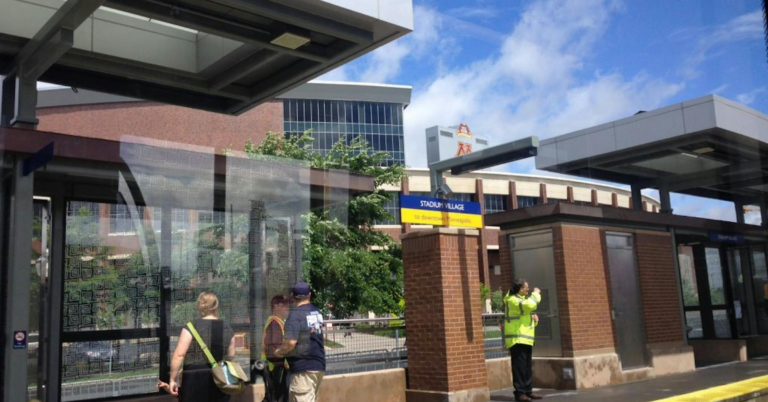
It’s unclear how many buses and trains will operate during Farm Aid because Kerr said they add services based on how many staff are available, but “the expectation is that if you get there on transit, you’re going to get home on transit.”
“We’re not going to be able to say exactly what that looks like in every situation, but the commitment that we have is that for those who are coming out of the concert, getting in line, wanting to get on a train, there’s going to be a train available to them,” Kerr said, adding that officials will send “a couple of extra trains” running close to midnight in case Farm Aid goes later than expected.
“We have largely been using two-car trains, and for this concert, as we do with lots of large events, we’ll be using three-car trains to provide extra room knowing there might be larger than usual crowds coming and going that day … If you’re wanting to get the train home: As soon as the show is over, get to the station as soon as you can to get in line.”
Farm Aid launched in 1985 when Willie Nelson, Neil Young and John Mellencamp organized the festival to raise money for family farms and spread awareness about their struggles. The event has raised more than $85 million since. Officials released set times for the 40th festival on Friday, adding Bob Dylan to the lineup and projecting that Willie Nelson and Family’s show would end at 11:42 p.m.
It will be another busy weekend around the Twin Cities. The Twins play their last regular-season games at home and the Minnesota Lynx play game 1 of the WNBA semifinals at home on Sunday.
Transit officials drew criticism for early planning two years ago during a pair of Taylor Swift concerts that each brought around 60,000 fans to U.S. Bank Stadium in Minneapolis. Late trains were eventually added to make sure those leaving late at night would get home. Low staffing at the time made it difficult to prepare for the large late crowds needing transportation, but Kerr said officials are ready for Farm Aid and that attendees can plan ahead, too.
Attendees can plan their route through Metro Transit’s trip planner. Kerr advised people to buy a $4 all-day pass to skip lines and use public transportation all day, and to remember that events like Open Streets Hennepin and the Dakota 40th Anniversary Block Party could cause delays.
Citing no-cash bail, US Transportation Dept. threatens to pull federal funding if CTA doesn’t lower crime

Transportation Secretary Sean Duffy on Friday said both Chicago and Boston are “on notice” to improve safety for transit riders and employees or they risk federal funding.
The Department of Transportation cites a 70-year-old CTA employee who was thrown onto Blue Line tracks by a passenger last month as proof of crime in Chicago. It also ties both cities to no-cash bail, claiming it “allows deranged criminals to repeatedly terrorize public spaces,” in another escalation of Trump’s threat to pull federal funding for cities who have enacted bail reform.
“President Trump cares about our great cities and the hardworking Americans who inhabit them,” Duffy said in a press release. “While local leaders seem intent on putting the needs of criminals first, we’re not waiting for the next Iryna. Chicago and Boston are on notice to take actions that enhance safety and reduce the crime affecting their riders and transit workers — or risk federal support. This is about standing up for American families who deserve a safe and clean transportation system.”
Iryna Zarutska, a 23-year-old Ukrainian refugee, was stabbed to death last month on a North Carolina commuter train. Decarlos Brown Jr. has been charged in the killing.
In letters to Acting President Nora Leerhsen of the CTA and General Manager Philip Eng of the Massachusetts Bay Transportation Authority, Duffy is requesting that both transit agencies submit written reports within 14 days that detail what actions have been taken to “deter crime, stop fare evasion, and provide a clean environment for passengers.” Duffy also wants a summary of sources of funds for fiscal year 2025 and 2026 related to security, safety and any funds from federal agencies, including funds from the Department of Homeland Security.
The CTA on Friday said it had received the letter from Duffy, but did not provide further comment. “We have reviewed the letter and will respond within the requested timeline,” a CTA spokesperson said.
Testifying before the City Council’s Transportation Committee in late July, Leerhsen reported progress on problems that have slowed the CTA’s post-pandemic recovery. To improve passenger security and reduce CTA crime, she talked about the deployment of teams of police officers working with CTA security guards on the Red Line overnight, seven days a week, since March.
She also reported having conducted 24 “anti-smoking missions” resulting in over 200 citations to crack down on one of the leading sources of rider complaints.
Trump last month signed an executive order aimed at ending no-cash bail nationwide. But advocates for bail reform argue that’s not within the president’s power, citing a recent ruling that blocked the administration from revoking funds for sanctuary cities.
Trump last month also vowed to end “no cash bail” in Chicago, telling reporters, “We’re going to change the statute.”
Although Trump specifically mentioned Chicago, cash bail was eliminated across Illinois through state law.
The Pre-Trial Fairness Act faced legal challenges after being signed into law, but its constitutionality was ultimately upheld by the Illinois Supreme Court. It took effect statewide in September 2023.
In the first year without bail, jail populations went down and both property and violent crime decreased statewide, according to research from the Loyola University Chicago Center for Criminal Justice.
Any threat to CTA funding looms large for the cash-strapped agency, which is facing a massive fiscal cliff next year as federal COVID-19 relief funds expire.
The CTA has been planning for service cuts up to 40% since the state legislature failed to pass a funding bill in May. Legislators get another chance to pass a bill in the fall veto session in October.
The Regional Transportation Authority last month reallocated $74 million in its 2026 budget from Metra and Pace to the CTA to delay the cuts until next summer, when the other agencies also face potential cuts without additional state funding.
President Trump’s transportation secretary orders MBTA to tighten up safety
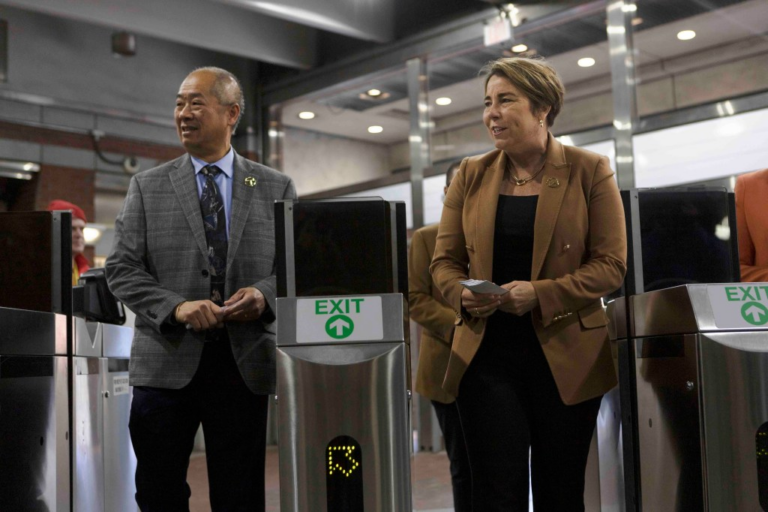
President Trump’s transportation secretary has ordered the MBTA to take immediate action to improve safety for riders and transit workers, or risk the loss of federal funding.
U.S. Transportation Secretary Sean Duffy hit MBTA General Manager Phillip Eng with the federal order via a Thursday letter, saying that the T “must ensure a secure and clean environment, reduce crime, vagrancy and fare evasion, and maintain a safe operating system.”
“President Trump cares about our great cities and the hardworking Americans who inhabit them,” Duffy said in a Friday statement. “While local leaders seem intent on putting the needs of criminals first, we’re not waiting for the next Iryna. Chicago and Boston are on notice to take actions that enhance safety and reduce the crime affecting their riders and transit workers — or risk losing federal support.”
Duffy was referencing Iryna Zarutska, a 23-year-old Ukrainian refugee who was stabbed to death on a train in Charlotte, N.C. on Aug. 22.
The Trump administration’s focus on the MBTA, or “Boston leadership,” appears to be responsive to two attacks on bus riders that took place in the past month, according to a U.S. Department of Transportation statement.
The USDOT statement references an elderly woman who was shoved off an MBTA bus at a stop in Roxbury on Sept. 8. The woman was injured after falling on a concrete sidewalk, MBTA Transit Police said.
The feds also mentioned an Aug. 16 incident involving a man who allegedly attacked at least one person with a belt on an MBTA bus in Cambridge. The man allegedly removed his belt and struck a rider in the face and neck, Transit Police said.
“This is about standing up for American families who deserve a safe and clean transportation system,” Duffy said.
Duffy’s letter to Eng directs the MBTA to focus particularly on “key transportation and intermodal hubs such as South Station.” Duffy’s deputy director of transportation Steven Bradbury suggested last month that the Trump administration was considering taking over the state-owned South Station to address security.
The federal government has taken control of Union Station in Washington, D.C., per an agreement reached this week with Amtrak and the Union Station Redevelopment Corporation Boards of Directors and announced by USDOT.
In his letter, Duffy advised Eng that the MBTA should target federal funds for “capital expenses related to crime prevention and security activities,” particularly at South Station, “the second-busiest transportation hub in New England.”
Duffy noted that the federal government has invested heavily in improving and maintaining South Station over the years, “and wants to ensure that this federal interest is protected for the benefit of public transportation passengers and workers.”
“People traveling on the MBTA system to reach their jobs, education, healthcare, and other critical services need to feel secure and travel in a safe environment free from crime and threatening encounters with drug addicts or the mentally ill, and workers who operate the system need to be assured of a safe operating environment to provide transportation services,” Duffy wrote to Eng.
Duffy has requested that the MBTA submit written reports within 14 days that identity actions taken to deter crime, stop fare evasion and provide a clean environment for riders; and summarize all sources of funds received for fiscal years 2025 and 2026 relating to safety and security, along with any funds from federal agencies, including the Department of Homeland Security.
Eng, the MBTA general manager, said the T is focused on safety and plans to provide the feds with the requested information.
“We value and appreciate our long-standing partnerships with the USDOT and (Federal Transit Administration), and we have a common goal to ensure that riders are safe and feel safe while using public transportation,” Eng said in a Friday statement.
Eng said he spoke this week with FTA Administrator Marc Molinaro in Boston “about our shared commitment in ensuring the security of every passenger, and we are in agreement about providing the safest commute possible for all riders and employees.”
“As the MBTA and its Transit Police Department continue to work together with our federal, state and local law enforcement partners, I want to assure the public that safety is at the heart of everything we do at the T,” Eng said. “Investments in modernization, technology, accessibility, infrastructure and more are showing real, tangible results as ridership returns to the system.”
The MBTA became just the second U.S. subway system to undergo a federal safety management inspection in April 2022, following a series of safety failures that culminated with a passenger being dragged to death by a train. The first was Washington, D.C. Metro System.
The T, as result of that investigation by the FTA, was ordered to comply with a series of safety directives to beef up staffing, address inadequate operations and shore up aging infrastructure.
“We’re building back trust with the riding public because the T is a safe, dependable system riders can rely on,” Eng said. “We look forward to providing the requested information and we’ll continue to demonstrate the significant progress that we’ve made working with the FTA.”
Before putting Boston and Chicago on notice, Duffy sent similar letters to transit authorities in Washington, D.C., New York and Los Angeles.
Highway 5 bridge replacement project extended through October

COLUMBIA, Mo. (KMIZ)
Work on the Missouri Highway 5 bridge over Bear Creek in Glasgow will continue into October, according to a Friday press release from the Missouri Department of Transportation.
The bridge replacement was expected to be done this month.
“An underground spring requiring extensive excavation and a deteriorated roadway foundation under Route 5 which required substantial work have extended the project timeline,” the release says.
Temporary traffic signals and the narrowed lane will remain in place until the end of the project, the release says.
Crash causes traffic delays on Interstate 70 in Cooper County
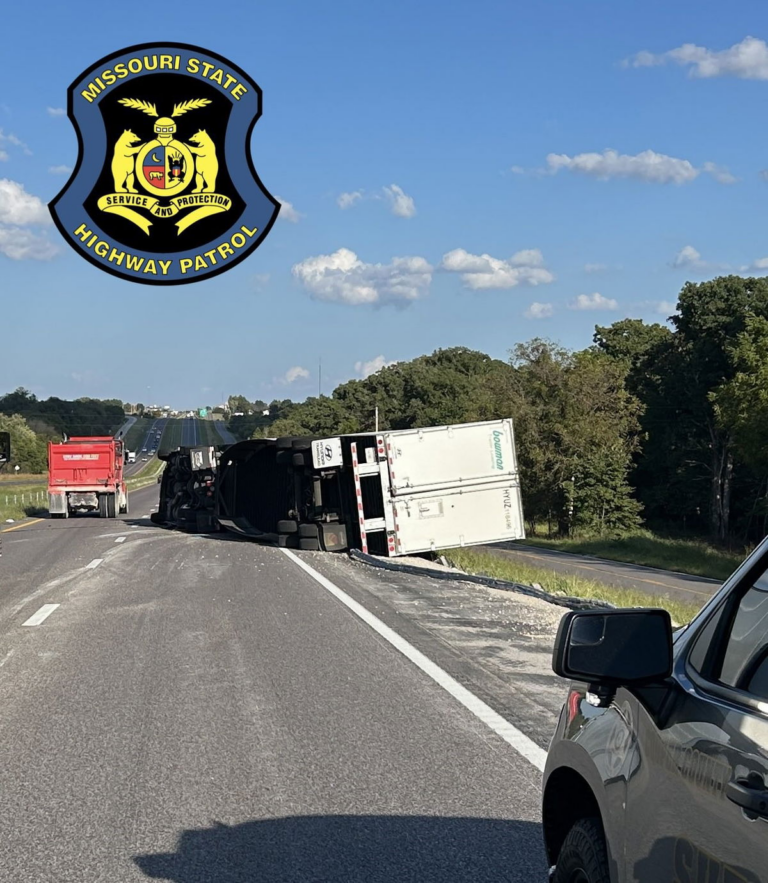
COLUMBIA, Mo. (KMIZ)
A non-injury rollover crash involving a tractor-trailer stifled traffic flow on eastbound Interstate 70 in Cooper County on Friday.
The crash happened at about 5 p.m. By 6 p.m., traffic was at a near standstill, with the Missouri Department of Transportation’s traveler information map showing a delay of hours possible.
The crash happened near the 96 mile marker. Traffic was backed up beyond the 93.5 mile marker near Pilot Grove, a MoDOT camera feed showed a little after 6 p.m.
MoDOT warns football traffic could worsen I-70 delays as MSHP cracks down on aggressive driving

COLUMBIA, Mo. (KMIZ)
The Missouri State Highway Patrol and the Missouri Department of Transportation are working together to curb aggressive driving as crash hot spots emerge in work zones along the Improve I-70 Project.
“This last week has been very challenging for our team across the state,” MDOT Improve I-70 Program Director Eric Kopinski told ABC 17 News. We’re up to eight semis that have flipped over, rolled over across the state in our work zones.”
Crash data shows many of these collisions stem from high speeds in work zones, where conditions are tighter and the margin for error is smaller. The project is still on track to be completed in December 2030. But with nearly 500 people working on the project, Kopinski says there have been several close calls.
“This week alone, we’ve had a number of near-misses. And when I say near-misses, we’re talking feet away from workers being seriously struck, injured or killed,” Kopinski said. “Specifically, we’ve had two of these locations, one in Wentzville and one in Columbia, for our crews out there working. All five of these workers at near-miss locations are Mid-Missouri residents, so they’re near and dear to Mid-Missouri. They’re traveling to Saint Charles or to Columbia to do their job, and all they’re asking to do is go home safely at the end of the day.”
With football season underway, MoDOT is planning to put out weekly releases ahead of Mizzou home games for the rest of the season, when traffic on I-70 is expected to increase.
This week, MODOT is adding a lane in each direction of I-70 to limit disruptions during peak travel times, beyond the work zone configurations already in place.
However, even with the extra lane, the department is urging fans headed to the game to leave early as crashes that occur in work zones are more difficult to clear and can lead to long delays. Last week a car overturned on I-70 near Kingdom City following Mizzou’s 52-10 victory over Louisiana, resulting in part of the highway being shut down.
“We know for Mizzou games, for Chiefs games, and for other large events, there are increased travel traffic. The demand on I-70 increases. So our big message to travelers is please still leave early. If you’re going to go to game day on Saturday night, please allow for additional travel time. While there are no planned closures, that that will happen to the system, we do know the likelihood that an unexpected event could occur. So we will be closely monitoring that,” Kopinski said.
MoDOT says it communicates daily with the MSHP and local law enforcement, which Kopinski called the “backbone of the project” to keep workers safe and traffic flowing.
Statewide, the MSHP has also launched efforts to reduce aggressive driving by forming a Strategic Traffic Operations and Rapid Mobilization team. The STORM team, which consists of 23 members, launched operations on Sept. 1.
Officials said the team was chosen for its specialized skills, including K-9 handlers for drug interdiction and tracking, motorcycle units for unique traffic enforcement and officers with experience in spotting impaired drivers and other hazards.
“They’re also going to be assisted by the patrol’s aircraft division as they can be a great benefit,” Lt. Eric Brown of MSPH’s Public Education and Information Division said. “One in locating the speeding vehicles, and they can also see those hazardous moving violations from the air, to multiple lane changes, following to close, cutting cars off. They can identify those vehicles, call them out to the officers on the ground.”
The STORM team deployed Sept. 16 in Jackson County for its first large-scale operation involving 10 of its 23 members.
“They were there targeting hazardous moving violations, and no crashes occurred in that area during that time frame,” Brown said. “As they moved that project into the evening hours, they were quite successful in making some very good criminal arrests, felonies, misdemeanors as well.”
The operation resulted in 72 traffic stops, 89 warnings, five speeding tickets, 14 “hazardous moving citations,” 27 “non-moving citations,” 18 misdemeanor arrests, 12 felony arrest and one gun taken.
MSHP says the team will be deployed statewide to areas experiencing high crash rates or hazardous driving.
“As far as how they’re going to be used in each individual area of the state, that’s still something they’re working to determine,” Brown said.
Tesla wins approval to test autonomous robotaxis in Arizona

Tesla had applied in June for a permit to begin trials for an autonomous vehicle ride-sharing service, and now plans to test robotaxis in the Phoenix Metro area using safety drivers, the Arizona Department of Transportation said in its email.
Sign up here.
Tesla did not respond to a Reuters request for comment. It was not immediately clear when the trials would start or how long they would last.
Tesla Chief Executive Elon Musk previously stated that Tesla plans to launch an autonomous ride-hailing service to about half of the U.S. population by the end of this year.
Tesla rolled out a small test of its robotaxi service in a limited area of Austin, Texas, in June, with about a dozen vehicles, a select group of passengers and many restrictions, including a safety monitor in the front passenger seat.
Reporting by Chris Kirkham, Preetika Parashuraman and Gnaneshwar Rajan; Editing by Tom Hogue
Port of L.A. plans to raise Vincent Thomas bridge faces headwinds
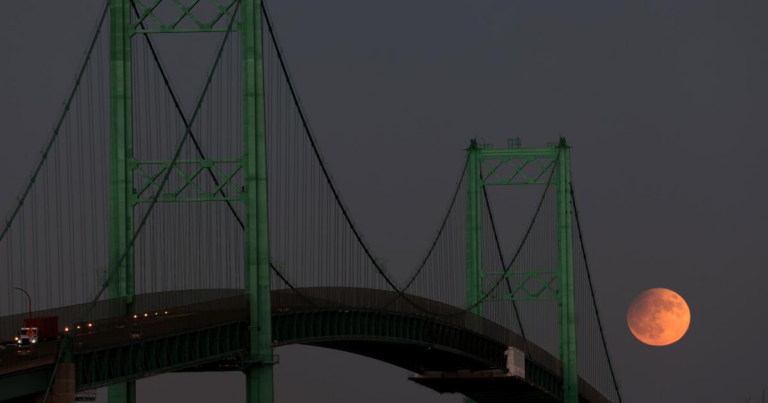
As officials ponder whether to spend at least a year and $1.5 billion more on an already ambitious upgrade of the Vincent Thomas Bridge, locals are asking if the mess they will have to endure during construction will be worth it.
Soon after the California Department of Transportation shared plans to fix up the more than 60-year-old bridge that connects downtown Long Beach to San Pedro and Terminal Island, the Port of Los Angeles piled on with even bigger plans.
Gene Seroka, executive director of the Port of L.A., suggested Caltrans also raise the height of the symbol of the locality by 26 feet.
Raising the bridge would allow larger cargo ships to pass under its deck, helping create jobs and keep the port relevant. It would also increase the project’s price, already projected at more than $700 million, by an additional $1.5 billion.
Most painfully for local commuters and businesses, it would mean the bridge will be closed for around 28 months rather than the originally planned 16 months.
About 40% of the port’s cargo container capacity is beyond the bridge, which is 185 feet high. Raising the bridge to 211 feet would accommodate the next generation of cargo ships, which will be larger and more energy efficient, Seroka said.
“You’re going to need more capacity at the nation’s largest port,” he said. “Caltrans was looking to resurface the bridge and we thought maybe there was a way you could accomplish both.”
Seroka said he has already secured private funding from banks and industry participants to raise the bridge by putting sleeve lifts and platforms on the bridge’s legs.
The Bayonne Bridge connecting Staten Island, N.Y., and Bayonne, N.J., was raised in a similar manner in 2019.
While the Port of Los Angeles has garnered support for the idea, many communities surrounding the bridge have raised concerns about travel disruptions and the effect of rerouted traffic.
Closing the bridge for more than two years would require an alternative route for cargo trucks traveling to and from the port, and would likely affect tourism across San Pedro and Long Beach.
“It’s not only for employees going back and forth through the port complex,” said Elise Swanson, president of the San Pedro Chamber of Commerce. “The bridge is really a connection to our communities for art, culture, dining.”
In August, the San Pedro Chamber of Commerce voted to support a study of the effects of raising the bridge.
Swanson said she saw the merits of raising the bridge while acknowledging the disruption the project would have, particularly to Wilmington residents, where truck traffic would be rerouted.
Preliminary detour routes would send commuters, tourists and cargo through Harry Bridges Boulevard in Wilmington and on the 110 and 405 freeways.
“We’re all in agreement on the study and getting all the facts in front of us,” Swanson said. “If we’re going to go through all of this work and spend this money on fixing the current bridge, is that really a good expenditure of funds if the bridge won’t meet future needs for the shipping industry?”
Caltrans is expected to decide on the bridge raising in October, following a late September meeting with the Port of Los Angeles. The $706 million re-decking project is slated to begin next year and will also replace the bridge railings, fences and median barrier.
Los Angeles City Councilmember Tim McOsker, who represents port-adjacent communities including Wilmington, Harbor City and San Pedro, said he supports raising the bridge as long as it is safe and takes locals’ needs into account.
“In the years that it would take to come up with the plans, the financing and the environmental review for raising the bridge, we have to think about the traveling public in the meantime,” he said.
Under its original plans, Caltrans hoped to reopen the bridge to traffic in late 2027 or early 2028, in time for the 2028 Summer Olympic Games in Los Angeles.
If the bridge is raised, it would likely not be done before the Olympics, making it harder for the tourists to visit that corner of Los Angeles.
The Pacific Merchant Shipping Assn., which represents marine terminal operators, says raising the bridge is worth the trouble.
“We would like to see the bridge’s useful life increased,” Pacific Merchant Shipping Assn. President Michael Jacob said of the Vincent Thomas Bridge, which opened in 1963.
Increasing the port’s capacity and ability to accommodate larger ships would boost job opportunities by about 20% for longshoremen, truckers, warehouse workers and terminal operators, Seroka said. The newest and largest container ships are also the most environmentally friendly, he said.
Caltrans declined to comment on its decision-making process regarding the bridge raising and directed questions about the bridge to the Port of L.A.
“Caltrans is focused on delivering a needed bridge deck replacement project and is collaborating with our partners on those efforts,” the department said in a statement.
McOsker said his constituents are waiting on a decision.
“Making the bridge higher with a greater clearance is really important to industry and the workforce, but it also has significant time implications and significant cost implications,” McOsker said. “Caltrans will have to speak for themselves.”
Florida trucking tragedies can be avoided by enforcing rules

A recent fatal crash in Florida highlights concerns over truck driver qualifications and road safety.
The U.S. Department of Transportation is increasing enforcement of federal standards, including English language proficiency for drivers.
The egregious crash in Florida that destroyed three innocent lives and grabbed national attention lays bare why we need a surge in enforcement to ensure bad actors do not jeopardize the safety of our nation’s highways.
It is exactly why the nation’s truck driver shortage is not about numbers. It’s about qualifications.
America doesn’t lack people who seek commercial driver’s licenses (CDL). What we lack are qualified drivers who meet the high standards of professionalism and safety that our industry expects and the law demands.
Qualified means you can speak English, read road signs, understand safety rules and respect our laws. Qualified means you’re not abusing alcohol or using drugs. Qualified means you earned your CDL the right way — not through a rubber-stamp process in some state that looks the other way.
While investigations continue, it appears the driver responsible for last month’s tragedy in Florida failed several of those tests. That’s why the recent announcement from U.S. Transportation Secretary Sean Duffy matters. By putting states that refuse to enforce the federal English Language Proficiency requirement on notice, USDOT is doing what’s necessary to protect the motoring public.
USDOT is enforcing the federal English Language Proficiency requirement. It’s the right think to do.
Safety regulations only work when they are consistently enforced. And if you can’t read road signs in America, you can’t drive a truck in America. Period.
The Trump Administration’s decision to suspend visas for foreign truck drivers is a prudent step while audits and investigations are conducted.
Until we know where breakdowns in the system are happening, adding more drivers into a flawed oversight process only increases the risk to the motoring public. We will not tolerate states playing by their own rules. The safety of the motoring public is not negotiable.
We need to ensure all federal regulations are evenly enforced by every state. That includes entry-level driver training standards so that new entrants to the industry can’t skirt the base requirements of the job. Too many shady training providers across the nation are operating CDL mills, foregoing federally required curriculum to fast-track prospective drivers for a fee. These fraudulent entities put profit over safety and need to be shut down immediately.
The overwhelming majority of America’s 3.5 million professional truck drivers take immense pride in their work. They meet every requirement, every day, and they move our economy forward with skill and responsibility. But when unqualified drivers are allowed behind the wheel, they tarnish the reputation of the entire industry and undermine public trust.
America runs on trucking, and trucking only runs safely when qualified professionals are behind the wheel.
Lowering the bar doesn’t just threaten freight. It threatens lives.
Chris Spear is the president and CEO of the American Trucking Associations.
EV Realty is betting the missing link in electric trucking is real estate

Electric commercial trucks are starting to take off. And that progress comes with a new slate of challenges for operators grappling with how to build out charging infrastructure for their growing EV fleets.
Given grid constraints, that’s not always possible. EV trucks are one of several energy users currently searching for space on an increasingly crowded electrical grid. And while today’s demand is small — only a few thousand units are currently operating — over half of fleets are piloting the technology, according to McKinsey.
One startup, EV Realty, is hoping to fill the void by finding free space on the grid and developing those properties into charging hubs that can serve multiple fleets. The company operates five charging hubs in California — all near warehouses, ports, and other industrial properties.
EV Realty recently raised $75 million to build additional charging hubs throughout California, the company exclusively told TechCrunch. Private equity investor NGP led the round with EV Realty’s management team contributing.
The funding will help the company build new hubs in California, including a 76-stall fast-charging site in San Bernardino, California. The site will have four “pull through” stalls with Megawatt Charging System plugs that allow a semitruck to top up without unhooking the trailer. When open, the hub should be able to charge more than 200 Class 8 trucks per day.
The company has modeled itself after Digital Realty, the real estate investment trust that builds and operates data centers. “It was a new sort of infrastructure class for real estate,” Patrick Sullivan, co-founder and CEO of EV Realty, told TechCrunch. EV Realty, he added, is “very much the same concept.”
EV Realty found the site using its in-house software, which maps the electrical grid, vehicle density, traffic patterns, real estate use, and likely customers.
The company is searching for free space on the grid — much like data centers. However, the charging hubs’ smaller footprints, both in terms of acreage and megawatts, give EV Realty more options, Sullivan said. “They’re looking for hundreds and hundreds of megawatts, and we’re looking for tens of megawatts,” he said.
While some fleets are hesitant to adopt electric trucks, Sullivan sees plenty of demand in the near future. “We see, frankly, more interest right now from the customers that have made the switch. They see the opportunity and want to do more.”
Belcher Elementary School receives $100K for HVAC upgrades
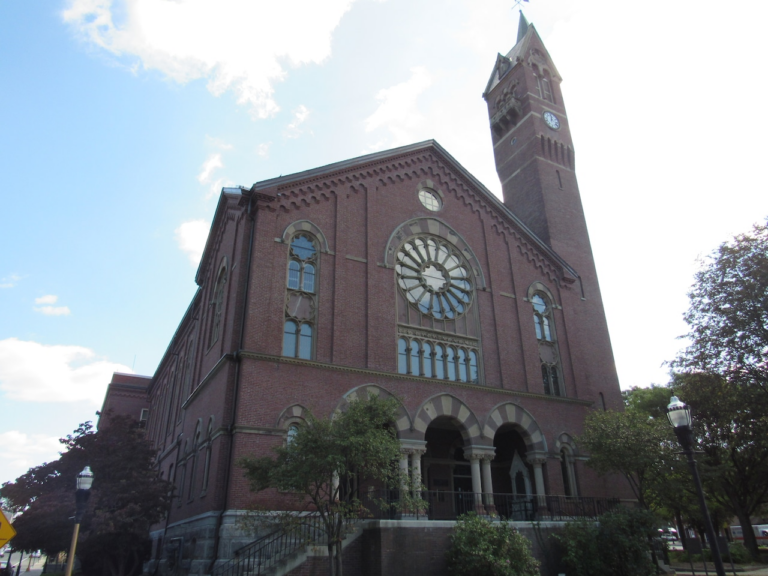
CHICOPEE — Belcher Elementary School will modernize its heating, ventilation and air conditioning systems via Fair Share allocations.
State Sen. Jacob Oliveira, D-Ludlow, secured $100,000 in Fair Share funding for the elementary school to help provide a healthier, more comfortable learning environment for Chicopee students, according to a statement from the senator’s office.
Fair Share funds allow communities to invest in their local infrastructure, split evenly between education and transportation projects.
Pete Buttigieg rallies Indiana Democrats against GOP push to draw new congressional maps

By Eric Bradner, CNN
Indianapolis (CNN) — Former Transportation Secretary Pete Buttigieg said Indiana Republicans are “ashamed of what they’re doing” on Thursday as he rallied opponents of a potential effort by GOP lawmakers to redraw the state’s congressional maps ahead of next year’s midterm elections to add one or two US House seats more favorable to the party.
Buttigieg, the former South Bend mayor, returned to his home state for an appearance at the Indiana Statehouse where he urged Republican state lawmakers who are being pressured by President Donald Trump’s administration to redistrict to “show some backbone before it’s too late.”
“Refraining from cheating is a low bar,” he said. “But you’ve got to start somewhere, because they are under so much pressure from Washington to do something wrong.”
Even as Buttigieg enters the fray, Indiana Democrats face a daunting political reality: They have no way of stopping Republican Gov. Mike Braun and the state’s supermajority Republican House and Senate from redrawing its congressional maps to try to tilt the GOP’s current 7-2 House seat advantage to 8-1 or 9-0.
Braun and GOP legislative leaders have not yet made a public argument in favor of redrawing Indiana’s congressional maps. However, Braun told state reporters Tuesday that redistricting “probably will happen.”
“I want it to happen to where the leaders and the legislators feel comfortable with it,” he said.
Braun said in an interview on Fort Wayne’s WOWO radio this week, according to an Indiana Capital Chronicle report, that lawmakers could vote on new maps either at the beginning of next year’s legislative session in January, “probably more ideally sometime in November.”
That timeline hinted at a possible path to approving new maps without Braun calling a special session. Lawmakers typically gather each November for “organization day” — a largely ceremonial one-day start to the next year’s session in which newly elected lawmakers are sworn in and legislative leaders are chosen.
Indiana Republicans face a pressure campaign from Trump’s White House to add one or two more GOP-leaning districts to bolster the party’s chances of maintaining its narrow House majority in next November’s midterms.
Already, Texas Republicans have redrawn their state’s maps to add five more seats that favor GOP candidates, and California Democrats responded with new maps of their own intended to add five Democratic-leaning seats. The California maps must still be approved by voters this November. Missouri Republicans last week passed new maps aimed at handing the GOP one more House seat there.
Republican state Rep. Ed Clere told CNN that Missouri’s approval of new congressional maps last week “has only increased the pressure on Indiana, but for all the wrong reasons.”
“This is being driven by very raw and very cynical politics,” he said.
Clere has been one of the Indiana GOP’s most vocal opponents of mid-decade redistricting. He said doing so “establishes a dangerous precedent,” and said there is deep opposition within the party to redrawing the maps.
“There are Republicans who are more concerned with upholding principles than with cheating to win elections. And that’s what this is: It’s cheating,” he said. “This is about a lot more than a congressional map or an election. This is about who we are as a people, and whether we are willing to prioritize democracy over politics.”
Multiple Indiana Republican lawmakers, speaking on the condition of anonymity, said they expect Trump will eventually get his way.
The pressure on the GOP supermajority has ratcheted up with Vice President JD Vance traveling to the Statehouse on August 7 to meet privately with Braun, state House Speaker Todd Huston and state Senate President Pro Tem Rodric Bray.
Indiana’s full seven-member Republican congressional delegation endorsed mid-decade redistricting in social media posts in August, on the same day state House Republicans were caucusing to discuss the prospect. The same month, the White House invited the state’s GOP legislators to Washington to further press their case.
The topic was prominently featured at Sen. Jim Banks’ Hoosier Leadership for America Summit last weekend, where state Rep. Andrew Ireland, a supporter of redistricting, said on X he’d spoken about it.
Braun, the first-term Republican governor, noted that some Republican state legislators had initially opposed mid-decade redistricting, but have since reversed their positions.
“You clearly saw certain legislators that had an ‘absolutely not interested’ to where they’re publicly out there changing their mind,” Braun told reporters this week.
One of those public GOP flips is state Rep. Jim Lucas, who in August repeatedly staked out his opposition to a mid-decade redistricting effort.
After visiting the White House, and in the hours after the shooting of conservative activist Charlie Kirk — who had waged a social media campaign to pressure Indiana Republicans to redraw their congressional lines, vowing to support primary challenges against those who turned Trump down — Lucas said he’d changed his mind.
“I am now a rock solid HELL YES for redistricting!” he said on X.
Lucas argued in another post the next day that because a Democratic House would impede Trump’s agenda, redistricting “went from a state issue to a national issue.”
The reversal by Lucas prompted an unusual back-and-forth with another veteran Republican state lawmaker, Rep. Heath VanNatter, on Lucas’ Facebook page — throwing the kinds of discussions GOP lawmakers have had in caucus meetings, including House and Senate members gathering separately last week, into public view.
“I knew you would fold. Maybe you should keep your powder dry next time,” VanNatter said.
Lucas responded by citing Hoosier legislators’ trip to the White House last month and the assassination of Kirk.
“After going to DC and hearing solid information from the federal level of how every Hoosier would benefit by redistricting and now the assassination of Charlie Kirk, I have ZERO problem to publicly come out and explain my changed position,” he wrote.
Harris says Pete Buttigieg was too risky to be her choice for running mate

Sept. 18 (UPI) — Former Vice President Kamala Harris said she wanted to name former Transportation Secretary Pete Buttigieg as her running mate, but it would have been too risky.
Harris was the first Black female to run for the nation’s highest office and in her to-be-released book
Amazon spends $1 billion to increase pay, lower health care costs for US workers

NEW YORK (AP) — Amazon said it’s investing more than $1 billion to raise wages and lower the cost of health care plans for its U.S. fulfillment and transportation workers.
The Seattle-based company said Wednesday the average pay is increasing to more than $23 per hour. Some of its most tenured employees will see an increase between $1.10 and $1.90 per hour. Full-time employees, on average, will see their pay increase by $1,600 per year.
Amazon also said it will lower the cost of its entry health care plan to $5 per week and $5 for co-pays, starting next year. Amazon said that it will reduce weekly contributions by 34% and co-pays by 87% for primary care, mental health, and most non-specialist visits for employees using the basic plan.
Amazon has a global workforce of 1.5 million workers.
Last December, some workers at seven Amazon facilities went on strike, an effort by the Teamsters union to pressure the e-commerce company for a labor agreement during a key shopping period.
That same month, Amazon reached a settlement with the Occupational Safety and Health Administration that requires the online behemoth to adopt corporate-wide ergonomic measures at facilities across the country. The agency claimed hazardous working conditions led to severe lower back and other musculoskeletal disorders at Amazon facilities.
In January 2024, Walmart, the nation’s largest private employer, said that average wages for hourly workers would exceed $18, up from $17.50. The increase was due to Walmart introducing some higher-paying hourly roles in its Auto Care Centers last year, among other changes, the company said.
Walmart, based in Bentonville, Arkansas, had announced in January 2023 that U.S. workers would get pay raises the following month, increasing starting wages to between $14 and $19 an hour. Starting wages had previously ranged between $12 and $18 an hour, depending on location.
At Minneapolis-based Target, the starting hourly wage ranges from $15 to $24 for workers employed at stores and distribution centers, depending on the location, company spokesman Brian Harper-Tibaldo said.
The average hourly wage for a Target store worker is more than $18, he said.
Buttigieg to Harris: It wouldn’t have been too risky to pick me as your running mate

The divergence comes as their party is grappling with its approach to diversity, as the Trump administration slashes through diversity, equity and inclusion programs. Democrats disagree about how much to emphasize such values after the GOP successfully painted the party as too “woke” — and now face new questions over how to field winning candidates.
Buttigieg, who appeared earlier Thursday afternoon with Democrats at a rally against a mid-decade redistricting effort in Indiana, cited former President Barack Obama winning the state in 2008 and his own two terms as mayor of South Bend, Indiana, as evidence of his approach.
“You just have to go to voters with what you think you can do for them,” he said. “Politics is about the results we can get for people and not about these other things.”
Harris revealed that her one-time rival in the 2020 Democratic presidential primary was her initial pick for a running mate in a passage of her forthcoming book, “107 Days,” that was published in The Atlantic this week. The former Transportation secretary topped the list of eight names on her initial vetting list, she wrote, but was out of the running by the time she narrowed it down to her finalists.
“But we were already asking a lot of America: to accept a woman, a Black woman, a Black woman married to a Jewish man. Part of me wanted to say, Screw it, let’s just do it. But knowing what was at stake, it was too big of a risk,” Harris wrote.
She believed Buttigieg, who is father to twins with his husband, Chasten, “also knew that — to our mutual sadness.” Harris ultimately selected Tim Walz — the straight, white two-term governor of Minnesota who shares two children with his wife.
Buttigieg said Harris’ concerns were “not something that we ever talked about.”
Harris’ admission comes as both she and Buttigieg eye presidential bids in 2028. Buttigieg has carved out a lane for himself as one of Democrats’ most effective communicators at a time when the party is struggling to land on both a message and a messenger after last year’s shellacking.
In that elevated role, Buttigieg has publicly grappled with some of the biggest issues facing the party, including whether former President Joe Biden should have run for reelection.
Jimmy Haslam Gets Strong Update on Browns’ $2.6B Stadium After Announcing Sponsorship Deal

Back in August, the Browns’ stadium dream in Brook Park hit turbulence when ODOT’s aviation division shot down a permit after pushback from leaders at nearby Cleveland Hopkins International Airport. But on Thursday, Jimmy Haslam’s Browns cleared their biggest hurdle.
Yes, the Ohio Department of Transportation finally signed off on the construction permit after the ODOT brought in an outside consultant to pore over every detail of the stadium plans over the last six weeks. Construction is set to be underway soon.
Cleveland Browns’ $2.4B stadium gets green light from Ohio transportation regulators

COLUMBUS, Ohio (AP) — The Ohio Department of Transportation approved a permit on Thursday for the construction of a new stadium for the Cleveland Browns.
The proposed stadium would be built in suburban Brook Park, next to Cleveland Hopkins International Airport. The Browns are looking to begin construction next year and start playing in their new home in 2029, following the completion of their 30-year lease at their lakefront stadium in downtown Cleveland.
ODOT originally rejected the permit on Aug. 1, citing height concerns. Haslam Sports Group — the company founded by Browns owners Dee and Jimmy Haslam, their daughter and son-in-law — had the opportunity to appeal, and both sides had been in talks for the past two months.
ODOT decided to waive the height limit, which is 150 feet above the airport’s ground elevation, after an independent third-party consultant determined that construction of the proposed $2.4-billion domed stadium would not change any flight paths. The building will have marking and lighting required by the Federal Aviation Administration.
“All along our goal has been to ensure that all concerns were heard and addressed, and a resolution could be found,” ODOT Director Pamela Boratyn said in a statement.
The stadium would be built on the former site of a Ford Motor Co. plant. It would sit 80 feet below ground and 221 feet above ground.
“We respect both the comprehensive work that the FAA did to determine that our stadium project poses no hazard to the surrounding area and ODOT’s diligent process to confirm these findings,” Haslam Sports Group President Dave Jenkins said. “Safety is of paramount importance to all of us and was at the forefront of our detailed and deliberate process with our FAA consultants, whom we engaged with well before our architects began designing the stadium.”
Jenkins added that the Browns plan to have more working sessions with airport officials about the stadium.
The Browns are paying $1.2 billion for construction and will receive $600 million from the state. The team is hoping to fill the remaining financing gap after discussions with Brook Park officials.
___
Cleveland Browns’ $2.4B stadium gets green light from Ohio transportation regulators

COLUMBUS, Ohio (AP) — The Ohio Department of Transportation approved a permit on Thursday for the construction of a new stadium for the Cleveland Browns.
The proposed stadium would be built in suburban Brook Park, next to Cleveland Hopkins International Airport. The Browns are looking to begin construction next year and start playing in their new home in 2029, following the completion of their 30-year lease at their lakefront stadium in downtown Cleveland.
ODOT originally rejected the permit on Aug. 1, citing height concerns. Haslam Sports Group — the company founded by Browns owners Dee and Jimmy Haslam, their daughter and son-in-law — had the opportunity to appeal, and both sides had been in talks for the past two months.
ODOT decided to waive the height limit, which is 150 feet above the airport’s ground elevation, after an independent third-party consultant determined that construction of the proposed $2.4-billion domed stadium would not change any flight paths. The building will have marking and lighting required by the Federal Aviation Administration.
“All along our goal has been to ensure that all concerns were heard and addressed, and a resolution could be found,” ODOT Director Pamela Boratyn said in a statement.
The stadium would be built on the former site of a Ford Motor Co. plant. It would sit 80 feet below ground and 221 feet above ground.
“We respect both the comprehensive work that the FAA did to determine that our stadium project poses no hazard to the surrounding area and ODOT’s diligent process to confirm these findings,” Haslam Sports Group President Dave Jenkins said. “Safety is of paramount importance to all of us and was at the forefront of our detailed and deliberate process with our FAA consultants, whom we engaged with well before our architects began designing the stadium.”
Jenkins added that the Browns plan to have more working sessions with airport officials about the stadium.
The Browns are paying $1.2 billion for construction and will receive $600 million from the state. The team is hoping to fill the remaining financing gap after discussions with Brook Park officials.
___
AP NFL: https://apnews.com/hub/nfl
Copyright © 2025 The Associated Press. All rights reserved. This material may not be published, broadcast, written or redistributed.
Federal government pulls $22 million in grants for projects in Roxbury and Mattapan
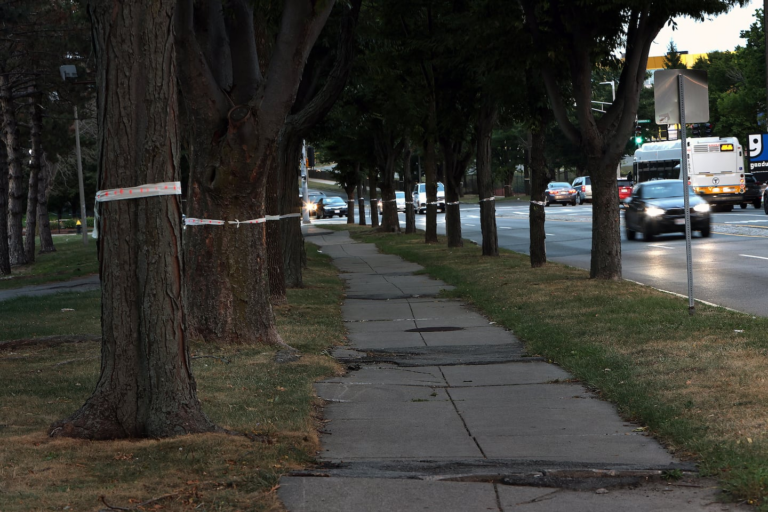
The same day, the agency retracted $2 million dedicated to help rework Mattapan Square, according to another letter from the DOT shared with the Globe.
The cancellations, made with little fanfare, are the latest instances of the federal government walking back sizable commitments to transportation projects in the Commonwealth’s capital.
“The City won these competitive federal grants to replace sidewalks, improve lighting, upgrade bus stops, and plant trees on neighborhood streets,” a Boston city spokesperson wrote to the Globe Thursday. “The federal government’s decision to cancel these grants once again ignores the clear intent of Congress and we are reviewing our options.”
In recent months, the Department of Transportation, under Trump’s direction, has made outspoken efforts to gut policies and programs concerned with the environment and other priorities supposedly tainted by “woke” ways of thinking.
“The previous administration turned the Department of Transportation into the Department of Woke. I’ve focused the Department on what matters; safety, making travel great again, and building big, beautiful infrastructure projects,” Transportation Secretary Sean Duffy said in a statement in May announcing the nixing of $54 million in university grants bankrolling studies on transportation and inequality.
Other localities across the country reported sudden grant cancellations this month, according to StreetsBlog, the transportation news site whose Massachusetts affiliate broke the news about the Roxbury corridors funding.
DOT informed Boston of the canceled grants in two letters sent to Boston city officials last week. The letter regarding the Roxbury project stated that the federal agency is now focused on “promoting traditional forms of energy and natural resources to the greatest extent possible” and ensuring the efficient use of taxpayer dollars, among other priorities.
The Roxbury plan’s ostensible “inclusion of EV [electric vehicle] charging infrastructure” meant that it “no longer aligns with DOT priorities,” and, as such, wouldn’t receive funding, according to the letter.
The letter addressing the Mattapan project noted the agency currently prioritizes “reducing roadway traffic congestion by preserving or increasing roadway capacity for motor vehicles.” The project’s intention to encourage other ways of getting around — walking, cycling, transit — “is hostile to motor vehicles and lacks national significance,” and thus ran afoul of the agency’s goals.
The Department of Transportation did not respond to a request for comment.
The Roxbury project, christened “Roxbury Resilient Corridors‚” promises to rebuild sections of Melnea Cass Boulevard, Malcolm X Boulevard, and Warren Street, with the stated aim of transforming the “wide, auto-centric thoroughfares” into pedestrian-friendly transit havens.
By the project’s completion — not yet scheduled — the city expects to install bus and bike lanes, new sidewalks and bus shelters, and other touch-ups, according to local and federal project descriptions. The city didn’t respond to questions about the project’s total costs and did not respond to questions regarding how the grant cancellation will impact the project’s future by press time.
The Biden administration chipped in $20 million for the Roxbury undertaking in Aug. 2022 through the “Rebuilding American Infrastructure with Sustainability and Equity” (RAISE) grant program, a transportation department initiative (since renamed) designed to help bankroll local transportation ventures.
“The inexplicable cancellation of this competitively awarded grant money, allocated by Congress, to projects that would improve the daily lives of commuters, enhance the climate resilience of communities at risk, and strengthen our communities, is evidence of this Administration’s inability or unwillingness to govern,” Congresswoman Ayanna Pressley said in a statement Wednesday.
State Senator Liz Miranda, representing the Second Suffolk District, struck a similar tone.
“This decision is nothing short of outrageous,” Miranda texted the Globe Thursday. “Once again, we are watching this administration turn its back on Black and Brown communities, this time by ripping away desperately needed infrastructure investments from Roxbury.”
The Mattapan project promises to “reconnect two long-separated sides of Mattapan, as well as improve access to natural resources, and multimodal transportation networks” in the hopes of advancing “the environmental, social, and economic well-being of Mattapan residents,” according to a federal project summary.
The federal government awarded Boston $2 million on Jan. 10 through DOT’s Reconnecting Communities Pilot (RCP) program to help move the project forward. A federal summary of the initiative pegged its total estimated cost at $16 million.
The city did not respond to questions regarding how the grant cancellation will impact the Mattapan project’s future by press time.
Amazon spends $1 billion to increase pay and lower health care costs for US workers

NEW YORK — Amazon says it’s making a $1 billion investment to raise wages and lower the cost of health care plans for its U.S. fulfillment and transportation workers.
The Seattle-based company said Wednesday the average pay is increasing to more than $23 per hour and said that some of its most tenured employees will see an increase between $1.10 and $1.90 per hour. Full-time employees, on average, will see their pay increase by $1,600 per year.
Amazon also said it was lowering the cost of its entry health care plan to $5 per week and $5 for co-pays, starting next year. Amazon said that will reduce weekly contributions by 34% and co-pays by 87% for primary care, mental health and most non-specialist visits for employees using the basic plan.
Last December, seven Amazon facilities went on strike, an effort by the Teamsters union to pressure the e-commerce company for a labor agreement during a key shopping period.
That same month, Amazon reached a settlement with the Occupational Safety and Health Administration that requires the online behemoth to adopt corporatewide ergonomic measures at facilities across the country. The agency claimed hazardous working conditions led to serious lower back and other musculoskeletal disorders at Amazon facilities.
In January 2024, Walmart, the nation’s largest private employer, said that average wages for hourly workers would exceed $18, up from $17.50. The increase was due to Walmart introducing some higher-paying hourly roles in its Auto Care Centers last year, among other changes, the company said.
Walmart had announced in January 2023 that U.S. workers would get pay raises the following month, increasing starting wages to between $14 and $19 an hour. Starting wages had previously ranged between $12 and $18 an hour, depending on location.
Maryland Department of Transportation unveils updated Harriet Tubman historical marker
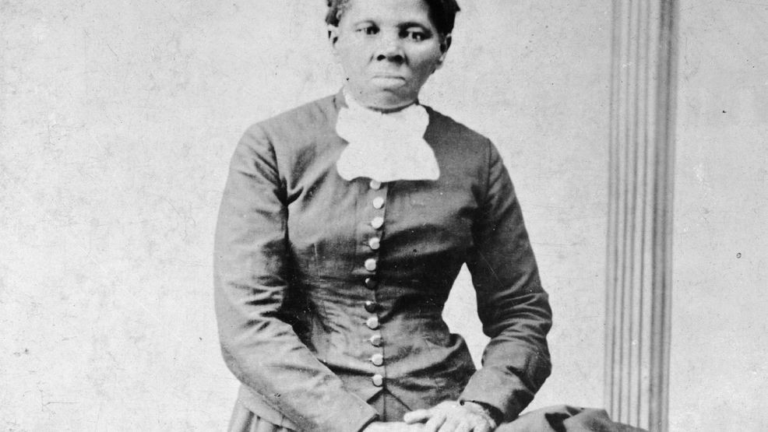
The Maryland Department of Transportation (MDOT) unveiled a new, updated roadside historical marker Wednesday in Cambridge, which honors the life and legacy of Maryland native Harriet Tubman.
The ceremony, held at the Harriet Tubman Freedom Center, brought together relatives of the abolitionist, state and local leaders as well as community members. The event took place during International Underground Railroad Month and on the date Tubman escaped slavery in 1849.
“We remember Harriet Tubman for her fearless and selfless service to others,” MDOT Assistant Secretary for Public Affairs and Strategy Jawauna Greene said via a press release.
The marker has updated language that Tubman’s relatives helped craft and corrects an inaccurate sign that was put in place in 1967 as part of the Civil War centennial. The former sign included false information about Tubman’s birthplace and the number of enslaved people she helped lead to freedom.
The new marker is sitting along Greenbrier Road in Bucktown in front of the former farm of Tubman’s enslaver Edward Brodess.
In addition, the roadside marker is part of a MDOT and Maryland Historical Trust initiative to review markers spotlighting Maryland’s untold stories and correct ones with inaccuracies.
The old marker will be donated to the Harriet Tubman Freedom Center and used as a teaching tool to demonstrate the importance of historical accuracy and how language around slavery is evolving, according to MDOT.
More information on the Maryland Roadside Historical Marker program can be found , and to find a historical marker near you, click .
No charges filed in deadly police pursuit crash in Baltimore from June, AG Brown announces

Maryland Attorney General Anthony Brown announced Wednesday that no charges will be filed against a Maryland Transportation Authority (MDTA) police officer involved in a high-speed pursuit that ended in a fatal crash earlier this summer.
The incident occurred in the early hours of Wednesday, June 4, 2025.
At approximately 2:18 a.m., an MDTA officer traveling northbound on I-95 observed a vehicle driving erratically near Exit 54.
According to the Attorney General’s Office, the driver — later identified as Gabriel Castillo — was intermittently speeding up and slowing down alongside the officer’s cruiser before abruptly merging into the officer’s lane without signaling and then accelerating away.
ALSO READ |
The officer followed the vehicle from a distance and observed it swerving within and between lanes before exiting the highway at Exit 55.
The officer then activated his lights and siren in an attempt to initiate a traffic stop. However, Castillo allegedly failed to stop and instead sped down E. McComas Street.
Moments later, Castillo reportedly lost control of the vehicle, which struck a guardrail and a curb, went airborne, and crashed into a support pillar beneath I-95.
Both Castillo and his passenger, identified as Ezequiel Eduardo Garcia-Chicas, were pronounced dead at the scene despite officers’ attempts to render aid.
The Attorney General’s Independent Investigations Division (IID) launched an investigation into the officer-involved fatal collision the same day.
After a three-month review, the division concluded on September 9 that the officer did not commit a crime under Maryland law.
After completing its investigation and evaluating all the available evidence, the Office of the Attorney General has determined that the subject officer did not commit a crime under Maryland law. Accordingly, the Attorney General has declined to prosecute the subject officer in this case.
NY to start over on project to change Kensington Expressway
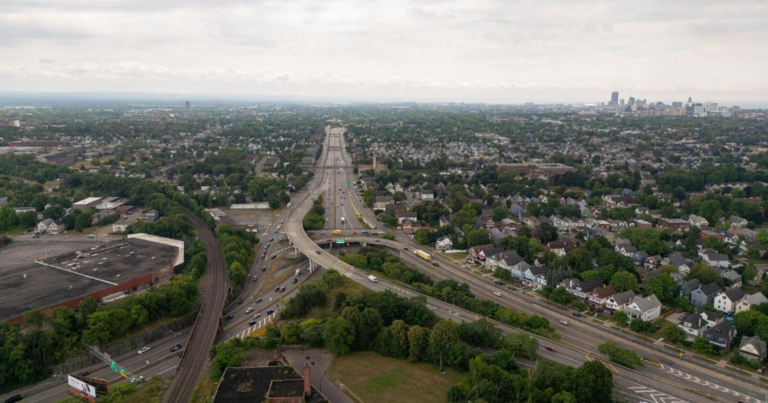
The New York State Department of Transportation is starting from the ground up on a project to possibly reconnect the part of Buffalo’s East Side currently divided by the Kensington Expressway.
In an announcement made Wednesday afternoon, Richard Fontana, special assistant at the state DOT, said the agency will conduct a full environmental impact statement on a project on Route 33.
That full EIS will involve several community meetings set to kick off in October, Fontana said during a press conference at the agency’s regional office in Buffalo.
The DOT will then take public input and
Broomfield-area 5K to support program for free plane transportation for medical care

Angel Flight West’s eighth annual 5K will help the organization continue its mission to break down the barrier of access to transportation for medical care, a push made possible by people like Colorado Springs-area pilot David Begin.
“Public benefit flying is a whole category — sometimes small aircrafts can get in and deliver goods after hurricanes, there’s dog rescue organizations that fly animals from one part of the country to the next, and Angel Flight West flies people that have medical needs to larger cities to get treatment or evaluation,” Begin said.
On Sept. 27, runners and supporters will gather at Rocky Mountain Metropolitan Airport in the Broomfield area to participate in the Run for the Angels 5K walk and run, an event raising funds for Angel Flight West.
Begin has been volunteering with Angel Flight West since selling his businesses a few years ago and finding time he wanted to donate to a good cause.
“We donate our time, our aircrafts, aviation fuel and whatever it takes to get that mission done,” he said. “It’s really gratifying for me to step in and help those people during a difficult time — to know that you’re volunteering all this to make their lives a little easier.”
Begin said he’s encountered passengers with many barriers to taking commercial flights, and Angel Flight West’s services include helping those who can’t afford the cost, who need special accommodations or are too severely immunocompromised to be in a small and crowded place.
For the patients who use Angel Flight West and their families, transportation to medical appointments can make a huge difference for their lives.
Linda Dunham said her husband Rick was diagnosed with a Stage 4 glioblastoma in 2014, a type of malignant brain tumor, she said. The couple was living in Oregon at the time but traveled frequently to the San Francisco area for his treatment.
“They originally gave him 14 months to live, and he survived three years,” Dunham said. “I really have to attribute that so much to Angel Flight, being able to get us to the appointments that he needed.”
Dunham said that transportation likely wouldn’t have been possible without Angel Flight West. In addition to being a 10-hour drive from their home, Rick’s condition could make travel by car dangerous.
“Rick would have seizures while I was driving, and most times he could tell when one was coming on, but I had to take action immediately, and that was impossible to do while driving,” she said. Flying with the organization proved easier and safer for them both, she said.
“All of the pilots and copilots were all so kind and patient even when sometimes Rick wasn’t as easy to get into the plane as you might hope,” Dunham said, adding that she still keeps in touch with some of the pilots who helped them.
Despite the difficulties of Rick’s diagnosis, Dunham said she loved caring for Rick and that she loved reading to him and being intentional with their time together.
“He was a peach, very easy to care for, and always a strong and gentle soul,” Dunham said. “He passed away in August of 2017 and he was singing Christmas carols the night before, trying to escape the hospital room and just being a joy to be around.”
With fundraisers like the Run for the Angels 5K, Angel Flight West is able to provide other patients with transportation, raising enough money to provide nearly 100 flights in recent years, according to a news release.
“The extra time we had together was everything — we were very present with each other, I feel like we fell in love with each other all over again” Dunham said. “It was so wonderful to have those years, and our kids and grandkids got to see him more and we all had a lot of time with him. It was absolutely a blessing.”
Massport to test ‘remote terminal’ in Framingham, allowing travelers to bypass security lines at Logan

For months, Massport chief executive Rich Davey has been talking up the potential for a “remote terminal” to allow travelers to bypass the security lines at Logan Airport.
Now, Davey is ready to talk about the details. He plans to tell the Massport board of directors on Thursday that he’s going to start testing a remote terminal option in Framingham next summer, at an overflow lot for Massport’s Logan Express bus service. If all goes well, Davey may end up expanding the service to other Logan Express lots, such as those in Braintree and Woburn, as well as the recently rechristened Menino Convention Center in the Seaport.
Massport plans to provide the service out of a temporary trailer in Framingham in June, July, and August of next year. Travelers would go through a Transportation Security Administration checkpoint at the Framingham location and check their bags there, before boarding a secure Logan Express bus. The bus would bring them to either Terminal A or Terminal C, behind security at Logan, on the side of the airport where the jets pull up, and where there are two existing airside bus locations (for passengers who deplane when a gate isn’t available).
Get Starting Point
A guide through the most important stories of the morning, delivered Monday through Friday.
Enter Email
One remote-terminal bus would leave every hour, for a four-to-five hour period each morning, Massport says. Tickets would have to be reserved in advance.
Advertisement
Massport’s hope is to encourage more flyers to use public transit, and also to give them a more enjoyable travel experience. Each bus would serve 30 to 35 travelers, meaning any line to board would be minimal in Framingham. Ideally, hundreds of travelers would choose this option each week, at least while the service is in its test phase.
Advertisement
“Part of the intent is to reduce people’s anxiety of getting to the airport,” Davey said in an interview in advance of the board meeting. “We’re going to start small to see if we can get folks excited about it.”
A Massport spokesperson said the authority plans to use existing Logan Express staff for the new service. The need for TSA staffing remains to be seen, and Davey said the proposal still needs TSA approval, something he expects to receive at some point in the next nine months.
Massport sent an envoy to Atlantic City, N.J., two weeks ago to check out a similar service there. That’s where American Airlines, working with motorcoach service Landline, offers check-ins for travelers heading to Philadelphia International Airport, allowing them to bypass security lines at the airport. American and Landline offer a similar service to Philadelphia from Allentown, Pa., and they will soon start something similar at Chicago O’Hare International Airport.
There are a few key differences, though, from what Davey is planning. Those bus trips are on a private shuttle, leave from secure airport areas, and serve passengers for a single airline.
Davey said he wasn’t sure how much extra the service would cost Massport, though he doesn’t intend to charge more during the test run than a typical Logan Express bus; one-way tickets for Logan Express buses from Framingham currently cost $9 when purchased online.
“I don’t want to charge more,” Davey said. “In the future, maybe we would. I just want to gather evidence about the efficiency of the service to see if this is even worth investing the dollars. … If my suspicion is correct, I think Massachusetts residents will embrace this.”
Advertisement
Jon Chesto can be reached at jon.chesto@globe.com. Follow him @jonchesto.
Longmont City Council continues 2026 budget discussion

Longmont’s Sandstone Ranch Community Park could receive a major expansion, with four new ball fields, restrooms, shelters and parking, all included in the city’s proposed 2026 budget.
Stephanie Cooper, Longmont’s manager of parks and trails development, told council members at Tuesday night’s study session that the project would complete the park’s original vision while meeting the growing demand for youth sports. “Sandstone Ranch is one of Longmont’s most iconic and heavily used community parks,” she said, adding that additional facilities will ease pressure on heavily used fields across the city.
The existing fourplex of ball fields at Sandstone Ranch was built nearly 20 years ago.
The project is slated to use a best-value design-build approach — selecting designs and builders based on quality, not lowest bid — to ensure efficiency and quality, according to Cooper’s presentation. She said the city has had success with that method on recent parks projects and expects the same at Sandstone Ranch. Construction would begin in 2026, with funding included in the $11 million budgeted for parks, recreation and open space projects next year.
City Manager Harold Dominguez emphasized that staff are focused on finishing projects already in motion before adding more and that limiting the number of major initiatives has improved delivery. “It was tough for us to finish anything (in 2025),” Dominguez said, explaining that staff are now tracking project capacity with new dashboards to avoid delays.
Budget Manager Sandra Sifuentes outlined the broader capital program, which totals $93.2 million in 2026 and $357.8 million over the next five years. Transportation projects make up the largest share at $38.4 million, followed by $16.5 million for water and $13.4 million for electric. Smaller allocations are set for drainage, sewer, broadband and downtown redevelopment.
Electric Utility Director Darrell Hahn described Longmont Power and Communications’ priorities, including new community solar installations, small-scale battery projects, and capacity upgrades to connect the city’s six substations. A new maintenance crew is also planned to reduce outages and address a backlog of system rehabilitation work.
“What you want to avoid is an overemphasis in one area,” Hahn said, describing the utility department’s approach as a three-legged stool balancing reliability, sustainability and affordability.
Hahn estimated that about 70% of the city’s electric lines are underground, with undergrounding (the process of relocating utility infrastructure such as power lines from overhead poles to buried cables) progress continuing as new development or infrastructure projects allow.
Beyond capital projects, the budget introduces a Technology Services Fund to consolidate software and IT costs across departments. The $2.2 million fund includes four term-limited positions and Salesforce licensing. Salesforce, according to its website, is a “customer relationship management technology.”
City staff said the change will give a clearer view of technology spending citywide.
The Sanitation Fund budget is set at $11.5 million, a 7.3% decrease from 2025, mainly due to the removal of one-time expenses. Updated revenues and expenses will be brought back early next year to align with sanitation rates approved by council.
During public comment, Longmont resident Scott Starr raised concerns about airport funding, arguing the Vance Brand Airport does not generate enough tax revenue to cover its costs. Airport funding will be discussed in more detail at next week’s session.
With Mayor Joan Peck absent, Mayor Pro Tem Susie Hidalgo-Fahring presided over Tuesday’s study session. The council will continue its budget discussions throughout September, with final adoption expected in October.
SCDOT almost at final design completion with Lowcountry Rapid Transit System
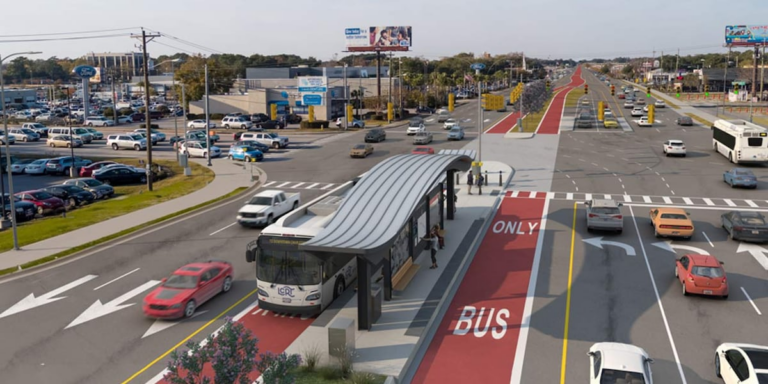
CHARLESTON, S.C. (WCSC) – The South Carolina Department of Transportation is moving along with the Lowcountry Rapid Transit System and gave an update on Wednesday that they are at 90% final design completion.
The 21.3-mile transit project is set to transform the Lowcountry by connecting the Fairgrounds in Ladson to North Charleston and downtown Charleston through mass transit. Officials at the meeting say there has been progress made on design components, including roadway and pavement designs, station and intersection layouts, construction limits and plans and landscaping details.
The main goal of the $650 million project is to address the area’s growing roadway congestion.
“I think it’s so much more than just a bus ride,” Jennifer Necker, SCDOT Deputy Secretary for Intermodal and Freight, says. “It allows you to get out of the traffic. The traffic down here we know is a challenge for people, so having that reliability on knowing that you can get from point A to point B in a set amount of time because of all those experiences with a bus rapid transit system is huge.”
The entire ride is estimated to be 70 minutes one-way from US-76 and Commerce Center in Ladson, all the way down to Line Street and Westedge Street in downtown Charleston.
“It allows people to do work on the bus,” Necker says. “It allows people to just relax on the bus. The things you can’t do in your car. It will allow them to be connected to communities.”
Officials highlighted how the route will also help residents connect to over 60 healthcare facilities, five colleges and universities and various shops and restaurants along the way.
“It’s pretty close to universally looked at as something that’s going to be positive for our region and is going to be transformative,” Mike Seekings, Charleston City Councilman and Charleston Area Regional Transportation Authority Board Chairman, says. “It’s really going to change the face of this region for the better.”
Throughout the system, there will be 60 dedicated buses, 20 stations and 21 hours of service on weekdays. Although SCDOT is working with CARTA, they say the buses and stations will look different from CARTA’s, with unique architecture and branding.
The Berkeley-Charleston-Dorchester Council of Governments is a project sponsor and focuses on the grants needed for the project, public engagement and quality and program management. SCDOT officials say collaboration is key to ensure they meet all of their deadlines.
“Everyone has been willing to think outside the box,” Necker says. “Everyone has seen the vision and bought into it so that we can move this project forward.”
Officials say this specific project is also just the beginning of transforming the future of transportation throughout the Lowcountry and they are already looking into other ways to connect communities like Moncks Corner and West Ashley to the greater Charleston area.
“This is by no means the end,” Seekings says. “This is really the beginning of building out a regional transportation corridor and system that can stand for the test of time as we grow as a community.”
The project has been in the works since 2016, and officials say the final design will be complete next year, with construction planned to begin in 2027. The transit system is projected to open in 2029.
Amazon to invest over $1 billion in fulfillment and transportation workers to boost pay, cut health care costs

The Seattle-based company said Wednesday the average pay is increasing to more than $23 per hour. Some of its most tenured employees will see an increase between $1.10 and $1.90 per hour. Full-time employees, on average, will see their pay increase by $1,600 per year.
Amazon also said it will lower the cost of its entry health care plan to $5 per week and $5 for co-pays, starting next year. Amazon said that will reduce weekly contributions by 34% and co-pays by 87% for primary care, mental health and most non-specialist visits for employees using the basic plan.
Amazon has a global workforce of 1.5 million workers.
Last December, seven Amazon facilities went on strike, an effort by the Teamsters union to pressure the e-commerce company for a labor agreement during a key shopping period.
That same month, Amazon reached a settlement with the Occupational Safety and Health Administration that requires the online behemoth to adopt corporatewide ergonomic measures at facilities across the country. The agency claimed hazardous working conditions led to serious lower back and other musculoskeletal disorders at Amazon facilities.
In January 2024, Walmart, the nation’s largest private employer, said that average wages for hourly workers would exceed $18, up from $17.50. The increase was due to Walmart introducing some higher-paying hourly roles in its Auto Care Centers last year, among other changes, the company said.
Walmart, based in Bentonville, Arkansas, had announced in January 2023 that U.S. workers would get pay raises the following month, increasing starting wages to between $14 and $19 an hour. Starting wages had previously ranged between $12 and $18 an hour, depending on location.
At Minneapolis-based Target, the starting hourly wage ranges from $15 to $24 for workers employed at stores and distribution centers, depending on the location, company spokesman Brian Harper-Tibaldo said.
The average hourly wage for a Target store worker is more than $18, he said.
Harris says Buttigieg was her ‘first choice’ for 2024 running mate but the pairing was too risky
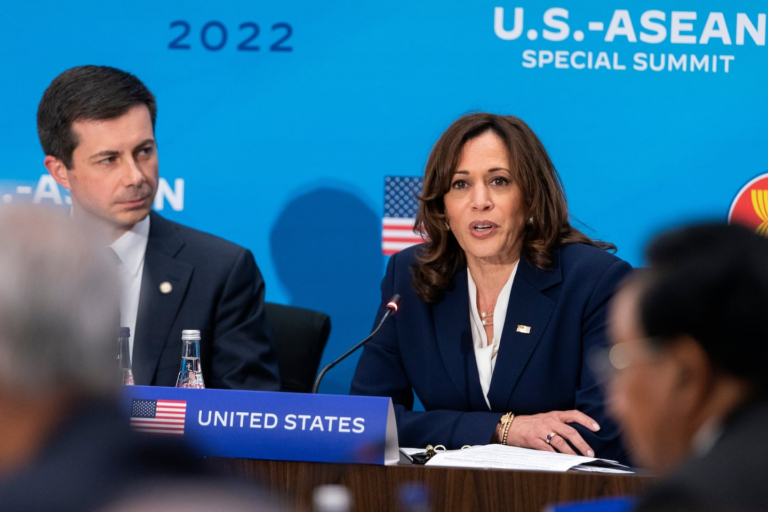
WASHINGTON (AP) — Former Vice President Kamala Harris says she would have picked Pete Buttigieg as her running mate last year but America wasn’t ready for the pairing, according to an excerpt of her new book.
Harris writes in an excerpt of “107 Days” published Wednesday in The Atlantic that former President Joe Biden’s transportation secretary was her “first choice,” adding that he “would have been an ideal partner — if I were a straight white man.”
“But we were already asking a lot of America: to accept a woman, a Black woman, a Black woman married to a Jewish man. Part of me wanted to say, Screw it, let’s just do it. But knowing what was at stake, it was too big of a risk,” she writes.
Her thoughts on selecting a running mate come as potential 2028 contenders begin traveling the U.S. in the early days of the second Trump administration.
Get Today in Politics
A digest of the top political stories from the Globe, sent to your inbox Monday-Friday.
Enter Email
In the book excerpt, she writes about her love of working with Buttigieg and her friendship with him and his husband, but that the two of them on the Democratic ticket would have been too risky.
Advertisement
“And I think Pete also knew that — to our mutual sadness,
James Lamb to Newsmax: States Must Answer for Non-English Speaking Truck Drivers
A trucking industry advocate warned on Newsmax on Saturday that U.S. states should be held accountable for granting commercial drivers licenses (CDL) to applicants who cannot read or speak English, saying the practice has contributed to rising fatalities on America’s highways.
James Lamb, executive director of the Small Business in Transportation Coalition (SBTC), appeared on
White Paper: State of the Industry – September 2025

The September 2025 “State of the Industry Report” — presented in affiliation with Ryder — shares an in-depth overview across the trucking, maritime and intermodal markets, as well as what to expect in the coming weeks. The data contained within the report provides breakdowns of capacity, volumes and rates.
In this report, you will find:
Despite U.S. ports posting record volumes in July, nothing appears to be capable of arresting container rates’ downward spiral.
Truckload demand is on an unseasonal decline, yet tender rejections and carrier rates suggest a nationwide tightening of capacity — albeit a slow one.
Rail shippers are skeptical about benefits arising from a potential merger between Norfolk Southern and Union Pacific, though many intermodal providers welcomed the news.
Sentiment among manufacturers is growing darker, but consumer spending has been surprisingly robust throughout the summer so far.
July’s abysmal print on the U.S. labor market convinced traders that the Federal Reserve will cut rates at its September meeting, with a majority further believing that the Fed will cut rates at all three of its remaining meetings in 2025.
Download the complimentary report today to access the full insights.
The Truth About the Truck Driver “Shortage” and the Fraud It Enables

So why does the narrative persist? The answer is leverage. The shortage narrative gives national trade associations and their lobbyists cover to push shortcuts that do not address retention. The most visible shortcut in Washington is immigration. For decades the American Trucking Associations has used shortage claims to argue that expanding visa programs is a solution to supposed labor gaps (PrePass Alliance). That messaging comes from national organizations and their advocates in the capital, not from small or mid sized fleets that are busy surviving volatile market cycles.
The Immigration Shortcut
Visa programs exist to fill real labor gaps. H-2B, E-2, and EB-3 visas make sense in industries where domestic workers are not available, such as seasonal agriculture or specific hospitality roles. In trucking the call for visas is rarely about a genuine shortage. It is often about avoiding reform of the job itself.
Instead of paying drivers for all of their time, fixing unpaid detention, unpredictable miles, or harsh long haul schedules, they point to Washington and say the answer is more visas. In reality, the numbers are small. In 2025, when Marco Rubio announced a pause on visas for commercial drivers, the pool involved was just under 1,500 annually out of a workforce of about 3.5 million drivers (Axios, 2025). That is a rounding error. Yet the rhetoric around visas is presented like an existential fix.
The visa pause did not shut down a critical pipeline. It revealed how out of step the shortage talk is with market reality. The United States does not need more drivers. It needs better jobs and better training.
Why the Job Pushes People Out
The industry does not struggle because of a shortage of people; it struggles because the job itself drives people away. Unpaid time at docks eats hours without compensation. Miles-based pay makes half a driver’s day invisible on a paycheck. Long haul schedules erode family life, disrupt sleep cycles, and degrade health. Benefits are thin at many fleets, and respect from management is often thinner than the margins.
The Bureau of Labor Statistics wrote in 2019 that the truck driver labor market functions like any other competitive market. Pay and conditions explain why people leave. There is no evidence of a mysterious missing pool of workers who cannot be found at any price (BLS, 2019). Retention is the problem: drivers come in, get licensed, and leave when promises do not match reality. Fleets replace them again and again. Lobbyists call this shortage; anyone looking honestly calls it churn.
Examples are everywhere. A new driver might spend three unpaid hours waiting at a shipper, then sit for another hour at a receiver, then discover that the layover does not qualify for detention pay under the carrier’s policy. The day looks full on a logbook, but empty on a paycheck. Another driver may chase promised miles, only to find that seasonal volume swings wipe out earnings for weeks. After a few months of that reality, people choose local work, switch industries, or exit transportation altogether. The result is not a shortage. It is the natural response to a compensation model that does not value time.
Retention improves when the job is designed to respect time. Paid detention turns waiting into earnings rather than loss. Guaranteed weekly minimums smooth out volatility in miles. Predictable home time reduces burnout. Clear, enforced safety policies reduce pressure to run illegal or skip rest. Transparent pay plans that compensate for non driving tasks align incentives with safety and service. None of these changes are mysterious. They are straightforward management choices that treat the driver’s time as the core product the industry sells.
How Fraud Thrives in the Myth
Instability is where fraud thrives. Fraudsters love a marketplace in turmoil and a workforce too destabilized to push back; they need companies that are too busy filling seats to ask hard questions. The shortage narrative helps create that desperation: if carriers think they cannot survive without new drivers, standards drop. Fake carriers slip in with false registrations and mailbox offices. Brokers skip vetting and release freight to unknown entities. Drivers with forged CDLs or stolen identities get behind the wheel. Fraud multiplies when survival is framed as a numbers game.
Fraud also evolves with opportunity. Double brokering schemes steal identities, steal rate confirmations, and re-assign loads through layers of shell entities, until the freight disappears or the liability is untraceable. Identity theft targets both carriers and drivers, exploiting gaps in verification on load boards and in back-office processes. When the market is told to prioritize speed over scrutiny because of a supposed shortage, bad actors flourish. The damage shows up as unpaid claims, cargo theft, missed appointments, and reputational harm for everyone who touched the load.
The response begins with insisting on identity that can be verified. That means carrier vetting tied to real people, verifiable tax records, and traceable physical operations. It means refusing to move freight with anyone whose story changes under basic due diligence. It means shrinking the window between onboarding and oversight so ghost companies cannot harvest freight and vanish. It also means pushing technology providers to make authentication, document validation, and event traceability default features, rather than optional add-ons.
Training: The Missing Foundation
One of the least discussed reasons the shortage myth survives is weak training. The United States does not lack people earning CDLs. It lacks preparation.
Entry Level Driver Training rules were meant to standardize a baseline. In practice, quality is uneven. Some schools teach professionalism, critical thinking in traffic, and real-world trip planning. Others operate as CDL mills that focus on passing the test rather than mastering the craft. The difference shows up immediately on the road. Undertrained drivers struggle with hours of service management, backing in tight urban docks, winter driving, trip time estimation, map reading, and defensive driving in mixed traffic. When drivers are thrown into those realities without a solid foundation, they burn out faster, make more mistakes, and leave earlier. That is not a shortage. That is a predictable fallout from poor preparation.
Groups like The Coalition for CDL Training, led by John Larrauri, are pressing for reform. Larrauri argues the issue is not quantity but raising the floor for skill. Strong training emphasizes time management, thorough pre-trip and post trip inspections, situational awareness in city and mountain corridors, and honest expectations about life on the road. That approach improves safety, cuts turnover, and reduces opportunities for exploitation. A trained driver is harder to manipulate, more confident in refusing unsafe runs, and more likely to remain in the industry for the long term.
Industry veteran John Carpenter has delivered the same warning in talks and public commentary. Treating CDL issuance as a numbers game without quality behind it does more harm than good. Each time a poorly prepared driver leaves in frustration or contributes to an avoidable incident, churn increases, insurance costs rise, and the shortage narrative gets recycled to excuse predictable attrition. Carpenter’s point is blunt, but accurate: the real shortage is in credible training, not in people.
Better training also blocks fraud. Weak standards allow paper drivers to emerge from fraudulent schools with documentation that looks legitimate but is not backed by competence. Strong standards expose those scams quickly because candidates cannot progress without demonstrating real skill. Training is not just a workforce issue. It is a fraud prevention issue because competence is the hardest thing to fake.
And this ties directly back to visas. When trade groups label every problem “shortage,” visas become the shortcut. Instead of fixing training pipelines, they look abroad. The visa pause sent a clear message. Until the industry proves it can train and retain the drivers it already has, importing more does nothing but extend churn.
Building Stability: Health and Identity in Trucking
Project 61 highlights a brutal fact: the average life expectancy of a U.S. truck driver is about 61 years (The Trucker). That number reflects grueling schedules, poor health support, poor sleep hygiene, and a job design that shortens lives. When drivers leave the industry early or never recover from chronic conditions, turnover and instability accelerate. Project 61 is about health, dignity, and longevity. The connection to fraud is indirect but real. Healthier drivers who stay longer create stability. Stability deprives opportunists of the chaos they exploit.
Project 61 also reframes accountability. Health outcomes are not personal failures; they are system outputs. If the system produces short careers and broken bodies, the system needs redesign. Nutrition access at truck stops, flexible parking, safe rest areas, paid waiting time that allows proper breaks, and support for preventive care are not fringe benefits. They are pillars of a workforce strategy that treats drivers as human beings rather than interchangeable parts.
What Comes Next
Stop recycling myths about shortages and call the problem what it is. Retention. Stop framing visas as the answer to an oversupplied market and address training and job design. Unpaid detention, miles only pay, and schedules that break people down have to change if trucking wants stability. Project 61 shows that driver health and longevity are not optional, and Dog Tags to DOT Numbers proves that accountability starts with identity.
There is no 80,000 driver shortage. What exists is a shortage of desirable jobs, consistent training, safety, and accountability. Fraud grows in those gaps. The longer the industry hides behind the shortage story, the deeper those gaps become.
This is not politics. This is accuracy. Drivers deserve jobs that pay and protect them. Shippers deserve a system that fraud cannot manipulate. The public deserves safe roads where every DOT number connects to a verified person.
The shortage narrative has been repeated for decades, but the facts have not changed. The United States produces more than enough drivers. The market is saturated. Wages and conditions, not headcount, explain why people leave. Fraud prevention and job reform, not visas and propaganda, are what will stabilize trucking.
The industry can either keep chasing ghosts or start building real trust again.
Texas cracks down on truckers who can’t speak English
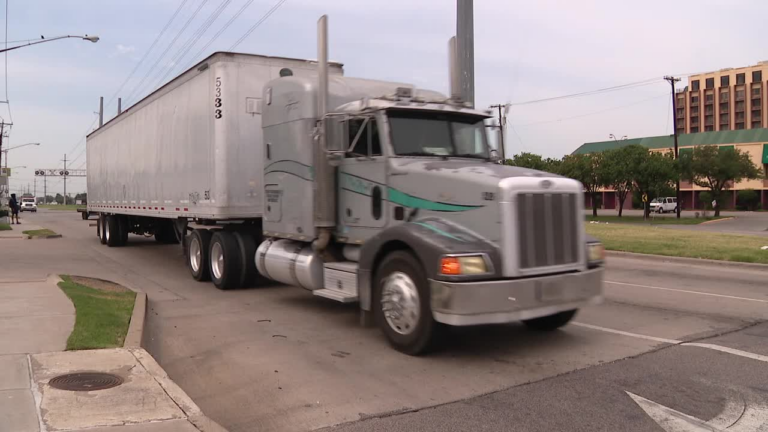
Texas is cracking down on truck drivers who can’t speak English. Gov. Greg Abbott said it’s about safety, but critics worry it could hurt the trucking industry.
Texas Trucking Language Policy
What we know:
Abbott is making it clear that if you are a truck driver, you must be able to speak English to drive on Texas roads. No exceptions.
The governor has directed the Texas Department of Public Safety to run zero-tolerance language checks on all commercial drivers in the state.
What they’re saying:
The Texas Trucking Association is backing the move, saying English proficiency is essential for safety.
How autonomous trucking will transform the American freight industry

NEWYou can now listen to Fox News articles!
When you sit down for dinner tonight, look at what’s on your table. Every ingredient was delivered by a truck. In fact, almost everything we touch – our clothes, our furniture, the groceries in our fridge – hitches a ride on 18 wheels before it reaches us.
Trucking, like many foundational sectors, is undergoing significant transformation. Artificial intelligence is already enhancing efficiency and productivity across various industries, and it is now making its way into logistics.
Self-driving trucks, which were once just a distant concept, have now become a reality and are set to reshape logistics in the coming decade. While some individuals may feel anxious at the thought of
Feds end longtime relationship between two popular airlines

The U.S. Department of Transportation announced Tuesday that it will terminate the approval of a joint collaboration between Delta Air Lines and Aeromexico, effective Jan. 1, 2026, according to a press release from the DOT.
The collaboration allowed for Delta Air Lines and Aeromexico to align their schedules, share revenues and jointly oversee routes between the US and Mexico since its establishment in 2017, according to Aerotime.
The DOT said Mexico has not been in compliance with the 2015 U.S.-Mexico Air Transport Agreement since 2022, which sought to promote and facilitate air travel between the countries while maintaining a competitive market.
“Empty promises mean nothing. After years of taking advantage of the U.S. and our carriers, we need to see definitive action by Mexico that levels the playing field and restores fairness,” said U.S. Transportation Secretary Sean P. Duffy in the release.
The DOT stated that “Mexico’s non-compliance intervenes in the market to provide an unfair advantage to Delta and Aeromexico, who operated a price and capacity-setting joint venture with conditional approval by USDOT.”
Delta and Aeromexico will be required to discontinue shared activities such as common pricing, capacity management and revenue sharing by next year, according to the release.
“We are disappointed that the Department of Transportation has chosen to terminate its approval of the strategic and pro-competitive partnership between Delta and Aeromexico, a decision that will cause significant harm to U.S. jobs, communities and consumers traveling between the U.S. and Mexico,” Delta Air Lines wrote in a statement on its website.
All Delta flights will continue to operate as normal unless stated otherwise, according to the statement.
US orders Delta and Aeromexico to dissolve their revenue-sharing partnership
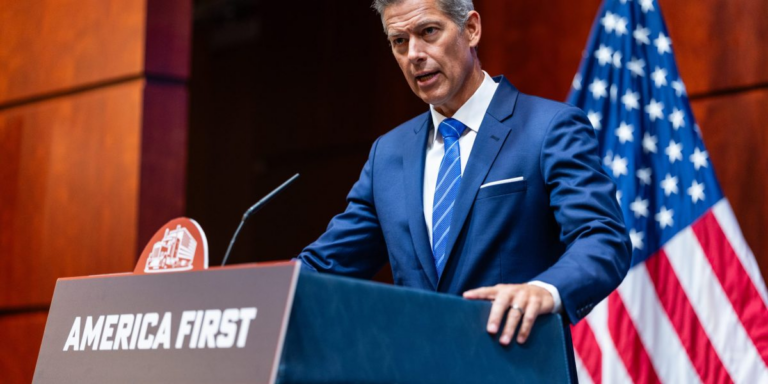
Duffy announced Tuesday that the Transportation Department is revoking the antitrust immunity the airlines have had since 2016 that allowed them to price and schedule their flights jointly and share revenue. He said it doesn’t make sense to maintain that arrangement as long as Mexico is giving its domestic airlines an unfair advantage through limits it placed on passenger and cargo flights into Mexico City several years ago.
This airline dispute is another front in the broader trade dispute that has the two countries at odds over President Donald Trump’s tariffs and his concerns about border security. Duffy is focused on whether Mexico’s actions to force airlines to move out of the main Benito Juarez International Airport to the newer Felipe Angeles International Airport more than 30 miles (48.28 kilometers) away violated a trade agreement between the two countries and gave domestic airlines the advantage.
Before Mexico forced cargo airlines to start using Felipe Angeles in 2022, all the major international airlines had shunned the airport that is so far from the center of Mexico City that is can take 2 1/2 hours to drive to the terminal. At the same time, Mexico also cut some of the slots available at Benito Juarez to allow for construction at the airport that Duffy says still hasn’t happened.
“Empty promises mean nothing. After years of taking advantage of the U.S. and our carriers, we need to see definitive action by Mexico that levels the playing field and restores fairness,” Duffy said.
Back when Duffy announced this threat in July, Mexican President Claudia Sheinbaum said that the transfer of cargo operations from Mexico City’s main airport to the new one was a technical decision and that any new change should be based on technical criteria and prioritizing safety.
“There is no reason to impose any sanctions related to this matter,” she said. According to her, Mexico’s decision was not a decision against any U.S. airlines, but due to the need to relieve congestion at the capital’s old airport, Benito Juárez.
She acknowledged that some U.S. companies complained when the change happened, but she said that they adapted to the new situation.
The two airlines said they are disappointed in Duffy’s decision, but they haven’t yet decided whether to challenge it. Delta and Aeromexico have argued in regulatory filings that they shouldn’t be punished for the actions of the Mexican government and consumers and the economies of both countries will be hurt by this.
Airlines react
Mexico is the top foreign destination for Americans with more than 40 million passengers flying there last year. Delta and Aeromexico operated more than 30,000 flights between the United States and Mexico last year, according to the aviation analytics firm Cirium.
Delta said this decision “will cause significant harm to U.S. jobs, communities and consumers traveling between the U.S. and Mexico.” Aeromexico said this “overlooks the benefits that the alliance has brought to connectivity, tourism, and consumers in Mexico.”
The two airlines will continue to cooperate but won’t be able to work together as closely. They said in regulatory filings that they believe the loss of direct flights would prompt over 140,000 American tourists and nearly 90,000 Mexican tourists not to visit the other country and hurt the economies of both countries with the loss of their spending.
Delta and Aeromexico said their alliance hasn’t kept other airlines from competing even as they grew their business. Competing airlines Viva and Volaris both expanded their operations at Benito Juarez airport after Interjet went out of business during the pandemic, although Aeromexico also grabbed half that airline’s slots and expanded in Mexico City.
Duffy’s order would take effect in January. Until then, there won’t be any changes to flights or loyalty programs at the airlines.
Swaths of public carrier data is no longer accessible on FMCSA website

Several types of publicly available data recorded by the Federal Motor Carrier Safety Administration (FMCSA) have seemingly vanished from the Department of Transportation’s website.
The data affected includes company census files, crash files, inspections per unit, citations and more. Most links to these records – updated daily on the FMCSA website – are no longer working.
Users took to social media on Tuesday drawing attention to the removal of these documents. Garret Allen posted on X that while monthly snapshots for this data are still available, it’s not as helpful as the daily updated datasets.
The DOT and FMCSA have not made statements as to why the information is no longer accessible. FreightWaves has reached out for comment.
Senate schedules oversight hearing on MassDOT service plaza contract
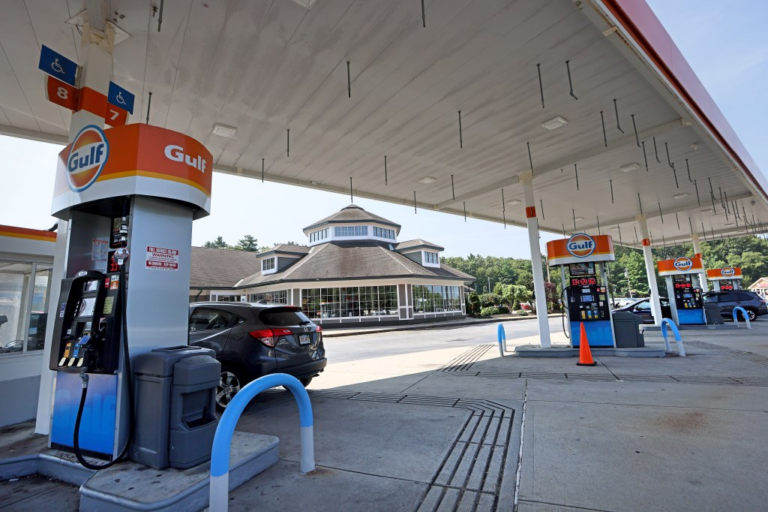
A dispute over whether the state’s Department of Transportation followed its own bidding rules in awarding a 35-year lease to operate the state’s service plazas will now be the subject of a state Senate oversight hearing.
According to the chair of the upper chamber’s Post Audit and Oversight Committee, state Sen. Mark Montigny, MassDOT’s decision to accept a bid offered by a foreign company over another offered by a Bay State-based firm requires “full transparency,” considering the “long-term nature of this agreement, the significant public resources involved, and very legitimate concerns raised.”
“All too often complaints regarding opaque procurement practices and behind-the-scenes relationships are swept aside and buried underneath the plethora of government bureaucracy. The committee will pursue all available means to ensure that the department’s process adheres to the highest levels of transparency and accountability,” the Democratic state senator said in a statement.
The committee will hear “invited” testimony from the parties involved in the June decision to award the 35-year service plaza revitalization and operation lease to Dublin-based Applegreen over Waltham-based Global Partners on September 24 at 1:30 p.m.
In the meantime, Montigny said that it would be best if MassDOT holds off on finalizing the contract with Applegreen and “should immediately cease contracting activities as requested by the committee.”
Global Partners Chief Operating Officer Mark Romaine told the Herald that his company is glad to see the Senate step in and demand transparency.
“For months, Global, community partners, and lawmakers have raised serious concerns about conflicts of interest, ethics violations, and a troubling lack of transparency in this process. This hearing marks an important step toward accountability. Nearly $1 billion in guaranteed taxpayer revenue was cast aside in favor of a risky, private-equity proposal riddled with red flags. Massachusetts deserves to know why,” he said in a statement.
The contract dispute erupted after MassDOT’s Board of Directors, at their June regular meeting, accepted the recommendation of Applegreen by their bid selection committee and over the objections of dozens of Global employees and supporters, many of whom expressed concern that the bid process was mired in conflicts of interest.
Last week, MassDOT released communications between selection committee chair Scott Bosworth and several people involved in Applegreen’s bid to Global Partners following a records request. According to Global, the text exchanges demonstrate that Bosworth had too close a relationship with the winning bidder, its construction partner, and its lobbyist.
Global sent a letter to MassDOT late last week urging them to hold off on finalizing the contract over what was apparently shown in the texts. The companies named by Global — Applegreen, Blackstone Partners, and Suffolk constructions — all pushed back on their interpretation of the text exchanges, noting that none of the released materials contained any discussion of the Request for Proposal process that led to Applegreen’s selection.
After the release of the texts, MassDOT told the Herald that even if Bosworth’s bidding scores were not included in the bid selection process, Applegreen’s bid would still have won the contract over Global Partners.
Applegreen and MassDOT did not immediately return requests for comment over the upcoming hearing.
Medpace Stock, Willdan, AppLovin Among 9 New Stocks On IBD Hot Lists

Information in Investor’s Business Daily is for informational and educational purposes only and should not be construed as an offer, recommendation, solicitation, or rating to buy or sell securities. The information has been obtained from sources we believe to be reliable, but we make no guarantee as to its accuracy, timeliness, or suitability, including with respect to information that appears in closed captioning. Historical investment performances are no indication or guarantee of future success or performance. Authors/presenters may own the stocks they discuss. We make no representations or warranties regarding the advisability of investing in any particular securities or utilizing any specific investment strategies. Information is subject to change without notice. For information on use of our services, please see our Terms of Use.
*Real-time prices by Nasdaq Last Sale. Real-time quote and/or trade prices are not sourced from all markets. Ownership data provided by LSEG and Estimate data provided by FactSet.
IBD, IBD Digital, IBD Live, IBD Weekly, Investor’s Business Daily, Leaderboard, MarketDiem, MarketSurge and other marks are trademarks owned by Investor’s Business Daily, LLC.
©2025 Investor’s Business Daily, LLC. All Rights Reserved.
Bureau Of Transportation Statistics Prints $4B Airline Net Gain In Q2

According to a statistical release from the Bureau of Transportation Statistics (BTS), U.S. airlines posted a $4.0 billion after-tax profit in the second quarter of 2025, an increase over the $3.8 billion that was recorded in the second quarter of the previous year. Overall revenue generation was around $66 billion, and expenses were around $61 billion, leading to pre-tax profits of around $5.0 billion. Net margins rose to around 6.1% while operating margins eased to 7.6%.
Domestic airline results weakened, with net margins sitting at just 4.6%, while international markets saw stronger performance, with net margins exceeding 10%. Fares comprised around 75% of overall revenue. The total expense share of fuel fell in relation to 2024, while labor, as a component of overall expenses, actually rose. The Bureau of Transportation Statistics notes that these figures may be revised, and if they are, new data will be published alongside third-quarter postings on December 17, 2025.
A Look At Recent Airline Performance
A look at recent trends in airline profitability demonstrates the seasonality of industry profits. Net income peaked last year in the second quarter and fell sharply during the shoulder seasons of Q1 and Q3. The fourth quarter saw holiday-boosted traffic lead to stronger performance, and the first quarter was a surprising trough, during which airlines actually recorded a marginal net loss. This reflected weak post-holiday demand, continued weather disruptions, and lingering cost pressures.
The second quarter of this year, despite issues and economic uncertainty related to tariffs and geopolitical tension, demonstrated outsized profits. This indicated a strong shift in demand and pricing recovery, as well as improved operational execution going into the summer months. With high-margin international travel picking up this summer, investors can have some confidence in airlines’ prospects.
What Is Driving The Industry’s Impressive Performance In 2Q25?
Despite macroeconomic headwinds, there were a few factors that drove airline industry outperformance in the second quarter of 2025. For starters, international travel was the industry’s principal profit engine, with the highest margins and the best performance in premium cabins. Input costs also declined notably, with fuel’s share of overall expenses falling quite significantly amid global declines in fuel prices. This was able to effectively offset higher labor figures.
The scale of revenue generation was also quite impressive, with fares accounting for roughly 75% of overall sales, demonstrating an increase in ancillary spending. Passengers are now, more than ever, expected to pay for unique upgrades and to gain access to the lounge, all things that will be sure to improve the nature of their in-flight experiences. Strong performance in premium cabins has helped sustain this premium revenue mix.
Operational reliability and capacity discipline also play a key role in this discussion. The gap between operating margins and net margins widened in airlines’ favor. Our bottom-line view is that stronger international demand, combined with cheaper jet fuel prices, served as the principal catalysts for strong airline industry financial performance earlier this year.
What Is The Bottom Line?
Airlines are incredibly cyclical businesses. The ebb and flow of the business cycle and macroeconomic headwinds tend to have a strong impact on airline performance. Costs for airlines are mostly fixed in the short run, as they fix capacity, labor, and other expenses in advance. Fuel prices are also typically locked in months in advance, as airlines will purchase futures or options contracts in order to hedge against exposure to higher fuel prices.
However, there are some situations where airlines will benefit despite macroeconomic uncertainty. Premium travelers this year kept flying throughout the early summer, despite troubling economic signals. This demonstrates continued resilience in these markets, which could bode better for airlines in the long run.
Furthermore, legacy carriers like United Airlines and Delta Air Lines continue to see more of their revenue mix come from non-seasonal sources. Namely, loyalty programs have become cash-generating assets for airlines.
US orders Delta and Aeromexico to dissolve their partnership over fairness concerns in Mexico

U.S. Transportation Secretary Sean Duffy is following through on his threat to force Delta and Aeromexico to dissolve their longtime partnership because of his concerns that Mexico isn’t being fair to U.S. airlines.
Duffy announced Tuesday that the Transportation Department is revoking the antitrust immunity the airlines have had since 2016 that allowed them to price and schedule their flights jointly and share revenue. He said it doesn’t make sense to maintain that arrangement as long as Mexico is giving its domestic airlines an unfair advantage through limits it placed on passenger and cargo flights into Mexico City several years ago.
This airline dispute is another front in the broader trade dispute that has the two countries at odds over President Donald Trump’s tariffs and his concerns about border security. Duffy is focused on whether Mexico’s actions to force airlines to move out of the main Benito Juarez International Airport to the newer Felipe Angeles International Airport more than 30 miles (48.28 kilometers) away violated a trade agreement between the two countries and gave domestic airlines the advantage.
Final vote on Oregon transportation tax hike delayed again
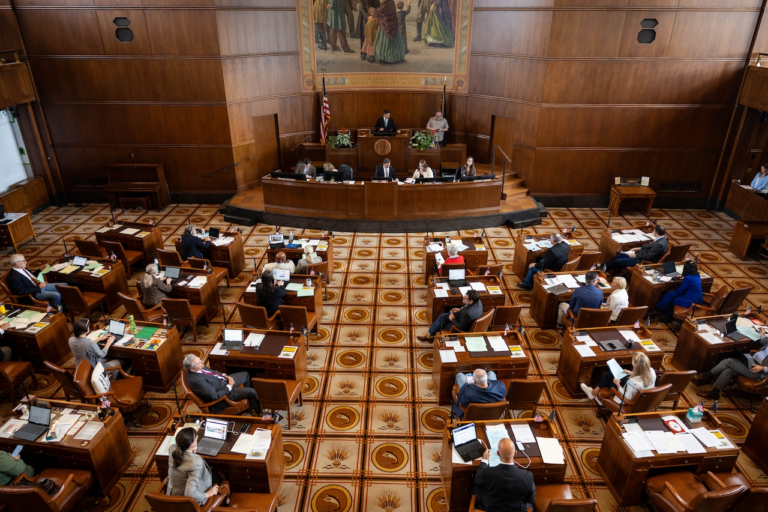
The Oregon Senate has once again delayed its final vote on a proposal to raise transportation taxes and fees that had been expected to take place Wednesday.
The package, crafted chiefly by Gov. Tina Kotek, is tailored to prevent widespread breakdowns across Oregon’s state and local road networks and avert severe cuts to public transit services.
Senate Democrats said they now plan to hold a vote on the package at the earliest on Sept. 29, giving Sen. Chris Gorsek, D-Gresham, more time to recover from back surgery. It takes 18 votes in each chamber to pass a tax hike, so Senate Democrats need all 18 of their members to show up to pass the bill.
Gorsek’s medical team told Senate President Rob Wagner, a Lake Oswego Democrat, that it would be “medically unsafe” for him to leave the hospital in time for Wednesday’s vote.
“The stop-gap transportation bill before the Senate is important for all Oregonians who rely on our roads and the maintenance workers whose jobs are at risk,” Wagner said in a news release. “At the same time we are not going to do anything that would put the health of our colleague at risk.”
The delay means the package won’t be up for a vote until a full month after Democrats hoped to usher it through the Legislature in a special session Kotek called into action on Aug. 29.
“We just pray that the Senator gets better and can join us,” Senate Minority Leader Bruce Starr, a Dundee Republican, said Tuesday night.
The House passed the transportation package on Labor Day, after some procedural glitches. But a Senate vote expected shortly afterward was postponed until Sept. 17 because Gorsek’s health complications rendered him unable to attend.
On Tuesday night, Senate leaders announced they were delaying the proceedings again, for the same reason.
Hundreds of workers face potential layoffs if the transportation package doesn’t get through. After the first Senate delay, Gov. Tina Kotek directed the Oregon Department of Transportation to postpone its worker layoffs, originally slated for Sept. 15, to Oct. 15 to give the Senate time to vote on the funding stream.
Lawmakers are expected back in Salem at the end of September for Legislative Days, an interim gathering to discuss policy ideas and formulate plans for the upcoming session. The vote will happen during that three day gathering.
Though Oregon’s lawmakers are on a break from their work, they keep drawing per-diem payments theoretically designed to cover housing, meals and travel while they need to be in Salem. Had the special session ended on Sept. 17, the likely cost of per-diem for the full 20-day special session would have been about $180,000, most of which lawmakers would have received during the days they were not in the Capitol.
Oregon special session on transportation funding delayed again

The Oregon special session to fund transportation has been delayed again until lawmakers convene for legislative days Sept. 29 to Oct. 1 because Sen. Chris Gorsek, D-Gresham, is still unable to return to the Capitol due to health complications.
The delay was announced the night before lawmakers were scheduled to meet on Sept. 17 for what was expected to be the last day of the special session. The session has been delayed since Sept. 3.
The funding bill would increase the gas tax and other fees in addition to phasing in a road usage charge for electric vehicles and other changes. It would also help fund the Oregon Department of Transportation and stop the layoff of 483 ODOT workers.
What happened to Dallas’ public transit network of the 1930s? Curious Texas investigates

At around 7 a.m. on a recent morning, the Green Dragon emerged from McKinney Avenue Transit Authority’s trolley barn in Uptown.
Throughout the day, the vintage trolley will travel on the same tracks that were once part of Dallas’ vast streetcar network. The car will ferry locals and visitors alike between landmarks like West Village, the Dallas Museum of Art and the Winspear Opera House.
Today, Dallas’ public transit system looks very different from a century ago. MATA offers a nostalgic glimpse into that past, but it also underscores how much of the city’s streetcar network has vanished — and how far the modern network is from it.
The state of the city and the region’s public transit system prompted Courtney Hunter to ask Curious Texas: What happened to our extensive public transportation system of the early 1900s? And why is it so difficult to restore what we once had?
Look backward
Railroad tracks — whether those connecting Dallas with other cities or among its neighborhoods — have been an integral part of the city almost since its beginning.
“Dallas really is the metropolis that it is today because of the intersection of two major rail lines,” said Bob LaPrelle, president of the Museum of the American Railroad in Frisco.
The meeting of the Houston and Texas Central Railway and Texas and Pacific Railway in Dallas in 1873 transformed the city into a major rail hub and brought to it unprecedented economic growth, LaPrelle said.
And like many cities in the 1900s, Dallas boasted an extensive public transit system based on rail.
Streetcars, which first appeared in the city in 1871 in the humble form of two mule-drawn trolleys, expanded to over 20 lines and 300 cars that connected every part of the city at the network’s peak in the 1930s.
From the Interurban Terminal Building in downtown, riders could also catch electric trains going to the city’s suburban sprawl and beyond — north to McKinney and Denison, south to Waco and Corsicana, west to Fort Worth and east to Terrell.
“For a lot of people, it was just a reliable, quick way to get around,” LaPrelle said. “There was kind of a sweet spot there, around 1900 to 1930, before improved roads and cheap automobiles, where the interurbans flourished.”
Historian and cartographer Jake Berman, who reimagined Dallas’ transit network in 1919 in his book The Lost Subways of North America, said public transit was the preferred way — and often the only way other than walking — to move around the city before the advent of affordable automobiles.
This system didn’t last. After World War II, a combination of forces began the dismantling of Dallas’ transit infrastructure.
The nation’s newfound obsession with automobiles diminished the need for mass transit. Government investments in freeway construction and the growth of suburbs also made automobiles the preferred form of transportation, Berman said.
For Colin Yarbrough, a lifelong Dallas resident and the author of Paved a Way, a book on infrastructure development’s unequal community impacts in Dallas, the stories of streetcars’ demise and the construction of highways in Dallas have another common theme.
Both led to the disruption and decline in the transit system’s accessibility and mobility for the city’s marginalized communities, said Yarbrough, who now researches infrastructure systems at Southern Methodist University.
“Very quickly, the politics of Dallas becomes centered around car movement,” Yarbrough said. “If you don’t have a car, then you’re not a part of the political discourse in Dallas around the midcentury.”
Much of the public transit system in Dallas and elsewhere was also controlled by private monopolies or had ties to current corporate giants. In 1917, the three competing streetcar companies in Dallas merged into the Dallas Railway Company.
Related
As the streetcars struggled to compete with cars and buses, both financially and in traffic, they fell into disrepair, Berman said, and there was little appetite for using public funding to support the system.
“The system withered away and was replaced by buses, and people were like, ‘Well, that kind of stinks, but this is the future now,’” Berman said.
The final interurban trains ran in 1948. And Dallas’ last streetcars stopped operating in January 1956.
Look forward
So what will it take to bring Dallas’ rail-based system back — or build one with equity and accessibility in mind?
While the system as Berman captured in his project has mostly vanished, traces of it still remain in the city.
DART descends from Dallas Railway Company. The agency operates a combination of bus, light rail and commuter rail lines — and, since 2015, one 2.5-mile modern streetcar line between downtown and Bishop Arts.
In Uptown, three decades after Dallas streetcars’ last trip, the McKinney Avenue Transit Authority was founded and soon began running vintage streetcars from a co-founder’s collection on the original streetcar tracks along McKinney Avenue, said his son, John Landrum, MATA’s vice president of systems and technology.
Today, MATA is a major piece of Dallas’ public transit system. Its original route was twice extended and now connects with DART’s Cityplace and St. Paul rail stations at each end. Landrum said during the company’s peak year, its trolleys carried 680,000 passengers.
But more importantly, Landrum said MATA has been at the heart of the rebirth of the Uptown neighborhood — “a walkable, streetcar-ridable community.”
“In the 1920s, people moved away from Uptown and McKinney Avenues, and we began a long, slow glide path to oblivion. The area went downhill. It became quasi-industrial,” Landrum said. “It just kind of withered until the late 1970s, when it began to be a fashionable area again.
And he thinks this recipe is replicable for other parts of the city.
“I’d like to point to Uptown as a ‘build it, and they will come’ scenario,” Landrum said. “It was nothing, and now it rivals downtown Dallas in real estate value. So from that standpoint, MATA has been a tremendous success.”
The company is planning another expansion to the Knox-Henderson neighborhood, Landrum said. DART also has plans for a looped service downtown that connects the existing MATA and Dallas Streetcar routes.
Berman, the historian and cartographer, is more doubtful that streetcars can once again be the centerpiece of Dallas’ public transit system — “unless you have a time machine somewhere, you’re not gonna uninvent the automobile.”
But he said the city should take inspiration from its older neighborhoods like Uptown, Bishop Arts and Highland Park, or look at how places like Houston and Fremont, Calif., develop around public transit.
“If you want to build transit-friendly neighborhoods, you have to actually do it,” Berman said. “The real bread and butter of how you get those types of neighborhoods is by establishing standards that allow people to do it that way.”
Janille Smith-Colin, an associate professor of civil and environmental engineering at SMU, said the suburban sprawl and the fast growth of Dallas-Fort Worth create both challenges and opportunities for designing its public transit network.
“That disconnect between the rapid pace of development and a limited will to fund transit is a challenge, because it typically impacts those of us that have the fewest transportation options to begin with,” Smith-Colin said.
One model that has worked elsewhere to respond to this challenge, Smith-Colin said, is to ask new employers to contribute to the transit system, similar to the public-private partnerships for supporting infrastructure and road expansions.
As the suburban areas around the city of Dallas grow in both population and employment opportunities, Smith-Colin said she looks forward to seeing the performance of DART’s Silver Line, a 26-mile commuter rail connecting cities in Collin, Dallas and Tarrant counties set to open later this year.
“We have so many cities within the region that have the opportunity to think about transportation in their own unique way,” Smith-Colin said. “I think within the city of Dallas, we have some of the greatest opportunities for diversifying the way people travel.”
Transportation lobbyists are influential. Why it matters

Transportation policy and infrastructure are determined by what the most influential lobbyists spend their resources on.
If one of the old investigative journalism shows was publishing a story on this topic, they’d probably call the segment “Power Play: How Lobbyists Shape Transportation Infrastructure.” The grandfatherly voice would open up with, “The corridors of power are often unseen, but their impact is felt by all.” Dun dun dun.
It’s kind of their thing to sound over-the-top, but lobbying certainly deserves that sort of big-voiced, you-won’t-believe-what-comes-next vibe. Lobbyists collect money from clients in order to buy legislation. In the olden days, they would stand in the Capitol lobby like it was some kind of high-stakes trading post.
📬
Subscribe to Urbanism Speakeasy . Join Andy Boenau as he explores ideas that the infrastructure status quo would rather keep quiet. To learn more, visit urbanismspeakeasy.com.
Transportation lobbyists have long been players in the political arena. Road building contractors, truckers, civil engineers, and labor unions—they all funnel substantial sums of money into political campaigns because they want access to decision-makers and key influencers so they can shape legislation to their advantage.
How to buy a bill
From leveraging personal relationships and funding political campaigns to offering miraculous investment advice, a lobbyist’s objective is to sway decisions in favor of their clients. Their reach extends to drafting legislation, providing input on regulations, and shaping the allocation of funds for infrastructure projects. Details about this stuff are accessible all over the internet. Here are the best places to start:
OpenSecrets.org
Center for Responsive Politics
Lobbying Disclosure Database
Lobbyists spent $267 million on issues related to ground transportation in 2021, making it the sixth-most lobbied sector in the United States; that amount helped the ground transportation lobbyists win 72% of the bills they were trying to get authorized. Think about that win rate—they get what they want three out of four times. Here’s a sample of the top spenders in a single year:
American Trucking Associations ($18.5 million)
United States Chamber of Commerce ($16.5 million)
National Automobile Dealers Association ($15.5 million)
American Public Transportation Association ($14.5 million)
Railway Supply Institute ($14 million)
American Road & Transportation Builders Association ($13.5 million)
FedEx ($12.5 million)
Uber Technologies ($12 million)
Lyft ($10 million)
National Highway Traffic Safety Administration (NHTSA) ($10 million)
When you hit #10, I hope you heard the sound of a record scratch. NHTSA, a government agency, is paid by the government to lobby the government. They’re the agency responsible for safety regulations, including life-or-death issues like truck underride crash prevention and automaker recalls. You know, the issues that those top lobbyists don’t ever want to see brought before Congress.
The feds are paying NHTSA to push for policies that improve safety. And NHTSA’s recommendations are heavily influenced (sometimes even drafted by) trucking and automotive lobbyists. I know, they don’t teach about widespread corruption in the kids’ cartoon about how a bill is made.
NHTSA isn’t alone. The Food and Drug Administration (FDA), Federal Trade Commission (FTC), Environmental Protection Agency (EPA), Securities and Exchange Commission (SEC), Federal Communications Commission (FCC) . . . name an industry, and there’s a government agency that gets paid by the government to lobby the government.
Is lobbying good or bad?
Yes. Lobbying is the art of persuading and influencing policymakers to shape laws, regulations, and policies in favor of specific interests. Lobbyists act as intermediaries to policymakers. Their influence is measured in terms of financial contributions, personal relationships, and the nature of their expertise. But the thing that really matters is the legislation that gets passed or scrapped.
advertisement
The auto-oriented groups are by far the most funded, so they have the most influence. I have a bias for healthy neighborhoods. You know what it takes in modern America to abolish unhealthy policy that leads to junk infrastructure? Lobbying. I don’t see how that’s avoidable in the short term.
Lobbying creates winners and losers.
Winners are generally the large corporations and politicians. The percentage of congressional politicians who get into lobbying jumped from 3% to 50% just in my lifetime. When you include indirect policy-influencing jobs, the number is close to 60%. It’s even more skewed in transportation, with close to 2,000 registered lobbyists, nearly 70% of whom previously worked in government.
Losers are generally the people trying to reduce the number of Americans being injured or killed as a result of transportation policy.
I don’t know if money makes the entire world go round, but it definitely makes or breaks political careers. Campaign donations, super PACs (political action committees), and corporate-funded think tanks all play a role in greasing the wheels of influence. It’s not a coincidence that “public servants” at the national level are able to live so lavishly. They’re rewarded based on their votes.
Lobbyists do provide valuable insights to policymakers, helping them make informed decisions. They write the tl;dr summaries for elected leaders. It’s not all “show me the money” antics.
Whether or not lobbying should exist at all is a worthwhile conversation. But for you and me, right now in today’s environment, it helps to at least be aware of lobbying’s purchasing power.
📬
Subscribe to Urbanism Speakeasy . Join Andy Boenau as he explores ideas that the infrastructure status quo would rather keep quiet. To learn more, visit urbanismspeakeasy.com.
Why it’s so hard to keep America’s public transit riders safe
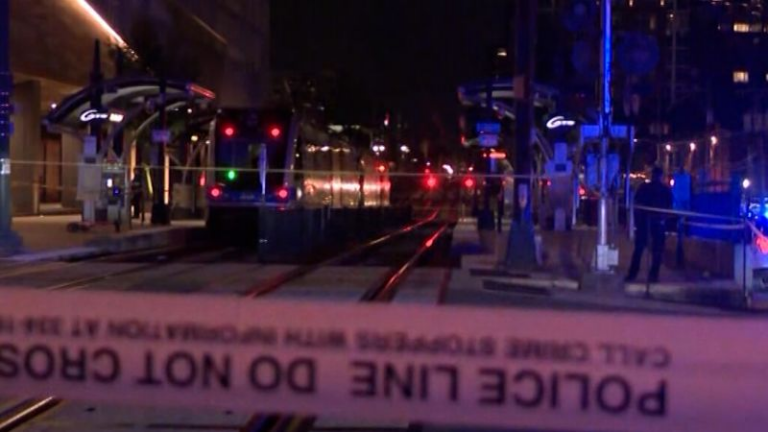
Wearing earbuds and a T-shirt for the pizzeria where she worked, Iryna Zarutska took a seat on a Charlotte light rail train one night last month and stared down at the screen of her phone on what was supposed to be an ordinary commute home.
Similar scenes play out countless times a day on transit systems in cities across the country – where riders go about their routines even as problems like homelessness, untreated mental illness and unpredictable assaults chip away at an already fragile sense of security in public transportation.
Zarutska, a 23-year-old Ukrainian refugee and artist, sat in front of a man in a red sweatshirt who around four and a half minutes later jumped up, grabbed the seat bar in front of him with his left hand and fatally stabbed her with his right hand. She clutched her face and throat and looked up at her attacker before slouching to the ground, according to security camera video.
After video of Zarutska’s August 22 death was released last weekend, the Trump administration highlighted the attack as more proof that crime is out of control in Democratic-run cities.
The tragedy also sheds light on the challenges of keeping America’s public transportation riders safe in vast, crowded and wide-open systems that fuel urban life.
“Wherever you have a gathering of people, it’s a target, particularly if the people can’t escape,” said CNN transportation analyst Mary Schiavo, a former US Department of Transportation inspector general. “And therein lies the problem. Once you’re on the train, the bus, the plane, the ship – you’re captive.”
Security challenges come with being ‘open and accessible’
While confining virtual strangers to platforms, stations, trains and buses, transportation systems ultimately deliver people where they’re going quickly and efficiently, according to experts. And heightened security measures – whether widespread bag checks in places where nearly everyone is carrying a bag or the use of metal detectors – slow that down.
“Transit systems have to be open and accessible,” said Anastasia Loukaitou-Sideris, interim dean at UCLA’s Luskin School of Public Affairs and a transit safety expert. “It’s very difficult to install measures that you put, for example, in airports because the public is not going to accept such delays.”
Loukaitou-Sideris said transit systems should consider using scanners at major hubs that can quickly detect knives and handguns without requiring riders to wait in line. But such technology – already used in China – is expensive, she noted.
Todd Litman, founder and executive director of the Victoria Transport Policy Institute in Canada, said his research shows that the risk of death or injury on public transit is about one tenth that of car travel.
“Anywhere there are concentrations of homelessness and mental illness, you’re probably going to find more of these random attacks like what happened in Charlotte,” Litman said.
And such attacks certainly are not exclusive to public transit systems: In November, a homeless man with mental health problems and a lengthy arrest record was accused of three unprovoked, broad daylight stabbings on the streets of Manhattan that left two men and a woman dead.
“The message I emphasize is overall public transit is safe, and it becomes safer the more non-criminals are riding,” Litman said. “The biggest safety is not whether or not there’s a police officer in the station. It’s whether the station is busy with normal people going about their normal business who are encouraged to intervene if some crazy person starts doing something irresponsible.”
Transit experts said it’s impractical to have police officers on every train car or bus and on every platform. Widespread bag checks and use of metal detectors are also not practical in systems that have dozens of stations with multiple entrances and exits. Some transit systems have installed fare gates designed to deter turnstile jumpers.
The Charlotte Observer reported that transit officials don’t believe the stabbing suspect bought a ticket on the open fare system that allows passengers to board without first getting tickets checked. The system does not use gates or turnstiles to access platforms.
“It is and it would be possible to secure and have security systems other than, of course, cameras in place already at train stations. But again, it’s going to slow things down dramatically. And it would change the way we use that system,” Schiavo said. “People will have to get used to a different way of life. You can’t just run from the office and hop on the train.”
Many transit systems across the country have increased the presence of uniformed officers on platforms and trains. Some have employed armed and unarmed private security personnel for stations, and others have dispatched mental health and crisis outreach teams to transit hubs to offer services to the homeless.
Loukaitou-Sideris said some transit systems have tested cell phone apps that connect with transit police in real time to report emergencies.
“But you cannot predict everything, or have someone stationed on each and every bus stop, on each and every transit station,” Loukaitou-Sideris said. “At the end of the day, if someone has a knife and all of a sudden stabs someone, it’s kind of difficult to prevent it.”
And transit systems across the country already employ extensive networks of surveillance cameras, according to experts.
“In the case of the the poor lady in in Charlotte, yes, the train was covered by cameras, but it didn’t stop anything,” Schiavo said.
Feds probe city’s light rail system
The Charlotte stabbing suspect, 34-year-old Decarlos Brown, has a lengthy rap sheet. He now faces a state charge of first-degree murder and a federal charge of committing an act causing death on a mass transportation system. He was homeless at the time of the attack, and suffered from mental health problems, family members told CNN.
CNN has reached out to Brown’s attorney for comment.
Brown’s criminal history included convictions for armed robbery, felony larceny and breaking and entering.
At a time when transit systems across the nation – including Charlotte’s – are recovering from declining ridership during the pandemic, the North Carolina light rail system is now facing increased scrutiny following Zarutska’s slaying.
The US Department of Transportation on Wednesday opened an investigation into the transit system “to determine whether they are taking the necessary actions to keep riders and transit workers safe.”
In response, the Charlotte Area Transportation System said it “remains fully committed to working collaboratively with our local, state, and federal partners. These relationships are essential to our mission, and we value the trust and cooperation they represent as we continue working together to support our region’s transit system.”
The city’s mayor said Wednesday the transportation system will add 30 more security personnel and will “deploy new security teams including bike patrols and urban terrain vehicles in the coming weeks.” The city also announced a stronger security presence on Blue Line platforms and increased fare enforcement. The Charlotte-Mecklenburg Police Department also increased patrols across the transit system.
Transportation Secretary Sean Duffy said he’s investigating the possibility of cutting federal funding from Charlotte’s light rail system.
“Using this incident as an excuse to do things like reduce transit funding is quite what I would consider the wrong approach,” Litman said. “If any policy maker is really concerned about transit crime the first thing they should do is increase funding to make transit systems safer and more attractive, so you get more ridership and, therefore, more security.”
‘This could have been anyone’
Kathryn Dean of Charlotte was in the area the night of the stabbing and saw blue lights and emergency service personnel at the light rail stop, she told CNN.
Since then, Dean and her boyfriend have grown “more aware” and “feel uneasy,” she said, adding she often sees homeless people hanging out at train stops but usually tries to avoid places they congregate.
Dean also takes early morning runs, and “as a small, 28-year-old blonde girl,” she is more aware of her surroundings since the stabbing, she said. It’s made her take notice of her habits, like wearing headphones, in public.
Dean said it’s good local leaders are considering safety enhancements around the light rail.
Zarutska’s family, in a statement, demanded change, citing a “lack of visible or effective security” on the Charlotte Area Transportation System Blue Line.
“This could have been anyone riding the light rail that night,” the family said. “We are committed to making sure this never happens again.”
Trump Is ‘Hurting’ Us, He Is Not Bringing the Country Together

Sunday on NBC’s “Meet the Press,” former Biden Transportation Secretary Pete Buttigieg said President Donald Trump was “hurting” the country, not bringing it together with his response to the assassination of Charlie Kirk.
Host Kristen Welker said, “I do want to get your response from the president this from the Oval Office this week. Take a look.”
Trump said, “My administration will find each and every one of those who contributed to this atrocity and to other political violence, ending the organizations that funded and support it as well as those who go after our judges, law enforcement officials and everyone else who brings order to our country.”
Welker said, “What is your reaction to hearing that?”
Buttigieg said, “I want to be really clear about this. This is an example of something that is hurting. We are not getting the leadership that we need to bring this country together from the White House.”
He added, “In order to turn the tide of political violence, yes, we have to reject those who commit political violence. Yes, we have to reject those who celebrate or promote political violence. But also in order to deprive political violence of its power, we have to reject anyone who would try to exploit political violence. The response to this cannot be for the government to crack down on individuals or groups because of violence, but because they challenge the government politically. We need to have a free and open political debate in this country, and much like the overwhelming majority of Americans reject violence, an overwhelming majority of Americans, left, right, and center, do not believe the government should be cracking down on political opponents, not in the United States of America, not ever.”
Trump administration launches flying taxi program

Sept. 14 (UPI) — A pilot program to establish electric flying taxis as a viable transportation option has been unveiled by the administration of President Donald Trump.
The Federal Aviation Administration announced Friday that it would administer the pilot program, officially the Electrical Takeoff and Landing Integration Pilot Program, which will form public-private partnerships between local governments and private sector companies to develop new frameworks and regulations for enabling safe operations.
The announcement comes after Trump penned an executive order in June for
Via raises $492.9M in IPO, and German automakers go on the offensive

Welcome back! Did you miss me? Yes, of course you did. There is a lot of “future of transportation” news to keep track of. Let’s jump in.
It’s comeback week, and not just because I have returned from vacation. I’m talking about the biennial IAA Mobility conference in Munich and the purposeful effort among German automakers to show the world it can still offer compelling, technologically advanced, and affordable vehicles. The subtext of the splashy event that started Tuesday: “Hey, China, we’re not out of the race.”
VW Group, Mercedes, and BMW all showcased numerous new vehicles, including electric ones. And executives made their battle cries: VW Group Oliver Blume struck a bullish tone in a few interviews with reporters and laid out the company’s plan to be competitive in China, particularly with EVs, a category where VW has lagged.
But what about on the home front? Chinese automakers have been pushing into Europe, and consumers have responded. The German automakers are hoping their latest products — including a new all-electric Mercedes GLC, the BMW iX3 with its four “superbrain” computers, and the Volkswagen ID Polo and ID Cross concept — will preserve and even grow market share. But they have some work to do. Chinese companies like BYD almost doubled their market share in Europe over the past year, JATO Dynamics reported in July.
One other IAA news item of note: Rimac Technology, the tech and parts unit of Rimac Group, has developed solid-state battery packs it says will be available by late 2027. These batteries apparently pack in the energy and can be charged from 10% to 80% in under 10 minutes.
To get TechCrunch Mobility in your inbox, sign up here for free — just click TechCrunch Mobility!
A little bird
Hyundai appears to still be committed to Motional, according to two little birds who have shared new investment information with me.
Hyundai and Aptiv had created a joint venture (called Motional) with an agreement to invest $4 billion in the effort. Aptiv backed out in early 2024, leaving Hyundai to either invest its own money, find other outside partners, or shutter the program altogether. Hyundai opted to invest $1 billion — $475 million directly into Motional as part of a broader deal that includes buying out joint venture partner Aptiv. Hyundai agreed to spend another $448 million to buy 11% of Aptiv’s common equity interest in Motional.
Now it appears Hyundai is investing more into Motional in two tranches. The first is being dispersed this year and is about $452 million. The second comes next year, and I’m still trying to nail down that amount. That first figure is in line with reporting from a Korean outlet. Hyundai declined (a couple of times!) to respond to my questions about the funding. That’s pretty typical for large corporations to stay mum. However, one little bird who is deep within the AV industry also noted that Hyundai might not want to make a big deal about this, considering it’s also working with Waymo.
In other little bird chirpings, there are two new hires at General Motors that you might find interesting. Sony Mohapatra, the former senior manager of AI compute platforms at Cruise, has landed as director of AI and machine learning engineering at General Motors. And Paul Menson, who was the senior staff account manager of Megapack at Tesla, is now director of energy storage systems business development at General Motors.
Got a tip for us? Email Kirsten Korosec at kirsten.korosec@techcrunch.com or my Signal at kkorosec.07, or Sean O’Kane at sean.okane@techcrunch.com.
Deals!
Via, the transit software startup that garnered attention for its consumer-facing on-demand shuttle service, has made its IPO debut. The company, as I have mentioned before, has been batting around plans for an IPO for years.
Earlier this year, it filed confidentially for an IPO — the second time it took this step. But this time, Via took the big IPO leap. The company, which is known for its Citymapper mobile navigation app, said it sold 10.7 million shares for $46 per share. In all, Via raised $492.9 million at a $3.7 billion valuation. That’s just slightly above its $3.5 billion valuation that it garnered back in 2023 during its last venture raise.
We had to wrap up this newsletter before it officially began trading, but I’ll be back next week with an update.
Other deals that got my attention …
Arc Boats, the Los Angeles startup founded in 2021 by former SpaceX employees, signed a $160 million contract with Curtin Maritime for new hybrid-electric tugs, which are expected to hit the waters around the Los Angeles port in 2027.
LeydenJar, the Netherlands-based battery materials startup, raised €13 million ($15.2 million) in a round led by Extantia and Invest-NL.
Standard Fleet, a fleet management software company, raised $13 million in a Series A round led by Nova Threshold with participation from WEX Venture Capital, SNR, Garry Tan (CEO of Y Combinator), Salil Deshpande (Uncorrelated Ventures), and Apoorv Bhargava (WeaveGrid). Returning investors included Burst Capital, Canvas Ventures, Liquid 2, Night Capital, Olive Capital, UP2398, and Danny Wen.
Notable reads and other tidbits
The Federal Aviation Administration announced a new pilot program that will let electric vertical takeoff and landing (eVTOL) startups test some operations before they receive full regulatory certification.
Hyundai’s once-buzzy electric air taxi startup Supernal is having trouble getting off the ground. The company paused work on its aircraft program after a rocky few months that saw staff cuts and the departure of its CEO and CTO, two people familiar with the matter told TechCrunch.
InDrive, the Mountain View-based startup that got its start in Siberia and is known for its bidding-based ride-hailing model across Asia and Latin America, wants to be a global super app. Here’s what and where it’s targeting.
Jaguar Land Rover said a cyberattack brought vehicle assembly lines to a standstill.
Lyft and May Mobility have launched a robotaxi service in Atlanta, the first commercial deployment in the two companies’ partnership.
Nevada’s Occupational Safety and Health Administration opened an investigation after a Boring Company employee sustained a “crushing injury” working on one of its tunnels in Las Vegas. Work has stopped at the site.
Tesla has the proper permit to begin testing autonomous vehicle technology on public roads in Nevada. As I explain in this article, securing a testing permit in the state is straightforward and easy. (Just fill out the registry form, and make sure you have the proper $5 million insurance coverage.) Tesla will still need to complete the self-certification process to be able to roll out an entire program. And it will need separate approval to operate a commercial ride-hailing service.
Uber and Chinese autonomous vehicle startup Momenta plan to start testing robotaxis in Munich starting in 2026.
TheU.S. Justice Department filed a lawsuit against Uber, accusing the ride-hailing company of violating federal law by discriminating against people with physical disabilities.
One more thing …
TechCrunch Disrupt 2025 is right around the corner — in around six weeks or so. And we have some high-profile folks from the transportation world coming onto our stage at the Moscone Center in San Francisco. The event, which will be held October 27 to 29, will include Wayve co-founder and CEO Alex Kendall, Waymo co-CEO Tekedra Mawakana, and Flexport founder and CEO Ryan Petersen. And more are coming. Stay tuned.
Pete Buttigieg now declares Biden ‘should not have run’ again

WASHINGTON — Former Transportation Secretary Pete Buttigieg, who spent years defending ex-President Joe Biden from attacks over his mental acuity, declared Sunday that the 82-year-old shouldn’t have run for re-election.
Buttigieg, 43, who underscored that he was not involved with Biden’s decision-making process, appeared to back former Vice President Kamala Harris in rebuking their elderly boss’s decision to seek a second term.
“He should not have run,” Buttigieg told NBC’s “Meet the Press.” “And if he had made that decision sooner, we might have been better off.
“But it literally was his decision. Nobody else was able to make that decision,” Buttigieg said. “And now in front of us, we’re confronted with the decisions that come next. And that’s where we’ve got to focus.”
The former transportation boss, who is rumored to be eyeing a 2028 presidential run, had previously taken a much softer stand on Biden’s disastrous re-election bid, which led to him bowing out at the last minute and Harris taking over and spectacularly losing to President Trump.
In May, when Buttigieg was asked whether Biden should not have run again, he responded, “Maybe, you know, right now, with the benefit of hindsight, I think most people would agree that is the case.”
In an interview with NPR’s “Morning Edition” in July, Buttigieg denied seeing Biden in cognitive decline and appeared to blame many of his faux pas on tiredness.
He conveyed a similar sentiment to reporters in May.
“Every time I needed something from him from the West Wing, I got it,” Buttigieg said at the time of his old boss.
“And the time I worked closest with him in his last year was around the Baltimore bridge collapse. And I want to tell you is that the same president the world saw addressing that, was the president that I was involved with.”
But many top Democrats were forced to publicly reckon with their role in downplaying Biden’s fitness for office after the release of the damning book, “Original Sin,” by Jake Tapper and Alex Thompson earlier this year.
The book claimed that multiple cabinet officials have now admitted they had doubts about Biden’s ability to discharge his duties as president. Those officials were not named in the book.
Buttigieg had been asked about Harris’ upcoming book, in which she blasted Biden’s “recklessness” for vying for reelection.
” ‘It’s Joe and Jill’s decision’ — we all said that, like a mantra, as if we’d all been hypnotized,” Harris bluntly reflected in her upcoming book, referring to Biden and his wife, according to a preview from The Atlantic magazine. “Was it grace or was it recklessness? In retrospect, I think it was recklessness.”
Buttigieg responded with his comments agreeing Biden should not have tried to run again.
Buttigieg says ‘we might have been better off’ if Biden exited race sooner

“[Biden] should not have run, and if he had made that decision sooner, we might have been better off,” Buttigieg said on NBC News’s Meet the Press on Sunday. “But it literally was his decision. Nobody else was able to make that decision.”
“I was not included in the process of deciding whether the president should run. Again, he made that decision,” Buttigieg said. “I think I’m not alone in believing that he should have made the decision not to run sooner, but, look, we are where we are as a country and as a party right now.”
Harris is releasing a book about her brief campaign Sept. 23. As part of promoting her book, Harris is currently touring the country.
KAMALA HARRIS MOVES TO SHIFT THE BLAME IN NEW BOOK
“The stakes were simply too high. This wasn’t a choice that should have been left to an individual’s ego, an individual’s ambition,” Harris wrote of Biden.
Buttigieg agrees Biden re-election bid was the wrong decision to make
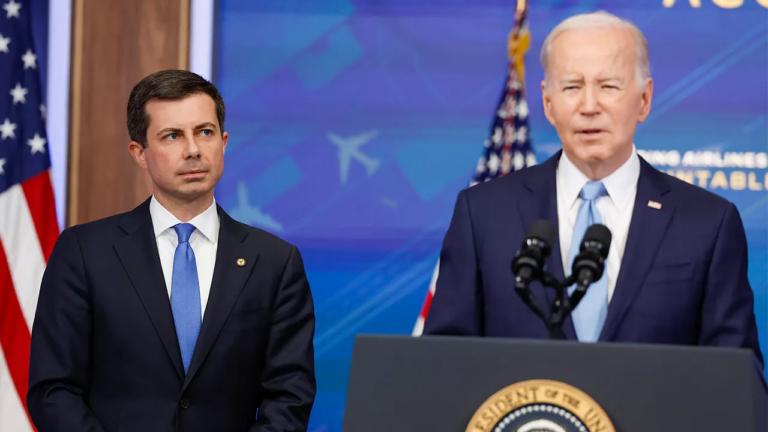
NEWYou can now listen to Fox News articles!
Former Transportation Secretary Pete Buttigieg said Sunday that former President Joe Biden should not have sought re-election and that Democrats might have been better off if he had made that decision sooner.
NBC News host Kristen Welker asked Buttigieg about former Vice President Kamala Harris’ new book, in which she described the former president’s decision to run for re-election as reckless.
Despicable Reactions to the Charlie Kirk Assassination: They Wanted Him Dead – and They’re Celebrating
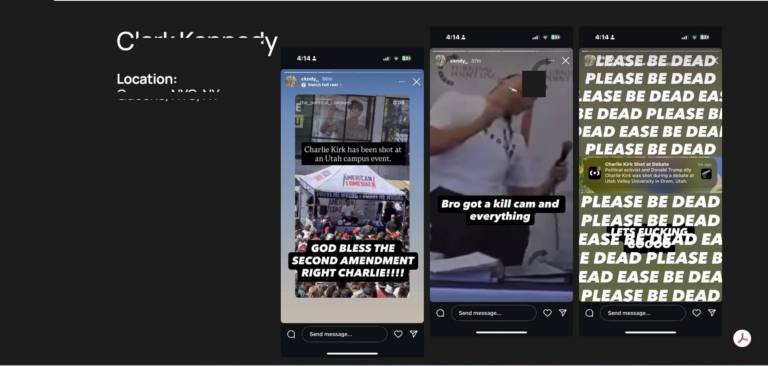
After Charlie Kirk’s death was announced, a man named Jeremiah Farmer, a transportation driver at Orgill Inc. in Utah, who lists LGBTQ and pronouns in his bio, posted: “We need to find people with better aim.”
Clark Kennedy of Queens, New York, shared a photo of Kirk slumped in his chair after being hit in the neck by an assassin’s bullet with the comment, “Bro got a kill cam and everything.” In a separate post, he repeated the phrase “Please be dead, please be dead, please be dead” over and over.
Miles Carter-Washington, who works at Boeing Space, Defense, and Intelligence Systems — US Department of War wrote “He got what he deserved.”
These are the kinds of posts being documented at a website dedicated to exposing such reactions: https://www.charliesmurderers.com/. It compiles public comments from both well-known figures and ordinary users who are reveling in his death.
They hated Charlie Kirk because he spoke the truth and was an outspoken Christian.
The left, including media and public figures, revealed their true colors through horrific comments about his assassination. Since this information is public, reposting it is not doxxing.
The website documenting these posts describes itself as “a lawful data aggregator of publicly available information” created to expose those glorifying political violence. It states: “We firmly denounce all political violence and criminal activity.
Our thoughts and prayers are with Charlie Kirk’s family.” It asks: “Is an employee or a student of yours supporting political violence online? Look them up… Say ‘NO’ to political violence,” and invites submissions about anyone celebrating Charlie’s death.
Many comments targeted Charlie’s support for the Second Amendment. Liberals often counter with personal hypotheticals—“What if your family was shot?” or “What if your daughter was raped?”—or claim my grandparents came illegally, though they did not.
But conservatives are guided by principle, not personal circumstance. Even if my grandparents had entered illegally, I would still oppose illegal immigration. If someone I knew were raped, I would still oppose abortion. And had Charlie survived, he would still have defended the Second Amendment.
One of the most illogical criticisms came from Alexandra Wilson of Sacramento, who wrote: “Charlie Kirk recently said to a Palestinian that there is no such thing as Palestine. Well now look… there is no such thing called Charlie Kirk.”
It is unclear he ever said this, but even if he had, the existence of Palestine is debatable. It lacks a defined territory and population. But does that justify killing him?
Other attacks twisted his words or outright lied. Rebecca Allen of Sacramento called him “a racist, xenophobic, transphobic, islamophobic, sexist, white nationalist mouthpiece,” claiming he spread hate.
In reality, Charlie cited crime statistics showing some demographics were more likely to commit murder, and that same demographic was dramatically more likely to grow up in a home without a father.
He also opposed illegal immigration and presented accurate data regarding the number of illegals and corresponding crimes.
On charges of transphobia, Charlie pointed to Scripture. Deuteronomy 22:5 states: “The woman shall not wear that which pertaineth unto a man, neither shall a man put on a woman’s garment: for all that do so are abomination unto the LORD thy God.”
The Bible also condemns homosexuality. Leviticus 20:13 says: “If a man also lie with mankind, as he lieth with a woman, both of them have committed an abomination…”
Yet Charlie stressed that all people are made in God’s image, all are loved, and all are welcome in the church, though sinful actions cannot be condoned.
He also cited science. The National Institutes of Health explains: “In mammals, primary sex determination is strictly chromosomal… In most cases, the female is XX and the male is XY.” The National Human Genome Research Institute adds: “Humans and most mammals have two sex chromosomes, X and Y. Females have two X chromosomes… males have one X and one Y.”
Charlie’s pro-life stance drew particular hatred. Ashley Creekbaum of the New Orleans Fire Department wrote: “I think he should be forced to carry that bullet in his body. That bullet has a right to be there because it’s a gift from God.” Liberals claim anti-abortion laws violate the separation of church and state, but the Constitution contains no such phrase.
The principle only means the church does not make laws, Congress does. And opposition to abortion is also grounded in science. The American College of Pediatricians affirms: “The predominance of human biological research confirms that human life begins at conception—fertilization.”
For stating these truths, Charlie Kirk was murdered, and many celebrate his death. Ironically, they claim the moral high ground even as they cheer the killing of a conservative pundit whose only “crime” was debating ideas and fostering open discussion.
Part of Baltimore’s N Charles Street closed through December for underground repairs

A portion of N Charles Street in Baltimore will remain shut down through December as crews rebuild a manhole in the area, according to the city Department of Transportation (DOT).
The repairs come nearly a year after an underground fire was reported in the area. Two similar fires were reported on N Charles Street in January 2024 and June 2024.
N Charles Street shut down
According to the DOT, the right lane of N Charles Street, between Saratoga and Pleasant Streets, closed on Sept. 11. Parking restrictions are also in effect.
Right turns from N Charles Street onto Pleasant Street will be prohibited during the closure. Drivers will instead need to access Pleasant Street from St. Paul Place, DOT officials said.
The closure is expected to remain in place through December.
According to the DOT, crews will rebuild a manhole at the intersection of N Charles Street and E Pleasant Street during the closure.
The mayor’s office said engineers will determine a designated loading zone for businesses along the street.
According to the mayor’s office, the construction project is necessary to prevent future underground fires in the area.
Drivers are urged to use alternate routes.
Previous underground fires
The city has seen at least three underground fires in the past year, including two that occurred along N Charles Street, damaging some businesses.
In September 2024, one firefighter was injured while responding to an underground fire on N Charles Street.
The fire was reportedly coming from multiple manhole covers. The incident prompted Baltimore Gas and Electric (BGE) to shut down power in the area. Nearly 2,100 customers were impacted.
The fire damaged Viva Books, shut down courthouses downtown and impacted the Enoch Pratt Central Library’s internet service.
A similar underground fire in June on East Baltimore Street prompted concerns about the city’s infrastructure.
Committee to help determine future of Charleston County transportation sales tax

CHARLESTON, S.C. (WCSC) – As sales taxes in Charleston County start the final stretch before they expire, the county’s council has created a new committee to decide what comes next.
The Charleston County Council has established a Transportation Sales Tax Program Special Committee. This committee will “guide the future of the county’s transportation funding.”
This comes as the first half-cent sales tax, which is among those that the county credits for several improvements over the past two decades, is set to expire in 2027.
The committee will reportedly look back at the sales tax program’s previous success and look forward, finding future needs, while also ultimately recommending what the next move should be for the county’s transportation infrastructure.
Officials say the new committee is made up of the nine current council members. Their first meeting will be Sept. 25.
“For nearly two decades, the Transportation Sales Tax Program has delivered transformative improvements across Charleston County, building safer roads, expanding public transit and protecting green space,” Charleston County Council Chairman Rev. Kylon Middleton said. “With our region growing rapidly, this new committee will take a thoughtful and transparent look at what’s worked well and what remains to be accomplished, so we’re prepared to meet the county’s infrastructure needs in the years ahead.”
Ohio lawmakers look to weaken Cuyahoga County’s grip on regional transportation decisions

COLUMBUS, Ohio — Some Republican lawmakers are preparing legislation to seek the most significant state reforms ever to the Northeast Ohio Areawide Coordinating Agency, which has enormous influence over transportation projects in the region, and 16 other metropolitan planning organizations.
Their proposed legislation, if passed, would transfer significant power over highway projects in Northeast Ohio from the city of Cleveland and Cuyahoga County to four surrounding suburban counties.
The bill would also force NOACA to end DEI and anti-global warming initiatives that conflict with Trump administration policy, as well as target NOACA CEO/executive director Grace Gallucci for simultaneously holding an out-of-state adjunct teaching job.
Your feedback matters
Do you think Cleveland and Cuyahoga County should have less power over decisions about transportation and development projects in Northeast Ohio?
State Rep. Mike Dovilla, a Strongsville Republican and the main proponent of the bill, says the legislation is intended to rein in NOACA and other non-elected metropolitan planning organizations.
Dovilla, in an interview, asserted that NOACA has, among other things, stifled economic development in suburban areas and bullied suburban officials into sharing tax money with Cleveland.
Gallucci countered that while Dovilla’s proposals “may be well-intentioned,” they’re either based on misinformation, unnecessary, redundant with existing law, or would result in loss of local control.
The state’s Legislative Service Commission has drawn up a draft of the bill. The GOP sponsors of the legislation say they intend to introduce it soon.
Why is NOACA important?
NOACA, which covers Cuyahoga, Geauga, Lake, Lorain and Medina counties, determines which highway, bikeway, and public transit proposals in those counties should get federal money – usually an essential part of how large transportation projects are paid for.
NOACA also conducts long-term transportation plans, as well as studies and forecasts about traffic patterns, population shifts, and pollution levels, that federal, state, and local officials rely on to make decisions about transportation and development projects.
Stories by Jeremy Pelzer
Columbus-area lawyer joins Democratic race for Ohio attorney general in 2026
GOP judge from Summit County eyes Ohio Supreme Court’s lone Democratic seat
Ohio Republicans oppose urban hospitals getting cut of rural health dollars: Capitol Letter
Like other metropolitan planning organizations, NOACA was created under a federal law that was passed in the early 1960s in response to state engineers deciding on the path of highways without coordinating with local officials, often resulting in large swaths of poor urban neighborhoods being razed.
What would the new bill change?
Dovilla said his bill would make four reforms for NOACA and other organizations like it:
1) No one county could hold a majority of seats on a metropolitan planning organization’s board of directors
Right now, just over half of NOACA’s 45 board members come from Cuyahoga County, including 15 members representing Cuyahoga County, six named by the city of Cleveland, and the heads of the Greater Cleveland Regional Transit Authority and Cleveland-Cuyahoga County Port Authority.
That accounts for 51% of the seats.
But it should be noted that of the nearly 2.1 million people who live in the five counties covered by NOACA, more than 60% of them — 1.24 million people — live in Cuyahoga County, and about 18% of them — about 366,000 — live in Cleveland.
But Dovilla said that Cleveland and Cuyahoga County’s board majority gives them “a veto on everything” NOACA does, leaving the other four counties “on the short end of the stick” when it comes to their economic development.
Preventing any one county from having a majority of board seats, he said, would force Cleveland and Cuyahoga County to work more closely with board members from other areas, rather than “dictating terms” to them.
Specifically, Dovilla claims that Lorain lost out to Central Ohio on landing a new $28 billion Intel computer-chip manufacturing complex in part because NOACA requires extensive analysis of proposed new or modified interchanges that would be needed to connect nearby highways to the proposed site.
That view, though, is at odds with what Lorain City Councilwoman Mary Springowski, who was active in efforts to land Intel, told cleveland.com earlier this year. She said that Lorain only lost out because it couldn’t meet Intel’s requirement to have a 1,000- to 1,500-acre, shovel-ready site with a single owner available within days.
Dovilla also said NOACA’s interchange analysis policy has prevented a resolution to a decades-long fight between Strongsville (in Cuyahoga County) and neighboring Brunswick (in Medina County) over where to build a new Interstate 71 interchange to ease traffic congestion along state Route 82. NOACA is currently conducting a two-year-long study into how to best resolve the problem.
A third issue Dovilla raised was NOACA’s opposition to adding new on- and off-ramps connecting Interstate 77 and Miller Road in Brecksville to accommodate a new Sherwin-Williams research facility unless Brecksville compensated Cleveland and Warrensville Heights for the jobs the new facility would take from those two cities. Dovilla called NOACA’s demand “legalized extortion.”
Gallucci said that Dovilla was “misinformed” about the Brecksville interchange issue, as NOACA has no power to require cities to enter into a tax-sharing agreement with other municipalities.
In general, Gallucci defended NOACA’s policy to require study of proposed interchange projects, saying that it ensures that every interchange project benefits Northeast Ohio as a whole, rather than moving economic development from one part of the area to another.
“We have not had population growth in the region for more than 50 years, probably at this point, 75 years,” Gallucci said. “And so, we just need to be smart about development.”
A spokeswoman for Cuyahoga County Executive Chris Ronayne, who’s president of the NOACA board of directors, said county officials are aware of the proposed bill and have reached out to Dovilla to learn more about its intent.
“We are concerned with any proposal that could limit fair representation in our region,” said the spokeswoman, Jennifer Ciaccia.
2) NOACA and other planning organizations couldn’t issue policies that conflict with state or federal law
Dovilla said NOACA ‘s continued advocacy of its climate action plan, which aims to make the region carbon-neutral by 2050, is “way outside of the lines of what they’re supposed to be doing under long-standing federal regulation.”
He also said NOACA still has an equity subcommittee that is “out of alignment” with President Donald Trump’s executive orders to roll back federal policies related to diversity, equity and inclusion — better known as DEI.
Gallucci said NOACA developed its climate action plan under a contract with the U.S. Environmental Protection Agency and is not paying for it with federal money either for its own operations or for transportation projects.
“We are simply following the requirements of our contract,” she said.
On Friday, after Dovilla’s interview with The Plain Dealer/cleveland.com, NOACA’s board voted 25-11 to dissolve its equity subcommittee, as well as remove or amend all of its policies related to DEI and environmental justice, in order to comply with Trump’s executive orders and administration policy.
3) Chief executives of regional planning organizations couldn’t simultaneously work out of state
This proposal is aimed squarely at Gallucci, who is an adjunct engineering professor at Northwestern University in suburban Chicago.
Last year, NOACA’s board delayed a vote on extending Gallucci’s $254,000-per-year contract after receiving anonymous complaints that, among other things, Gallucci’s travel to Illinois hurt her job performance at NOACA.
“I think there’s a number of us who are concerned that her time and her loyalties are split between here and where she is originally from,” Dovilla said of Gallucci, a Cleveland native who went to school in Ohio and worked in Cleveland and Florida before spending five years in Chicago as chief financial officer for the Regional Transportation Authority of Northeastern Illinois.
Gallucci, who has been NOACA’s CEO since 2012, responded by saying she teaches one class per year at Northwestern for a maximum of $15,000 per year.
She said she believes it’s a public service to help educate future transportation leaders, and that her position at Northwestern has benefitted NOACA by (for example) getting Northwestern professors to participate in organization studies at no cost.
On Friday, the NOACA board voted to extend Gallucci’s contract as CEO through the end of 2026.
4) Ohio’s governor would be allowed to move a county out of NOACA if at least 25% of the county’s workforce travels to a county in an adjacent regional planning organization
Dovilla said the proposal is specifically aimed at Medina County, where data shows more than a quarter of the workforce commutes to Summit County, which is part of the Akron Metropolitan Area Transportation Study.
Such a move, he said, would require Medina County to formally ask Gov. Mike DeWine to move their county to a different regional planning organization.
“That’s one way of just trying to get government closer to the people that it impacts, rather than everything running through a centralized regional bureaucracy,” Dovilla said.
Gallucci said federal rules already allow counties to move from one metropolitan planning organization to another with the governor’s approval. Medina County, she said, has considered leaving NOACA in the past but ended up deciding to stay.
What happens now?
Dovilla, the number-two Republican on the powerful House Finance Committee, will introduce the bill with a powerful co-sponsor: Finance Committee Chair Brian Stewart, a Pickaway County Republican who’s unhappy with some of the decisions made by his local planning organization, the Mid-Ohio Regional Planning Commission.
While Republicans hold supermajorities in the Ohio House and Senate, it remains to be seen whether Dovilla’s bill will pass, and – if it does – whether DeWine will sign it.
Dovilla admitted that when lawmakers wrap up their summer break later this month, they will have a lot of other priorities, such as drawing new congressional districts for the state.
“But as (former Ohio) Speaker (Bill) Batchelder used to say, we can walk and chew gum at the same time,” Dovilla said.
Gallucci, meanwhile, said that while she opposes the reforms that Dovilla is planning to include in his initial bill, she sees the legislation as a chance for organizations like hers to address lawmakers’ concerns and talk about the best way for them to operate.
“It opens up an opportunity for discussion and, certainly, many improvements,” she said.
California firefighting helicopter collision caused by pilot flying too high and making rapid descent, NTSB reports

By Alexandra Skores, CNN
Washington (CNN) — A firefighting helicopter crew’s decision to fly an altitude higher than they were cleared for and the subsequent rapid descent led to the deaths of three people in a midair collision in 2023, according to a final report from the National Transportation Safety Board.
Thursday’s report concludes the investigation into the collision between a Bell 407, on a helicopter coordinator training flight, and a Sikorsky S-64E Skycrane helitanker during a 2023 wildfire near Cabazon, California.
The report concludes the cause of the collision was the Skycrane crew’s decision to enter the airspace around the fire at “an altitude significantly above their maximum cleared altitude, which resulted in their need for an aggressive descent into congested airspace and subsequent failure to see and avoid the Bell 407.”
Both helicopters departed from Hemet-Ryan Airport, east of Los Angeles, and about 18 miles from the fire on August 6, 2023. The Bell helicopter, with three people onboard, traveled north and about three minutes later the Skycrane helicopter headed northeast, with two people inside.
“Likely due to the mountainous terrain,” the report read, “neither helicopter was able to receive a clear radio signal” from its air tactical group supervisor, who the helicopters are supposed to communicate with.
The helicopters both maneuvered to establish radio contact, but the Skycrane helicopter continued into the airspace around the fire at 4,000 feet altitude before they were given clearance to enter at a maximum altitude of 2,500 feet.
The Skycrane initiated a “rapid descent” reaching their cleared altitude, but the right wheel and tire assembly slammed into the other helicopter’s main rotor three seconds later.
An explosion separated the Bell’s tail boom, main rotor, mast and transmission and sent the fuselage crashing into the ground. The three people onboard the Bell were killed. All on-board communication and video recordings in the helicopter were destroyed by the post-crash fire.
The Skycrane made an emergency landing in a field. The aircraft only sustained minor damage and the two people inside were not injured.
“The Skycrane pilot should have advised (the Air Tactical Group Supervisor) that the aircraft could not comply with the altitude clearance and should have informed ATGS of their aggressive descent,” the report notes.
The helicopters were among six aircraft responding to the Broadway Fire, which began after a building fire spread to nearby vegetation in Cabazon, a community in Riverside County 90 miles east of Los Angeles.
SCDOT proposes road improvements in Dorchester County
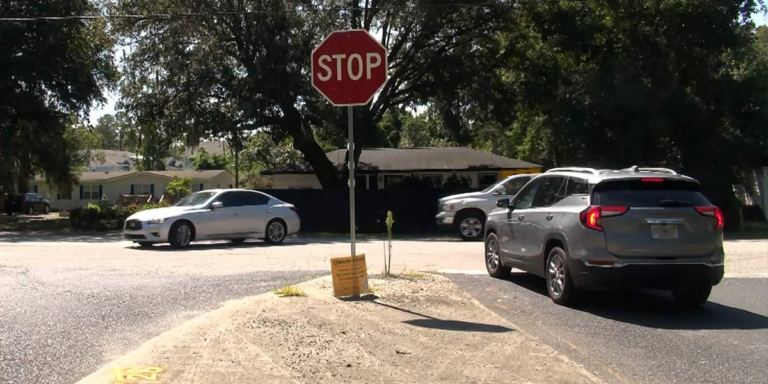
DORCHESTER COUNTY, S.C. (WCSC) – The South Carolina Department of Transportation is looking to propose road improvements in Summerville.
The intersection of US 17 Alternate and S-13, also known as Central Avenue in Dorchester County, has had a high crash rate in recent years.
There were a total of 44 crashes between 2016 to 2020, 12 of which resulted in injuries, according to SCDOT.
The plan would introduce a roundabout, which the department says would help keep us safe when driving.
“There are only eight conflict points in a roundabout,” Hannah Robinson, Media Relations Manager for the SCDOT, said. “This is a way that we can prevent crashes. There’s a constant flow of traffic and there’s no backing up, as long as people are using the roundabout correctly. It is a way to increase capacity, to drop those travel times and also keep people safe.”
SCDOT is holding a public information briefing at Gregg Middle School in Summerville on Sept. 25 from 5 p.m. to 7 p.m. regarding their plans for road improvements.
Michigan school advocates urge lawmakers to sign funding pledge amid budget gridlock

LANSING, MI – Michigan education advocates are asking state lawmakers to sign a pledge to affirm funding levels for K-12 schools amid the ongoing stalemate finalizing a budget for the coming year.
The state’s Republican-led House and Democratic-majority Senate passed separate school aid proposals for 2025-26 earlier this year before legislators ultimately failed to meet a July 1 deadline to get a full budget before Gov. Gretchen Whitmer.
Since then, local school districts, which were required to pass their own budgets by that date, have begun the academic year without a final idea of what financial support will look like before the state’s fiscal year kicks off Oct. 1.
In a release on Thursday, Sept. 11, the K-12 Alliance of Michigan cited the uncertainty as a source of difficulty for local schools leaving positions unfilled and preparing contingency plans for future layoffs, program cuts, obtaining high-interest loans and the elimination of free school meals.
“We’ve had enough of the finger pointing and want to see action,” Robert McCann, the alliance’s executive director, said in a statement. “We are calling on lawmakers to either sign this pledge that guarantees their support for specific funding levels or pass a budget that includes those same commitments.
“Anything less would only further harm Michigan’s kids and their opportunities for success in the classroom.”
The pledge itself, which was reportedly sent Thursday, asks lawmakers to pass the per-student founding allowance for districts at $10,000 or higher. It’s currently $9,608.
It also demands levels of funding for certain programs at the following:
At-risk student support, $1,120,374,000
Great Start Readiness pre-kindergarten, $655,370,000
Special education support, $2,796,908,100
Career and technical education added costs, $41,575,600
School meals, which also receives federal funding, $246,453,400
Bilingual education, $62,732,600
Transportation, $125,000,000
Rural and isolated district support, $12,824,000
Regional school district operational support, $82,760,500
School employee retirement system legacy debt, $2,244,764,400
The state’s budget gridlock has irked some voters in addition to becoming a growing concern among school leaders in recent weeks.
Earlier this month, it also inspired House Democrats to craft legislation aimed at protecting minimum future levels of school funding.
House Republicans passed a $21.9 billion school budget proposal in June that increased per-student funding to $10,025, while cutting free student meals and categorical earmarks for programs, including mental health and school safety, transportation, and teacher recruitment and retention.
GOP leaders have said the billions in categorical cuts would free up more per-student funding for schools to choose how to use.
In contrast, Senate Dems called for $21.8 billion for education this spring, also raising per-student funding to $10,008 with other measures to address higher teacher pay, school building upgrades, and mental health and safety resources.
In his own statement on Thursday, Don Wotruba, executive director of the Michigan Association of School Boards, called Michigan’s school aid budget the foundation fo safe classrooms and quality instruction.
“The damage that’s been done by lawmakers failing to pass a budget on time cannot be undone, but every day that continues to go by without any certainty in our school funding only makes it worse,” he said. “We need lawmakers to provide that certainty, and we need them to do it now.”
A copy of the ledge sent to lawmakers Thursday can be found online at K12michigan.org/pledge.
Public meetings planned for Rathdrum Prairie transportation study

COEUR d’ALENE — The Idaho Transportation Department is inviting the public to provide feedback that will help shape the future of roads and highways across the Rathdrum Prairie.
The Rathdrum Prairie Area Transportation Study began with more than 50 ideas for improving travel across Kootenai County. Through earlier rounds of public input and technical review, those concepts have been narrowed to 13 alternatives, according to a press release. These options focus on improving safety, reducing congestion and keeping traffic moving as the region grows.
Two upcoming public meetings will give community members a chance to see how the alternatives were compared and which ones are recommended to move forward. Feedback will help the study team narrow the list of alternatives and shape the recommendations that will guide future projects across the Rathdrum Prairie.
Meetings:
4:30 to 7 p.m. on Wednesday, Sept. 17 at the Coeur d’Alene Chamber of Commerce at 105 N. First St.
4:30 to 7 p.m. on Thursday, Sept. 18 at Q’emiln Park Trailhead Event Center, 12201 W. Parkway Drive, Post Falls.
Both meetings will be held in an open-house style so anyone interested in the study can drop in anytime. Displays will show updates, and staff will be available to answer questions and gather feedback.
TSA Explains How to Pack Electric Toothbrushes and Other Items That Buzz

This might be a buzz kill for airline travelers.
The Transportation Security Administration (TSA) shared a reminder about how to pack battery-operated devices — specifically electric toothbrushes — that buzz when accidentally turned on in bags. However, the friendly reminder is for another reason pertaining to safety.
“Traveling with your electric toothbrush, or other items that buzz? If they have an installed lithium battery you should pack them in your carry-on bag,” the TSA explained in an X post on Sept. 4.
The same guidance applies to smartphones, laptops, tablets and other electronics containing lithium batteries, as listed on the Federal Aviation Administration’s PackSafe page about battery-operated devices.
The TSA confirmed to PEOPLE that the X post is not a rule-change announcement — it’s just a reminder: “This is not a new regulation and has been in place since 2008,” a TSA spokesperson says.
The 2008 rule change states that “passengers will no longer be able to pack loose lithium batteries in checked luggage … to reduce the risk of lithium battery fires.”
The regulation “will continue to allow lithium batteries in checked baggage if they are installed in electronic devices, or in carry-on baggage if properly protected from short circuiting in their original packaging or by placing them in individual plastic bags or a protective travel case.”
Batteries not installed in devices aren’t permitted in checked bags.
“Any spare or uninstalled lithium batteries must be placed in a carry-on bag,” the TSA’s Sept. 4 X post added as a final reminder.
Never miss a story — sign up for PEOPLE’s free daily newsletter to stay up-to-date on the best of what PEOPLE has to offer, from celebrity news to compelling human interest stories.
The reminder comes weeks after the TSA and the FAA updated their prohibited items list to include popular hair styling tools in checked luggage: cordless curling irons or flatirons containing gas cartridges, butane-filled curling irons and flatirons, and gas refill cartridges for these tools. These items must be packed in carry-on bags.
Trump nominates pilot to serve on transportation safety board

John DeLeeuw, managing director of safety and efficiency for American Airlines and a Boeing 787 captain, has been named to fill the seat of Alvin Brown, an appointee of the Biden administration who was dismissed by the White House in May.
Sign up her… [1343 chars]
Trump nominates rail consultant Kloster to STB

President Trump has nominated railroad industry consultant Richard Kloster for an initial five-year term as a member of the Surface Transportation Board, and re-nominated current member Michelle Schultz, FreightWaves has learned.
The nominations now … [1128 chars]
Converting Transportation and Labor into Products and Profits Creates Insane Stock Values

Cern Basher is wealth manager of billions and he explains capitalization. At its core, capitalization is the process of transforming everyday human activities—often free, informal, or unmonetized—into structured, scalable businesses that generate rec… [5256 chars]
RI council maps 10 years of transportation improvement funding

The program, or STIP, is required every four years so the state can access funding from the United States Department of Transportation.
Mason Perrone, assistant chief of Transportation Planning, said the goal is to “use as much federal funding as we … [4716 chars]
Elyria schools seek first new funding in more than 15 years with Issue 17 levy

ELYRIA, Ohio — For the first time in more than 15 years, Elyria City School District is asking voters for new funding.
If approved, Issue 17 — a 10-year, 4.9 mill emergency levy — would generate $6.4 million annually. It would cost property owners … [943 chars]
The Subway Had Its Safest Summer in Years. The White House Shrugged.

Gov. Kathy Hochul said Wednesday that this summer was the safest in the New York City subway in at least 15 years, even as federal officials have painted the transit system as dangerous and crime-ridden.
While the latest statistics were promising, th… [5665 chars]
Labor and industry clash over rail automation

“These railroads cannot even get their handheld radio systems to function consistently with the length of today’s trains. If the carriers … cannot perfect basic technologies such as reliable radios, DOT cannot allow the nation to place blind faith in… [2435 chars]
New details released about Delta flight that sent dozens to hospital

Several Delta Air Lines passengers sustained injuries during a July flight after a plane heading from Utah to Amsterdam flew straight into a storm.
The incident occurred on July 30 around 5 p.m. MT. The aircraft experienced severe turbulence while in… [2531 chars]
Severe Turbulence Caught Delta Pilots Off Guard, New Report Says

The National Transportation Safety Board released new details this week illustrating how a Delta Air Lines flight bound for Europe experienced turbulence strong enough to force an emergency landing and send about two dozen people to the hospital, des… [2420 chars]
Sunset Transportation CEO Lindsey Graves Earns 2025 Women

ST. LOUIS, Sept. 08, 2025 (GLOBE NEWSWIRE) — Sunset Transportation (“Sunset”), a premier third-party logistics (3PL) provider and leader in global supply chain solutions, announces that President and Chief Executive Officer Lindsey Graves has been n… [3679 chars]
Regional: Advocates Rally For California To Deliver On Emergency Loans To Prevent Public Transportation Cuts

Advocates dressed as emergency medical responders carried transit vehicles on stretchers across San Francisco’s Civic Center Plaza on Monday morning at a rally for California to deliver emergency loan funding to prevent drastic public transportation … [1973 chars]
Tesla’s US market share hits an eight-year low.

A
External Link
Tesla’s US market share hits an eight-year low.
Tesla once commanded a dominant position in the EV market. But rising competition and an aging vehicle lineup — not to mention Elon Musk’s unique ability to alienate his liberal customer… [674 chars]
Bay Bridge will have lane closures due to maintenance work this week

The Chesapeake Bay Bridge will have lane closures and altered traffic patterns until Saturday, Sept. 13, due to maintenance work, according to the Maryland Transportation Authority.
During the week, the eastbound span of the bridge is scheduled to be… [1420 chars]
SCDOT to provide updates, gather feedback on proposed Orangeburg County bridge replacements

ORANGEBURG COUNTY, S.C. (WIS) – The South Carolina Department of Transportation will share updates on the U.S. 176 bridge replacement project in Orangeburg County on Monday.
SCDOT will hold a presentation to discuss the project on Monday at 4 p.m. at… [1067 chars]
Philadelphia Transit Hub to Get Funding Bailout to Reverse Cuts
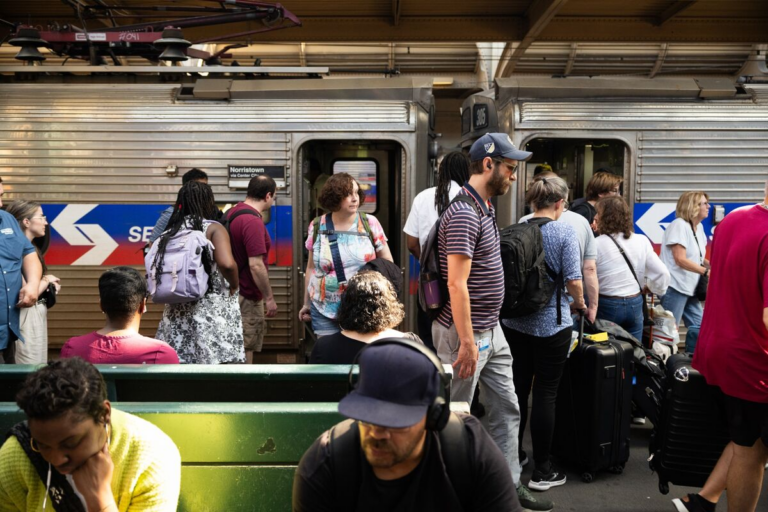
Pennsylvania Governor Josh Shapiro on Monday directed the state’s Department of Transportation to approve a request directing a one-time funding lifeline to the cash-strapped mass transit system that serves the Philadelphia region.
The Southeastern P… [267 chars]
Maryland announces $12.9 million to prevent improve road safety, prevent fatal crashes

The Maryland Department of Transportation (MDOT) on Monday announced $12.9 million in federal highway safety grants as part of an effort to prevent fatal crashes and improve highway safety.
MDOT said the funds will go to counties, and organizations a… [2078 chars]
Maryland releases statewide plan to expand, connect trail network
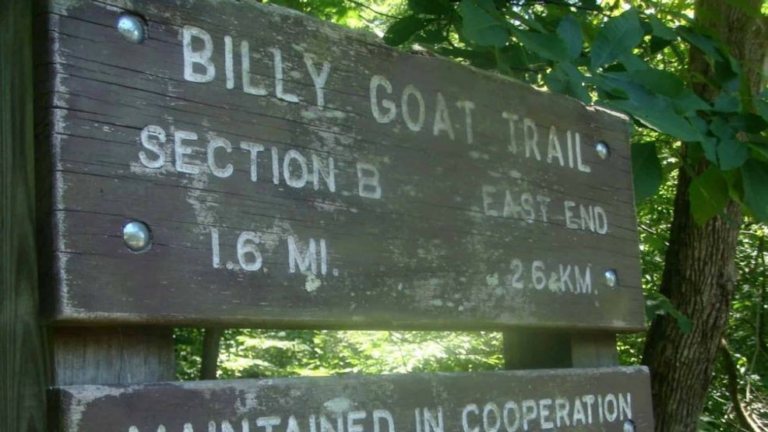
The Maryland Department of Transportation has released a new blueprint to expand and connect the state’s transportation trail system with an emphasis on safety, accessibility and community development.
The Maryland Statewide Transportation Trails Str… [828 chars]
See it: Rain leads to road collapse in New York
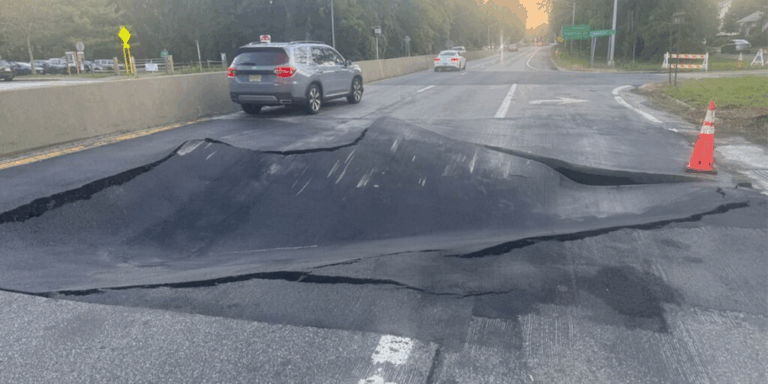
DOBBS FERRY, N.Y. – Part of a parkway north of New York City remains closed Monday after heavy rain caused the road to buckle, according to New York State Department of Transportation officials.
The Dobbs Ferry Fire Department said Saw Mill River Par… [837 chars]
Thousands of Ohio students left without a school bus ride as private school transport expands
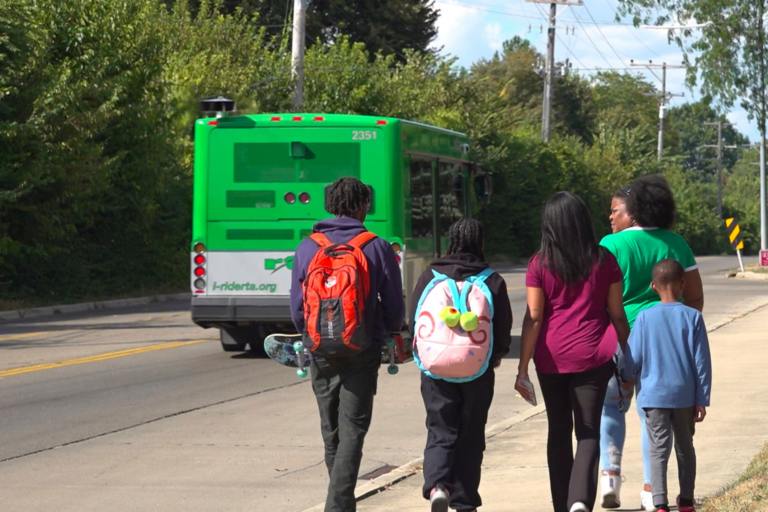
COLUMBUS, Ohio (AP) — A scramble is underway for some Ohio families over a staple of the back-to-school season: rides on the big, yellow school bus.
Public school districts canceled bus transportation for thousands of high schoolers again this year w… [6649 chars]
Governor Moore deploys state troopers to Baltimore amid federal assistance debate
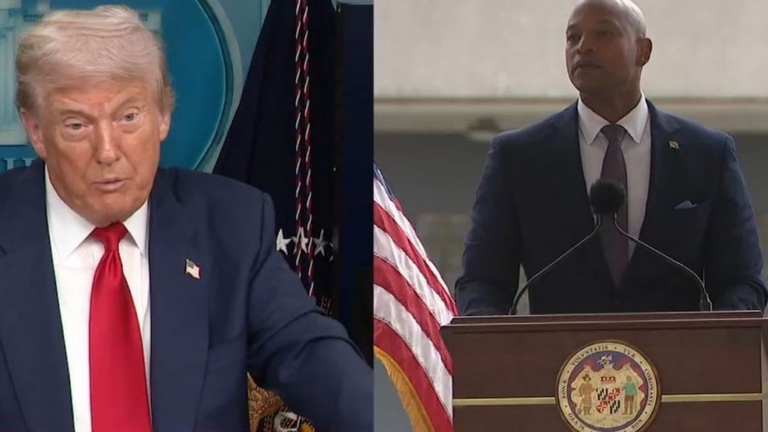
BALTIMORE — Governor Moore announced a significant deployment of law enforcement to Baltimore, involving Maryland State Troopers and the Maryland Transportation Authority Police. This move comes amid ongoing discussions with President Trump regarding… [442 chars]
UBS Group Downgrades Knight-Swift Transportation (NYSE:KNX) to Neutral

Knight-Swift Transportation (NYSE:KNX – Get Free Report) was downgraded by UBS Group from a “buy” rating to a “neutral” rating in a report issued on Friday, MarketBeat reports. They currently have a $51.00 price objective on the transportation compan… [5348 chars]
Baird Financial Group Inc. Sells 38,410 Shares of Knight-Swift Transportation Holdings Inc. $KNX

Baird Financial Group Inc. reduced its stake in Knight-Swift Transportation Holdings Inc. (NYSE:KNX – Free Report) by 37.3% during the first quarter, Holdings Channel.com reports. The fund owned 64,575 shares of the transportation company’s stock aft… [6333 chars]
Concord: City Launches Free Shuttle Service For Seniors, Residents With Disabilities

The City of Concord has expanded its Senior Transportation Program with a new free shuttle connecting seniors and residents with disabilities to the Concord Senior Center, city officials announced Friday.
The Senior Center Shuttle, part of the Concor… [1346 chars]
Chrysler recalls over 91,000 Jeep hybrid SUVs due to potential loss of drive power

(NEW YORK) — Chrysler is recalling up to 91,787 Jeep Grand Cherokee plug-in hybrid SUVs over a software error that could result in a loss of drive power, according to a recall notice issued by the U.S. Department of Transportation.
The recall applies… [1078 chars]
Proposed bill doles out nearly $16M for electric, hydrogen buses
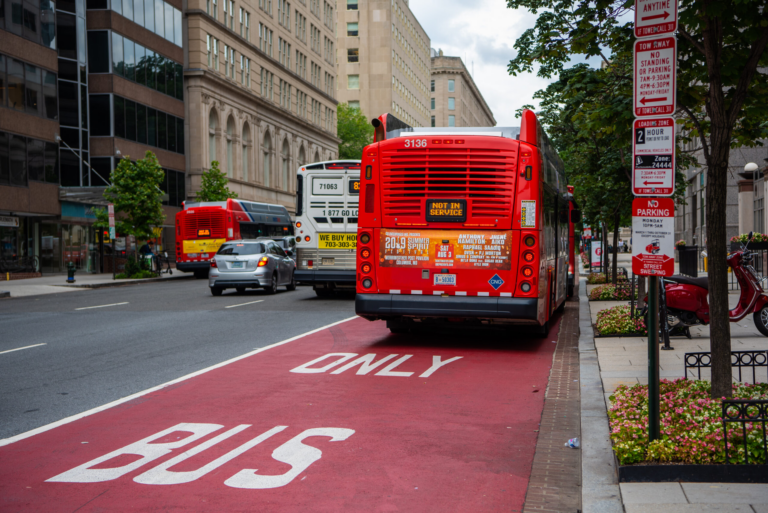
With a total price tag of $89.9 billion, the proposed legislation includes more than a dozen earmarks totaling at least $15.8 billion for electric buses, hydrogen buses, and electric bus charging stations or battery systems across only four states. T… [2146 chars]
MBTA to launch crackdown on fare jumpers, ticket scofflaws
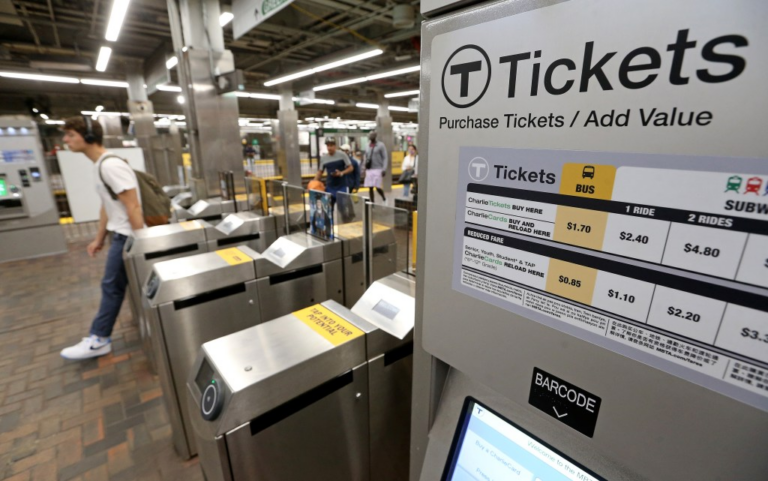
Fare evaders be warned: starting Monday the MBTA will begin issuing citations to those who don’t pay for public transportation before boarding, according to the transit agency.
Riders will see an increased presence of MBTA Fare Engagement Representat… [2322 chars]
Mr. regulator, ‘You’re fired’

Union Pacific is calling this merger the nation’s first truly transcontinental railroad, although for practical purposes, the first complete rail connection was completed 156 years ago. In fact, the presidents of the Central Pacific and, yes, Union P… [6415 chars]
US Government Withdraws Airline Delay Compensation Proposal

The US Government is planning to abandon a proposal that would have seen airlines in the country made liable to compensate passengers in the event of long delays. The idea was originally conceived by the Biden administration at the end of the former … [3422 chars]
Can I bring my electric toothbrush on a plane? How to pack it.

By now, we know that lithium batteries can catch fire on planes.
The Transportation Security Administration and Federal Aviation Administration have been flagging devices like portable power banks, laptops and cell phones for a while, urging traveler… [941 chars]
White House plans to abandon Biden-era rules on compensating customers for disrupted flights

By Alexandra Skores, CNN
Washington, DC (CNN) — The White House says it plans to roll back proposed rules by the Biden administration, including some that required passengers to be compensated by airlines for disrupted flights.
According to a public … [1628 chars]
Small decline in truck transportation jobs in August, overall 5-month trend is stable
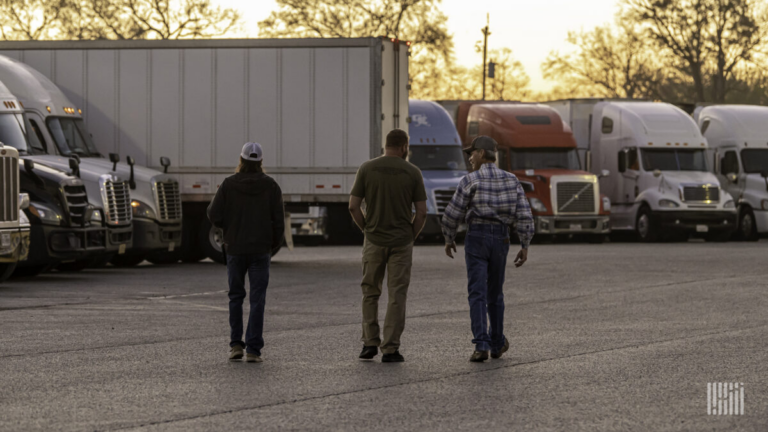
The August figure is 6,600 jobs less than August 2024.
Long-term trend is down
Three years ago, truck transportation jobs in August were 1,586,900 jobs. They peaked at 1,587,500 jobs the following January. Two years ago, when Yellow Corp. shut its do… [3629 chars]
MDOT announces plan to expand Maryland’s trail system

The Maryland Department of Transportation on Thursday released a statewide plan to expand and connect transportation trails.
The Statewide Transportation Trails Strategic Plan aims to make walking, biking and using wheelchairs or other mobility devic… [2331 chars]
Eastbound I-70 to see lane reduction after Mizzou-Kansas football game

COLUMIBA, Mo. (KMIZ)
Fans heading east of Columbia after Saturday’s football game should be prepared for traffic.
The Missouri Department of Transportation wrote in a Friday morning press release that eastbound traffic will be reduced to one lane in … [304 chars]

Artists, Activists Respond To Removal Of Street Murals By FDOT Crews
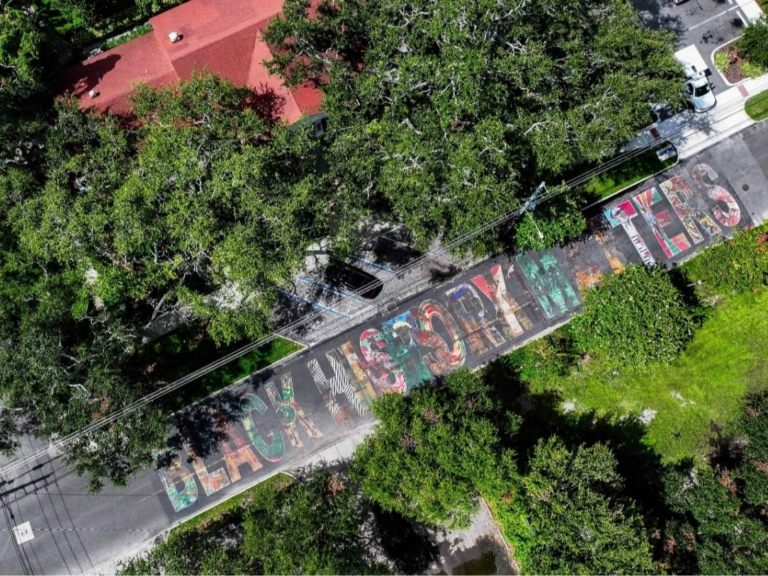
LGBTQ+ rainbow and Black History Matters murals were removed by FL Dept. of Transportation crews, drawing the ire of activists and artists.
ST. PETERSBURG, FL — The arts community is reeling in the aftermath of the removal of street murals in St. Pet… [5262 chars]
MDOT gives update on 2-year I-696 project 6 months after first phase began

OAKLAND COUNTY, Mich. – The Michigan Department of Transportation gave an update on the ongoing project on I-696, six months after the first phase began.
The eight-mile stretch from I-75 to the Lodge has been causing headaches for thousands of driver… [1377 chars]
Moms’ careers and personal time hit hard by school drop-off demands

By JEFF McMURRAY and LINLEY SANDERS, Associated Press
CHICAGO (AP) — When Elizabeth Rivera’s phone would ring during the overnight shift, it was usually because the bus didn’t show up again and one of her three kids needed a ride to school.
After lea… [6650 chars]
The Return Of

Authored by Jonathan Turley,
It has been 157 years since the last ship taking convicts from the United Kingdom landed in Australia.
Now, in a crushing historical irony, Australia is contracting with the small Pacific island of Nauru to resettle forei… [2435 chars]
Diddy Questions Prosecutors’ Definition Of Prostitution

Diddy is using a new strategy to counter prosecutors’ opposition to his acquittal of two counts of transportation to engage in prostitution. In a recent filing obtained by TMZ, he argued that the definition of prostitution was different in 1910, when… [1735 chars]
ADP says job growth was ‘whipsawed’ in August, with rare warning on AI and consumer jitters

America’s private employers added only 54,000 jobs in August, much lower than economists’ already-modest expectations of 68,000, according to payroll processor ADP’s latest National Employment Report, released Wednesday. The number marks a steep slow… [2579 chars]
SF: Transit Month Has Arrived: Officials Say Hop On For A Smoother Ride
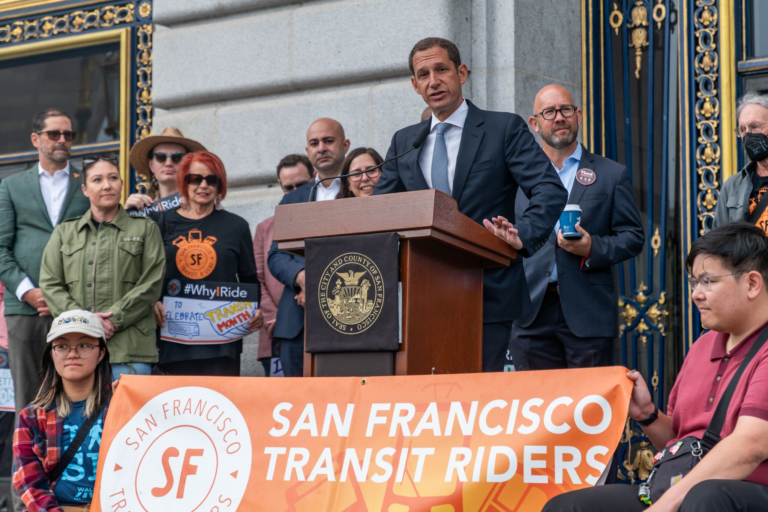
A collection of San Francisco officials and public transportation advocates gathered at the steps of City Hall on Thursday morning to raise awareness of September being Transit Month, an annual celebration sponsored by Bay Area transit agencies and g… [3944 chars]
Bay Bridge lane closures scheduled beginning Sept. 7

The Maryland Transportation Authority (MDTA) has announced scheduled lane closures and traffic pattern changes for the Bay Bridge (US 50/301) during the week of September 7-13, as part of ongoing preservation and maintenance work.
The westbound span … [1005 chars]
Feds scrap proposal to offer cash to airline passengers for flight disruptions

The Department of Transportation is dropping a proposed rule that would have required airlines to offer cash to passengers whose flights were disrupted.
The rule, which never went into effect, would have required carriers to provide compensation
Boston Public Schools transportation records best first-day performance: officials

BPS transportation officials say 66% of the district’s morning buses arrived on time on the first day of school, a performance rate they’re lauding as the highest on record, but one that still needs improvement.
Roughly 94% of the buses arrived withi… [2656 chars]
States receive $86 million to enhance pipeline safety

Sept. 4 (UPI) — The Transportation Department Thursday announced $86 million in federal grants to enhance safety programs along the nation’s 3.3-million mile pipeline network, or 85% of all pipelines in the United States.
Amite River Bridge opens in French Settlement after nearly five years of DOTD work

Amite River Bridge opens in French Settlement after nearly five years of DOTD work
FRENCH SETTLEMENT – It’s an exciting day in Livingston Parish on Tuesday as French Settlement drivers travel across a brand-new bridge along La. 16.
The Louisiana Depa… [789 chars]
TOUAX : Disclosure of Share Capital and Voting Rights

REGULATED INFORMATION Paris, 2 September 2025 5:45 PM
YOUR OPERATIONAL LEASING SOLUTION FOR SUSTAINABLE TRANSPORTATION
Disclosure of Share Capital and Voting Rights
Disclosure of Share Capital and Voting Rights pursuant to Article L.233-8 II of the F… [1177 chars]
Australia Transportation Infrastructure Construction Market

Dublin, Sept. 02, 2025 (GLOBE NEWSWIRE) — The
Ford’s Model T wasn’t just a car. See the creative ways it was used

NEWS Ford Motor Add Topic
Ford flashback: See the many interesting ways people used the Model T car
A 1918 Ford Model T used as a one-ton stake bed truck for transporting freight. Provided By Ford Motor Company
Ford introduces its first light-duty pi… [1592 chars]
Residents weigh future of transportation in Post Falls

POST FALLS — A steady stream of residents trickled into Post Falls City Hall on Thursday to learn about potential changes the city may undergo in its transportation plan over the next 20 years.
Julie Hensley said Hayden Avenue and Cecil Road are road… [2587 chars]
Kim Jong-un Heads to Beijing by Train

When the top leader of North Korea travels abroad, its secretive government often does not confirm the trip until he has arrived at his destination, or even after he has returned home.
So when both China and North Korea announced last week that Kim … [500 chars]
6 months later: Here’s an update on the I-696 construction

OAKLAND COUNTY, Mich. – Six months after the construction began on I-696, the Michigan Department of Transportation has provided an update on the ongoing project.
The eight-mile stretch from I-75 to the Lodge is causing headaches for thousands of dri… [1380 chars]
Transportation metrics sour in August

Transportation metrics soured in August, according to a monthly survey of supply chain professionals.
The Logistics Managers’ Index – a diffusion index in which a reading above 50 indicates expansion while one below 50 signals contraction – returned … [651 chars]
hoppaGo and Scandinavian Airlines Expand Strategic Partnership to Integrate Global Rail Network

LONDON, UK, September 2nd, 2025, FinanceWire
hoppaGo, the world’s leading B2B marketplace for ground transportation, and SAS, Scandinavia’s premier airline, today announced a significant expansion of their strategic partnership. Building on a success… [5738 chars]
Radiant Logistics buys majority stake in Mexican transportation company
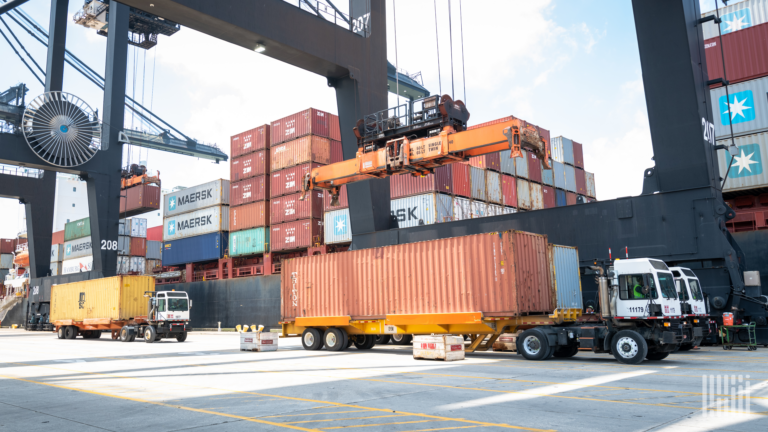
Radiant Logistics announced Tuesday that it has acquired an 80% equity stake in Mexico City-based transportation and logistics provider Weport.
Privately held Weport offers ocean and airfreight forwarding and multimodal domestic services. The company… [333 chars]
TechCrunch Mobility: A new speed bump for EV owners and Waymo’s robotaxi fleet surpasses 2,000

Welcome back to TechCrunch Mobility — your central hub for news and insights on the future of transportation. To get this in your inbox, sign up here for free — just click TechCrunch Mobility!
Wow, y’all aren’t exactly bullish on EV sales in the U.S…. [7616 chars]
Sidewalk Chalk Art Protest Of FDOT’s Street Mural Removals Rescheduled In St. Pete

Community Corner Sidewalk Chalk Art Protest Of FDOT’s Street Mural Removals Rescheduled In St. Pete A sidewalk chalk art protest of the FL Dept. of Transportation’s removal of an LGBTQ+ pride crosswalk has been rescheduled in St. Petersurg.
A sidewal… [2736 chars]

Saudi Arabia CNG Tanks Market Forecast & Opportunities,

Dublin, Sept. 01, 2025 (GLOBE NEWSWIRE) — The


Road Marking Machine Market to Reach USD 17.12 Billion by

Austin, Sept. 01, 2025 (GLOBE NEWSWIRE) — The Road Marking Machine Market size was valued at USD 8.37 billion in 2024 and is expected to reach USD 17.12 billion by 2032, growing at a CAGR of 9.37% over 2025–2032.
With governments and urban planners … [5985 chars]
Real IDs are being rejected by TSA at airport due to ‘sporadic’ scanning issues
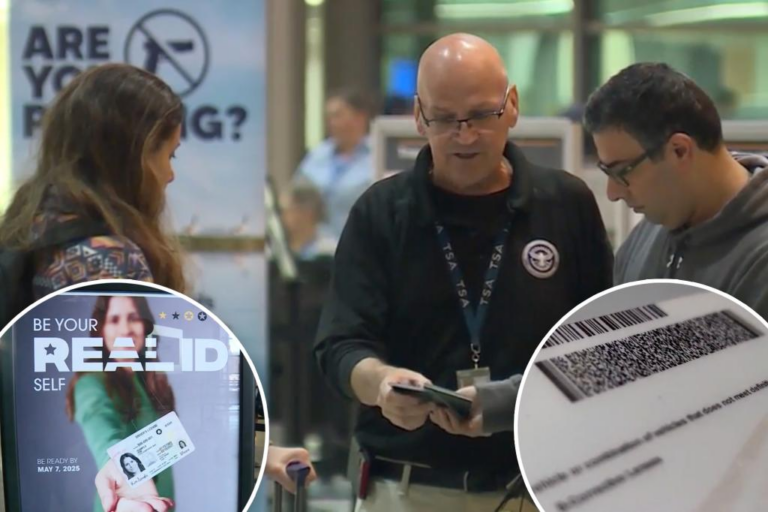
They’re being treated like fake IDs.
The Maine Secretary of State’s office confirmed that some Real IDs issued by the state have been rejected at various Transportation Security Administration (TSA) checkpoints.
“A tiny fraction of Maine REAL IDs cou… [3203 chars]
Charleston International Airport sees steady travel flow after Labor Day weekend
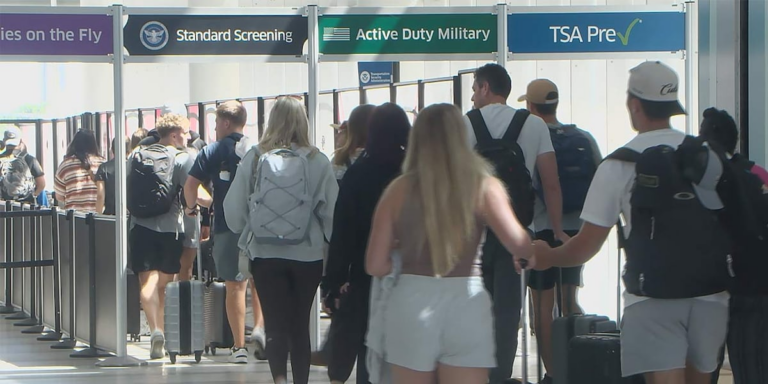
CHARLESTON, S.C. (WCSC) – Millions are wrapping up their travel over the holiday weekend, and the Transportation Security Administration projected about 17.5 million people will go through checkpoints through Wednesday.
Charleston International Airpo… [3575 chars]
Trump admin cancels $679 million for offshore wind projects as attacks on reeling industry continue
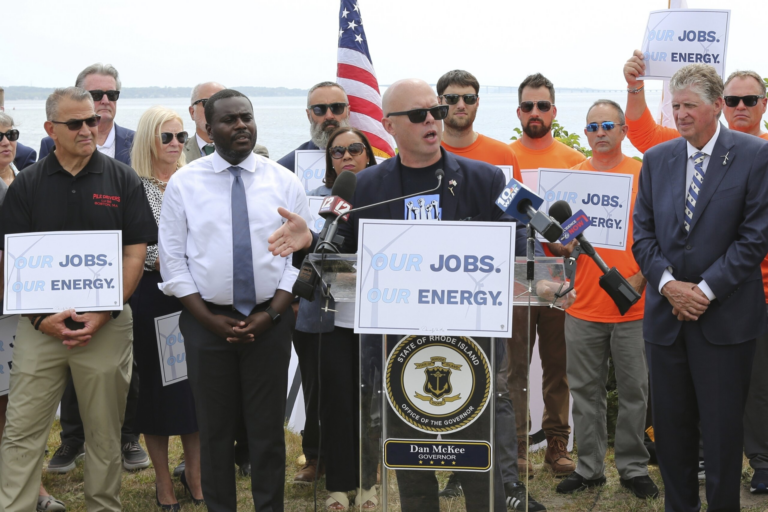
The Transportation Department on Friday canceled $679 million in federal funding for a dozen offshore wind projects, the latest attack by the Trump administration on the reeling U.S. offshore wind industry.
Patrick Crowley, president of the Rhode Isl… [6225 chars]
Trump administration cancels $679 million in funding for offshore wind projects

WASHINGTON (AP) — The Transportation Department on Friday canceled $679 million in federal funding for a dozen offshore wind projects, the latest attack by the Trump administration on the reeling U.S. offshore wind industry.
Funding for projects in 1… [5500 chars]
Transportation Dept. Cancels $679 Million for Offshore Wind Projects

The Transportation Department on Friday said it was terminating or withdrawing $679 million in federal funding for 12 projects around the country intended to support the development of offshore wind power, the latest of the Trump administration’s esc… [993 chars]
Trump admin cancels $679 million for offshore wind projects
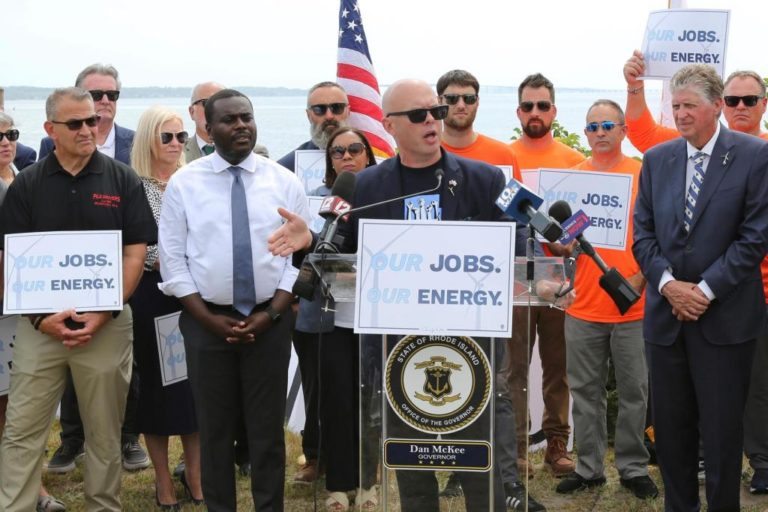
By MATTHEW DALY, Associated Press
WASHINGTON (AP) — The Transportation Department on Friday canceled $679 million in federal funding for a dozen offshore wind projects, the latest attack by the Trump administration on the reeling U.S. offshore wind i… [5349 chars]